U.S. Clears Runway for Commercial Electric Aviation Era
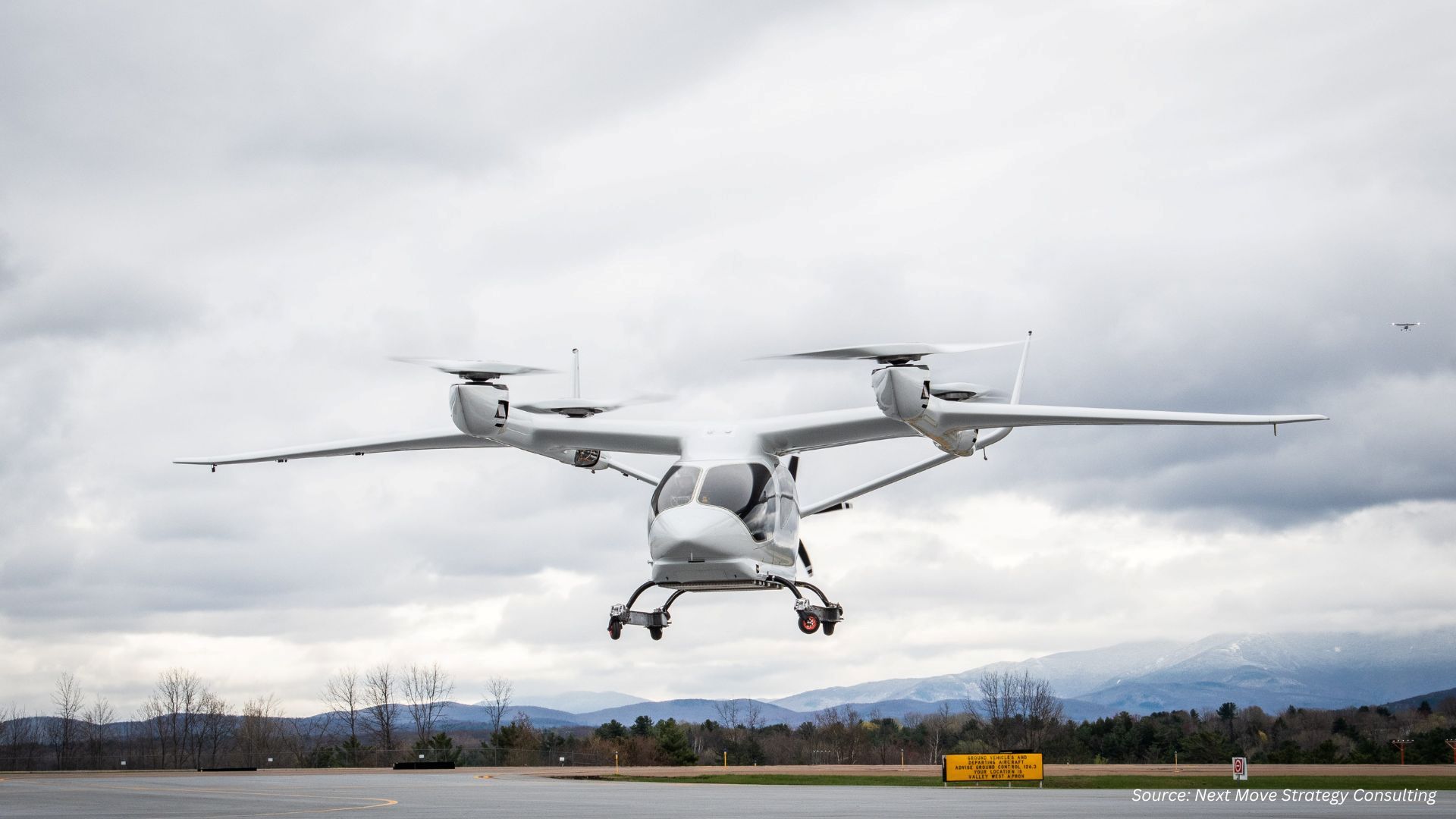
FAA Selects Eight eIPP Projects as Electric Aviation Enters Commercial Operations Phase; GAO Flags Certification Gaps Amid $1.5 Billion Industry Investment Wave
The United States Department of Transportation and the Federal Aviation Administration, on March 9, 2026, unveiled eight selected projects under the Advanced Air Mobility and Electric Vertical Takeoff and Landing (eVTOL) Integration Pilot Program (eIPP) — marking the most consequential regulatory milestone in the history of commercial electric aviation. Transportation Secretary Sean P. Duffy and FAA officials announced that the American public would begin to see operations under the program by summer 2026, with Joby Aviation selected for early operations spanning 10 U.S. states — a development that signals the sector's transition from developmental testing to nascent commercial deployment.
The announcement followed Executive Order 14307, Unleashing American Drone Dominance, signed on June 6, 2025, and the subsequent Federal Register notice establishing the eIPP (Docket No. FAA-2025-2633, published September 16, 2025), which directed the FAA to accelerate the safe commercialization of eVTOL and other Advanced Air Mobility (AAM) aircraft operations within the National Airspace System (NAS). The eIPP is structured to select a minimum of five public-private partnerships — pairing state, local, tribal, and territorial governments with private sector operators — to conduct operational trials under FAA safety oversight, with each participant entering into an Other Transaction Agreement with the FAA.
The regulatory acceleration arrives at a pivotal moment for the global Electric Aviation Market, which is navigating a complex intersection of technological maturation, capital formation, and certification uncertainty. According to a May 2026 report by the U.S. Government Accountability Office (GAO-26-107816), the FAA had not yet issued a type certification for any manned electric aircraft as of March 2026, underscoring the persistent gap between industry ambition and regulatory readiness. The GAO report further noted that as of December 2025, only 47 airports across the United States had identified electric aircraft charging stations in their official Airport Layout Plans — the majority of which belong to BETA Technologies' proprietary charging network.
For More Information: Download FREE Sample on Electric Aviation Market Report
GE Aerospace's $300 Million Commitment to Hybrid-Electric Flight
The capital markets have not waited for regulatory clarity. On September 5, 2025, BETA Technologies — the South Burlington, Vermont-based electric aircraft developer — announced a $300 million equity investment from GE Aerospace, pending regulatory approval, bringing the company's total cumulative funding to nearly $1.5 billion. The investment is structured to co-develop a hybrid electric turbogenerator, combining BETA's battery and propulsion engineering with GE Aerospace's legacy turbine expertise to extend the range, speed, and payload capacity of future electric aircraft platforms.
"We believe the industry is on the precipice of a real step change," said Kyle Clark, CEO of BETA Technologies, in the company's official press release. "We look forward to partnering to co-develop products that will unlock the potential of hybrid electric flight." The GE Aerospace equity investment also grants the legacy aerospace corporation the right to appoint a director to BETA's board, signaling a deepening of institutional commitment to the hybrid-electric aviation segment.
BETA Technologies, which holds contracts with UPS and the U.S. Department of Defense and operates a 188,500-square-foot production facility in South Burlington, has emerged as one of the most capitalized independent electric aircraft developers globally. The company's charging network — which accounts for the majority of the 47 airport charging stations identified by the FAA — represents a critical infrastructure advantage as the sector approaches commercial operations.
Aviation's Decarbonization Imperative Drives Electric Aviation Demand
The structural case for electric aviation is reinforced by the aviation industry's mounting emissions burden. According to the International Energy Agency (IEA), total energy-related CO₂ emissions reached an all-time high of 37.8 gigatonnes in 2024. Aviation accounts for approximately 2.5% of global CO₂ emissions, with international aviation contributing approximately 545 million tonnes of CO₂ in 2023, according to IEA data cited by the Climate Action Tracker.
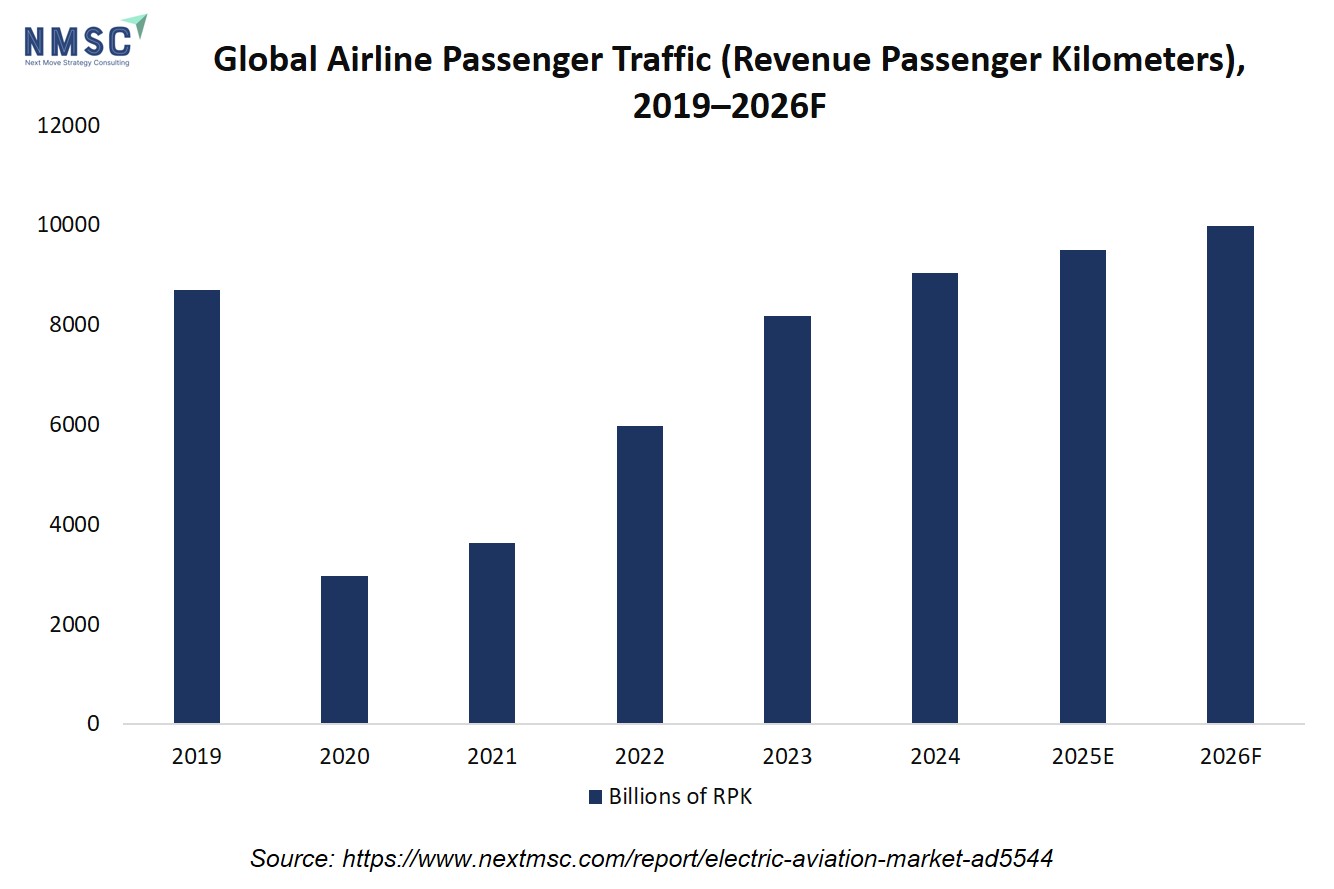
The International Air Transport Association (IATA), in its December 2025 Global Outlook for Air Transport, projects global passenger traffic to reach 9,505 billion Revenue Passenger Kilometers (RPK) in 2025 — a 5.2% year-on-year increase — and 9,971 billion RPK in 2026. The airline industry is on track to surpass USD 1 trillion in total revenues for the first time in 2025, with net profits forecast at USD 39.5 billion. Yet Sustainable Aviation Fuel (SAF) is projected to cover less than 1% of total jet fuel consumption in 2026, at an estimated 2.4 million tonnes — a figure IATA describes as "an unambiguous verdict on how ineffective the current policy environment is."
This decarbonization deficit creates a structural demand driver for electric aviation technologies, particularly for short-haul and regional routes where battery energy density constraints are less prohibitive. The eIPP's operational categories — including air taxis, regional fixed-wing flights, cargo logistics, and offshore energy support services — align directly with the near-term commercial viability window for electric propulsion systems
Regulatory Architecture: Progress and Persistent Gaps
The FAA's regulatory approach to electric aircraft certification remains in active transition. As documented in GAO-26-107816 (May 2026), the FAA is evaluating electric aircraft and engine designs on a case-by-case basis while considering longer-term regulatory changes, including the development of dedicated airworthiness standards for eVTOL aircraft. Aviation industry stakeholders cited in the GAO report identified two principal challenges: insufficient FAA staff with expertise in electric propulsion, and limited standardization in the certification process.
The FAA has responded by hiring engineers in propulsion disciplines and deploying experienced personnel to emerging technology areas. The GAO recommended that planned skill gap assessments be made quantitative and include all mission-critical occupations — a recommendation consistent with the agency's 2021 workforce guidance.
On the international front, the European Union Aviation Safety Agency (EASA) has been advancing its own certification framework. H55, a Swiss electric propulsion systems developer, completed an EASA-approved and witnessed certification campaign on December 19, 2025, confirming completion of a critical propulsion milestone. ZeroAvia, meanwhile, received a signed P-1 Issue Paper from the FAA for its 600kW electric propulsion system in 2025, following the issuance of the FAA G-1 in February 2025 — marking a significant step toward type certification for hydrogen-electric powertrains.
U.S. Electric Aircraft Infrastructure and Certification Status, 2025–2026
|
Indicator |
Status / Figure |
Reference Date |
|
FAA type certifications issued for manned electric aircraft |
0 (None issued) |
March 2026 |
|
U.S. airports with electric aircraft charging stations in Airport Layout Plans |
47 |
December 2025 |
|
eIPP projects selected by DOT/FAA |
8 |
March 9, 2026 |
|
Joby Aviation eIPP operational coverage |
10 U.S. states |
2026 |
|
ZeroAvia FAA G-1 Issue Paper (600kW system) |
Issued |
February 2025 |
|
ZeroAvia FAA P-1 Issue Paper (600kW system) |
Signed |
2025 |
|
H55 EASA certification campaign |
Completed |
December 19, 2025 |
|
BETA Technologies total cumulative funding |
~USD 1.5 billion |
September 2025 |
Market Landscape: Capital Formation and Competitive Dynamics
The electric aviation sector has attracted more than $10.1 billion in cumulative funding over the past decade, with 2024 representing the peak year for investment activity, according to Tracxn market data. The financial landscape is increasingly bifurcated. A November 2025 analysis by AIN Online noted a widening financial gulf between well-capitalized electric aviation contenders and underfunded developers, with a leading U.S. player raising $1 billion through an initial public offering as 2025 drew to a close.
Key companies operating across the electric aviation value chain include Airbus SE, The Boeing Company, Joby Aviation, Archer Aviation, BETA Technologies, Eviation, Heart Aerospace, Pipistrel Group, Bye Aerospace, and ZeroAvia. The competitive landscape spans fully electric fixed-wing aircraft, eVTOL air taxis, hybrid-electric regional aircraft, and hydrogen-electric propulsion systems — each targeting distinct range, payload, and operational profiles.
According to Next Move Strategy Consulting's analysis of the electric aviation market, the sector is characterized by strong segmentation across propulsion type (fully electric, hybrid-electric, hydrogen-electric), aircraft type (fixed-wing, rotorcraft, eVTOL), end-use (commercial, military, cargo, urban air mobility), and range category (short-haul, regional, medium-haul). The convergence of regulatory momentum, capital formation, and technological advancement positions the sector for a critical commercial inflection between 2026 and 2030.
Global Airline Industry Key Financial and Traffic Metrics, 2019–2026
|
Metric |
2019 |
2020 |
2021 |
2022 |
2023 |
2024 |
2025E |
2026F |
|
Segment Passengers (million) |
4,560 |
1,779 |
2,304 |
3,452 |
4,414 |
4,774 |
4,982 |
5,202 |
|
RPK (billion) |
8,688 |
2,974 |
3,623 |
5,973 |
8,171 |
9,039 |
9,505 |
9,971 |
|
Total Revenue (USD billion) |
838 |
384 |
513 |
738 |
909 |
969 |
1,008 |
1,053 |
|
Net Profit (USD billion) |
26.4 |
-137.7 |
-40.4 |
-3.5 |
37.6 |
28.3 |
39.5 |
41.0 |
|
Net Profit Margin (%) |
3.1% |
-35.8% |
-7.9% |
-0.5% |
4.1% |
2.9% |
3.9% |
3.9% |
|
Passenger Load Factor (% ASK) |
82.6% |
65.2% |
66.9% |
78.7% |
82.2% |
83.5% |
83.7% |
83.8% |
|
Fuel Spend (USD billion) |
190 |
80 |
106 |
215 |
269 |
261 |
253 |
252 |
|
SAF Output (million tonnes) |
— |
— |
— |
— |
— |
— |
1.9 |
2.4 |
Regional Dynamics: North America Leads, Asia Pacific Accelerates
North America remains the most active region for electric aviation development and regulatory activity, anchored by the FAA's eIPP framework and the concentration of leading developers including Joby Aviation, Archer Aviation, and BETA Technologies. The DOT/FAA's selection of eight eIPP projects — with Joby Aviation designated for operations across 10 states — establishes the United States as the primary proving ground for commercial eVTOL operations in 2026.
Europe is advancing through EASA's certification framework and the EU's ReFuelEU Aviation mandate, which came into force in January 2025 requiring a 2% SAF blend at EU airports. The United Kingdom announced funding for eight zero-emission flight projects in July 2026, according to Aviation Week, reinforcing Europe's commitment to aviation decarbonization across both SAF and electric propulsion pathways.
Asia Pacific presents the largest long-term growth opportunity, driven by rapid urbanization, rising middle-class air travel demand, and government-backed urban air mobility initiatives in China, India, South Korea, and Japan. IATA projects Asia Pacific passenger traffic to grow by 7.3% year-on-year in 2026 — the fastest of any region globally — creating a substantial addressable market for electric short-haul and urban air mobility solutions. The Middle East, while currently focused on conventional aviation expansion through mega-projects such as King Salman International Airport in Riyadh and Dubai World Central, is increasingly incorporating electric aviation into long-term infrastructure planning, supported by the region's industry-leading net profit margin of 9.3% in 2025E.
Strategic Outlook: Certification as the Critical Gatekeeper
The electric aviation market's trajectory toward commercial scale is contingent on resolving the certification bottleneck. As the GAO concluded, the FAA has not yet issued a type certification for any manned electric aircraft as of March 2026, and the timeline for commercial certification remains uncertain. The eIPP provides a structured pathway for pre-certification operations, enabling data collection that will inform future regulatory frameworks — but it does not substitute for full type certification.
The convergence of regulatory momentum (eIPP, Executive Order 14307), capital formation (BETA Technologies' $1.5 billion cumulative funding, sector-wide $10.1 billion in decade-long investment), and technological advancement (hybrid-electric turbogenerators, hydrogen-electric propulsion, improving battery energy density) positions the electric aviation sector for a critical inflection point between 2026 and 2030. The sector's ability to deliver on its commercial promise will depend on the pace of FAA and EASA certification, the build-out of charging and vertiport infrastructure, and the resolution of battery energy density constraints for medium-haul applications.
Bottom Line
The electric aviation market is entering its most consequential phase since the sector's emergence, defined by the transition from developmental testing to nascent commercial operations. The U.S. DOT/FAA's selection of eight eIPP projects in March 2026, Joby Aviation's designation for operations across 10 states, and GE Aerospace's $300 million equity investment in BETA Technologies collectively signal deepening institutional confidence in the sector's near-term commercial viability. However, the GAO's May 2026 finding that no manned electric aircraft has yet received FAA type certification underscores the structural risk that regulatory timelines may lag commercial ambitions.
For investors and strategic planners, the electric aviation market presents a bifurcated risk-return profile: well-capitalized developers with established regulatory relationships and proprietary infrastructure networks represent lower-risk exposure, while the broader ecosystem of underfunded developers faces existential capital risk. The decarbonization imperative — with aviation accounting for approximately 2.5% of global CO₂ emissions and SAF covering less than 1% of jet fuel consumption in 2026 — ensures sustained policy and investment tailwinds. The critical variable is certification velocity, which will determine whether the sector's commercial inflection arrives in the late 2020s or is deferred to the early 2030s. Stakeholders across the value chain — from OEMs and propulsion developers to airport operators and institutional investors — must align their planning horizons with the regulatory realities documented by the GAO and the operational ambitions embedded in the FAA's eIPP framework.
About Next Move Strategy Consulting
Next Move Strategy Consulting is a premier market research and management consulting firm that has been committed to provide strategically analysed well documented latest research reports to its clients. The research industry is flooded with many firms to choose from, what makes NMSC different from the rest is its top-quality research and the obsession of turning data into knowledge by dissecting every bit of it and providing fact-based research recommendation that is supported by information collected from over 500 million websites, paid databases, industry journals and one on one consultations with industry experts across a diverse range of industry sectors. The high-quality customized research reports with actionable insights and excellent end-to-end customer service help our clients to take critical business decisions that enables them to move beyond time and have competitive edge in the industry.
We have been servicing over 1000 customers globally that includes 90% of the Fortune 500 companies over a decade. Our analysts are constantly tracking various high growth markets and identifying hidden opportunities in each sector or the industry. We provide one of the industry's best quality syndicate as well as custom research reports across 10 different industry verticals. We are committed to deliver high quality research solutions in accordance to your business needs. Our industry standard delivery solutions that ranges from the pre consultation to after-sales services, provide an excellent client experience and ensure right strategic decision making for businesses.
For more information, please contact:
Next Move Strategy Consulting
5th Floor 867
Boylston St, STE 500,
Boston, MA 02116, U.S.
E-Mail: [email protected]
Direct: +1-217-650-7991
Website: www.nextmsc.com
About the Author
 Sanyukta Deb
— Sanyukta Deb is Digital Marketing Team Lead at Next Move Strategy Consulting, where she has led content strategy and technical SEO for the firm's B2B market research publications for over 2 years. Her editorial process translates NextMSC's primary and secondary research — spanning technology, industrial, and consumer sectors — into commercial narratives, backed by search-intent, keyword, and competitive analysis. She brings 5 years of overall experience in digital marketing and content strategy.
Sanyukta Deb
— Sanyukta Deb is Digital Marketing Team Lead at Next Move Strategy Consulting, where she has led content strategy and technical SEO for the firm's B2B market research publications for over 2 years. Her editorial process translates NextMSC's primary and secondary research — spanning technology, industrial, and consumer sectors — into commercial narratives, backed by search-intent, keyword, and competitive analysis. She brings 5 years of overall experience in digital marketing and content strategy.
About the Reviewer
 Debashree Dey
— Debashree Dey is Assistant Manager at Next Move Strategy Consulting, where she supports cross-vertical market content and communications across diverse industries for 6 years. Her professional background includes senior content writing, communications, and published manuscript authorship, with experience developing audience-focused business narratives and maintaining clear, consistent messaging. Her role supports research-led content development and editorial quality across NextMSC publications.
Debashree Dey
— Debashree Dey is Assistant Manager at Next Move Strategy Consulting, where she supports cross-vertical market content and communications across diverse industries for 6 years. Her professional background includes senior content writing, communications, and published manuscript authorship, with experience developing audience-focused business narratives and maintaining clear, consistent messaging. Her role supports research-led content development and editorial quality across NextMSC publications.

















Add Comment