BASF’s AgBiTech Acquisition Signals a Major Shift in Insecticide Chemistry

BASF's Acquisition of AgBiTech Marks a Structural Turning Point as the Global Insecticides Market Accelerates Its Chemistry Transition
On March 31, 2026, BASF Agricultural Solutions completed its acquisition of AgBiTech — a biological insect control company specializing in naturally occurring virus-based products that target caterpillar pests in major row crops — after receiving all required regulatory approvals. The transaction, first announced in January 2026 following an agreement with private equity firm Paine Schwartz Partners, gives BASF full ownership of a company with manufacturing facilities in the United States, Australia, and Brazil, and positions the German agrochemical giant to scale biological insecticide technologies across global markets beyond AgBiTech's established stronghold in Brazil. "The biologicals market continues to expand at a strong pace. Acquiring AgBiTech strengthens our position in this attractive segment and complements our existing portfolio with proven biological technologies," said Livio Tedeschi, President of BASF Agricultural Solutions, in the company's official press release dated April 1, 2026.
The BASF-AgBiTech deal is not an isolated transaction — it is a directional signal for an industry undergoing a chemistry-level restructuring. According to Next Move Strategy Consulting's Insecticides Market report, the global insecticides market was valued at USD 24.87 billion in 2025 and is estimated at USD 26.44 billion in 2026, projected to reach USD 40.54 billion by 2035, growing at a CAGR of 4.87% from 2026 to 2035. The USD 14.10 billion absolute investment opportunity created between 2026 and 2035 is being shaped by three structurally independent demand engines — agricultural crop protection, public health vector control, and non-agricultural urban pest management — each reinforcing the market's resilience across commodity price cycles.
For More Information: Download FREE Sample on Insecticides Market Report
BASF-AgBiTech: What the Deal Reveals About the Insecticide Industry's Structural Pivot
The BASF-AgBiTech acquisition is a significant 2026 transaction highlighting the growing importance of biological insect control precisely because it confirms that originator Companies are increasingly using acquisitions to expand their biological insecticide capabilities within competitive R&D timelines. AgBiTech's core technology — baculovirus-based products that use naturally occurring viruses to manage caterpillar pests — represents a mode-of-action class that is structurally immune to the neonicotinoid and organophosphate regulatory restrictions reshaping product portfolios across Europe and North America.
"Joining BASF marks an important milestone for AgBiTech's mission to make biological insect control accessible to farmers worldwide. BASF's global reach, strong R&D ecosystem and deep agricultural expertise will help accelerate the impact of our technologies," said Adriano Vilas-Boas, CEO of AgBiTech, in the April 1, 2026 press release.
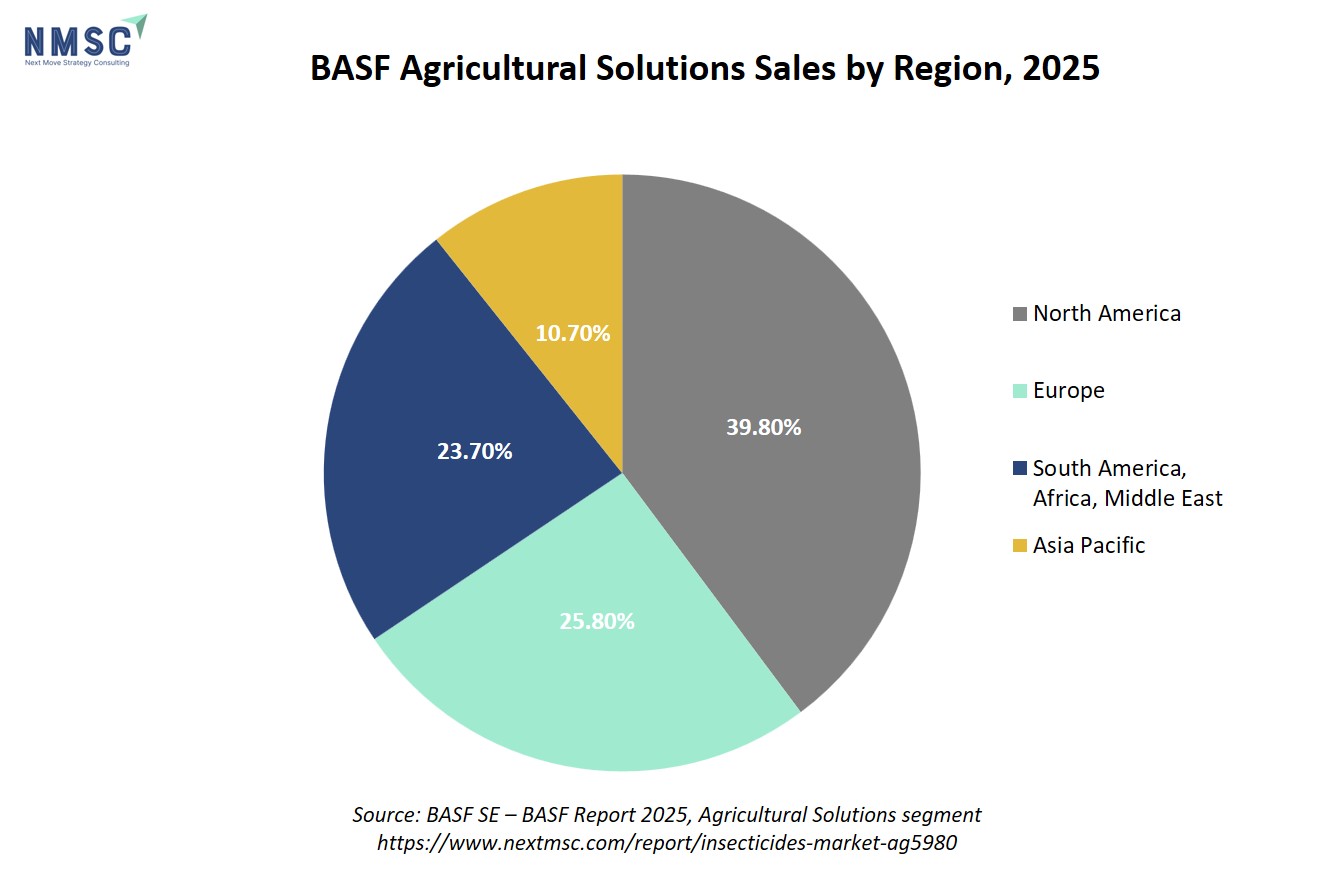
BASF's Agricultural Solutions division generated sales of EUR 9.6 billion in 2025 and invested EUR 990 million in R&D during the same year, underscoring the financial scale at which the biologicals pivot is being executed. The acquisition follows Syngenta's June 2025 announcement of its ambition to become a global leader in biologicals, noting that the agricultural biologicals market is expected to exceed USD 20 billion by 2030 — a commitment that has already translated into double-digit growth in Syngenta's Seed Care biologicals business and 1,800 new product registrations during 2025 alone, per Syngenta's FY 2025 financial report.
Regulatory Pressure Reshaping the Active Ingredient Landscape
The regulatory environment governing insecticide active ingredients has intensified materially in 2026, with consequences that extend well beyond Europe. On July 1, 2026, the U.S. Environmental Protection Agency launched a USD 30 million challenge to help American farmers grow healthy food with fewer chemical inputs — a direct policy signal that the U.S. regulatory trajectory is converging with the European Union's Farm-to-Fork target of reducing pesticide use by 50% by 2030.
On September 15, 2026, the EPA cleared outdated pesticides from the marketplace to protect health and the environment, continuing a multi-year active-ingredient rationalization process that has already resulted in the cancellation of multiple chlorpyrifos product registrations and the ongoing registration review of clothianidin and other neonicotinoids. The EPA's ongoing registration review of chlorpyrifos and clothianidin exemplifies the active-ingredient discontinuation risk that constrains medium-term product portfolio planning for manufacturers dependent on these compound classes, according to NextMSC primary research and analysis.
Simultaneously, the OECD convened a virtual webinar on September 29, 2026, introducing a new Management Scheme on Countering the Illegal Trade of Pesticides, aligned with Target A4 of the Global Framework on Chemicals — which calls for the prevention of illegal trade and traffic of chemicals and waste by 2030. The scheme, developed in collaboration with the Food and Agriculture Organization of the United Nations, provides countries with a practical toolkit to translate global commitments into national enforcement action, addressing a supply-chain integrity risk that disproportionately affects branded insecticide manufacturers competing against unregistered generic imports in price-sensitive markets.
PI Industries Launches CARVINT: India's Next-Generation Insecticide Enters the Market
In September 2026, PI Industries Limited launched CARVINT (Flometoquin 10% SC) in India — a next-generation insecticide designed to control thrips and diamondback moth in crops including chilli, cabbage, and cauliflower. Flometoquin belongs to a novel mode-of-action class, and its commercial launch in India — the world's fastest-growing national insecticide market at a 6.7% CAGR through 2035 per NextMSC primary research and analysis — directly illustrates the resistance-replacement demand cycle that is structurally shortening conventional active ingredient lifecycles. India's Central Insecticides Board registration of Flometoquin also signals that the country's regulatory framework is accommodating next-generation chemistry at a pace that supports export-oriented horticulture compliance with European and Japanese maximum residue limit requirements.
In the same month, ADAMA Agricultural Solutions launched Ravari in Latin America — a dual-mode-of-action insecticide targeting fruit and vegetable growers exporting produce to the United States — reinforcing the trend of premium, export-residue-compliant insecticide formulations gaining commercial traction in Brazil and Argentina's high-value crop segments.
NMSC Strategic Perspective: Three Forces Redefining the Insecticide Investment Thesis Through 2035
NextMSC primary research and analysis identifies three structural forces that are simultaneously compressing the conventional insecticide product lifecycle and expanding the total addressable market for next-generation chemistry and biological platforms.
Force 1 — Resistance-Driven Chemistry Substitution Is Accelerating, Not Stabilizing. Documented resistance to one or more insecticide classes in more than 600 arthropod pest species worldwide is structurally shortening active ingredient product lifecycles from approximately 20 years to under 12 years, according to NextMSC primary research and analysis. Each documented resistance event in a major pest species typically accelerates branded next-generation insecticide volume uptake by 15 to 25 percent in the affected geography within two seasons of widespread resistance confirmation. This dynamic is most acute in South and Southeast Asian rice, corn, and vegetable systems — markets that collectively anchor Asia-Pacific's USD 9.95 billion insecticide base in 2025 — and creates predictable product substitution cycles every three to five years that benefit manufacturers with IRAC Group 28 (diamide), Group 30, or Group 31 mode-of-action portfolios.
Force 2 — Regulatory Phaseout of Neonicotinoids Is Eliminating More Than 20% of European Insecticide Volume, Redirecting Capital Toward Biopesticides. EU restrictions on several neonicotinoid uses are increasing pressure on conventional insecticide portfolios and encouraging alternative product development. This regulatory compression is simultaneously creating export market disruptions and innovation incentives, with biopesticides growing at an 8.2% CAGR — the fastest of any insecticide type segment — from USD 2.49 billion in 2025 to USD 5.38 billion by 2035. The BASF-AgBiTech acquisition and Syngenta's biologicals commitment are direct capital responses to this regulatory-driven demand shift.
Force 3 — Non-Agricultural Vector Control Is Emerging as a Structurally Independent Revenue Platform. National vector control programs in tropical and subtropical Middle East & Africa, Latin American, and Asia-Pacific markets represent the highest-growth non-crop insecticide demand pool, enabling manufacturers with WHO-approved public health insecticide registrations to access government procurement channels independent of agricultural commodity price cycles. The non-agricultural end use segment is growing at a 6.9% CAGR — the highest of any end-use segment — from USD 3.98 billion in 2025 to USD 6.89 billion by 2035, per NextMSC primary research and analysis. The WHO's Global Malaria Programme continues to recommend insecticide-treated nets and indoor residual spraying as the primary vector control interventions for malaria prevention, sustaining institutional procurement demand for pyrethroid and next-generation public health insecticide formulations across Sub-Saharan Africa and South Asia.
Market Segmentation: Where Growth Is Concentrating
Insecticides Market Segmentation by Type (2025–2035)
|
Segment |
2025 (USD Billion) |
2035 (USD Billion) |
CAGR (2026–2035) |
|
Pyrethroids |
6.47 |
10.00 |
4.4% |
|
Organophosphates |
5.47 |
7.90 |
3.7% |
|
Neonicotinoids |
4.97 |
6.57 |
2.8% |
|
Carbamates |
2.49 |
3.64 |
3.8% |
|
Organochlorines |
1.24 |
1.42 |
1.4% |
|
Biopesticides |
2.49 |
5.38 |
8.2% |
|
Others |
1.74 |
5.63 |
13.0% |
|
Total |
24.87 |
40.54 |
4.87% |
Pyrethroids lead the type segmentation at USD 6.47 billion in 2025, expanding to USD 10.00 billion by 2035, reflecting their broad-spectrum efficacy, low mammalian toxicity profile, and regulatory acceptance relative to phased-out organochlorine and increasingly restricted neonicotinoid classes. Biopesticides is the fastest-growing type at an 8.2% CAGR, driven by regulatory preferences for bioderived active ingredients, integrated pest management protocol requirements, and grower demand for residue-compliant products for export-oriented fruit and vegetable production, per NextMSC primary research and analysis.
Suspension Concentrate is the fastest-growing formulation at a 6.5% CAGR, driven by its superior active ingredient stability, lower solvent content, favourable residue profile, and compatibility with precision spray technologies — including drone-enabled and AI-guided application platforms that are reducing per-application volumes by 30 to 50 percent while maintaining field efficacy, per NextMSC primary research and analysis.
Regional Outlook: Asia-Pacific Anchors Volume, Middle East & Africa Leads Growth
Asia-Pacific holds approximately 40% of the 2025 global insecticides market at USD 9.95 billion, anchored by China's USD 4.72 billion national market and India's USD 2.98 billion market — the latter growing at a 6.7% CAGR through 2035, the fastest among all covered countries, per NextMSC primary research and analysis. China's large paddy rice, vegetable, and fruit crop acreage sustains the highest national insecticide demand globally, while India's government emphasis on export-oriented horticulture is driving demand for maximum residue limit-compliant biopesticide and next-generation synthetic insecticide products that meet European and Japanese import tolerance requirements.
The Middle East & Africa region is the fastest-growing at a 6.2% CAGR, driven by national vector control investment programs targeting malaria, dengue, and Rift Valley fever mosquito populations and expanding food security horticultural investment in the UAE, Saudi Arabia, and Sub-Saharan African nations, per NextMSC primary research and analysis. Saudi Arabia's Vision 2030 agricultural self-sufficiency investment is expanding irrigated vegetable, date palm, and wheat production that requires insect pest management, while national vector control programs sustain government procurement of WHO-approved public health insecticide formulations.
North America's market at USD 5.22 billion in 2025 is shaped by resistance management rotation requirements across corn, soybean, and cotton production and expanding non-agricultural urban pest control demand, with the U.S. market — valued at approximately USD 4.24 billion in 2025 — projected to reach USD 6.57 billion by 2035 at a 4.5% CAGR, per NextMSC primary research and analysis.
Growth Drivers and Restraints: The CAGR Impact Matrix
Growth Catalyst & Risk Assessment Matrix
|
Factor |
Type |
CAGR Impact |
Geographic Relevance |
Timeline |
|
Rising global food demand requiring crop production intensification |
Driver |
+1.8% |
Global |
2026–2035 |
|
Documented insect resistance driving novel mode-of-action demand |
Driver |
+1.2% |
Global |
2026–2033 |
|
Biopesticide and biological platform expansion within IPM programs |
Driver |
+0.9% |
North America, Europe, Asia-Pacific |
2026–2035 |
|
Public health vector control demand targeting mosquitoes and disease vectors |
Driver |
+0.7% |
MEA, Latin America, Asia-Pacific |
2026–2035 |
|
Seed treatment adoption expanding insecticide total addressable market |
Driver |
+0.5% |
North America, Europe, Asia-Pacific |
2026–2032 |
|
Neonicotinoid restrictions and high-risk pesticide phaseout mandates |
Restraint |
−1.1% |
Europe, North America |
2026–2030 |
|
Generic and off-patent insecticide price competition compressing margins |
Restraint |
−0.7% |
Asia-Pacific, Latin America |
2026–2035 |
|
Rising regulatory compliance costs constraining pipeline size |
Restraint |
−0.5% |
Global |
2026–2033 |
|
Tightening maximum residue limits on exported produce |
Restraint |
−0.3% |
Europe, North America, Asia-Pacific |
2026–2031 |
The primary growth driver is rising global food demand requiring higher agricultural productivity and intensified insect pest management. According to the U.S. Department of Agriculture Economic Research Service, global agriculture must expand output by approximately 70% by 2050 to meet projected food demand, sustaining persistent investment in crop protection inputs including insecticides that protect yield potential against insect-caused crop losses across all major crop categories.
Expert Perspective
"Innovation in crop protection is about finding new ways to help growers manage pests safely, effectively and sustainably," said Dr. Seva Rostovtsev, Executive Vice President and Chief Technology Officer at FMC Corporation. This statement reflects the industry's accelerating investment in RNA-based biological solutions and targeted biological mechanisms that can expand the insecticide pipeline beyond conventional chemistries while supporting resistance management strategies and reducing potential impacts on beneficial organisms.
Competitive Landscape: Consolidation at the Biologicals Tier
The insecticides market is highly consolidated at the originator level, with the top six multinationals — Syngenta Group, Bayer AG, BASF SE, Corteva Agriscience, FMC Corporation, and UPL Limited — holding an estimated 60 to 65% of branded market share, per NextMSC primary research and analysis. Recent M&A activity is concentrated in biopesticide platform acquisitions and strategic biologicals partnerships rather than large conventional chemistry company mergers, reflecting the industry's recognition that biological active ingredient capability cannot be built organically within competitive R&D timelines.
The BASF-AgBiTech acquisition exemplifies the bolt-on acquisition strategy that originator companies are prioritizing — targeting validated biopesticide manufacturers with existing WHO and EPA registrations over large-scale agrochemical company consolidation. Chinese generic manufacturers including Jiangsu Yangnong Chemical maintain price pressure on commodity chemistry pricing globally, compressing branded margins on organophosphate and pyrethroid commodity products while originator companies redirect investment toward novel mode-of-action and biological active ingredient tiers.
Bottom Line
The global insecticides market is undergoing a chemistry-level restructuring that is simultaneously compressing the conventional active ingredient lifecycle and expanding the total addressable market for next-generation biological and synthetic insecticide platforms. BASF's March 2026 acquisition of AgBiTech, PI Industries' September 2026 launch of CARVINT (Flometoquin 10% SC) in India, and the EPA's USD 30 million challenge to reduce chemical inputs collectively confirm that the industry's investment thesis has shifted from volume-driven commodity chemistry toward resistance-breaking, residue-compliant, and biologically derived active ingredient platforms. According to NextMSC primary research and analysis, the market will expand from USD 26.44 billion in 2026 to USD 40.54 billion by 2035 at a 4.87% CAGR, with biopesticides growing at 8.2% — the fastest of any type segment — and the non-agricultural end use growing at 6.9%, providing structural revenue diversification independent of agricultural commodity cycles. Manufacturers that combine novel mode-of-action active ingredient portfolios with precision digital agronomy service platforms are best positioned to capture disproportionate share of the USD 14.10 billion absolute investment opportunity created between 2026 and 2035. Companies managing more than 30% of insecticide revenue through a single active ingredient class face above-market revenue disruption risk during regulatory review cycles.
About Next Move Strategy Consulting
Next Move Strategy Consulting is a premier market research and management consulting firm that has been committed to provide strategically analysed well documented latest research reports to its clients. The research industry is flooded with many firms to choose from, what makes NMSC different from the rest is its top-quality research and the obsession of turning data into knowledge by dissecting every bit of it and providing fact-based research recommendation that is supported by information collected from over 500 million websites, paid databases, industry journals and one on one consultations with industry experts across a diverse range of industry sectors. The high-quality customized research reports with actionable insights and excellent end-to-end customer service help our clients to take critical business decisions that enables them to move beyond time and have competitive edge in the industry.
We have been servicing over 1000 customers globally that includes 90% of the Fortune 500 companies over a decade. Our analysts are constantly tracking various high growth markets and identifying hidden opportunities in each sector or the industry. We provide one of the industry's best quality syndicate as well as custom research reports across 10 different industry verticals. We are committed to deliver high quality research solutions in accordance to your business needs. Our industry standard delivery solutions that ranges from the pre consultation to after-sales services, provide an excellent client experience and ensure right strategic decision making for businesses.
For more information, please contact:
Next Move Strategy Consulting
5th Floor 867 Boylston St, STE 500,
Boston, MA 02116, U.S.
E-Mail: [email protected]
Direct: +1-217-650-7991
Website: www.nextmsc.com
About the Author
 Sanyukta Deb
— Sanyukta Deb is Digital Marketing Team Lead at Next Move Strategy Consulting, where she has led content strategy and technical SEO for the firm's B2B market research publications for over 2 years. Her editorial process translates NextMSC's primary and secondary research — spanning technology, industrial, and consumer sectors — into commercial narratives, backed by search-intent, keyword, and competitive analysis. She brings 5 years of overall experience in digital marketing and content strategy.
Sanyukta Deb
— Sanyukta Deb is Digital Marketing Team Lead at Next Move Strategy Consulting, where she has led content strategy and technical SEO for the firm's B2B market research publications for over 2 years. Her editorial process translates NextMSC's primary and secondary research — spanning technology, industrial, and consumer sectors — into commercial narratives, backed by search-intent, keyword, and competitive analysis. She brings 5 years of overall experience in digital marketing and content strategy.
About the Reviewer
 Debashree Dey
— Debashree Dey is Assistant Manager at Next Move Strategy Consulting, where she supports cross-vertical market content and communications across diverse industries for 6 years. Her professional background includes senior content writing, communications, and published manuscript authorship, with experience developing audience-focused business narratives and maintaining clear, consistent messaging. Her role supports research-led content development and editorial quality across NextMSC publications.
Debashree Dey
— Debashree Dey is Assistant Manager at Next Move Strategy Consulting, where she supports cross-vertical market content and communications across diverse industries for 6 years. Her professional background includes senior content writing, communications, and published manuscript authorship, with experience developing audience-focused business narratives and maintaining clear, consistent messaging. Her role supports research-led content development and editorial quality across NextMSC publications.
















Add Comment