Can Palm Vein Biometrics Redefine Global Identity Security in 2026?
Lede
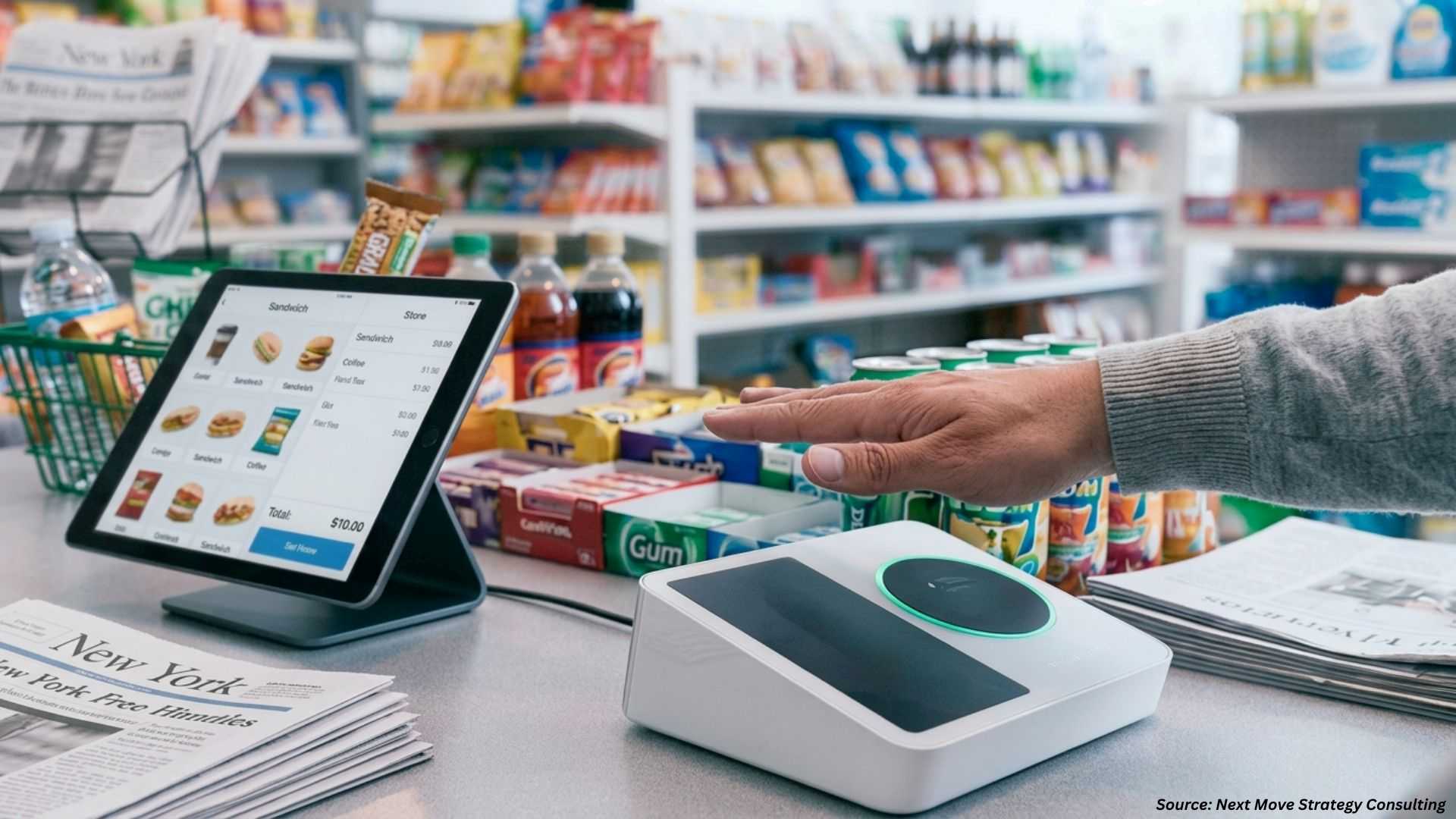
Palm Vein Biometrics Market is entering a new phase of commercial expansion in 2026 as palm vein and palm print technologies move from pilot programs into scaled deployment. Once viewed as niche authentication tools, palm-based systems are now being adopted in exam security, healthcare check-ins, digital payments, and blockchain identity workflows. The appeal is clear: contactless verification, reduced fraud risk, and faster user authentication.
We see the latest announcements from Pearson, Tencent, and Pi Network as evidence that the Palm Vein Biometrics Market is gaining momentum, with biometric identity systems advancing into a new growth stage where multimodal palm recognition could compete directly with fingerprints, passwords, and facial recognition in high-assurance environments.
Pearson Expands Exam Authentication With Palm Print Biometrics
Pearson announced a partnership with Redrock Biometrics to deploy PalmID across its global testing network, adding palm print authentication to its long-running palm vein verification process. Pearson says the rollout will begin in mid-2026 at test centers already equipped with palm-vein devices, subject to regulatory approvals, before extending to remote-proctored exams.
The scale of the deployment is notable. Pearson delivers nearly 21 million certification and licensure exams annually through around 20,000 secure test centers and online services across more than 180 countries. We observe that this is not simply a technology upgrade it is a signal that education and professional certification providers are prioritizing stronger anti-fraud systems as remote testing grows.
How Smart Feature Selection Boosts AI-Based Palm Biometrics
The diagram shows how intelligent feature selection can strengthen deep learning models for palm vein recognition. An input image first passes through a feature extraction layer, creating an initial representation of the palm vein pattern. Global Average Pooling then summarizes the key information, while an adaptive kernel network learns which features are most important. These learned weights are applied to the original data to generate an optimized output feature map. For palm biometrics, this approach increases precision, reduces noise, and enables faster, more reliable authentication across exams, healthcare, payments, and digital identity systems.

Pearson Deployment Snapshot
|
Metric |
Reported Figure |
|
Annual Exams Delivered |
21 million |
|
Test Centers |
20,000 |
|
Countries Served |
180+ |
|
Existing Palm Vein Use Since |
2006 |
|
Palm Print Rollout Start |
Mid-2026 |
Palm Biometrics Enter Healthcare and Payments
Tencent and Bupa Hong Kong launched a palm-based patient check-in service across 20 clinics, one of the first healthcare deployments of its kind in the city. Patients can verify identity through palm scans instead of cards or manual desk processing. Tencent says the system combines palm print and palm vein recognition to improve hygiene, speed and convenience.
Separately, Tencent partnered with Brazilian fintech Treeal to introduce PalmAI for payments and access control in Brazil. Reported system performance includes user identification in under 300 milliseconds, a false acceptance rate below one in one billion, and a false rejection rate of 0.01%. We note that these performance claims, if replicated at scale, could significantly improve trust in frictionless payment systems.
How Palm Biometrics Is Expanding Across Global Industries
Palm biometrics is rapidly evolving into a multi-sector identity solution in 2026. Education providers are strengthening exam authentication, healthcare clinics are enabling faster patient check-ins, fintech companies are testing cardless payments, and blockchain platforms are enhancing digital identity verification. With benefits such as contactless access, lower fraud risk, improved speed, and scalable deployment, palm vein and palm print technologies are becoming a key part of the next generation of secure authentication systems worldwide.

Commercial Use Cases Expanding
|
Sector |
Example Deployment |
Value Proposition |
|
Healthcare |
Bupa Hong Kong clinics |
Faster check-in |
|
Payments |
Brazil via Treeal |
Cardless transactions |
|
Enterprise Access |
Tencent offices |
Secure entry |
|
Transit |
Asian transport pilots |
Faster throughput |
Blockchain Platforms Test Palm Authentication
Pi Network said it is beta testing palm print authentication within its KYC process, positioning it as an alternative or complement to facial verification for account recovery, password resets and two-factor authentication. The platform also said 16 million users have migrated to Mainnet, while millions more are in process or regaining access.
We believe this matters because decentralized ecosystems need scalable identity systems without relying entirely on passwords or centralized credentials. If palm biometrics prove user-friendly and privacy-compliant, blockchain ecosystems may become an unexpected growth channel for biometric vendors.
Palm Biometrics Adoption Trends Across Key Application Areas
The pie chart highlights how palm biometrics is being adopted across multiple industries, with Exam Authentication leading at 32%. This reflects the growing need for secure identity verification in certification centers, remote testing, and academic examinations. Healthcare Check-ins account for 24%, showing strong demand for contactless patient registration and faster clinic workflows.
Payments represent 21%, indicating increasing interest in cardless and password-free transactions powered by palm recognition. Blockchain Identity holds 13%, where the technology is being explored for secure digital identity verification, account recovery, and KYC processes. Access Control makes up 10%, demonstrating continued use in office entry systems, smart buildings, and secure facilities. Overall, the chart shows that palm biometrics is expanding beyond security into broader commercial and digital applications.

How Palm Vein Recognition Uses Machine Learning for Smarter Authentication
The diagram shows a three-step workflow for palm vein recognition powered by machine learning. First, a captured palm image undergoes pre-processing, where the ROI is extracted to improve image quality and focus on unique vascular patterns. Next, the biometric data is processed by a W-ELM model that learns and matches complex palm vein features. Finally, the system classifies the user into different categories such as age and gender, showing how palm biometrics can support both secure authentication and demographic insights. This highlights the growing role of AI-driven palm recognition across exams, payments, healthcare, and digital identity systems.

Why This Matters Beyond 2026
We see palm biometrics shifting from isolated deployments to cross-industry infrastructure. That transition could create long-term revenue opportunities across hardware, software, cloud APIs and identity orchestration platforms.
Authentication convergence means one biometric identity could be used across exams, clinics, retail and digital wallets. Hardware demand growth will require more kiosks, scanners, embedded sensors and edge devices. Software expansion will create recurring revenue streams in matching engines, fraud analytics, consent tools and encryption layers. Emerging markets such as Brazil and parts of Asia may become leading commercialization regions due to strong digital payment readiness. Regulatory pressure and biometric consent laws will continue shaping deployment speed and public acceptance.
How Deep Learning Uses Palm Vein Images to Verify Real Users
The diagram illustrates how deep learning can transform a palm vein image into a secure identity decision. First, the biometric image enters a CNN model, where successive feature extraction layers analyze vein structure, texture, and pattern uniqueness. These processed features are then passed through fully connected layers that compare the input against learned identity profiles. The final output classifies the attempt as either genuine or imposter, enabling fast and accurate authentication. This demonstrates how palm vein recognition is becoming a next-generation solution for high-security applications requiring contactless and reliable user verification.

NMSC Strategic Outlook
At Next Move Strategy Consulting, we expect the next competitive battleground will not be accuracy alone, but ecosystem readiness. Vendors that combine hardware, privacy safeguards, API integrations and industry-specific workflows are likely to outperform single-product providers.
Long-Term Opportunity Matrix
|
Growth Driver |
Market Effect |
Strategic Priority |
|
Remote Identity Needs |
Higher demand for secure verification |
High |
|
Contactless User Experience |
Faster adoption in public venues |
High |
|
AI Fraud Detection |
Better spoof prevention |
Medium |
|
Regulation & Compliance |
Slower but more trusted scaling |
High |
|
Cross-Platform Integration |
Larger enterprise contracts |
High |
Conclusion
Palm biometrics are no longer experimental. Pearson’s exam security rollout, Tencent’s healthcare and payment deployments, and Pi Network’s identity trials show the technology is moving into mainstream operational settings. We believe the next phase of growth will depend on trust, interoperability and measurable ROI rather than novelty alone.
About Next Move Strategy Consulting:
Next Move Strategy Consulting is a premier market research and management consulting firm that has been committed to provide strategically analysed well documented latest research reports to its clients. The research industry is flooded with many firms to choose from, what makes Next Move different from the rest is its top-quality research and the obsession of turning data into knowledge by dissecting every bit of it and providing fact-based research recommendation that is supported by information collected from over 500 million websites, paid databases, industry journals and one on one consultations with industry experts across a diverse range of industry sectors. The high-quality customized research reports with actionable insights and excellent end-to-end customer service help our clients to take critical business decisions that enables them to move beyond time and have competitive edge in the industry.
We have been servicing over 1000 customers globally that includes 90% of the Fortune 500 companies over a decade. Our analysts are constantly tracking various high growth markets and identifying hidden opportunities in each sector or the industry. We provide one of the industry’s best quality syndicate as well as custom research reports across 10 different industry verticals. We are committed to deliver high quality research solutions in accordance to your business needs. Our industry standard delivery solutions that ranges from the pre consultation to after-sales services, provide an excellent client experience and ensure right strategic decision making for businesses.
For more information, please contact:
Next Move Strategy Consulting
5th Floor 867
Boylston St, STE 500,
Boston, MA 02116, U.S.
E-Mail: [email protected]
Direct: +1-217-650-7991
Website: www.nextmsc.com
About the Author
 Sanyukta Deb
— Sanyukta Deb is Digital Marketing Team Lead at Next Move Strategy Consulting, where she has led content strategy and technical SEO for the firm's B2B market research publications for over 2 years. Her editorial process translates NextMSC's primary and secondary research — spanning technology, industrial, and consumer sectors — into commercial narratives, backed by search-intent, keyword, and competitive analysis. She brings 5 years of overall experience in digital marketing and content strategy.
Sanyukta Deb
— Sanyukta Deb is Digital Marketing Team Lead at Next Move Strategy Consulting, where she has led content strategy and technical SEO for the firm's B2B market research publications for over 2 years. Her editorial process translates NextMSC's primary and secondary research — spanning technology, industrial, and consumer sectors — into commercial narratives, backed by search-intent, keyword, and competitive analysis. She brings 5 years of overall experience in digital marketing and content strategy.
About the Reviewer
 Debashree Dey
— Debashree Dey is Assistant Manager at Next Move Strategy Consulting, where she supports cross-vertical market content and communications across diverse industries for 6 years. Her professional background includes senior content writing, communications, and published manuscript authorship, with experience developing audience-focused business narratives and maintaining clear, consistent messaging. Her role supports research-led content development and editorial quality across NextMSC publications.
Debashree Dey
— Debashree Dey is Assistant Manager at Next Move Strategy Consulting, where she supports cross-vertical market content and communications across diverse industries for 6 years. Her professional background includes senior content writing, communications, and published manuscript authorship, with experience developing audience-focused business narratives and maintaining clear, consistent messaging. Her role supports research-led content development and editorial quality across NextMSC publications.
















Add Comment