Can Supply Chain Management Redefine Resilience in an Era of AI, Regulation, and Uncertainty?

Lede
As global disruptions intensify and artificial intelligence reshapes enterprise operations, Supply Chain Management is undergoing a structural transformation in 2026. From AI-driven orchestration to rising geopolitical intervention, recent developments highlight a critical shift: supply chains are no longer just operational backbones they are strategic control towers for resilience, ethics, and competitive advantage.
AI-Powered Supply Chains Move from Concept to Execution
A recent industry perspective highlights how advanced technologies, particularly agentic AI and predictive analytics, are actively transforming supply chain ecosystems. Organizations are no longer relying on reactive processes; instead, they are deploying intelligent systems capable of autonomous decision-making across procurement, logistics, and manufacturing.
These AI-driven systems are enabling measurable improvements in efficiency and responsiveness. Supplier onboarding, once a lengthy process, is being accelerated through automated validation and integration. Similarly, predictive maintenance models are reducing unexpected equipment failures by continuously monitoring operational health.
More importantly, AI is enabling real-time disruption management. Supply chain networks can now detect demand or supply fluctuations, simulate outcomes, and initiate corrective actions with minimal human intervention. This shift reflects a broader transition from fragmented operations to synchronized, data-driven ecosystems.
Industry recognition further reinforces this evolution, as integrated platforms combining planning, execution, and analytics are increasingly seen as essential for enterprise resilience. The emphasis is clear technology is no longer an enabler but a core driver of supply chain strategy.
Next-Gen Capabilities Redefining Supply Chain Management
|
Capability |
What It Involves |
Business Outcome |
|
Autonomous Decision |
AI-driven engines that |
Accelerates response time |
|
Digital Twin Technology |
Virtual replicas of |
Improves planning accuracy |
|
Intelligent Supplier |
Connected ecosystems |
Enhances visibility and |
|
Demand Sensing |
AI-powered analysis of |
Enables precise demand |
Sustainability Emerges as a Strategic Differentiator
Alongside technological transformation, sustainability is becoming deeply embedded in supply chain decision-making. Environmental accountability is no longer limited to compliance; it is influencing operational efficiency, brand perception, and long-term viability.
Organizations are integrating carbon tracking, circular supply models, and ESG metrics directly into their workflows. This approach not only reduces environmental impact but also optimizes logistics efficiency, lowers operational costs, and strengthens stakeholder trust.
The growing alignment between sustainability and profitability signals a major shift. Companies that successfully integrate environmental considerations into their supply chains are positioning themselves to gain both regulatory and competitive advantages in a rapidly evolving global landscape.
AI-Led Transformation in Supply Chain Management
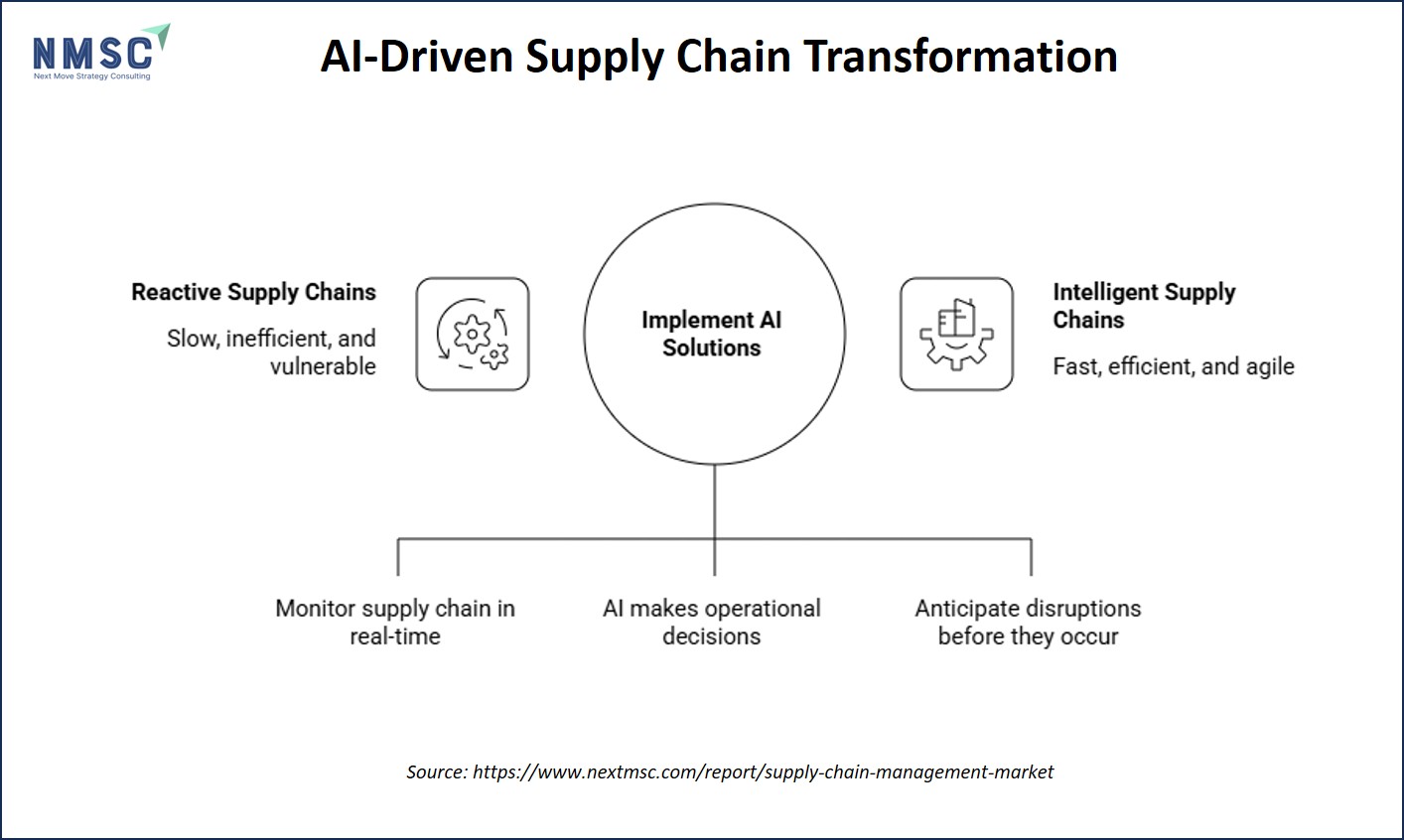
Artificial intelligence is rapidly shifting supply chains from reactive systems to intelligent, self-optimizing networks. With capabilities such as real-time analytics, autonomous decision-making, and predictive insights, organizations can now anticipate disruptions before they occur. This evolution not only enhances operational speed but also allows businesses to reallocate human expertise toward strategic planning and innovation, making supply chains more agile and future-ready.
Policy Shock: AI Supply Chain Risk Designation Raises New Concerns
While innovation accelerates, regulatory developments are introducing new complexities. In a landmark move, a leading AI company was designated as a “supply chain risk” by U.S. defense authorities an action traditionally reserved for foreign entities.
This decision marks a significant shift in how governments may leverage supply chain authority to influence corporate behavior. Experts suggest that such designations could alter negotiation dynamics between technology firms and federal agencies, potentially limiting flexibility in contract terms.
The implications extend beyond a single company. Labeling a domestic AI provider as a supply chain risk raises concerns about precedent, particularly regarding innovation and ethical safeguards. Companies may become more cautious in establishing boundaries around the use of their technologies, especially if such stances risk exclusion from critical markets.
At a broader level, this development underscores the increasing intersection of Supply Chain Management, national security, and AI governance areas that are becoming deeply interconnected in the modern economy.
Strategic Challenges and Adaptive Measures in 2026
|
Challenge |
Industry Implication |
Adaptive Strategy |
|
Policy-Driven Supply Risks |
Government actions influencing supplier eligibility and partnerships |
Develop multi-region sourcing strategies |
|
Ethical AI Constraints |
Balancing innovation with responsible AI deployment |
Establish clear AI ethics and compliance frameworks |
|
Supply Chain Fragmentation |
Increasing complexity across global supplier networks |
Invest in orchestration and integration technologies |
|
Carbon Accountability Demands |
Pressure to track and reduce emissions across operations |
Adopt circular supply models and carbon tracking tools |
|
Innovation Slowdown Risks |
Regulatory uncertainty potentially discouraging tech advancements |
Foster collaboration between industry and regulators |
AI, Ethics, and Control: A New Supply Chain Paradigm
The convergence of AI capabilities and regulatory oversight is creating a new paradigm for supply chains. On one side, enterprises are embracing intelligent automation to enhance speed and efficiency. On the other, governments are asserting greater control over technological ecosystems, particularly where national interests are involved.
This dual pressure is forcing organizations to rethink not only how supply chains operate, but also how they align with ethical standards, compliance requirements, and geopolitical realities.
The result is a more complex but also more strategic supply chain environment one where decision-making must balance innovation with accountability.
Regulatory Dynamics Reshaping Global Supply Chains
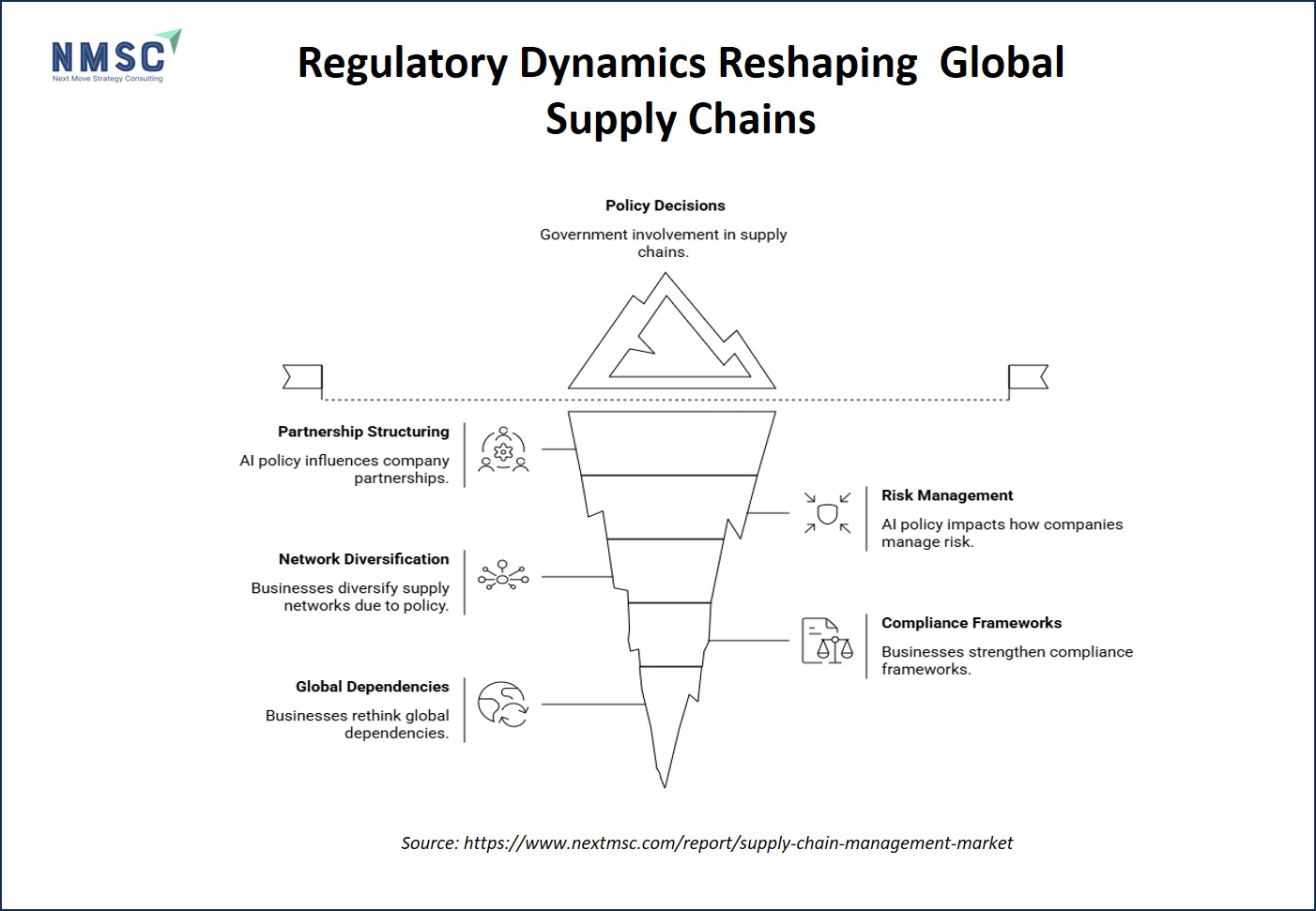
The increasing involvement of governments in supply chain ecosystems is introducing a new layer of complexity. Policy decisions, especially around advanced technologies like AI, are influencing how companies structure partnerships and manage risk. As a result, businesses are being pushed to diversify supply networks, strengthen compliance frameworks, and rethink global dependencies to ensure long-term resilience in an evolving regulatory environment.
Long-Term Impact and NMSC Perspective
According to Next Move Strategy Consulting, the evolving landscape of Supply Chain Management in 2026 reflects three defining trajectories:
1. Shift from Linear Chains to Intelligent Networks
Supply chains are transitioning into interconnected, AI-driven networks capable of real-time orchestration. This transformation will significantly enhance agility, enabling organizations to anticipate disruptions rather than react to them.
2. Rising Importance of Data and Trust Frameworks
As AI becomes central to operations, the quality, transparency, and governance of data will determine supply chain effectiveness. Companies that invest in robust data ecosystems and ethical AI frameworks will gain long-term strategic advantages.
3. Geopolitical Influence Will Reshape Supply Chain Strategies
The designation of AI firms as supply chain risks signals a broader trend of increasing government intervention. Organizations will need to diversify partnerships, strengthen regional supply bases, and incorporate regulatory risk into strategic planning.
4. Sustainability as a Core Performance Metric
Environmental considerations will evolve into key performance indicators across supply chains. Businesses that embed sustainability into their operational DNA will not only meet regulatory requirements but also unlock efficiency gains and brand differentiation.
Outlook: From Resilience to Reinvention
The current wave of transformation suggests that Supply Chain Management is entering a phase of reinvention rather than incremental improvement. AI-driven automation, sustainability integration, and regulatory shifts are collectively redefining how supply chains are designed and managed.
As uncertainty remains a constant, the ability to adapt, collaborate, and innovate will determine long-term success. Organizations that embrace this new blueprint are likely to emerge as leaders in a world where resilience is no longer optional but foundational.
About Next Move Strategy Consulting:
Next Move Strategy Consulting is a premier market research and management consulting firm that has been committed to providing strategically analysed well documented latest research reports to its clients. The research industry is flooded with many firms to choose from, what makes NMSC different from the rest is its top-quality research and the obsession of turning data into knowledge by dissecting every bit of it and providing fact-based research recommendation that is supported by information collected from over 500 million websites, paid databases, industry journals and one on one consultations with industry experts across a diverse range of industry sectors. The high-quality customized research reports with actionable insights and excellent end-to-end customer service help our clients to take critical business decisions that enables them to move beyond time and have competitive edge in the industry.
We have been servicing over 1000 customers globally that includes 90% of the Fortune 500 companies over a decade. Our analysts are constantly tracking various high growth markets and identifying hidden opportunities in each sector or the industry. We provide one of the industry’s best quality syndicate as well as custom research reports across 10 different industry verticals. We are committed to deliver high quality research solutions in accordance to your business needs. Our industry standard delivery solutions that ranges from the pre consultation to after-sales services, provide an excellent client experience and ensure right strategic decision making for businesses.
For more information, please contact:
Next Move Strategy Consulting
5th Floor 867
Boylston St, STE 500
Boston, MA 02116, U.S.
E-Mail: [email protected]
Direct: +1 857 758 5017
Website: www.nextmsc.com
About the Author
 Sanyukta Deb
— Sanyukta Deb is Digital Marketing Team Lead at Next Move Strategy Consulting, where she has led content strategy and technical SEO for the firm's B2B market research publications for over 2 years. Her editorial process translates NextMSC's primary and secondary research — spanning technology, industrial, and consumer sectors — into commercial narratives, backed by search-intent, keyword, and competitive analysis. She brings 5 years of overall experience in digital marketing and content strategy.
Sanyukta Deb
— Sanyukta Deb is Digital Marketing Team Lead at Next Move Strategy Consulting, where she has led content strategy and technical SEO for the firm's B2B market research publications for over 2 years. Her editorial process translates NextMSC's primary and secondary research — spanning technology, industrial, and consumer sectors — into commercial narratives, backed by search-intent, keyword, and competitive analysis. She brings 5 years of overall experience in digital marketing and content strategy.
About the Reviewer
 Debashree Dey
— Debashree Dey is Assistant Manager at Next Move Strategy Consulting, where she supports cross-vertical market content and communications across diverse industries for 6 years. Her professional background includes senior content writing, communications, and published manuscript authorship, with experience developing audience-focused business narratives and maintaining clear, consistent messaging. Her role supports research-led content development and editorial quality across NextMSC publications.
Debashree Dey
— Debashree Dey is Assistant Manager at Next Move Strategy Consulting, where she supports cross-vertical market content and communications across diverse industries for 6 years. Her professional background includes senior content writing, communications, and published manuscript authorship, with experience developing audience-focused business narratives and maintaining clear, consistent messaging. Her role supports research-led content development and editorial quality across NextMSC publications.















Add Comment