CATL’s Sodium-Ion Battery Strategic Shift in Electric Vehicle Energy Storage
Industry Insights from Next Move Strategy Consulting
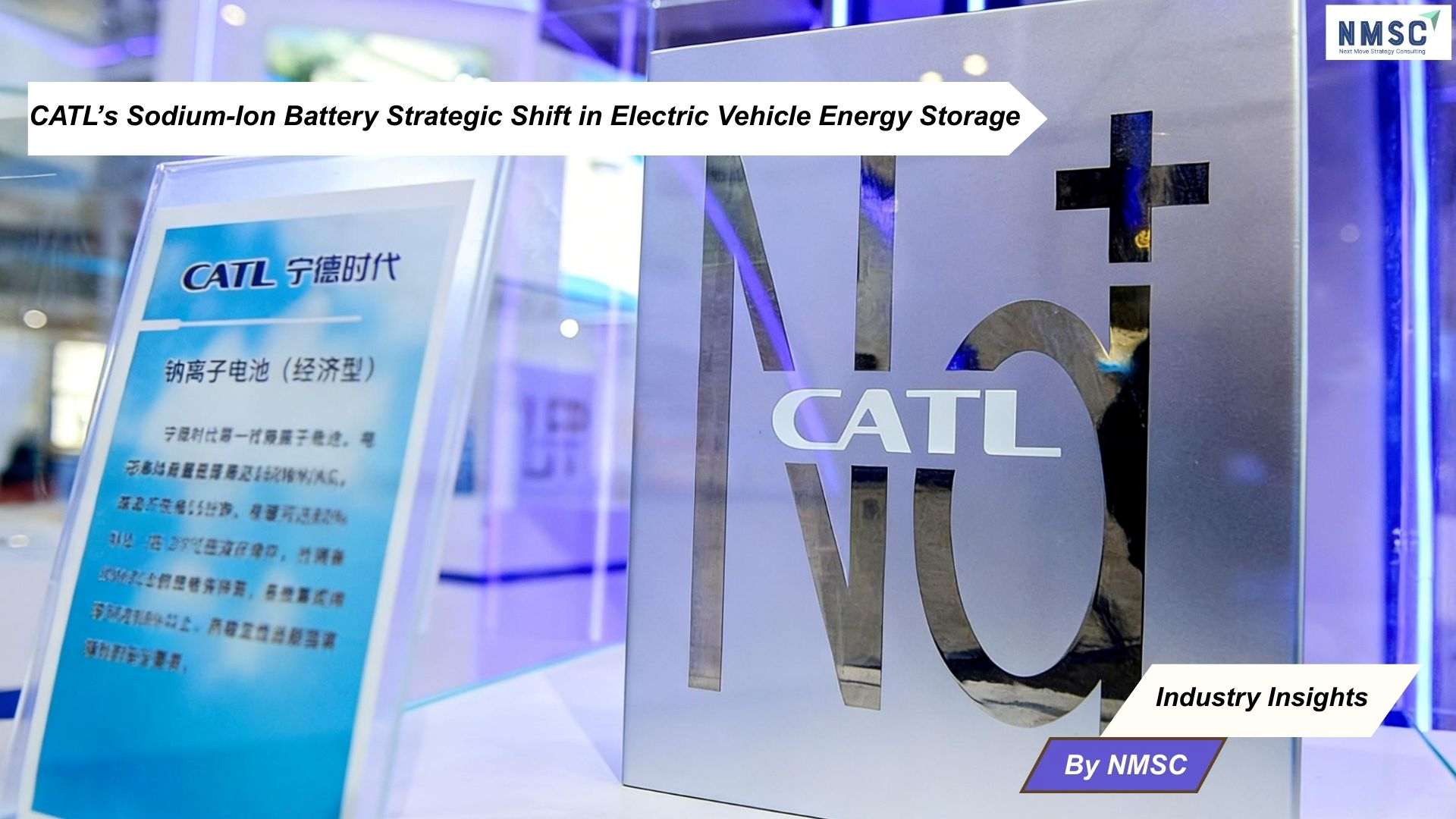
In a decisive move with profound implications for the global Electric Vehicle (EV) Battery Market, CATL has announced plans for the commercial-scale deployment of its sodium-ion battery technology in 2026. This strategic pivot away from lithium-centric chemistry represents a fundamental evolution for the industry, introducing a viable alternative designed to enhance supply chain resilience, improve cost structures, and expand performance parameters for mass-market electrification.
A Calculated Diversification from Conventional Battery Chemistry
For years, the EV industry has been largely dependent on lithium-based batteries, facing challenges related to resource volatility and cost. CATL — a global leader in battery manufacturing — is addressing this dynamic with its sodium-ion technology, set for real-world application in electric vehicles. This development marks a strategic expansion of the company's portfolio and a broadening of options for the automotive industry, under its stated "dual-star" policy of parallel development for sodium-ion and lithium-ion technologies.
“We are committed to advancing sodium-ion battery technology as part of our diversified technology roadmap,” a CATL representative stated. The company confirmed that several domestic OEMs will have models equipped with these batteries in 2026.
Key Attributes of the Initiative:
-
Commercial-Scale Deployment targeting the electric passenger vehicle segment starting in 2026.
-
Diversified Technology Portfolio under a "dual-star" policy advancing both sodium-ion and lithium-ion technologies in parallel.
-
Established OEM Partnerships with several domestic automakers already slated to adopt the technology.
-
Validated Performance & Safety, with cells achieving up to 175 Wh/kg specific energy, a 500 km driving range, and operation from -40°C to 70°C. The batteries have passed China's stringent GB 38031-2025 national safety standard.
Scalable and Integrated for Market Readiness
At its core, this initiative demonstrates a scalable approach to integrating new battery chemistries into existing manufacturing and vehicle architectures. By commercializing its sodium-ion brand, Naxtra, CATL aims to leverage the distinct advantages of the technology, such as lower cost, improved safety, and superior low-temperature performance, for the EV market.
As automotive electrification accelerates globally, CATL's commercial timeline provides a clear pathway for incorporating alternative energy storage. This move enables carmakers to diversify their battery sourcing strategies and mitigate supply chain risks associated with traditional materials.
Industry Response and Strategic Outlook
CATL's announcement is poised to influence industry planning, particularly for automakers focused on cost management and supply chain diversification. With the firm's established manufacturing scale and the significant price advantage sodium-ion cells held in 2025, the 2026 deployment date sets a tangible benchmark for the adoption of this technology in mainstream electric vehicles.
According to Next Move Strategy Consulting, CATL's move to commercialize sodium-ion batteries is a clear indicator of strategic market diversification. This will likely accelerate investment and research into alternative battery chemistries, shifting long-term industry focus toward a multi-technology landscape where supply chain security, cost, and specific performance advantages compete directly with energy density as primary development drivers.
Expanding the EV Battery Frontier
As the demand for electric vehicles continues to grow, CATL's scheduled commercial deployment of sodium-ion batteries signals a new phase in energy storage — one where material diversity and strategic supply chains become critical to sustainable growth.
With this plan, CATL reinforces its commitment to pioneering multiple technological pathways, providing the automotive industry with innovative solutions to navigate the evolving landscape of electric mobility.
Source: EV Engineering News
Prepared by: Next Move Strategy Consulting
About the Author
 Priyanka Dutta
— Priyanka Dutta is Senior Operations Executive at Next Move Strategy Consulting, where she has supported cross-vertical market operations for 3.5 years, covering digital workflows, website operations, and research support work. Her professional background includes coordinating website updates, managing back-end workflows, maintaining operational records, and supporting execution across all teams. She uses structured operational tracking and process coordination to keep content workflows accurate.
Priyanka Dutta
— Priyanka Dutta is Senior Operations Executive at Next Move Strategy Consulting, where she has supported cross-vertical market operations for 3.5 years, covering digital workflows, website operations, and research support work. Her professional background includes coordinating website updates, managing back-end workflows, maintaining operational records, and supporting execution across all teams. She uses structured operational tracking and process coordination to keep content workflows accurate.
About the Reviewer
 Sanyukta Deb
— Sanyukta Deb is Digital Marketing Team Lead at Next Move Strategy Consulting, where she has led content strategy and technical SEO for the firm's B2B market research publications for over 2 years. Her editorial process translates NextMSC's primary and secondary research — spanning technology, industrial, and consumer sectors — into commercial narratives, backed by search-intent, keyword, and competitive analysis. She brings 5 years of overall experience in digital marketing and content strategy.
Sanyukta Deb
— Sanyukta Deb is Digital Marketing Team Lead at Next Move Strategy Consulting, where she has led content strategy and technical SEO for the firm's B2B market research publications for over 2 years. Her editorial process translates NextMSC's primary and secondary research — spanning technology, industrial, and consumer sectors — into commercial narratives, backed by search-intent, keyword, and competitive analysis. She brings 5 years of overall experience in digital marketing and content strategy.

















Add Comment