NIO and Geely Forge EV Battery-Swapping Alliance
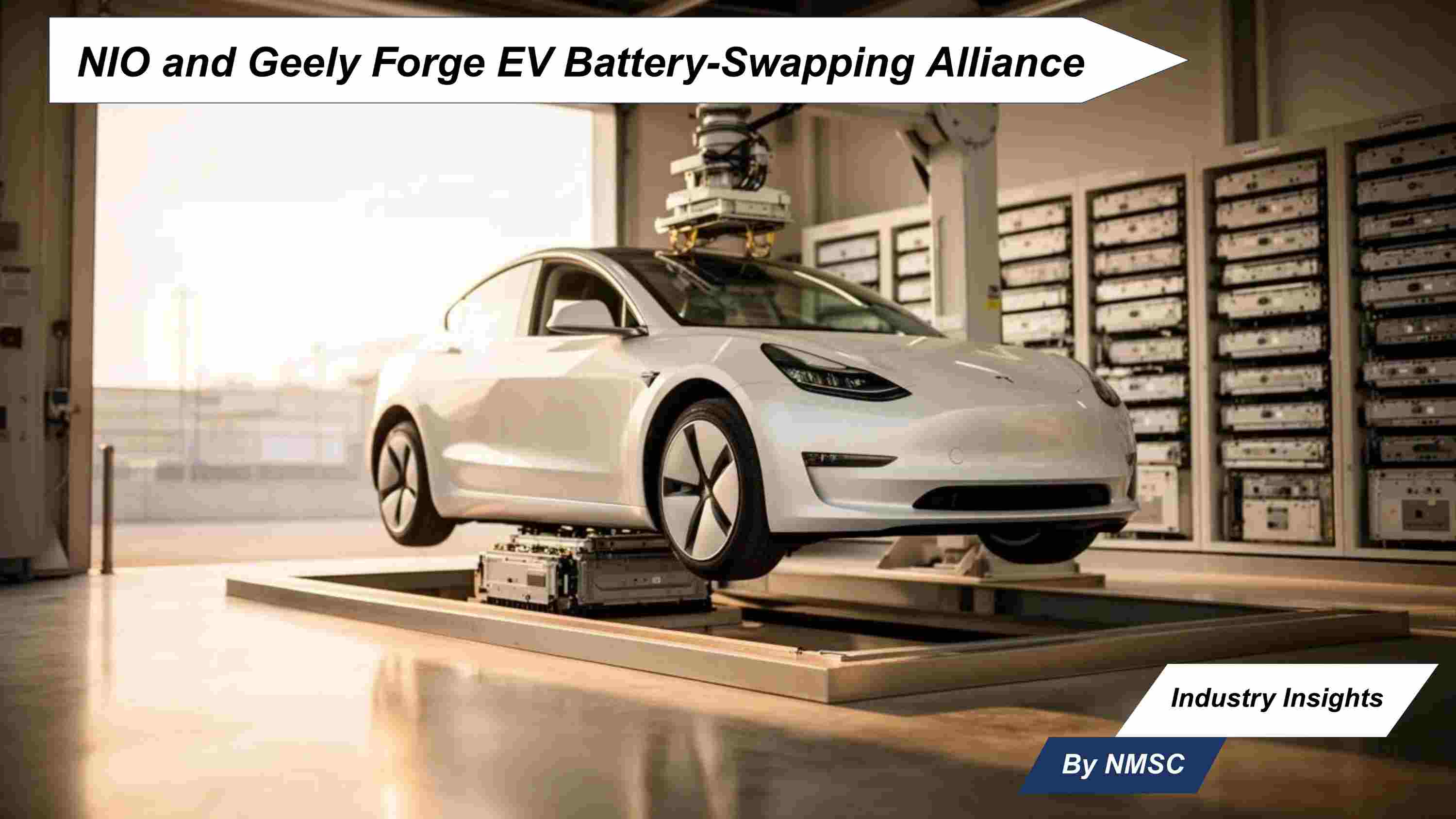
NIO and Geely Sign Battery-Swapping Deal, Valuing NIO Power at $2.38 Billion
BEIJING, China — September 28, 2026 — Chinese electric vehicle maker NIO has signed a landmark strategic agreement with Zhejiang Geely Holding Group to jointly expand their battery-swapping and charging infrastructure networks, marking one of the most significant cross-manufacturer collaborations in the electric vehicle market to date. The deal, announced Monday, signals a broader industry push to resolve charging anxiety one of the primary barriers to mass EV adoption through shared infrastructure and unified standards.
Under the terms of the agreement, Geely Holding Group will acquire a 30% stake in NIO Power NIO's dedicated battery-swapping and charging unit by contributing its 100% equity in battery-swapping subsidiary Yiyi Power, along with 640 million yuan (approximately $95 million) in cash. The transaction values NIO Power at approximately 16 billion yuan, equivalent to $2.38 billion.
As part of the cross-equity arrangement, NIO will simultaneously acquire a 10% stake in Geely's smart charging subsidiary, Haohan Energy. The two companies have also committed to co-developing unified battery-swapping standards and compatible vehicle models, a move that could set a new industry benchmark for interoperability across competing EV platforms. Shares in NIO rose 3.2% following the announcement, recovering from losses recorded in the two prior trading sessions.
The partnership arrives at a pivotal moment for China's EV sector, where manufacturers are engaged in an intensifying race over ultra-fast charging and battery-swap technology. NIO currently operates more than 4,000 battery-swap stations capable of completing a full battery replacement in approximately three minutes, while Geely Auto unveiled a 4-minute charging technology just last week. Their mutual rival BYD has simultaneously been constructing tens of thousands of flash-charging stations across the country. According to Next Move Strategy Consulting, the global electric vehicle market is projected to reach USD 1,869.9 billion by 2030, expanding at a compound annual growth rate of 24.4% from 2022 to 2030, underscoring the enormous commercial stakes driving this infrastructure competition.
Key Highlights:
-
Cross-equity structure: Geely acquires a 30% stake in NIO Power (valued at ~$2.38 billion); NIO acquires a 10% stake in Geely's Haohan Energy smart charging subsidiary.
-
Unified standards development: Both companies will co-develop common battery-swapping protocols and compatible vehicle models, potentially opening the framework to other industry participants.
-
Aggressive network expansion targets: NIO Power aims to operate 10,000 battery-swap stations by 2030, with annual electricity demand projected to exceed 10 billion kWh; Geely plans to expand its charging network to over 22,000 stations by end of 2027.
-
Open-industry model: NIO CEO William Li stated the collaboration is open to broader industry participation, inviting other EV manufacturers to join the shared infrastructure framework.
Analyst Insight:
According to analysts at Next Move Strategy Consulting, the NIO-Geely partnership represents a structural shift in how Chinese EV manufacturers are approaching the charging infrastructure challenge moving from proprietary, siloed networks toward open, interoperable ecosystems. NMSC analysts note that the cross-equity model adopted in this deal is particularly significant, as it aligns the financial incentives of both parties around network density and utilization, rather than competitive exclusivity. This approach, if replicated across the industry, could materially accelerate EV adoption by reducing the per-unit cost of charging infrastructure deployment and improving coverage in underserved regions factors that remain critical to sustaining the market's projected long-term growth trajectory.
Industry Outlook:
The NIO-Geely agreement is likely to intensify competitive pressure on other EV manufacturers and charging network operators to either join the emerging open-infrastructure coalition or accelerate their own proprietary buildouts. With BYD aggressively expanding its flash-charging footprint and European truckmakers facing cost-competitiveness challenges from Chinese rivals, the global EV charging landscape is entering a period of rapid consolidation and standardization. For the broader electric vehicle market, the establishment of unified swapping standards could prove as consequential as the vehicle technology itself reducing consumer hesitation, lowering total cost of ownership, and enabling faster fleet electrification across passenger and commercial segments. The trajectory of this partnership, and whether additional manufacturers elect to join, will be a key indicator of how quickly China's EV infrastructure matures into a truly interoperable national grid.
Source: Reuters
For More Information: Download FREE Sample on Electric Vehicle Market Report
Prepared By: Sanyukta Deb
About the Author
 Sanyukta Deb
— Sanyukta Deb is Digital Marketing Team Lead at Next Move Strategy Consulting, where she has led content strategy and technical SEO for the firm's B2B market research publications for over 2 years. Her editorial process translates NextMSC's primary and secondary research — spanning technology, industrial, and consumer sectors — into commercial narratives, backed by search-intent, keyword, and competitive analysis. She brings 5 years of overall experience in digital marketing and content strategy.
Sanyukta Deb
— Sanyukta Deb is Digital Marketing Team Lead at Next Move Strategy Consulting, where she has led content strategy and technical SEO for the firm's B2B market research publications for over 2 years. Her editorial process translates NextMSC's primary and secondary research — spanning technology, industrial, and consumer sectors — into commercial narratives, backed by search-intent, keyword, and competitive analysis. She brings 5 years of overall experience in digital marketing and content strategy.
About the Reviewer
 Debashree Dey
— Debashree Dey is Assistant Manager at Next Move Strategy Consulting, where she supports cross-vertical market content and communications across diverse industries for 6 years. Her professional background includes senior content writing, communications, and published manuscript authorship, with experience developing audience-focused business narratives and maintaining clear, consistent messaging. Her role supports research-led content development and editorial quality across NextMSC publications.
Debashree Dey
— Debashree Dey is Assistant Manager at Next Move Strategy Consulting, where she supports cross-vertical market content and communications across diverse industries for 6 years. Her professional background includes senior content writing, communications, and published manuscript authorship, with experience developing audience-focused business narratives and maintaining clear, consistent messaging. Her role supports research-led content development and editorial quality across NextMSC publications.
















Add Comment