Is Asia-Pacific the Fastest-Growing Region for Oral Sleep Apnea Devices?
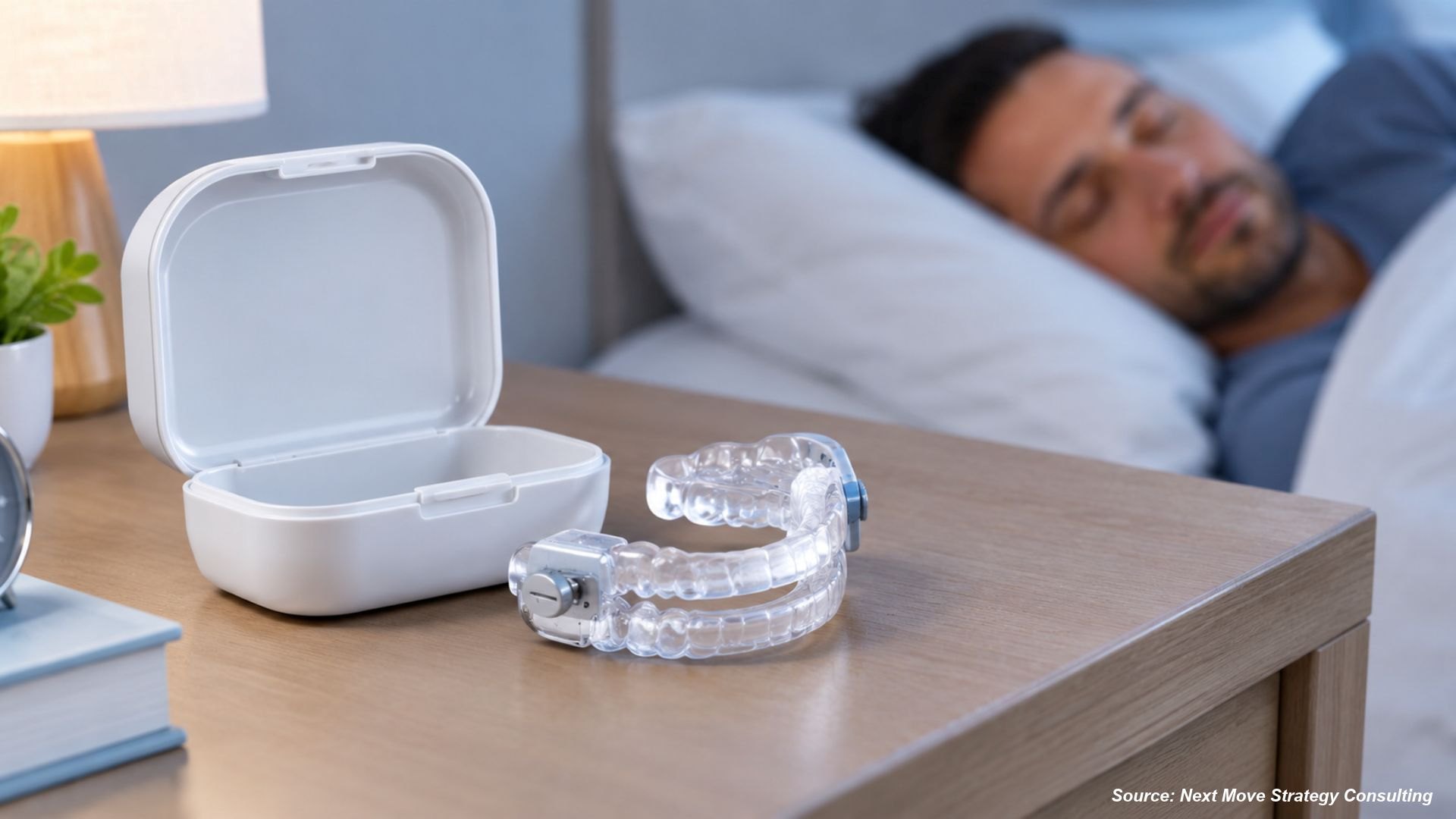
SomnoMed's FY26 accounts show North America adding sales while Asia Pacific slipped 3%, even as China and India hold the largest documented untreated populations
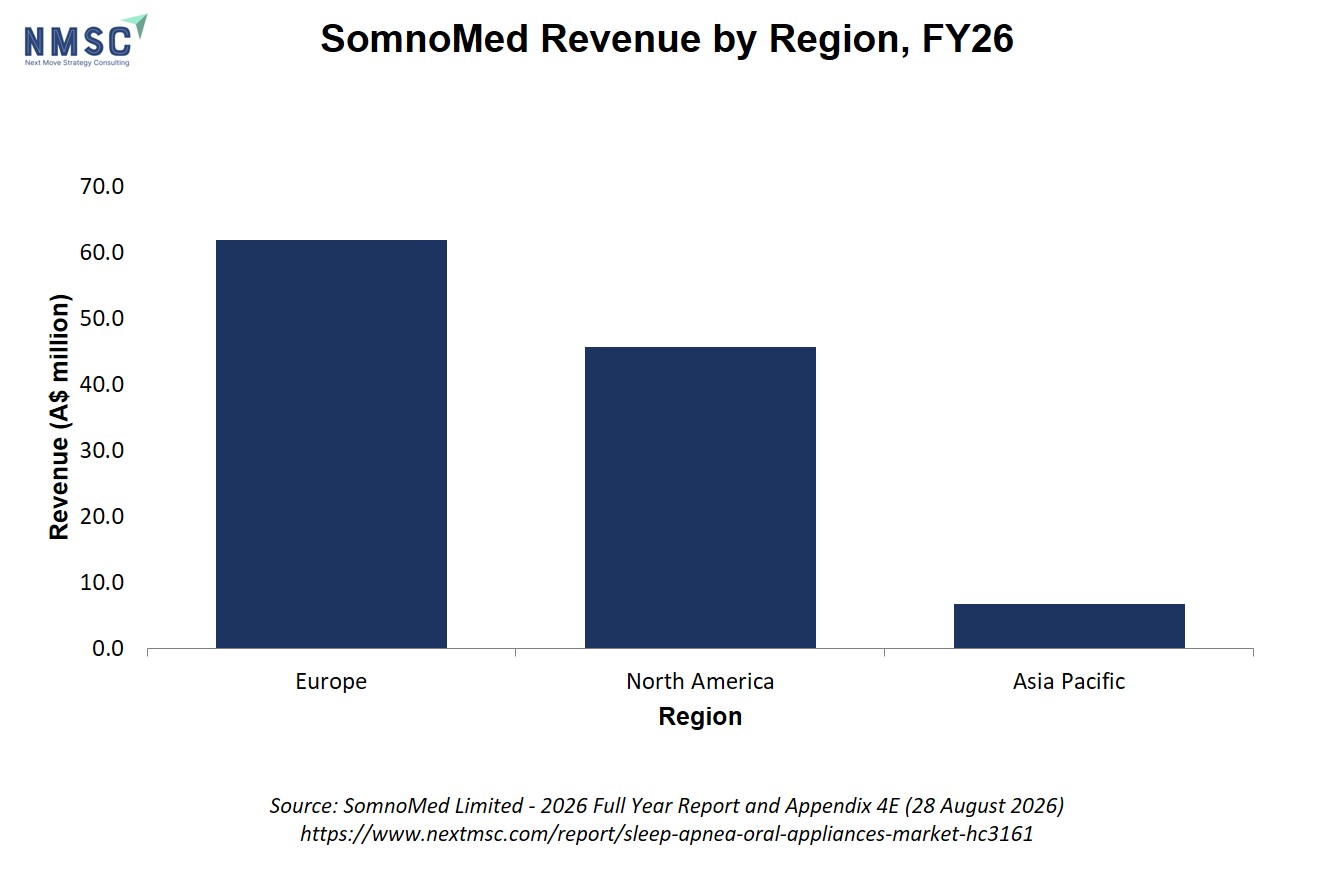
On 28 August 2026, SomnoMed Limited, the ASX-listed maker of custom-fitted oral devices for obstructive sleep apnea, published its 2026 Full Year Report and Appendix 4E for the year ended 30 June 2026. Group revenue rose 2.7% to A$114.5 million from A$111.5 million. North America, at A$45.8 million, grew 6% as reported and 11% in constant currency, and the company identifies it as the primary growth driver. Asia Pacific revenue was A$6.8 million, down 3%, which SomnoMed attributes to cost-of-living pressure on patient demand in non-reimbursed markets.
According to Next Move Strategy Consulting's Sleep Apnea Oral Appliances Market report, the global sleep apnea oral appliances market was valued at USD 728.03 million in 2024 and is projected to reach USD 1,855.08 million by 2030, growing at a CAGR of 16.9%. NextMSC primary research and analysis identifies North America as the dominant region through the forecast period and describes Asia-Pacific as expanding steadily. That leaves open the question this article tests: whether Asia-Pacific is already the fastest-growing region, or whether that status is still a projection.
For More Information: Download FREE Sample on Sleep Apnea Oral Appliances Market Report
What SomnoMed's Regional Accounts Show
The regional split in the filing runs against the common assertion that Asia-Pacific is already the fastest-growing region for oral sleep apnea devices. Europe remains SomnoMed's largest region at A$61.9 million, up 1% as reported and down 1% in constant currency. North America is the only region where growth appears in both reported and constant-currency terms. Asia Pacific, the company's first commercial region, contributed A$6.8 million, or 5.9% of group revenue (NextMSC calculation from the company's published figures).
SomnoMed Revenue by Region, Year Ended 30 June 2026
|
Region |
FY26 revenue (A$ million) |
Reported growth |
Constant-currency growth |
|
Europe |
61.9 |
+1% |
-1% |
|
North America |
45.8 |
+6% |
+11% |
|
Asia Pacific |
6.8 |
-3% |
Not stated |
|
Group |
114.5 |
+2.7% |
Not stated |
Where the Untreated Patients Are
The case for Asia-Pacific rests on epidemiology. A meta-analysis published in Nature and Science of Sleep on 9 May 2025 by Yuqi Niu and colleagues at the First Affiliated Hospital of China Medical University pooled 62 studies covering 178,049 participants and put obstructive sleep apnea prevalence in China at 11.8% (95% confidence interval 10.1% to 13.4%). Prevalence rose from 8.1% in 2000 to 2005 to 26.9% in 2021 to 2024. The authors report very high heterogeneity across studies (I² of 99.7%), so the figures indicate direction more than a precise national rate. The same paper cites the 2019 literature-based analysis by Benjafield and colleagues in The Lancet Respiratory Medicine, which estimated 936 million adults aged 30 to 69 with obstructive sleep apnea worldwide, 425 million of them with moderate-to-severe disease, and the highest prevalence in China, followed by the United States, Brazil and India.
India adds to the pool. A systematic review and meta-analysis by researchers at the All India Institute of Medical Sciences, published in Sleep Medicine Reviews and reported by DT Next on 8 October 2023, estimated about 104 million working-age Indians with obstructive sleep apnea, about 47 million of them with moderate-to-severe disease. The team was led by Dr Anant Mohan, professor and head of the pulmonology department at AIIMS.
A large patient pool converts into device revenue only through diagnosis, a clinician able to fit the device and a payer. The American Academy of Dental Sleep Medicine reported that oral appliances remain under the Medicare durable medical equipment benefit for calendar year 2026, which keeps an established billing route in place in the region NextMSC identifies as dominant. SomnoMed's Asia Pacific result shows the opposite case: where that route is absent, demand follows household budgets.
Regional Evidence: Patient Pool Versus Realised Revenue
|
Region |
Patient-pool and market-position evidence |
Revenue and payment evidence |
|
North America |
NextMSC identifies North America as the dominant region through the forecast period |
SomnoMed revenue A$45.8 million, +6% (+11% constant currency); oral appliances stay under the Medicare DME benefit for 2026 |
|
Europe |
No regional prevalence figure cited in this article |
SomnoMed revenue A$61.9 million, +1% reported, -1% constant currency |
|
Asia-Pacific |
China pooled prevalence 11.8% (Niu et al., 2025); about 104 million working-age Indians with OSA (AIIMS, 2023) |
SomnoMed revenue A$6.8 million, -3%; decline attributed to non-reimbursed markets |
Key Industry Developments: Clearances and Remote Monitoring
In the same 28 August 2026 report, SomnoMed stated that it had commenced the global controlled market release of Virtus, its new oral appliance, and that Virtus received FDA clearance in June 2026, with its Pricing, Data Analysis and Coding application submitted and approval awaited. The filing therefore records a cleared device whose United States coding status was still pending at the reporting date.
On 27 October 2025, Good Sleep Co announced FDA 510(k) clearance for the Hushd Pro Z-Link, a custom mandibular advancement device intended to reduce or alleviate snoring and mild-to-moderate obstructive sleep apnea in adults, according to the American Academy of Sleep Medicine's report of 11 November 2025. A modular advancement system lets dentists adjust jaw position with millimeter precision, and Good Sleep Co distributes the device across the United States through licensed dental sleep medicine professionals.
A review published in Cureus on 8 September 2026 by Joanna Guzman and colleagues examined mandibular advancement devices with remote monitoring. It noted that conventional follow-up relies on intermittent visits and self-reported adherence, while emerging smart devices can track sleep duration, sleep position and respiratory events. NextMSC primary research and analysis identifies telehealth integration, including remote monitoring, as the principal opportunity in this market.
Growth Drivers and Restraints
Sleep Apnea Oral Appliances Market: Growth Catalyst and Risk Matrix
|
Factor |
Type |
Basis |
|
Rising prevalence of obstructive sleep apnea and wider awareness |
Driver |
NextMSC primary research and analysis |
|
Technological advances in oral appliances, including digitally designed and 3D-printed devices |
Driver |
NextMSC primary research and analysis |
|
Ongoing clinical research supporting oral appliance efficacy |
Driver |
NextMSC primary research and analysis |
|
Regional variation in regulatory approval: FDA 510(k) in the U.S., CE marking under the European Medical Device Regulation, Health Canada licensing |
Restraint |
NextMSC primary research and analysis |
|
Out-of-pocket payment in non-reimbursed markets |
Restraint |
SomnoMed FY26 report (28 August 2026) |
|
Telehealth integration, including e-consultation and remote patient monitoring |
Opportunity |
NextMSC primary research and analysis |
NMSC Strategic Perspective: Reading the Regional Ranking Correctly
NextMSC primary research and analysis frames regional leadership in this market as a conversion problem rather than a population problem. Three steps separate an untreated patient from a device sale: a diagnosis, a clinician able to fit and adjust a custom appliance, and a payer or a patient willing to fund it. North America, which NextMSC identifies as the dominant region through 2030, has all three in place, supported by the Medicare benefit the American Academy of Dental Sleep Medicine confirmed for 2026. Asia-Pacific holds the largest documented pool in the sources cited above but, on the evidence in SomnoMed's FY26 accounts, converts it through out-of-pocket channels that tighten when household budgets do.
NextMSC's projection of a 16.9% CAGR, from USD 728.03 million in 2024 to USD 1,855.08 million in 2030, implies the market reaches 2.55 times its 2024 value. Delivering that value does not require Asia-Pacific to lead; it requires the three conversion steps to improve somewhere at scale. NextMSC's reading is that North American reimbursement keeps revenue concentrated in the near term, while Asia-Pacific growth is set by diagnosis rates, clinician capacity and the first payer decisions in its large markets.
The test for the title question is therefore observable. An Asia-Pacific market that adds a payer pathway for oral appliances, or a fitting-and-monitoring model that lowers the clinical cost per patient, would be the first credible candidate for fastest-growing region. Until revenue data from a named, independent source shows that, the claim remains a projection about patient numbers rather than a measurement of sales.
Competitive Landscape
NextMSC's report profiles 15 companies and names SomnoMed, ResMed, Whole You, ProSomnus Holding, Oventus Medical, Panthera Dental, Airway Management, DynaFlex, Dentsply Sirona and Myerson among the key players. The two cleared-device events above, SomnoMed's Virtus and Good Sleep Co's Hushd Pro Z-Link, show competition moving toward adjustable, digitally designed devices cleared by the FDA. ResMed Inc.'s Form 10-K for the fiscal year ended 30 June 2026 describes mandibular advancement devices as an increasingly used second-line option for patients who cannot use CPAP or who have mild obstructive sleep apnea, which positions oral appliances behind CPAP in the treatment sequence.
Bottom Line
The title question has a data-backed answer only in part. Asia-Pacific holds a very large untreated population, with China's pooled prevalence at 11.8% and about 104 million working-age Indians affected, but the revenue evidence points the other way: SomnoMed's Asia Pacific sales fell 3% to A$6.8 million in the year to 30 June 2026 while North America rose 6%, or 11% in constant currency. The difference is payment. Oral appliances stay under the Medicare durable medical equipment benefit in the United States, whereas SomnoMed ties its Asia Pacific decline to non-reimbursed markets. NextMSC projects the global market to grow from USD 728.03 million in 2024 to USD 1,855.08 million by 2030 at a 16.9% CAGR. Manufacturers and investors tracking the market should treat Asia-Pacific as the largest option on that growth, not yet the largest source of it, and watch for the first payer pathway, remote-monitoring model or clearance that converts patients into sales.
About Next Move Strategy Consulting
Next Move Strategy Consulting is a premier market research and management consulting firm that has been committed to provide strategically analysed well documented latest research reports to its clients. The research industry is flooded with many firms to choose from, what makes NMSC different from the rest is its top-quality research and the obsession of turning data into knowledge by dissecting every bit of it and providing fact-based research recommendation that is supported by information collected from over 500 million websites, paid databases, industry journals and one on one consultations with industry experts across a diverse range of industry sectors. The high-quality customized research reports with actionable insights and excellent end-to-end customer service help our clients to take critical business decisions that enables them to move beyond time and have competitive edge in the industry.
We have been servicing over 1000 customers globally that includes 90% of the Fortune 500 companies over a decade. Our analysts are constantly tracking various high growth markets and identifying hidden opportunities in each sector or the industry. We provide one of the industry’s best quality syndicate as well as custom research reports across 10 different industry verticals. We are committed to deliver high quality research solutions in accordance to your business needs. Our industry standard delivery solutions that ranges from the pre consultation to after-sales services, provide an excellent client experience and ensure right strategic decision making for businesses.
For more information, please contact:
Next Move Strategy Consulting
5th Floor 867 Boylston St, STE 500,
Boston, MA 02116, U.S.
E-Mail: [email protected]
Direct: +1-217-650-7991
Website: www.nextmsc.com
About the Author
 Sanyukta Deb
— Sanyukta Deb is Digital Marketing Team Lead at Next Move Strategy Consulting, where she has led content strategy and technical SEO for the firm's B2B market research publications for over 2 years. Her editorial process translates NextMSC's primary and secondary research — spanning technology, industrial, and consumer sectors — into commercial narratives, backed by search-intent, keyword, and competitive analysis. She brings 5 years of overall experience in digital marketing and content strategy.
About the Reviewer
 Debashree Dey
— Debashree Dey is Assistant Manager at Next Move Strategy Consulting, where she supports cross-vertical market content and communications across diverse industries for 6 years. Her professional background includes senior content writing, communications, and published manuscript authorship, with experience developing audience-focused business narratives and maintaining clear, consistent messaging. Her role supports research-led content development and editorial quality across NextMSC publications.















Add Comment