Cornell Students' Electric Weed-Killing Robot Wins Top Prize
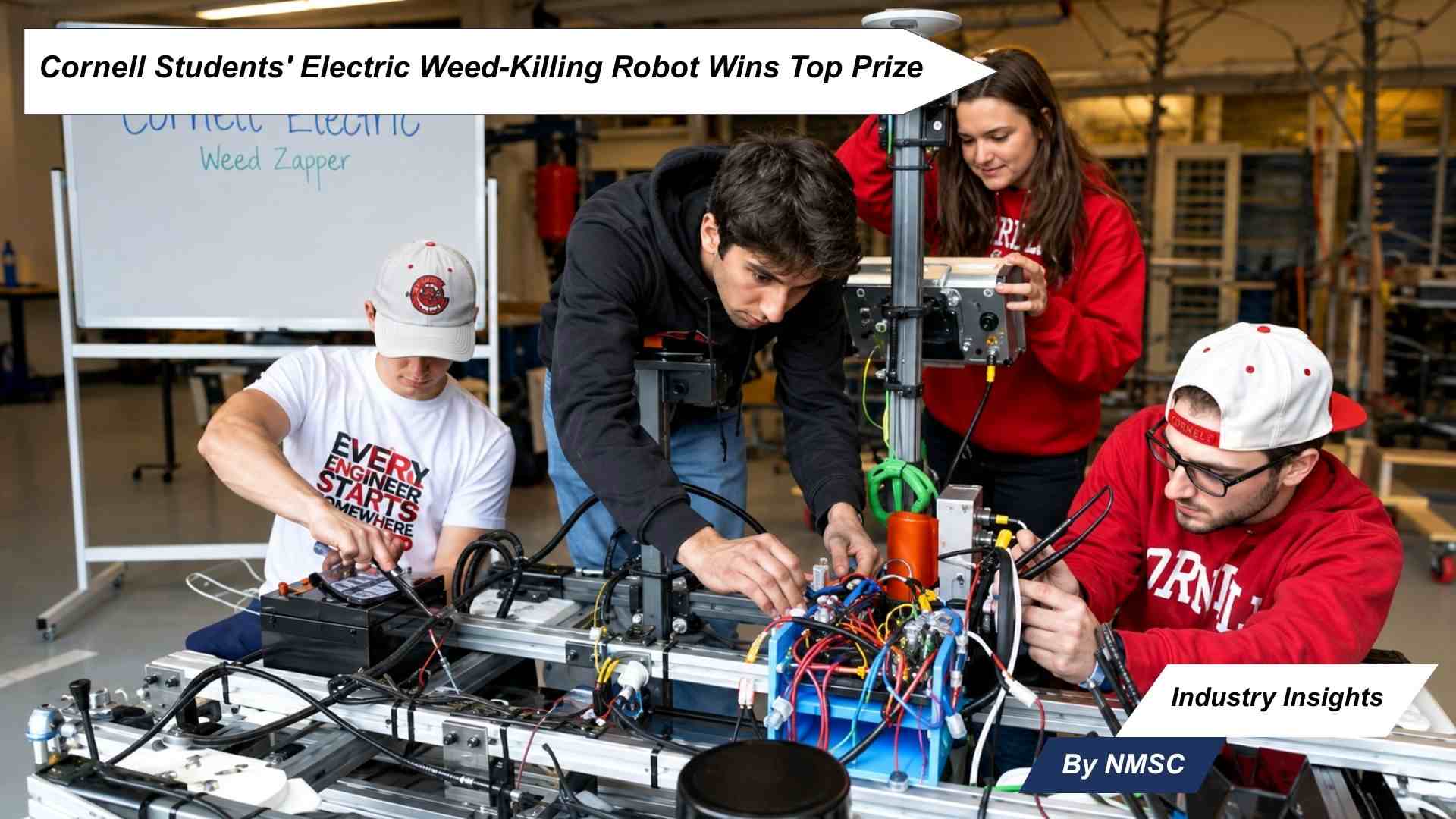
Cornell Undergrads' Autonomous Electric Weed-Killing Robot Wins Top Farm Robotics Prize, Launches Startup
ITHACA, United States — June 26, 2026 — A team of Cornell University undergraduates has won the grand prize at The Farm Robotics Challenge with an autonomous robot that eliminates weeds using electricity, beating out 95 competing teams and forming a new agricultural technology startup, Rootline Robotics. The development underscores accelerating innovation in herbicide-free, labor-saving automation within the global agricultural robots market.
Main Development:
The robot travels autonomously through vineyards and orchards without a human operator, applying a small amount of electricity to weeds to save labor and energy and prevent crop loss, all without herbicides.
Led by Andrew James, an agricultural sciences major in the College of Agriculture and Life Sciences, the team developed a low-energy system and built a working prototype over four months. The team is using the $50,000 grand prize to form Rootline Robotics, which will be hosted at sponsor Reservoir's incubator in Sonoma, California.
According to the team, existing electric weeders require an operator, consume significant energy and cost approximately $150,000 on average, placing them out of reach for most growers.
Key Highlights:
-
A Cornell undergraduate team defeated 95 other teams to win The Farm Robotics Challenge grand prize.
-
The autonomous robot zaps weeds with electricity, eliminating the need for chemical herbicides.
-
The $50,000 prize, sponsored by Reservoir, is funding the launch of startup Rootline Robotics in Sonoma, California.
-
The team aims to validate the technology with growers before bringing it to market.
Analyst Insight:
NMSC analysts note that herbicide-free, autonomous weeding solutions address two of the most persistent constraints in specialty crop farming—labor intensity and rising regulatory pressure on chemical inputs. The emergence of lower-cost electric weeding platforms from academic incubators signals broadening competition and faster commercialization cycles across the agricultural robotics landscape.
Industry Outlook:
As orchards and vineyards face mounting labor shortages and sustainability mandates, demand for autonomous, chemical-free weed management systems is expected to expand. Continued collaboration between universities, agricultural technology firms and growers is likely to shorten the path from prototype to field deployment.
(Market value note: A specific market size figure could not be verified directly from the provided NMSC Industry URL during research and has therefore been omitted pending editorial confirmation.)
Source: Cornell Chronicle
Prepared By: Sanyukta Deb
For More Information – Download FREE Sample on Agriculture Robots Market Report
About the Author
 Sanyukta Deb
— Sanyukta Deb is Digital Marketing Team Lead at Next Move Strategy Consulting, where she has led content strategy and technical SEO for the firm's B2B market research publications for over 2 years. Her editorial process translates NextMSC's primary and secondary research — spanning technology, industrial, and consumer sectors — into commercial narratives, backed by search-intent, keyword, and competitive analysis. She brings 5 years of overall experience in digital marketing and content strategy.
Sanyukta Deb
— Sanyukta Deb is Digital Marketing Team Lead at Next Move Strategy Consulting, where she has led content strategy and technical SEO for the firm's B2B market research publications for over 2 years. Her editorial process translates NextMSC's primary and secondary research — spanning technology, industrial, and consumer sectors — into commercial narratives, backed by search-intent, keyword, and competitive analysis. She brings 5 years of overall experience in digital marketing and content strategy.
About the Reviewer
 Debashree Dey
— Debashree Dey is Assistant Manager at Next Move Strategy Consulting, where she supports cross-vertical market content and communications across diverse industries for 6 years. Her professional background includes senior content writing, communications, and published manuscript authorship, with experience developing audience-focused business narratives and maintaining clear, consistent messaging. Her role supports research-led content development and editorial quality across NextMSC publications.
Debashree Dey
— Debashree Dey is Assistant Manager at Next Move Strategy Consulting, where she supports cross-vertical market content and communications across diverse industries for 6 years. Her professional background includes senior content writing, communications, and published manuscript authorship, with experience developing audience-focused business narratives and maintaining clear, consistent messaging. Her role supports research-led content development and editorial quality across NextMSC publications.

















Add Comment