Danaher's $9.9B Masimo Deal Reshapes the Care Diagnostics Market | NextMSC

Danaher's $9.9B Masimo Acquisition and Siemens Healthineers' Diagnostics Carve-Out Signal a Structural Realignment in Global Care Diagnostics
In one of the most consequential consolidation moves in the diagnostics sector this year, Danaher Corporation (NYSE: DHR) announced on February 17, 2026, a definitive agreement to acquire Masimo Corporation (NASDAQ: MASI) — a leading specialty diagnostics provider of pulse oximetry and patient monitoring solutions — for $180 per share in cash, representing a total enterprise value of approximately $9.9 billion. The deal, which closed earlier than anticipated in Q2 2026, immediately expanded Danaher's acute-care diagnostics footprint by adding AI-enabled continuous monitoring capabilities to a portfolio that already includes Beckman Coulter Diagnostics, Cepheid, Leica Biosystems, and Radiometer. This transaction, alongside a parallel restructuring at Siemens Healthineers and a landmark FDA authorization for Abbott's first dual-analyte wearable diagnostic device, marks a period of accelerating structural change across the global care diagnostics landscape.
According to Next Move Strategy Consulting's Care Diagnostics Market report, the global care diagnostics market is projected to reach USD 84.3 billion by 2030, growing at a CAGR of 8.7% from 2024 to 2030. NMSC's proprietary research and analysis identifies the convergence of chronic disease burden, aging demographics, and AI-integrated diagnostic hardware as the three structural forces compressing the timeline between disease onset and clinical diagnosis — a compression that is directly expanding the addressable market for both point-of-care and laboratory-based diagnostic systems.
For More Information: Download FREE Sample on Care Diagnostics Market Report
Danaher-Masimo: Acute-Care Diagnostics Gains an AI-Enabled Monitoring Layer
The strategic logic of Danaher's Masimo acquisition is rooted in a specific clinical gap: the absence of continuous, real-time physiological monitoring within the diagnostics workflow for patients in acute care settings. Masimo's pulse oximetry platform and AI-enabled sensor technology address precisely that gap, enabling clinicians to receive continuous data streams rather than episodic test results.
"We are excited to welcome the Masimo team to Danaher. We've followed this innovative company for many years and see it as an exceptional strategic fit for Danaher. Masimo is a leader in pulse oximetry and other patient monitoring solutions, which combined with its trusted brand and differentiated technology, will greatly strengthen our diagnostics franchise," said Rainer M. Blair, President and Chief Executive Officer, Danaher Corporation, in the company's official announcement on February 17, 2026.
Julie Sawyer Montgomery, Executive Vice President for Diagnostics, Danaher, added: "Masimo's advanced sensor technology and AI-enabled monitoring bring powerful new capabilities to our diagnostics portfolio. Integrating these strengths into Danaher will create meaningful opportunities to innovate for clinicians and improve decision making in critical settings."
Danaher projects Masimo will generate EBITDA of more than $530 million in 2027 under its ownership, with more than $125 million in annual cost synergies and more than $50 million in annual revenue synergies expected by the fifth full year following completion. The transaction is valued at approximately 18x estimated 2027 EBITDA, or 15x including the full benefit of expected synergies.
Siemens Healthineers: Diagnostics Division Faces Structural Headwinds, Carve-Out Planned
While Danaher is consolidating its diagnostics position, Siemens Healthineers is moving in the opposite direction. On July 31, 2026, Reuters reported that the German medical technology firm cut its 2026 revenue growth forecast to a range of 3.5% to 4%, down from a prior guidance of 5% to 6%, citing weakness in its diagnostics business.
Diagnostics revenue fell 5.5% in the company's fiscal third quarter, with Jochen Schmitz, Chief Financial Officer, Siemens Healthineers, stating that the division would likely decline by a mid-single-digit percentage in the fourth quarter as well. Two specific mechanisms drove the shortfall: China's volume-based procurement programme, which has systematically depressed reimbursement rates and sales volumes in the country's diagnostics market; and the temporary revenue loss associated with migrating customers to an updated laboratory testing platform, as legacy platforms are withdrawn from the market.
Schmitz confirmed that the planned carve-out of the diagnostics segment would take approximately two years, a timeline that signals a fundamental reassessment of the diagnostics business within the broader Siemens Healthineers portfolio. Despite the diagnostics headwinds, the company's adjusted operating profit margin improved to 19.1% from 16.8% a year earlier, and quarterly revenue reached €5.76 billion ($6.63 billion).
Abbott's Libre Duo 10 Day: FDA Authorizes the World's First Dual Glucose-Ketone Wearable
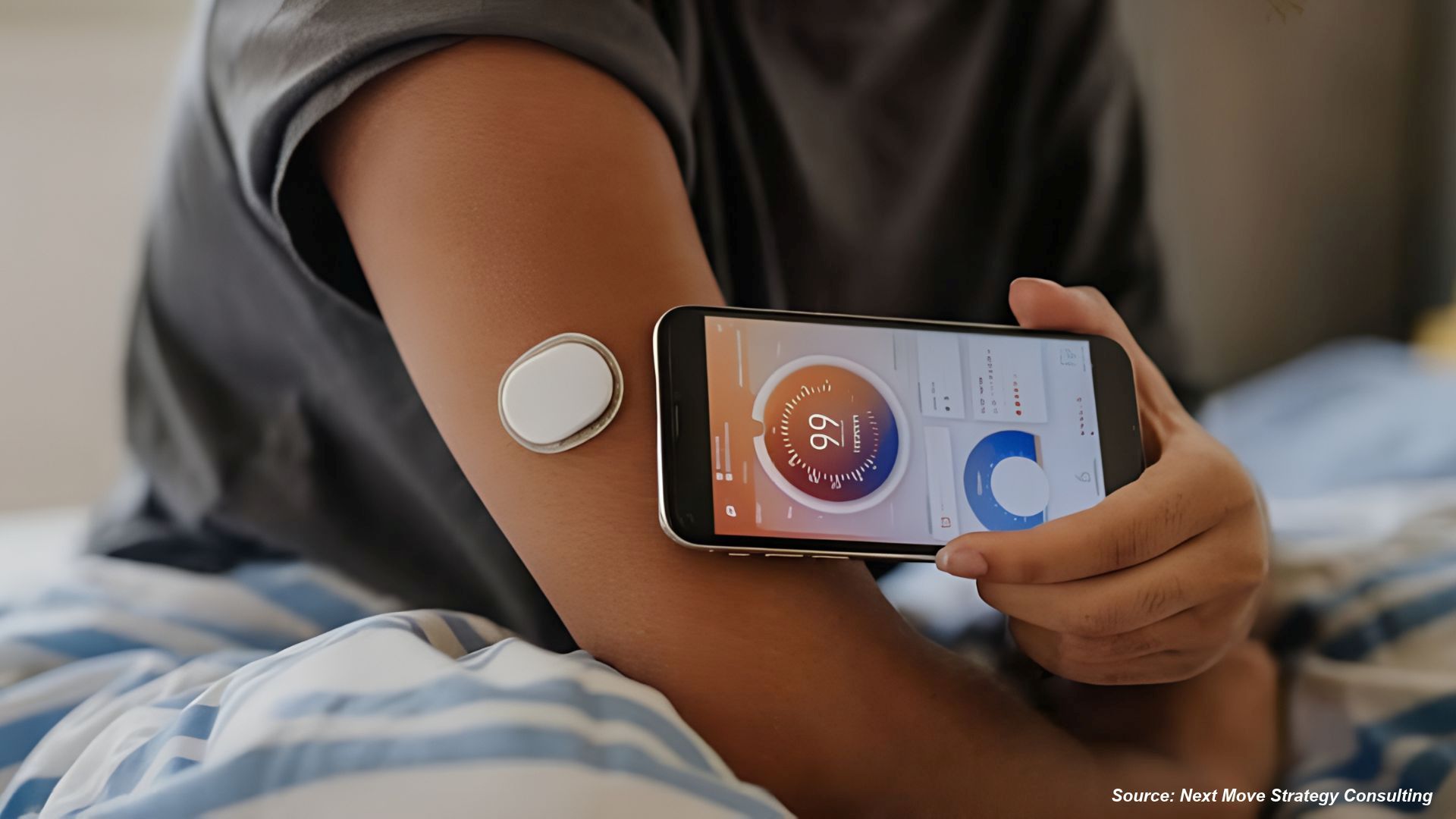
On August 25, 2026, the U.S. Food and Drug Administration authorized the Libre Duo 10 Day Continuous Dual Glucose Ketone Monitoring System — developed by Abbott Diabetes Care — for people aged 2 years and older living with diabetes. The device is the first in the world to continuously monitor both ketone and blood sugar levels simultaneously in a single wearable, transmitting readings wirelessly to a compatible smartphone every minute, day and night.
The clinical significance is substantial. According to the U.S. Centers for Disease Control and Prevention, an estimated 40.1 million Americans are living with diabetes, of whom approximately 2.1 million have type 1 diabetes — a population for whom undetected ketone elevation can rapidly progress to diabetic ketoacidosis (DKA), a life-threatening emergency.
"Today's authorization is a breakthrough for the safety of children and adults living with diabetes. Knowing that ketone levels are rising, and having that information in real time, around the clock, can be the difference between early intervention and a life-threatening emergency," said Michelle Tarver, M.D., Ph.D., Director of the FDA's Center for Devices and Radiological Health, in the FDA's official press announcement on August 25, 2026.
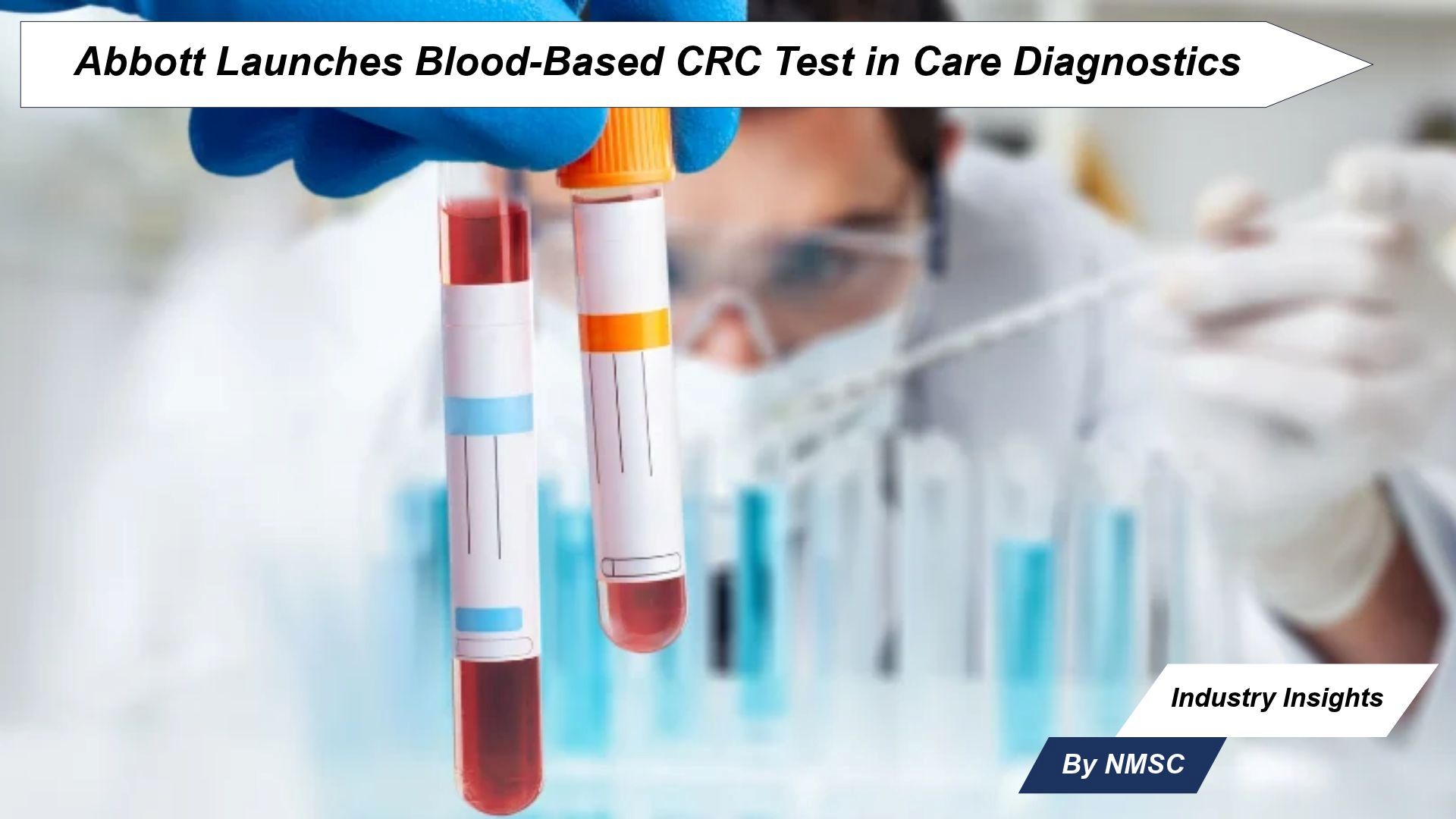
The authorization was granted through the FDA's De Novo premarket review pathway, following a clinical program spanning six studies with more than 600 participants. The FDA had previously granted Breakthrough Device designation to the Libre Duo 10 Day, reflecting the device's potential to address a life-threatening condition. Separately, Abbott launched its SimpleScreen CRC blood test in September 2026, expanding its colorectal cancer screening portfolio and reinforcing the company's strategy of building a multi-disease, blood-based diagnostics platform.
G7 Global One Health Diagnostics Access Compact: A Policy Catalyst for Emerging Markets
At the G7 One Health Summit held from April 5–7, 2026, in Lyon, France, more than 20 international partners unveiled the Global One Health Diagnostics Access Compact — a multilateral framework designed to expand access to affordable, high-quality diagnostics across human, animal, and environmental health systems.
The Compact's four priority areas — expanding geographic access to diagnostics, strengthening antibiotic stewardship, increasing R&D investment for low-resource settings, and improving how diagnostics are valued within health financing frameworks — directly address the structural barriers that have historically constrained diagnostics adoption in Asia-Pacific, Latin America, and Sub-Saharan Africa.
Major funding commitments accompanied the launch: the European Commission pledged €700 million ($818 million) to the Global Fund to Fight AIDS, Tuberculosis and Malaria; the World Bank announced $750 million for One Health programmes; and Gavi signalled up to $200 million to support African vaccine manufacturing.
The WHO's concurrent guidance on tuberculosis diagnostics — issued on March 24, 2026 — reinforced the policy momentum, recommending portable near-patient diagnostic tools capable of delivering results within one hour. Dr. Tereza Kasaeva, Director of WHO's Department for HIV, Tuberculosis, Hepatitis and Sexually Transmitted Infections, framed the economic case directly: "Investing in TB is a strategic political and economic choice, generating up to $43 in health and economic returns for every dollar spent."
Chronic Disease Burden and Aging Demographics: The Structural Demand Drivers
The demand trajectory for care diagnostics is anchored in two converging demographic realities. The World Health Organization projects that by 2050, approximately 86% of the 90 million annual deaths globally will be attributable to chronic diseases — a scale of mortality that requires diagnostic infrastructure capable of detecting conditions such as cardiovascular disease, diabetes, and cancer at earlier, more treatable stages.
Simultaneously, the global population aged 60 and above is expected to rise from 12% in 2015 to 22% by 2050, according to the WHO — a demographic shift that structurally increases the per-capita demand for diagnostic monitoring across blood glucose, imaging, and genetic testing modalities. In the United States alone, the Population Reference Bureau projects that the population aged 65 and older will grow by 47%, from 58 million in 2022 to 82 million by 2050.
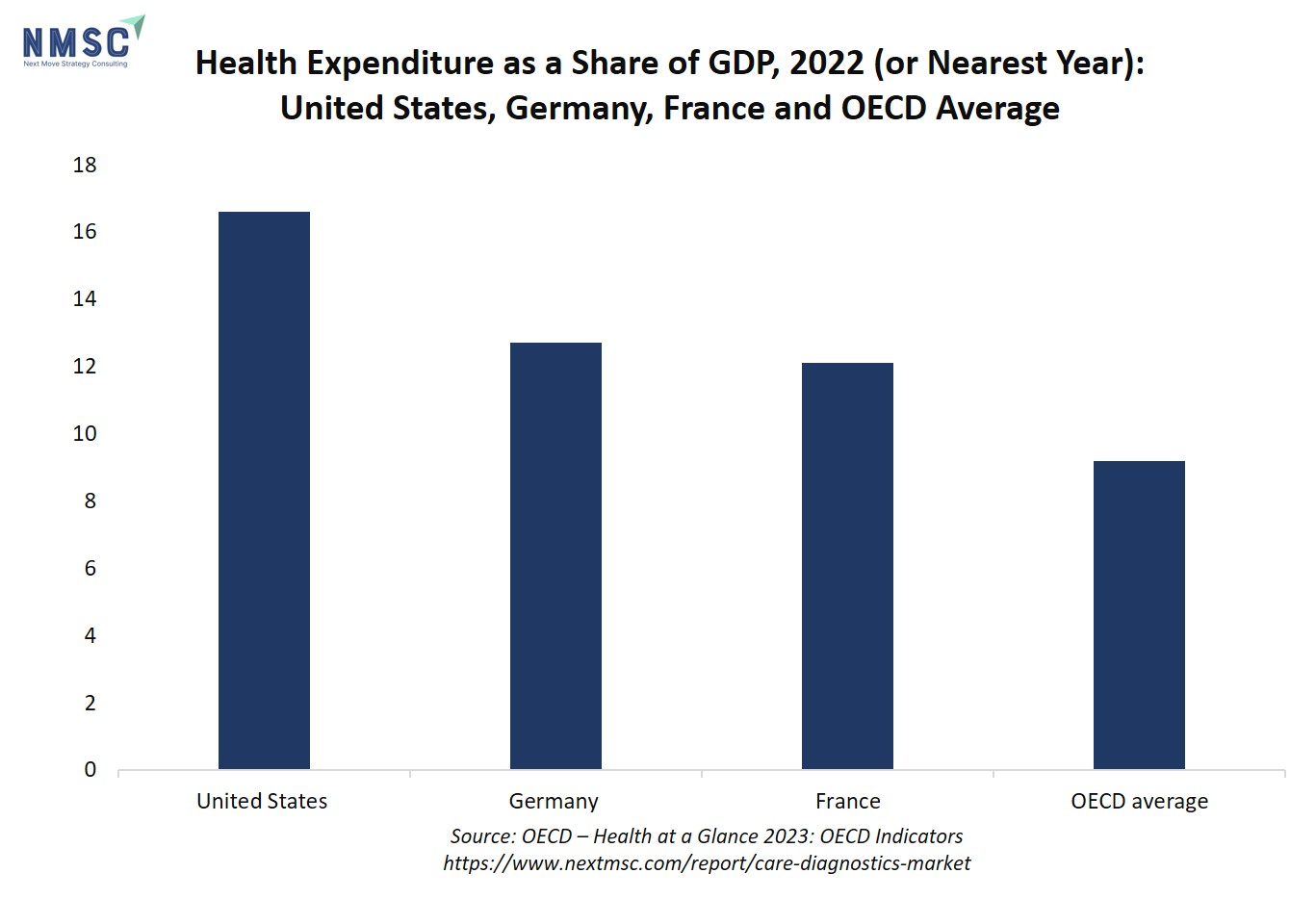
Healthcare infrastructure investment is scaling in parallel. According to the Organisation for Economic Co-operation and Development, health expenditure as a share of GDP reached 16.6% in the United States, 12.7% in Germany, and 12.1% in France in 2022 — ratios that reflect sustained institutional commitment to expanding diagnostic capacity.
Market Segmentation: Blood Testing and Imaging Lead, Genetic Testing Accelerates
NMSC's proprietary research and analysis segments the care diagnostics market across four test-type categories: blood tests, imaging, genetic testing, and others. Blood tests represent the largest segment by volume, driven by the ubiquity of glucose monitoring, complete blood count panels, and emerging liquid biopsy applications for cancer screening. Imaging — encompassing X-ray, CT, and MRI — commands the highest per-procedure revenue, particularly in North America and Western Europe where hospital capital expenditure on advanced imaging systems remains robust.
Genetic testing is the fastest-growing sub-segment within the NMSC forecast period, as next-generation sequencing costs continue to decline and companion diagnostic approvals — such as the FDA's updated List of Authorized Companion Diagnostic Devices (updated September 28, 2026) — expand the clinical indications for genomic-based diagnostics.
Key Care Diagnostics Market Events — Q1–Q3 2026
|
Date |
Company / Institution |
Event |
Financial / Strategic Significance |
|
February 17, 2026 |
Danaher Corporation |
Announced acquisition of Masimo Corporation at $180/share |
~$9.9B enterprise value; expands acute-care diagnostics with AI-enabled monitoring |
|
April 5–7, 2026 |
G7 / 20+ International Partners |
Launched Global One Health Diagnostics Access Compact, Lyon, France |
EC pledged €700M; World Bank committed $750M; Gavi signalled $200M |
|
July 21, 2026 |
Danaher Corporation |
Reported Q2 2026 results; confirmed earlier-than-anticipated Masimo acquisition completion |
Increased full-year guidance; Masimo integrated into Diagnostics segment |
|
July 31, 2026 |
Siemens Healthineers |
Cut 2026 revenue growth forecast to 3.5%–4%; diagnostics revenue fell 5.5% in Q3 |
Planned diagnostics segment carve-out confirmed; two-year timeline |
|
August 25, 2026 |
Abbott Diabetes Care / FDA |
FDA authorized Libre Duo 10 Day — world's first dual glucose-ketone wearable |
De Novo pathway; Breakthrough Device designation; 600+ participant clinical program |
|
September 2026 |
Abbott Laboratories |
Launched SimpleScreen CRC blood test for colorectal cancer screening |
Expands blood-based cancer diagnostics portfolio |
Regional Analysis: North America Leads, Asia-Pacific Faces Dual Pressures
North America retains the dominant share of the global care diagnostics market, according to NMSC's proprietary research and analysis, underpinned by the Healthcare Information and Management Systems Society's reported commitment of approximately USD 36.7 billion in public health infrastructure investment over a ten-year period. The FDA's accelerating authorization cadence — including the Libre Duo 10 Day in August 2026 and the reclassification of digital breast tomosynthesis systems in August 2026 — continues to expand the commercial addressable market for novel diagnostic devices within the region.
Asia-Pacific presents a more complex picture. On one hand, rising chronic disease incidence — including the National Center for Biotechnology Information's estimate of approximately 1.5 million cancer cases detected in India in 2022, expected to rise by 12.8% by 2025 — creates structural demand for advanced diagnostic tools. On the other hand, China's volume-based procurement programme has demonstrably compressed diagnostics pricing, as evidenced by Siemens Healthineers' 5.5% diagnostics revenue decline in Q3 2026 — a direct consequence of lower reimbursement rates in the Chinese market. This pricing pressure is reshaping the competitive calculus for multinational diagnostics companies operating in the region, accelerating the shift toward higher-margin, technology-differentiated products that are less susceptible to procurement-driven commoditization.
Competitive Landscape: Consolidation, Carve-Outs, and Platform Differentiation
The care diagnostics competitive landscape in 2026 is defined by three simultaneous strategic movements: consolidation through acquisition (Danaher-Masimo), portfolio rationalization through divestiture (Siemens Healthineers' planned diagnostics carve-out), and platform differentiation through regulatory authorization (Abbott's Libre Duo 10 Day). Key players identified in NMSC's proprietary research and analysis include Abbott Laboratories, Siemens Healthineers, Danaher Corporation, Chembio Diagnostics Systems Inc., Nova Biomedical, QIAGEN N.V., Abaxis Inc., AccuBioTech Co. Ltd., Cue Health Inc., and EKF Diagnostics Holdings plc.
The Danaher-Masimo transaction is particularly significant because it extends Danaher's diagnostics franchise — which already spans molecular diagnostics (Cepheid), clinical chemistry (Beckman Coulter), and pathology (Leica Biosystems) — into continuous patient monitoring, a segment that generates recurring consumable revenue and creates a data layer that can be leveraged for AI-driven clinical decision support.
NMSC Strategic Perspective: Three Inflection Points Reshaping the Care Diagnostics Market
Next Move Strategy Consulting's proprietary research and analysis identifies three structural inflection points that are simultaneously reshaping the care diagnostics market's growth trajectory through 2030:
1. The Consolidation of Diagnostics and Continuous Monitoring: Danaher's $9.9 billion acquisition of Masimo is not an isolated transaction — it reflects a broader industry recognition that the boundary between episodic diagnostic testing and continuous physiological monitoring is dissolving. As AI-enabled wearables and sensor platforms generate continuous data streams, the clinical value of a single diagnostic result is being superseded by trend-based monitoring. This shift expands the total addressable market for care diagnostics beyond the traditional test-kit and laboratory-equipment categories into software, connectivity, and data analytics — segments with structurally higher margins and recurring revenue profiles.
2. Regulatory Acceleration as a Market-Expansion Mechanism: The FDA's authorization of the Libre Duo 10 Day through the De Novo pathway — following Breakthrough Device designation — demonstrates that the U.S. regulatory framework is actively facilitating the commercialization of novel diagnostic modalities that address unmet clinical needs. The FDA's concurrent reclassification of radiology computer-aided detection devices (September 16, 2026) and the classification of a prognostic test for chronic kidney disease progression (July 23, 2026) signal a regulatory environment that is systematically expanding the clinical indications for diagnostic devices, directly enlarging the market's addressable patient population.
3. Geopolitical Pricing Pressure as a Catalyst for Technology Differentiation: Siemens Healthineers' diagnostics revenue decline in China — driven by volume-based procurement — illustrates a structural risk for diagnostics companies that compete primarily on price in government-reimbursed markets. NMSC's analysis indicates that companies with proprietary AI-enabled platforms, continuous monitoring capabilities, or companion diagnostic authorizations are better positioned to sustain pricing power in procurement-sensitive markets, because their clinical differentiation is demonstrable and their reimbursement case is supported by outcomes data rather than commodity pricing alone.
Taken together, these three inflection points support NMSC's projection of a USD 84.3 billion market by 2030 — a trajectory that reflects not merely volume growth in existing diagnostic categories, but a structural expansion of what "care diagnostics" encompasses as a clinical and commercial category.
Bottom Line
The global care diagnostics market is undergoing a structural realignment that extends well beyond cyclical demand growth. Danaher's $9.9 billion acquisition of Masimo — completed ahead of schedule in Q2 2026 — has redefined the competitive perimeter of the diagnostics sector by integrating continuous AI-enabled patient monitoring into a portfolio that spans molecular, clinical chemistry, and pathology diagnostics. Simultaneously, Siemens Healthineers' planned two-year carve-out of its diagnostics division, triggered by a 5.5% revenue decline in Q3 2026 driven by China's procurement policies and platform migration costs, signals that scale alone is insufficient to sustain diagnostics profitability in price-sensitive markets. Abbott's FDA authorization of the Libre Duo 10 Day — the world's first dual glucose-ketone wearable — and the G7's Global One Health Diagnostics Access Compact, backed by over $1.5 billion in multilateral funding commitments, collectively reinforce the policy and innovation tailwinds supporting the market's expansion. According to Next Move Strategy Consulting's proprietary research and analysis, the global care diagnostics market is projected to grow from USD 47.0 billion in 2023 to USD 84.3 billion by 2030 at a CAGR of 8.7%, with technology differentiation, regulatory authorization velocity, and chronic disease demographics serving as the primary structural growth engines through the forecast period.
About Next Move Strategy Consulting
Next Move Strategy Consulting is a premier market research and management consulting firm that has been committed to provide strategically analysed well documented latest research reports to its clients. The research industry is flooded with many firms to choose from, what makes NMSC different from the rest is its top-quality research and the obsession of turning data into knowledge by dissecting every bit of it and providing fact-based research recommendation that is supported by information collected from over 500 million websites, paid databases, industry journals and one on one consultations with industry experts across a diverse range of industry sectors. The high-quality customized research reports with actionable insights and excellent end-to-end customer service help our clients to take critical business decisions that enables them to move beyond time and have competitive edge in the industry.
We have been servicing over 1000 customers globally that includes 90% of the Fortune 500 companies over a decade. Our analysts are constantly tracking various high growth markets and identifying hidden opportunities in each sector or the industry. We provide one of the industry's best quality syndicate as well as custom research reports across 10 different industry verticals. We are committed to deliver high quality research solutions in accordance to your business needs. Our industry standard delivery solutions that ranges from the pre consultation to after-sales services, provide an excellent client experience and ensure right strategic decision making for businesses.
For more information, please contact:
Next Move Strategy Consulting
5th Floor 867 Boylston St, STE 500,
Boston, MA 02116, U.S.
E-Mail: [email protected]
Direct: +1-217-650-7991
Website: www.nextmsc.com
About the Author
 Sanyukta Deb
— Sanyukta Deb is Digital Marketing Team Lead at Next Move Strategy Consulting, where she has led content strategy and technical SEO for the firm's B2B market research publications for over 2 years. Her editorial process translates NextMSC's primary and secondary research — spanning technology, industrial, and consumer sectors — into commercial narratives, backed by search-intent, keyword, and competitive analysis. She brings 5 years of overall experience in digital marketing and content strategy.
Sanyukta Deb
— Sanyukta Deb is Digital Marketing Team Lead at Next Move Strategy Consulting, where she has led content strategy and technical SEO for the firm's B2B market research publications for over 2 years. Her editorial process translates NextMSC's primary and secondary research — spanning technology, industrial, and consumer sectors — into commercial narratives, backed by search-intent, keyword, and competitive analysis. She brings 5 years of overall experience in digital marketing and content strategy.
About the Reviewer
 Debashree Dey
— Debashree Dey is Assistant Manager at Next Move Strategy Consulting, where she supports cross-vertical market content and communications across diverse industries for 6 years. Her professional background includes senior content writing, communications, and published manuscript authorship, with experience developing audience-focused business narratives and maintaining clear, consistent messaging. Her role supports research-led content development and editorial quality across NextMSC publications.
Debashree Dey
— Debashree Dey is Assistant Manager at Next Move Strategy Consulting, where she supports cross-vertical market content and communications across diverse industries for 6 years. Her professional background includes senior content writing, communications, and published manuscript authorship, with experience developing audience-focused business narratives and maintaining clear, consistent messaging. Her role supports research-led content development and editorial quality across NextMSC publications.















Add Comment