Defense Spending Surge Reshapes 3D Printing Materials
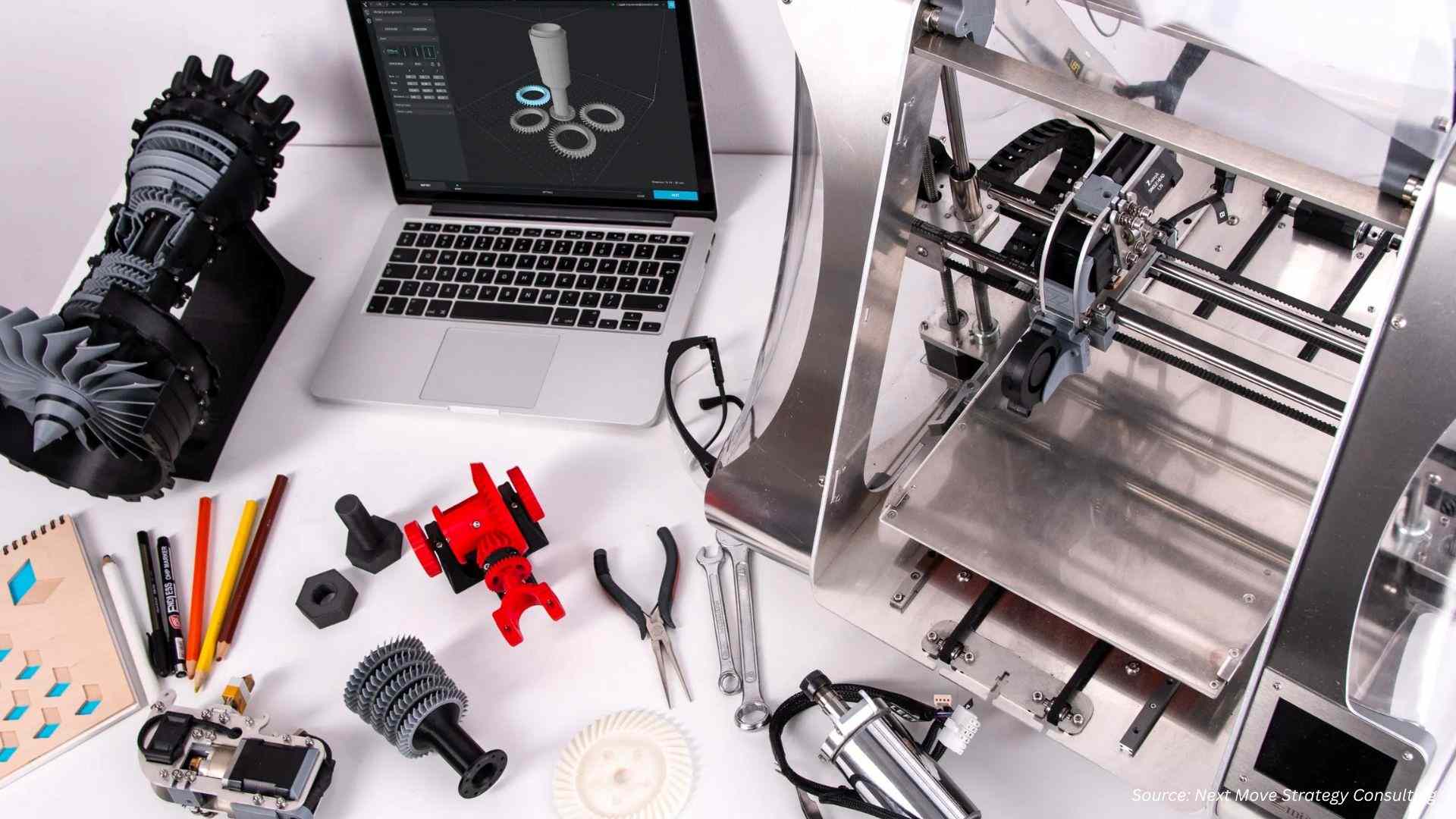
U.S. Defense Additive Manufacturing Funding Surges 83% to $3.3 Billion in FY2026, Accelerating Global Demand for Advanced 3D Printing Materials Across Aerospace, Healthcare, and Industrial Sectors
Pentagon's Additive Manufacturing Commitment Signals a Structural Shift
On March 30, 2026, Stratasys Ltd. (NASDAQ: SSYS) announced that its contract manufacturing division, Stratasys Direct™, had been selected to participate in the U.S. Department of War's Joint Additive Manufacturing Acceptability (JAMA) IV Pilot Parts Program — a multimillion-dollar federal initiative designed to accelerate the qualification and operational deployment of 3D-printed components across active military platforms and systems.
The announcement carried implications that extended well beyond a single contract award. According to the company's official press release, U.S. Department of War budget programs referencing additive manufacturing have seen funding rise 83% to $3.3 billion in fiscal year 2026 compared to fiscal year 2025 — a figure that underscores the federal government's accelerating commitment to additive manufacturing as a strategic industrial capability.
Stratasys Direct currently ships over 100,000 parts annually to the defense industry and reported double-digit annual revenue growth from aerospace and defense in 2025. The JAMA IV program, a Program of Record for the U.S. Air Force and Naval Air Systems Command (NAVAIR), is expected to further accelerate the qualification of additively manufactured parts for operational deployment across active platforms.
This development arrives against a broader policy backdrop that is reshaping the competitive landscape for domestic additive manufacturing providers. In January 2026, 3D Systems Corporation (NYSE: DDD) disclosed that provisions embedded in the National Defense Authorization Act (NDAA) for Fiscal Year 2026 restrict the use of foreign-sourced 3D printing systems in Department of Defense programs — a regulatory development that creates direct structural tailwinds for U.S.-based manufacturers of both additive manufacturing systems and the specialized materials they consume.
3D Systems simultaneously announced that its Aerospace & Defense business is forecasted to grow more than 20% in 2026, with revenue from production printing systems and custom metal parts expected to exceed $35 million. The company is also progressing on a multi-phase, $18.5 million U.S. Air Force-sponsored program to develop next-generation laser powder-bed fusion technologies for large-format, high-efficiency metal part production.
Taken together, these developments represent a decisive inflection point for the global 3D Printing Materials Market — one in which policy-driven demand, industrial-scale adoption, and materials innovation are converging to redefine the sector's growth trajectory.
For More Information: Download FREE Sample on 3D Printing Materials Market Report
Global Additive Manufacturing Industry: A Market in Structural Maturation
The broader additive manufacturing industry provides essential context for understanding the materials market's trajectory. According to Wohlers Report 2026, published by Wohlers Associates, powered by ASTM International, in February 2026, global additive manufacturing revenues reached $24.2 billion in 2025, representing 10.9% year-over-year growth.
The report's segmentation reveals a market in structural transition: printing services accounted for the largest share at 48%, followed by system sales and servicing at 26%, materials at 20%, and software at 6%. The materials sector's 20% revenue contribution — combined with the strongest growth signals in the service provider and materials segments identified in Wohlers Report 2025 — indicates that value creation is increasingly concentrated in production-scale material consumption rather than hardware sales alone.
Regional divergence is a defining characteristic of the current landscape. Companies in the Asia-Pacific region reported average revenue growth of 19.8% in 2025, compared with 12.6% in the Americas and 9.0% in Europe, the Middle East, and Africa — a pattern that reflects both the rapid industrialization of manufacturing in China and the more selective capital deployment environment in mature Western markets.
3D Printing Materials Market: Quantifying the Opportunity
Analysis from Next Move Strategy Consulting identifies the 3D printing materials market as one of the most strategically significant segments within the advanced manufacturing ecosystem, with demand increasingly driven by the industrialization of additive manufacturing — the transition from prototyping applications toward end-use part production at scale. This structural shift is expanding the addressable market for engineering-grade polymers, metal powders, ceramics, and advanced composites across multiple high-value end-use industries.
Segmentation Dynamics: Aerospace & Defense Leads, Metals Accelerate
The aerospace and defense sector holds the largest application share of the 3D printing materials market, accounting for 24.8% of global revenues in 2025. The sector's dominance reflects additive manufacturing's ability to produce lightweight, complex, and high-performance components — including engine parts, structural brackets, tooling fixtures, and mission-critical assemblies — with superior dimensional precision and reduced material waste compared to conventional subtractive manufacturing.
The automotive segment is projected to grow at a CAGR of 31.2% from 2026 to 2033, driven by the industry's accelerating shift toward lightweight components, rapid prototyping, and the production demands of electric vehicle platforms.
By material type, photopolymers led the market with a 38.6% revenue share in 2025, attributed to their precision, versatility, and widespread use in healthcare, dental, and industrial prototyping applications. Thermoplastics are expected to grow at a CAGR of 30.0% over the forecast period, while the metals segment — encompassing titanium alloys, aluminum, nickel-based superalloys, and cobalt-chrome powders — is projected to expand at a CAGR of 21.4%, driven by rising demand in aerospace, defense, and orthopedic implant manufacturing.
By form, the filament segment currently holds the largest market share, while powder-based materials are projected to register the highest growth rate, underpinned by the expanding adoption of Selective Laser Sintering (SLS), Direct Metal Laser Sintering (DMLS), Selective Laser Melting (SLM), and Binder Jetting technologies in commercial production environments.
By technology, Fused Deposition Modeling (FDM) accounts for the largest market share due to its cost-effectiveness and broad industrial accessibility, while DMLS is expected to register the highest growth rate, reflecting the increasing demand for precision metal components in defense and aerospace applications.
Regional Analysis: North America Leads, Asia-Pacific Accelerates
North America maintains its position as the dominant regional market for 3D printing materials, accounting for USD 1.73 billion in 2025 — equivalent to a 40.33% global market share. The United States alone contributed USD 1.52 billion, representing approximately 35.4% of global revenues, driven by the concentration of aerospace, defense, and healthcare manufacturing activity, combined with robust government investment in domestic additive manufacturing capabilities.
China represented the second-largest national market at USD 0.57 billion in 2025, accounting for 13.2% of global revenues, supported by large-scale manufacturing expansion and sustained government investment in additive manufacturing technologies. Germany contributed USD 0.26 billion (6.0% of global revenues), reflecting its strong automotive and precision engineering industrial base. India and the GCC countries, at USD 0.07 billion and USD 0.05 billion respectively, represent nascent but strategically significant growth markets.
Asia Pacific is projected to grow at a CAGR of 31.1% from 2026 to 2033, the fastest of any region, driven by rapid industrialization in China, Japan, South Korea, and India, alongside government-led Industry 4.0 adoption programs.
3D Printing Materials Market — Regional Revenue Breakdown, 2025
|
Region / Country |
Market Size (USD Billion) |
Global Revenue Share (%) |
Growth Outlook |
|
North America |
1.73 |
40.33% |
Largest market; fastest-growing in North America |
|
United States |
1.52 |
35.4% |
Dominant national market; aerospace & defense led |
|
China |
0.57 |
13.2% |
Rapid manufacturing expansion; government-backed |
|
Germany |
0.26 |
6.0% |
Automotive & precision engineering driven |
|
India |
0.07 |
~1.6% |
Emerging; Industry 4.0 adoption accelerating |
|
GCC Countries |
0.05 |
~1.2% |
Vision 2030 industrial diversification programs |
Competitive Landscape: Strategic Investments and Material Innovation
The competitive landscape of the 3D printing materials market is characterized by a combination of large diversified chemical and materials companies, specialized additive manufacturing solution providers, and emerging material innovators. Key market participants include 3D Systems, Inc., Stratasys Ltd., GE Aerospace, Arkema SA, Evonik Industries AG, BASF SE, Höganäs AB, Sandvik AB, Materialise NV, and EOS GmbH, among others.
Recent strategic developments illustrate the pace of material innovation across the sector. In April 2026, Stratasys expanded its materials portfolio with the addition of ULTEM 1010 filament, P3 Deflect 110 resin, Loctite 3D IND3785 Low Migration, PolyJet ToughONE White and Black, and Somos WaterShed White — broadening its addressable application range across industrial and regulated-use environments.
In January 2026, 3D Systems expanded its NextDent Jetted Denture material offering with three new base shades for dental additive manufacturing applications, while in April 2025, the company partnered with University Hospital Basel to create the world's first in-hospital manufacturing process for 3D-printed facial implants using PEEK material — a development that exemplifies the convergence of materials science and clinical manufacturing.
In May 2025, Stratasys acquired assets from Forward AM GmbH, a Germany-based BASF spin-off, expanding its advanced 3D printing materials portfolio and strengthening its capabilities in Selective Absorption Fusion (SAF) and Digital Light Processing (DLP) technologies. In February 2025, ATI commissioned a new world-class Additive Manufacturing Products facility in Margate, Florida, integrating design, printing, heat treatment, machining, and inspection for metal additive manufacturing — directly supporting the aerospace and defense markets.
Market Drivers, Restraints, and Strategic Opportunities
Primary Growth Drivers
The primary drivers of the 3D printing materials market include the growing demand for lightweight, high-performance components across aerospace and automotive industries; the expansion of additive manufacturing from prototyping into end-use part production; increasing healthcare applications for customized implants, prosthetics, and surgical guides; and sustained government investment in domestic advanced manufacturing capabilities.
The NDAA FY2026 provisions restricting foreign-sourced 3D printing systems for DoD programs represent a particularly significant policy catalyst, creating structural demand for domestically produced materials and systems that is expected to persist through the end of the decade.
Key Restraints
High material costs remain the principal restraint on broader market adoption. Advanced 3D printing materials — particularly metal powders, specialty photopolymers, and high-performance thermoplastics — are significantly more expensive than conventional manufacturing materials, with cost premiums attributable to the stringent purity, particle size distribution, and performance consistency requirements of additive manufacturing processes. Proprietary material systems employed by certain printer manufacturers further limit material compatibility and increase procurement costs for end users.
Limited standardization across industries creates qualification and certification challenges, particularly in aerospace, defense, and medical device applications where material performance validation requirements are stringent and time-intensive.
Strategic Opportunities
The most significant near-term opportunities reside in mass customization for healthcare applications — including patient-specific orthopedic implants, dental devices, and surgical planning models — and in the penetration of additive manufacturing into emerging economies. Markets including India, South Korea, Singapore, Thailand, and Mexico are demonstrating accelerating adoption of metal 3D printing across automotive, aerospace, and industrial manufacturing, supported by government-backed innovation programs and expanding research institution partnerships.
The development of sustainable and bio-based printing materials represents an additional growth vector, as environmental compliance requirements and corporate sustainability commitments increasingly influence material procurement decisions across industrial sectors.
Bottom Line
The global 3D printing materials market is entering a period of accelerated, policy-reinforced growth, underpinned by the structural industrialization of additive manufacturing across defense, aerospace, healthcare, and automotive sectors. The 83% surge in U.S. Department of War additive manufacturing funding to $3.3 billion in FY2026, combined with NDAA provisions mandating domestic sourcing for DoD programs, has created durable demand tailwinds for U.S.-based material producers and system integrators. Market projections from multiple authoritative sources consistently indicate a trajectory toward a USD 10–28 billion market by the early 2030s, reflecting a CAGR range of approximately 20–30% depending on scope and methodology. North America retains its dominant position with over 40% of global revenues, while Asia-Pacific — led by China — is positioned as the fastest-growing region. For investors and industrial strategists, the most compelling opportunities lie in metal powder technologies, high-performance polymer development, defense-grade material qualification programs, and healthcare customization applications. Key risks include material cost inflation, supply chain concentration for specialty feedstocks, and the pace of regulatory standardization across critical end-use industries.
About Next Move Strategy Consulting
Next Move Strategy Consulting is a premier market research and management consulting firm that has been committed to provide strategically analysed well documented latest research reports to its clients. The research industry is flooded with many firms to choose from, what makes NMSC different from the rest is its top-quality research and the obsession of turning data into knowledge by dissecting every bit of it and providing fact-based research recommendation that is supported by information collected from over 500 million websites, paid databases, industry journals and one on one consultations with industry experts across a diverse range of industry sectors. The high-quality customized research reports with actionable insights and excellent end-to-end customer service help our clients to take critical business decisions that enables them to move beyond time and have competitive edge in the industry.
We have been servicing over 1000 customers globally that includes 90% of the Fortune 500 companies over a decade. Our analysts are constantly tracking various high growth markets and identifying hidden opportunities in each sector or the industry. We provide one of the industry's best quality syndicate as well as custom research reports across 10 different industry verticals. We are committed to deliver high quality research solutions in accordance to your business needs. Our industry standard delivery solutions that ranges from the pre consultation to after-sales services, provide an excellent client experience and ensure right strategic decision making for businesses.
For more information, please contact:
Next Move Strategy Consulting
5th Floor 867 Boylston St, STE 500,
Boston, MA 02116, U.S.
E-Mail: [email protected]
Direct: +1-217-650-7991
Website: www.nextmsc.com
About the Author
 Sanyukta Deb
— Sanyukta Deb is Digital Marketing Team Lead at Next Move Strategy Consulting, where she has led content strategy and technical SEO for the firm's B2B market research publications for over 2 years. Her editorial process translates NextMSC's primary and secondary research — spanning technology, industrial, and consumer sectors — into commercial narratives, backed by search-intent, keyword, and competitive analysis. She brings 5 years of overall experience in digital marketing and content strategy.
Sanyukta Deb
— Sanyukta Deb is Digital Marketing Team Lead at Next Move Strategy Consulting, where she has led content strategy and technical SEO for the firm's B2B market research publications for over 2 years. Her editorial process translates NextMSC's primary and secondary research — spanning technology, industrial, and consumer sectors — into commercial narratives, backed by search-intent, keyword, and competitive analysis. She brings 5 years of overall experience in digital marketing and content strategy.
About the Reviewer
 Debashree Dey
— Debashree Dey is Assistant Manager at Next Move Strategy Consulting, where she supports cross-vertical market content and communications across diverse industries for 6 years. Her professional background includes senior content writing, communications, and published manuscript authorship, with experience developing audience-focused business narratives and maintaining clear, consistent messaging. Her role supports research-led content development and editorial quality across NextMSC publications.
Debashree Dey
— Debashree Dey is Assistant Manager at Next Move Strategy Consulting, where she supports cross-vertical market content and communications across diverse industries for 6 years. Her professional background includes senior content writing, communications, and published manuscript authorship, with experience developing audience-focused business narratives and maintaining clear, consistent messaging. Her role supports research-led content development and editorial quality across NextMSC publications.


















Add Comment