Digital Signalling Milestone Hits UK Smart Railways
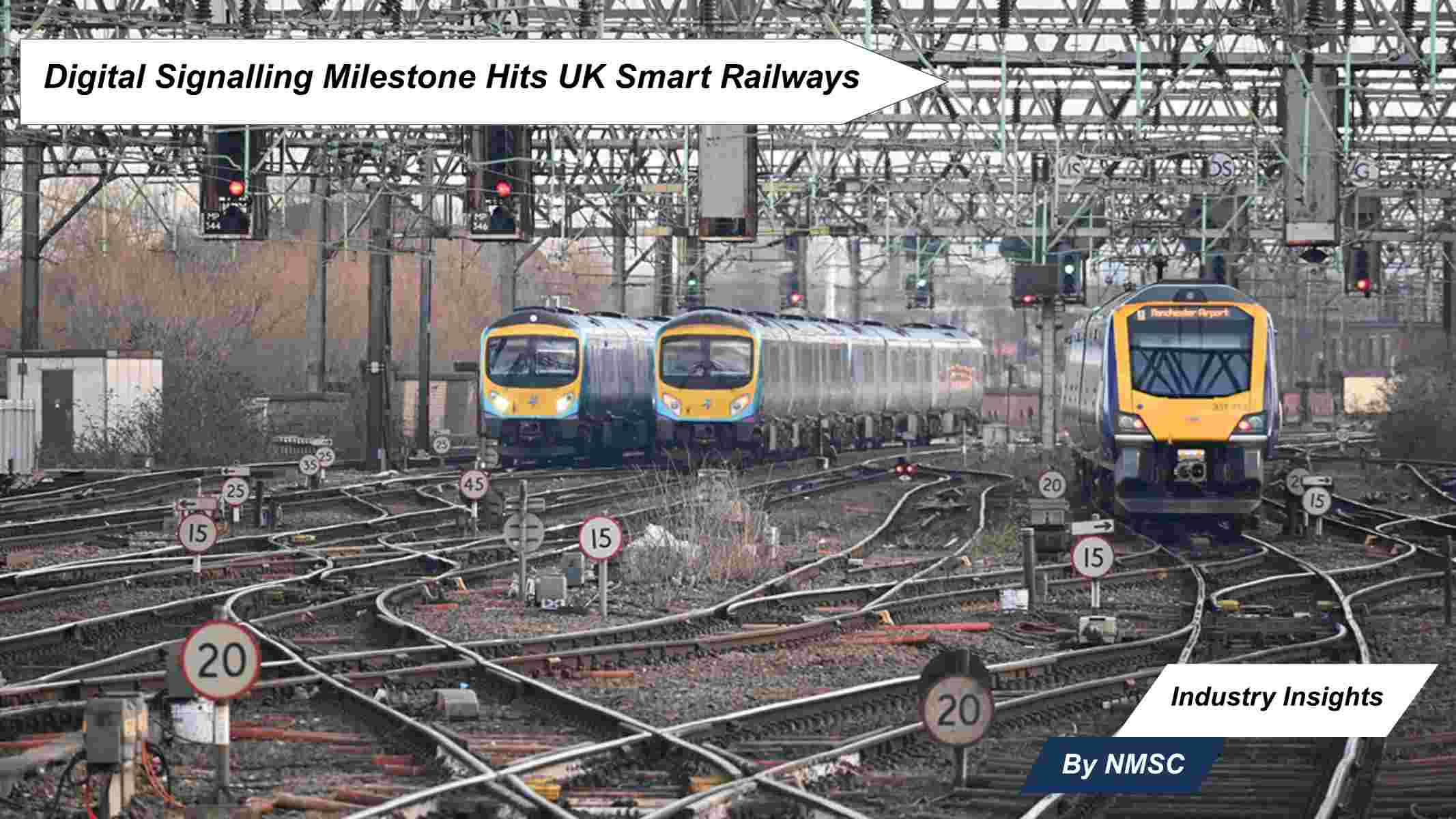
UK East Coast Main Line Activates ETCS Digital Signalling in GBP 1.4B Rail Programme
LONDON, United Kingdom September 2, 2026 Passenger trains have used digital in-cab signalling on the East Coast Main Line (ECML) for the first time, marking a landmark milestone in the modernisation of one of Britain's most critical rail corridors. The development, delivered under the government-funded East Coast Digital Programme (ECDP) backed by GBP 1.4 billion (approximately EUR 1.65 billion), is set to accelerate the broader transformation of the global Smart Railways Market, is projected to reach USD 54.96 billion by 2030 at a CAGR of 9.3%.
Siemens Mobility serves as the train control partner and systems integrator for the programme, responsible for delivering the European Train Control System (ETCS) across the ECML. The company tested and validated the technology remotely using its digital-twin integration laboratory in Chippenham, Wiltshire, a methodology designed to minimise disruption to live train services while upholding the highest safety standards.
The 08:05 Great Northern service to Moorgate on August 31 became the first passenger train to operate under the new digital signalling system on the main line, departing from Welwyn Garden City station. The East Coast Digital Programme will progressively replace conventional lineside signals with a digital system that delivers permitted speed and movement authority directly to drivers via an in-cab display.
The first phase of ETCS deployment covers Great Northern's modern Class 717 trains across a 24-kilometre section between Welwyn and Hitchin, commissioned as an overlay system. This configuration allows trains to operate under either conventional or digital signalling, enabling progressive driver training and phased technology validation ahead of wider network rollout. Additional train types and passenger services are scheduled to transition to digital in-cab signalling from 2027.
On certain sections of the ECML, including between Moorgate and Finsbury Park, Great Northern services already operate exclusively under ETCS Level 2 supervision without conventional lineside signals, demonstrating the operational maturity of the technology in a live environment.
Key Highlights:
-
GBP 1.4 billion government investment underpins the East Coast Digital Programme, with Siemens Mobility acting as systems integrator for ETCS deployment across the ECML.
-
24-km Welwyn–Hitchin section commissioned as an overlay system, enabling simultaneous operation under conventional and digital signalling during the transition phase.
-
Digital-twin integration laboratory in Chippenham, Wiltshire used for remote testing and validation, minimising service disruption during commissioning.
-
Expanded rollout planned from 2027, with additional train types and services scheduled to adopt digital in-cab signalling, advancing Britain's first full-scale intercity digital railway deployment.
Analyst Insight:
According to analysts at Next Move Strategy Consulting, the activation of ETCS on the East Coast Main Line represents a pivotal proof-of-concept for large-scale digital signalling deployment on high-density intercity corridors, with direct implications for smart railways adoption globally. NMSC analysts note that government-backed programmes of this scale combining digital-twin validation methodologies with phased overlay commissioning are increasingly becoming the preferred deployment model for national rail digitalisation strategies, and are expected to catalyse similar investments across Europe and Asia-Pacific through the forecast period to 2030.
Industry Outlook:
The commissioning of ETCS on the East Coast Main Line signals a decisive shift in how advanced economies are approaching railway modernisation moving from incremental upgrades to structured, technology-led transformation programmes. As digital signalling matures from pilot deployments to mainline operations, the technology is expected to deliver measurable improvements in network capacity, service reliability, and safety performance, while reducing long-term dependence on costly trackside infrastructure.
For the global smart railways sector, milestones such as the ECML activation reinforce the commercial and policy case for accelerated investment in ETCS, AI-driven traffic management, and integrated rail automation systems. With the UK programme targeting progressive expansion through 2027 and beyond, the East Coast Main Line is positioned to serve as a reference model for digital railway transformation across major international markets.
Source: Railway PRO
For More Information: Download FREE Sample on Smart Railways Market Report
Prepared By: Sanyukta Deb
About the Author
 Sanyukta Deb
— Sanyukta Deb is Digital Marketing Team Lead at Next Move Strategy Consulting, where she has led content strategy and technical SEO for the firm's B2B market research publications for over 2 years. Her editorial process translates NextMSC's primary and secondary research — spanning technology, industrial, and consumer sectors — into commercial narratives, backed by search-intent, keyword, and competitive analysis. She brings 5 years of overall experience in digital marketing and content strategy.
Sanyukta Deb
— Sanyukta Deb is Digital Marketing Team Lead at Next Move Strategy Consulting, where she has led content strategy and technical SEO for the firm's B2B market research publications for over 2 years. Her editorial process translates NextMSC's primary and secondary research — spanning technology, industrial, and consumer sectors — into commercial narratives, backed by search-intent, keyword, and competitive analysis. She brings 5 years of overall experience in digital marketing and content strategy.
About the Reviewer
 Debashree Dey
— Debashree Dey is Assistant Manager at Next Move Strategy Consulting, where she supports cross-vertical market content and communications across diverse industries for 6 years. Her professional background includes senior content writing, communications, and published manuscript authorship, with experience developing audience-focused business narratives and maintaining clear, consistent messaging. Her role supports research-led content development and editorial quality across NextMSC publications.
Debashree Dey
— Debashree Dey is Assistant Manager at Next Move Strategy Consulting, where she supports cross-vertical market content and communications across diverse industries for 6 years. Her professional background includes senior content writing, communications, and published manuscript authorship, with experience developing audience-focused business narratives and maintaining clear, consistent messaging. Her role supports research-led content development and editorial quality across NextMSC publications.

















Add Comment