Robotaxi Market: Waymo Enters Germany with Munich Expansion
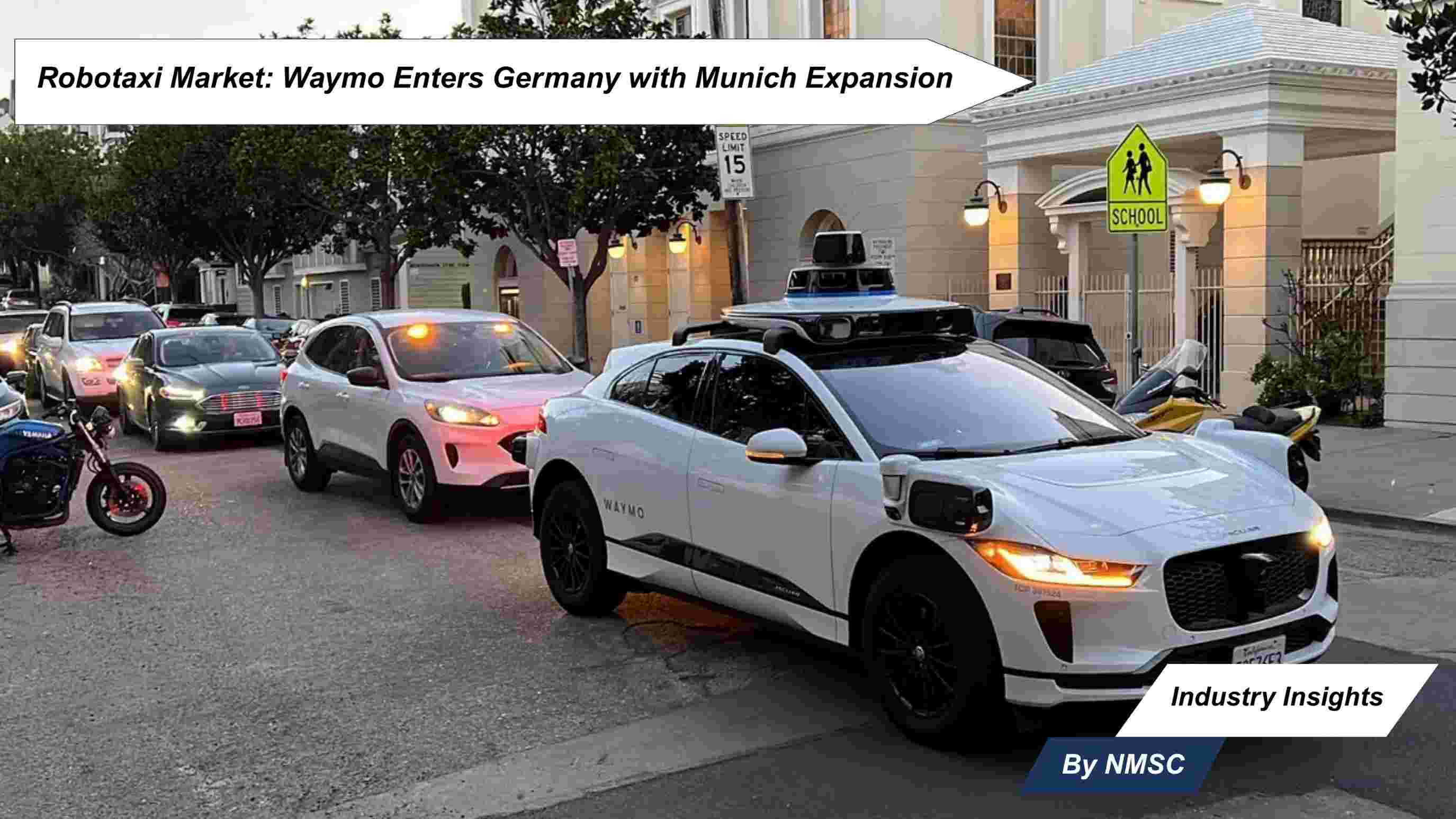
Waymo to Begin Autonomous Vehicle Testing in Munich, Eyes 2027 Commercial Launch
MUNICH, Germany August 25, 2026 Alphabet-owned autonomous vehicle company Waymo has announced plans to begin testing its self-driving vehicles in Munich, Germany, in the coming weeks, marking the company's first operational presence on the European continent and laying the groundwork for a commercial ride-hailing service targeted for launch toward the end of 2027. The development represents a significant milestone for the global Robotaxi Market, as one of the world's leading autonomous vehicle operators extends its footprint into a major European economy for the first time.
Waymo confirmed that its vehicles will initially operate manually across Munich to map local roads and conduct testing with trained autonomous specialists behind the wheel. This preparatory phase is designed to allow the company's autonomous driving system to adapt to Munich's specific driving conditions, traffic patterns, and road infrastructure before fully driverless commercial operations commence.
The Alphabet subsidiary stated it is actively engaging with local, state, and federal German authorities to secure the regulatory approvals necessary to offer its ride-hailing service in the country. Waymo also indicated plans to invest in local fleet operations and create high-skilled employment opportunities in Munich as it prepares for the commercial launch.
The Munich announcement follows a broader wave of autonomous vehicle activity in Europe. Uber, Verne, and Pony.ai launched autonomous rides in Zagreb, Croatia, last week, making the Croatian capital the first European city where users could book a self-driving vehicle through Uber's app. Waymo's entry into Germany, however, represents a move into one of Europe's largest and most strategically significant automotive markets. The company raised USD 16 billion earlier this year at a USD 126 billion valuation as it continues to scale its robotaxi business globally.
Key Highlights:
-
First European Continental Expansion: Waymo's Munich testing initiative marks its first operational presence on the European continent, with a commercial ride-hailing service targeted for late 2027.
-
Phased Testing Approach: Vehicles will initially be driven manually to map Munich's roads, followed by supervised autonomous testing with trained specialists, before fully driverless operations begin.
-
Regulatory Engagement Underway: Waymo is in active discussions with local, state, and federal German authorities to obtain the necessary permits and approvals for commercial autonomous operations.
-
Strategic Investment Commitment: The company has pledged to invest in local fleet infrastructure and create high-skilled jobs in Munich, signaling a long-term operational commitment to the German market.
Analyst Insight:
According to analysts at Next Move Strategy Consulting, the global Robotaxi Market is predicted to reach USD 104.03 billion by 2030, expanding at a CAGR of 74.5% from 2024 to 2030. NMSC analysts note that Waymo's entry into the German market is a strategically consequential development, as Germany represents one of Europe's most mature automotive ecosystems and a critical regulatory benchmark for autonomous vehicle adoption across the European Union. The move is expected to accelerate regulatory dialogue across the continent and could catalyze further investment in European robotaxi infrastructure, fleet operations, and high-definition mapping technologies.
Industry Outlook:
Waymo's Munich expansion underscores the accelerating internationalization of the robotaxi sector, as leading autonomous vehicle operators move beyond established North American markets to capture emerging demand in Europe. Germany's robust automotive regulatory framework, combined with its advanced road infrastructure and high consumer adoption of technology-driven mobility solutions, positions it as a pivotal entry point for global robotaxi operators seeking European scale.
As Waymo advances through its testing and regulatory approval phases, the broader industry is expected to closely monitor the company's progress in Munich as a potential template for autonomous vehicle commercialization across other major European cities. The development further validates the long-term growth trajectory of the global robotaxi market, with international expansion emerging as a key driver of sector-wide revenue growth through the end of the decade.
Source: Reuters
For More Information: Download FREE Sample on Robotaxi Market Report
Prepared By: Sanyukta Deb
About the Author
 Sanyukta Deb
— Sanyukta Deb is Digital Marketing Team Lead at Next Move Strategy Consulting, where she has led content strategy and technical SEO for the firm's B2B market research publications for over 2 years. Her editorial process translates NextMSC's primary and secondary research — spanning technology, industrial, and consumer sectors — into commercial narratives, backed by search-intent, keyword, and competitive analysis. She brings 5 years of overall experience in digital marketing and content strategy.
Sanyukta Deb
— Sanyukta Deb is Digital Marketing Team Lead at Next Move Strategy Consulting, where she has led content strategy and technical SEO for the firm's B2B market research publications for over 2 years. Her editorial process translates NextMSC's primary and secondary research — spanning technology, industrial, and consumer sectors — into commercial narratives, backed by search-intent, keyword, and competitive analysis. She brings 5 years of overall experience in digital marketing and content strategy.
About the Reviewer
 Debashree Dey
— Debashree Dey is Assistant Manager at Next Move Strategy Consulting, where she supports cross-vertical market content and communications across diverse industries for 6 years. Her professional background includes senior content writing, communications, and published manuscript authorship, with experience developing audience-focused business narratives and maintaining clear, consistent messaging. Her role supports research-led content development and editorial quality across NextMSC publications.
Debashree Dey
— Debashree Dey is Assistant Manager at Next Move Strategy Consulting, where she supports cross-vertical market content and communications across diverse industries for 6 years. Her professional background includes senior content writing, communications, and published manuscript authorship, with experience developing audience-focused business narratives and maintaining clear, consistent messaging. Her role supports research-led content development and editorial quality across NextMSC publications.
















Add Comment