Robotaxi Market Expansion: Waymo Scales to 15 U.S. Cities
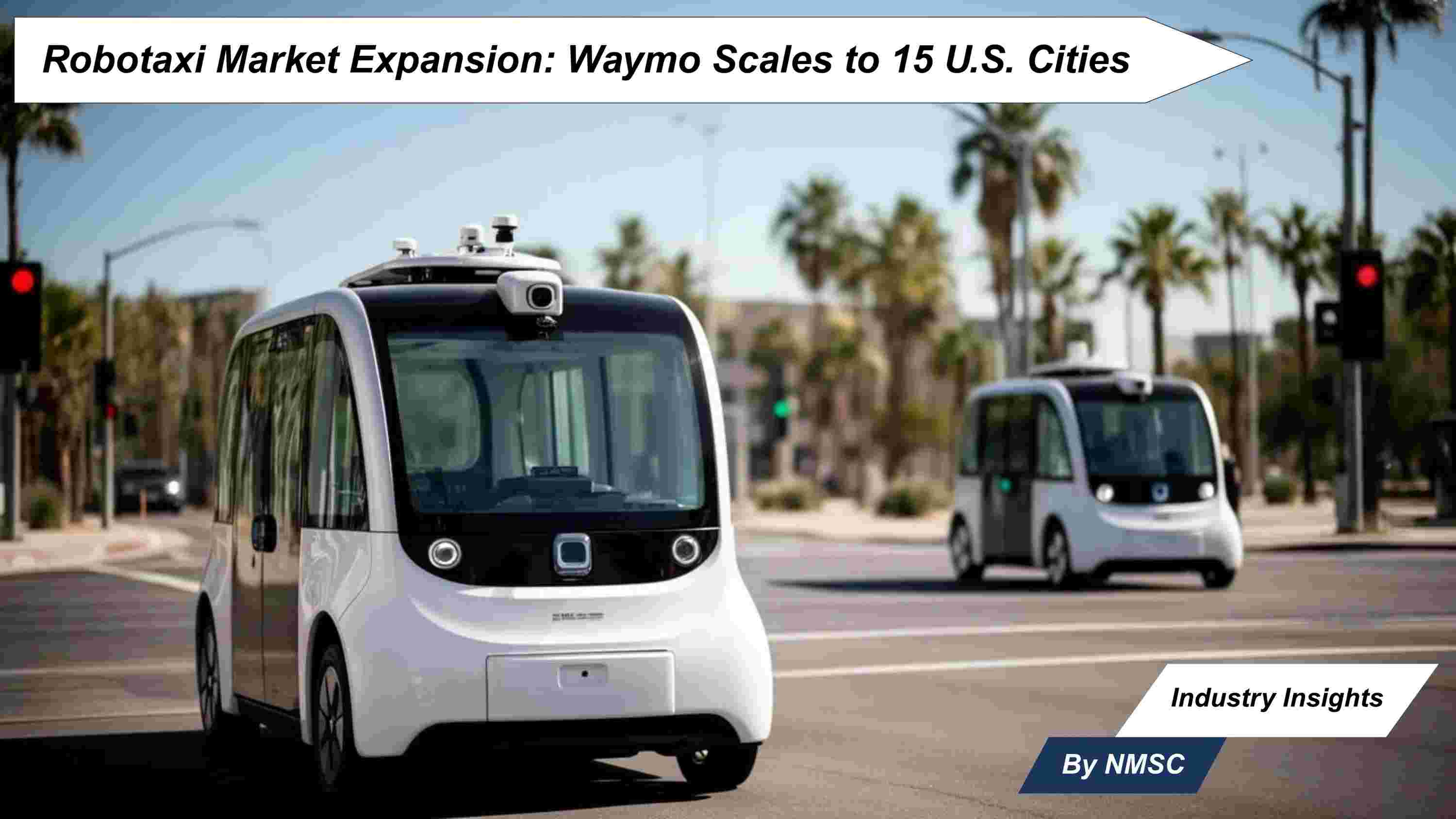
Waymo Hits 500K Weekly Rides as U.S. Robotaxi Race Intensifies Across 15 Cities
SAN FRANCISCO, United States September 25, 2026 Alphabet's Waymo has expanded its fully autonomous ride-hailing service to 15 U.S. cities and is now averaging 500,000 paid robotaxi rides per week, according to fleet data published Wednesday, as the broader robotaxi market is projected to reach USD 104.03 billion by 2030 at a CAGR of 74.5% enters a period of accelerated commercial deployment.
Waymo's commercial footprint has expanded sharply over the past 12 months. In September 2024, the company operated in just three cities Phoenix, Los Angeles, and San Francisco. It now serves riders across 15 U.S. markets, with recent launches in Denver, San Diego, and Tampa marking a significant geographic broadening of its autonomous ride-hailing network.
Fleet data reveals that approximately 80% of Waymo's roughly 4,000 robotaxis are concentrated in California and Texas, with Texas emerging as the most active growth corridor. Waymo's Texas fleet expanded by 49% in the past three weeks alone, driven by an influx of the company's new "Ojai" minivan a modified Zeekr RT vehicle outfitted with Waymo's sixth-generation self-driving system at its Arizona facility.
As of September 24, Waymo had 1,102 autonomous vehicles registered in Texas, according to state vehicle registration data. New York-based research firm MoffettNathanson, which tracks Ojai imports using detailed shipping records, reported in its September analysis that Waymo is on track to bring 5,100 of the vehicles into the United States by year-end.
The Ojai is designed to drive down per-ride costs and support Waymo's path to profitability. However, current U.S. trade policy imposes steep import tariffs on vehicles manufactured in China, raising the cost of each unit. Waymo appears to be absorbing that cost as it prioritizes fleet scale over near-term margin. Florida, where Waymo now operates in three cities, and newer markets such as Las Vegas are also expected to receive significant Ojai deployments in the coming months.
Key Highlights:
-
Waymo now operates in 15 U.S. cities, up from just three cities in September 2024, with recent public launches in Denver, San Diego, and Tampa
-
The company averages 500,000 paid robotaxi rides per week, reflecting a sharp acceleration in ridership
-
Waymo's Texas fleet grew 49% in three weeks, reaching 1,102 registered autonomous vehicles as of September 24, 2026
-
MoffettNathanson projects 5,100 Ojai minivans to be imported into the U.S. by year-end, signaling continued fleet expansion
Analyst Insight:
According to analysts at Next Move Strategy Consulting, the robotaxi market's trajectory reflects a structural shift in urban mobility investment, with the sector's projected CAGR of 74.5% through 2030 underscoring the commercial urgency driving operators to prioritize fleet density and geographic coverage simultaneously. NMSC analysts note that the concentration of deployments in high-density, technology-forward markets such as California and Texas is consistent with early-stage commercialization patterns, where operators seek to optimize unit economics before pursuing broader national rollout. The rapid adoption of purpose-built platforms such as the Ojai minivan further indicates that leading operators are transitioning from proof-of-concept fleets to scalable, cost-engineered commercial vehicles.
Industry Outlook:
The rapid scaling of Waymo's fleet now spanning 15 cities and 4,000 vehicles combined with the concurrent expansion of Amazon's Zoox into new testing markets and Tesla's Cybercab commercial debut in Austin, signals that the U.S. robotaxi sector has moved decisively from pilot-phase operations into competitive commercial deployment. Regulatory frameworks, tariff pressures on Chinese-built vehicle platforms, and infrastructure readiness across secondary markets will remain key variables shaping the pace and geography of further expansion through the remainder of 2026 and into 2027. With the global robotaxi market forecast to reach USD 104.03 billion by 2030, the current multi-city rollout wave represents an early but consequential inflection point in the industry's commercial maturation.
Source: TechCrunch
For More Information: Download FREE Sample on Robotaxi Market Report
Prepared By: Sanyukta Deb
About the Author
 Sanyukta Deb
— Sanyukta Deb is Digital Marketing Team Lead at Next Move Strategy Consulting, where she has led content strategy and technical SEO for the firm's B2B market research publications for over 2 years. Her editorial process translates NextMSC's primary and secondary research — spanning technology, industrial, and consumer sectors — into commercial narratives, backed by search-intent, keyword, and competitive analysis. She brings 5 years of overall experience in digital marketing and content strategy.
Sanyukta Deb
— Sanyukta Deb is Digital Marketing Team Lead at Next Move Strategy Consulting, where she has led content strategy and technical SEO for the firm's B2B market research publications for over 2 years. Her editorial process translates NextMSC's primary and secondary research — spanning technology, industrial, and consumer sectors — into commercial narratives, backed by search-intent, keyword, and competitive analysis. She brings 5 years of overall experience in digital marketing and content strategy.
About the Reviewer
 Debashree Dey
— Debashree Dey is Assistant Manager at Next Move Strategy Consulting, where she supports cross-vertical market content and communications across diverse industries for 6 years. Her professional background includes senior content writing, communications, and published manuscript authorship, with experience developing audience-focused business narratives and maintaining clear, consistent messaging. Her role supports research-led content development and editorial quality across NextMSC publications.
Debashree Dey
— Debashree Dey is Assistant Manager at Next Move Strategy Consulting, where she supports cross-vertical market content and communications across diverse industries for 6 years. Her professional background includes senior content writing, communications, and published manuscript authorship, with experience developing audience-focused business narratives and maintaining clear, consistent messaging. Her role supports research-led content development and editorial quality across NextMSC publications.

















Add Comment