DTCC Takes Tokenization Live, Moving Securities Settlement onto Blockchain

DTCC's October 28 Launch for 20 Participants, the ECB's Pontes Go-Live and the OCC's Final Stablecoin Rule Move Blockchain From Pilot Technology Into Regulated Market Infrastructure
On October 28, 2026, The Depository Trust Company (DTC), a DTCC subsidiary, put the DTCC Tokenization Service into production, allowing DTC Participants to convert DTC-custodied assets into tokenized form and deliver them to digital wallets. According to DTCC's press release of October 28, 2026, 20 DTC Participants have signed agreements to access the service, including Bank of America, BNP Paribas, Citi, Fidelity Investments, J.P. Morgan, Morgan Stanley, State Street and UBS, and the service is integrated with the Canton Network and DTCC's private Besu network. DTC holds more than USD 114 trillion in assets under custody, so the launch connects blockchain rails to one of the largest pools of securities in global finance rather than to a new, isolated asset class. DTCC states that additional blockchain networks will be added in 2027.
According to Next Move Strategy Consulting's Blockchain Technology Market report, the global blockchain technology market was estimated at USD 475.48 billion in 2026 and is projected to reach USD 4,377.18 billion by 2035, growing at a CAGR of 27.97% from 2026 to 2035. NextMSC primary research and analysis assigns the largest estimated CAGR impact, +5.2%, to institutional tokenization of collateral, funds and securities, followed by regulatory clarity for stablecoins and digital asset providers at +4.6%. Both forces became concrete in the five weeks to October 28, 2026, as the European Central Bank opened its Pontes settlement platform, the U.S. Office of the Comptroller of the Currency finalized its stablecoin rule and DTCC opened its production service.
For More Information: Download FREE Sample on Blockchain Technology Market Report
The Financial Logic: Rulebooks Now Set the Deployment Calendar
On October 21, 2026, the OCC issued Bulletin 2026-50, finalizing its rules implementing the GENIUS Act for payment stablecoins issued by entities under its jurisdiction. The rule covers national banks, federal savings associations, federal branches and agencies, foreign payment stablecoin issuers and nonbank applicants for federal qualified issuer status, and addresses permitted activities, reserve assets, redemption, custody, capital and supervision. It takes effect on January 18, 2027, the same date as the Act's effective date, while Bank Secrecy Act, anti-money laundering and sanctions requirements will follow in a separate rulemaking with the U.S. Treasury Department. The commercial effect is a fixed compliance calendar: banks weighing stablecoin issuance now work from final rule text and a start date, where the proposal published in the Federal Register on March 2, 2026 had left the terms open.
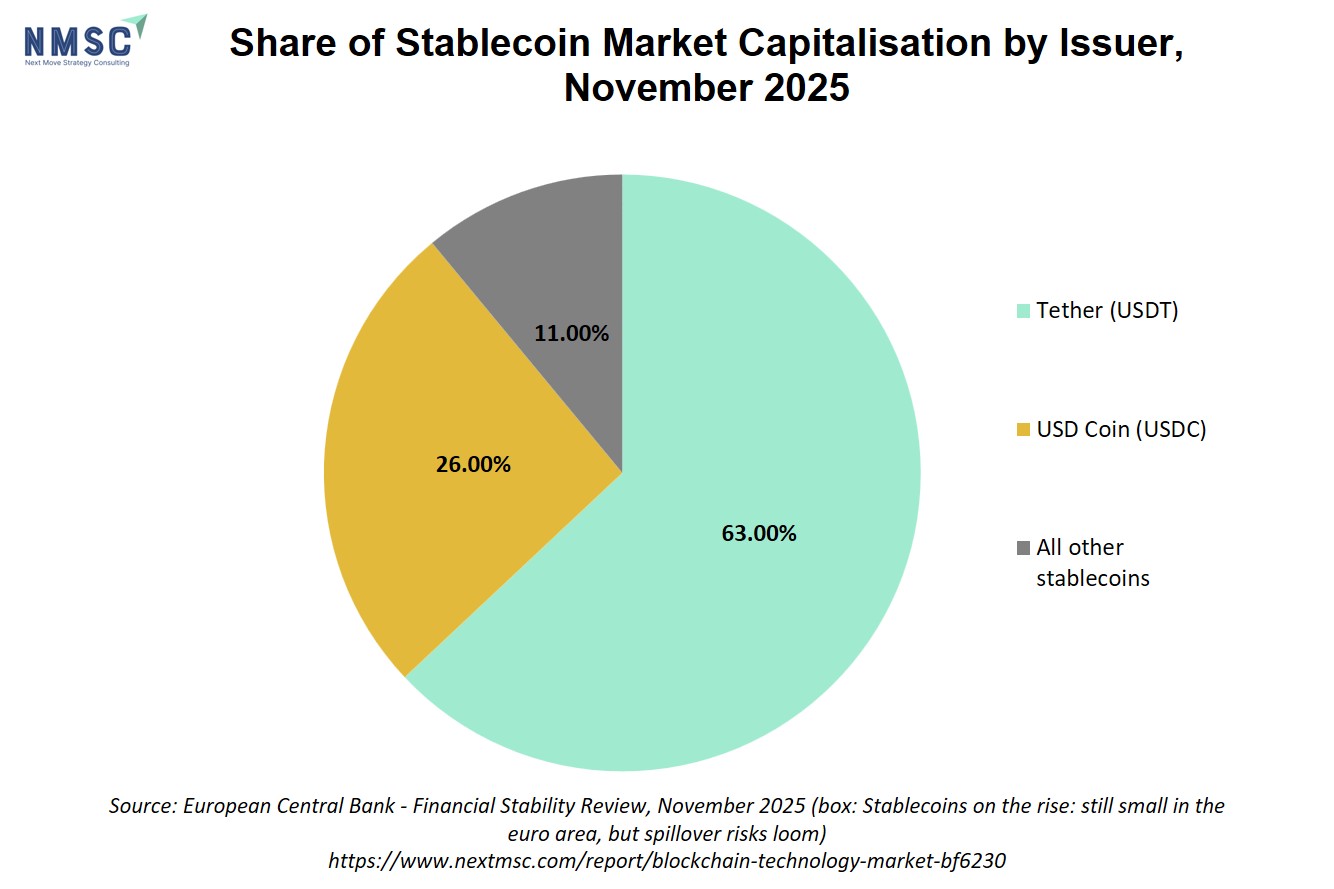
The stablecoin market that the OCC rule will regulate is highly concentrated. According to the ECB's Financial Stability Review of November 2025, published on November 26, 2025, Tether's USDT accounted for 63% of stablecoin market capitalisation, or USD 184 billion, and USD Coin (USDC) for 26%, or USD 75 billion. That leaves 11% for all other stablecoins combined, a remainder calculated from the two issuer shares the ECB reported. A rulebook covering reserve assets, redemption and custody for issuers under OCC jurisdiction, including foreign payment stablecoin issuers, therefore addresses a market in which two issuers hold the large majority of supply.
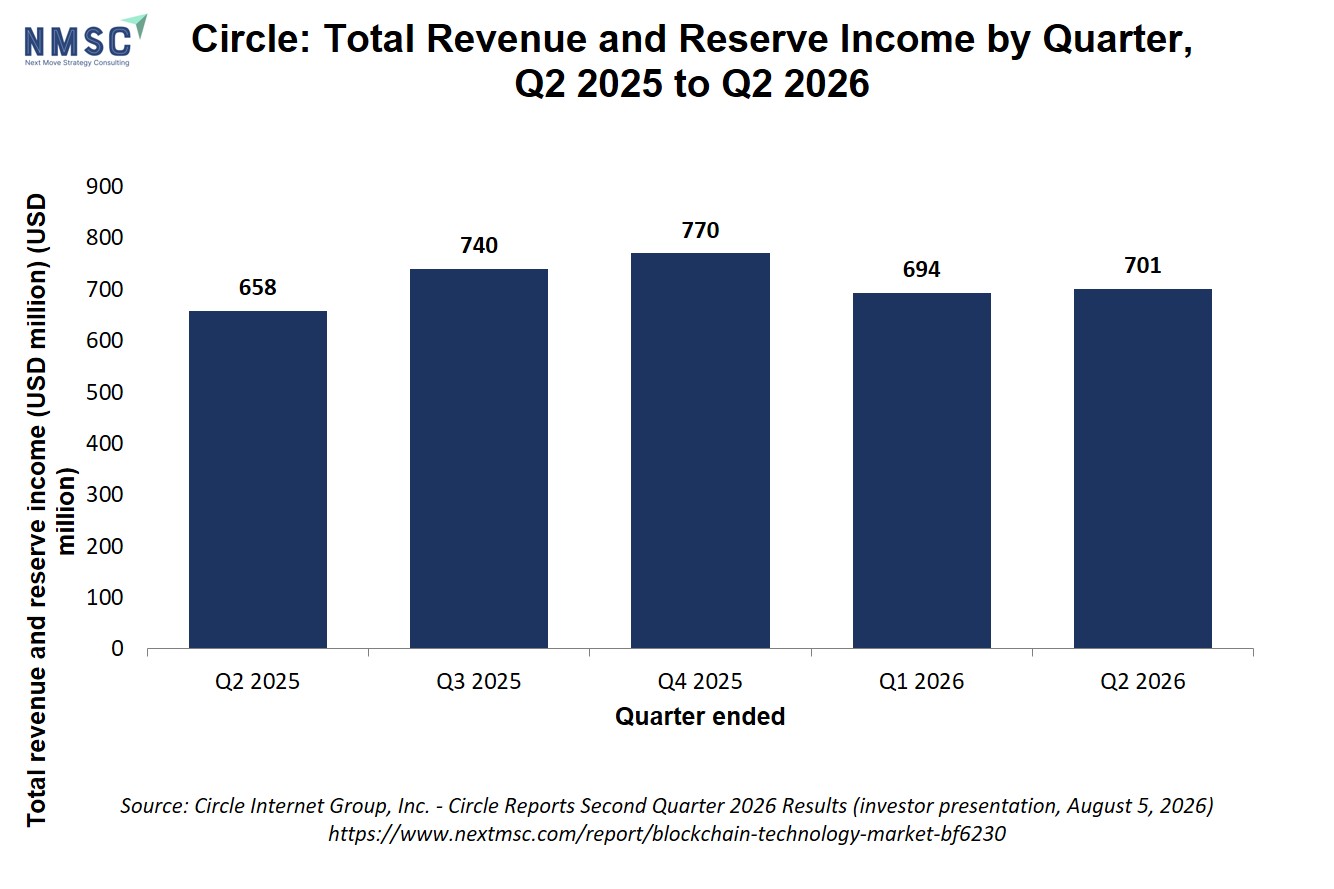
Issuer economics show what the reserve rules touch. Circle Internet Group reported on August 5, 2026 that USDC in circulation stood at USD 73.3 billion at the end of the second quarter of 2026, up 19% year over year, and that total revenue and reserve income was USD 701 million, up 7% year over year, of which reserve income was USD 668 million. Reserve income is the revenue line most exposed to the reserve-asset requirements that rules such as the OCC's bulletin set, which makes the quarterly series a published gauge of what stablecoin issuance earns.
In Europe, the European Central Bank (ECB) brought Pontes, the Eurosystem's distributed ledger technology solution, into initial operation on September 21, 2026. Pontes links market DLT platforms with TARGET Services so that wholesale transactions in tokenized assets settle in central bank money, and participants can settle either on the Eurosystem DLT platform using cash tokens or in T2, the Eurosystem's real-time gross settlement system. According to the ECB's Governing Council decisions published in October 2026, the Governing Council approved the agreement for the initial launch on August 11, 2026, and the Market Infrastructure Board recommended proceeding with the September 21 date on September 11, 2026. Final settlement of the cash leg occurs when the related transaction is completed in T2, which ties the cash side of tokenized transactions to the euro area's existing central bank money settlement system.
The Bank for International Settlements (BIS) marked the limits of that shift in June 2026. In the special chapter of its Annual Economic Report 2026, released on June 23, 2026, the BIS concluded that current stablecoin designs fall short on singleness, meaning redemption at par for central bank money, and argued that a unified ledger holding different forms of tokenized money would preserve trust in money while capturing the benefits of tokenization. The BIS cited Project Agorá, a wholesale cross-border payments prototype involving eight central banks and more than 40 regulated institutions.
Key Industry Developments: DTCC's Path From No-Action Relief to Production
The October 28 launch closed a sequence that DTCC itself dates. On December 11, 2025, DTCC announced that U.S. Securities and Exchange Commission staff had issued a no-action letter allowing DTC to tokenize DTC-custodied assets in a controlled production environment for three years, covering Russell 1000 constituents, exchange-traded funds tracking major indices and U.S. Treasury securities, with the digital version carrying the same entitlements, investor protections and ownership rights as the traditional asset. On July 15, 2026, DTCC reported that more than 30 firms had taken part in production trades using DTC-tokenized assets across seven transaction types, including collateral pledge, securities lending, U.S. Treasury repo delivery versus payment and central counterparty margin workflows, run over the Besu and Canton networks.
The October 28 release also names the ecosystem around the service. Beyond the 20 DTC Participants, DTCC lists collaborators including BitGo Bank & Trust, Blockdaemon, Broadridge, Fireblocks, Kaleido, Ondo, Talos, Tradeweb and Virtu, a roster that spans custody, node infrastructure, trading venues and tokenization platforms and shows that the production service rests on a multi-vendor stack rather than a single provider.
“Today marks the culmination of years of work.”
- Frank La Salla, President and CEO, DTCC, DTCC press release, DTCC Tokenization Service Goes Live, October 28, 2026.
Three Milestones Reshaping Regulated Blockchain Infrastructure
|
Milestone |
Date |
Scale and scope |
|
ECB Pontes initial launch (Eurosystem) |
September 21, 2026 |
Settlement of tokenized-asset wholesale transactions in central bank money via TARGET Services; cash tokens or T2 settlement |
|
OCC final rule under the GENIUS Act (Bulletin 2026-50) |
October 21, 2026 |
Payment stablecoin issuance rules for national banks, federal savings associations, foreign issuers and nonbank applicants; effective January 18, 2027 |
|
DTCC Tokenization Service goes live |
October 28, 2026 |
20 DTC Participants; Canton Network and Besu network; more than USD 114 trillion in DTC custody; further networks in 2027 |
Segment Dynamics: Applications and Capital Markets Lead the Mix
According to NextMSC primary research and analysis, Blockchain Applications is the largest offering segment, with about 32% share, and the fastest-growing at a 32.13% CAGR, projected to reach USD 1,925.96 billion by 2035. Blockchain Platform Software follows at a 27.97% CAGR, then Blockchain Infrastructure at 25.95%, Blockchain Professional Services at 22.85% and Blockchain Hardware at 14.76%. By use case, Tokenisation and Digital Assets is the largest segment, while Capital Markets is the fastest-growing at a 35.45% CAGR, the profile that DTCC's securities-focused service addresses directly.
NextMSC's segmentation by end-user industry places Banking, Financial Services and Insurance as the largest vertical, with Government and Public Sector the fastest-growing at a 33.87% CAGR. On architecture, Provider Cloud is the largest deployment model and Hybrid Environment the fastest at 32.85%, while Multi-Network Systems expand fastest by network scope at 35.98% and Public Permissionless Networks are the fastest-growing governance type at 30.52%. DTCC's design, which pairs a private Besu network with the Canton Network and adds further networks in 2027, is the type of configuration that NextMSC's analysis tracks under the Hybrid Environment and Multi-Network Systems segments.
Regional Outlook
North America holds the largest regional share of the market at about 36%, according to NextMSC primary research and analysis, which projects the region at USD 1,444.47 billion by 2035 at a 26.74% CAGR. The U.S. is projected at USD 1,126.69 billion by 2035 at a 26.39% CAGR and Canada at USD 187.78 billion at 27.87%, with the DTCC service and the OCC rule both falling inside this region's regulatory perimeter.
Asia-Pacific is the fastest-growing region at a 30.18% CAGR and is projected to reach USD 1,532.01 billion by 2035, overtaking North America by that year. Within the region, NextMSC projects China at USD 413.64 billion at a 29.66% CAGR, India at USD 260.44 billion at 35.32%, Japan at USD 168.52 billion at 26.74% and South Korea at USD 137.88 billion at 30.18%. Europe is projected at USD 744.12 billion at a 25.68% CAGR, led by the UK at USD 156.27 billion, Germany at USD 148.82 billion and France at USD 96.74 billion, the economies that sit inside the ECB's Pontes perimeter or alongside it. Middle East & Africa is projected at USD 393.95 billion at a 29.66% CAGR and Latin America at USD 262.63 billion at 27.97%.
Blockchain Technology Market: Regional Forecast to 2035
|
Region |
2035 value (USD billion) |
CAGR (2026–2035) |
|
North America |
1,444.47 |
26.74% |
|
Europe |
744.12 |
25.68% |
|
Asia-Pacific |
1,532.01 |
30.18% |
|
Middle East & Africa |
393.95 |
29.66% |
|
Latin America |
262.63 |
27.97% |
Growth Drivers and Restraints
Blockchain Technology Market: Growth Catalyst and Risk Assessment Matrix
|
Factor |
Type |
Impact on CAGR |
Geography |
Timeline |
|
Institutional tokenization of collateral, funds and securities |
Driver |
+5.2% |
Global |
2026–2035 |
|
Regulatory clarity for stablecoins and digital asset providers |
Driver |
+4.6% |
North America, Europe |
2026–2030 |
|
Central bank money access for DLT settlement |
Driver |
+2.1% |
Europe, Asia-Pacific |
2026–2031 |
|
Enterprise demand for managed node, custody and key management |
Driver |
+1.9% |
Global |
2026–2033 |
|
Fragmented standards and limited interoperability |
Restraint |
−2.4% |
Global |
2026–2032 |
|
Illicit finance concerns and uneven supervision |
Restraint |
−1.8% |
Global |
2026–2035 |
|
Smart contract and key management security incidents |
Restraint |
−1.3% |
Global |
2026–2034 |
|
Legacy system integration cost and skills shortages |
Restraint |
−1.1% |
Global |
2026–2030 |
NMSC Strategic Perspective: Production Rails Replace Pilot Budgets
NextMSC primary research and analysis identifies the period from September 21 to October 28, 2026 as the point at which blockchain settlement moved from pilot budgets to production budgets inside regulated institutions. Three separate rulebooks became operational within 37 days of one another: a central bank's settlement platform in the euro area, a banking regulator's stablecoin rule in the United States and a securities depository's tokenization service with an SEC staff no-action framework behind it. Each one reduces legal and settlement ambiguity for institutions that are already regulated, which is why NextMSC's driver analysis weights institutional tokenization (+5.2%) and regulatory clarity (+4.6%) above every other factor.
The restraint side of the matrix is equally visible in the same events. The BIS finding that current stablecoin designs fall short on singleness, and DTCC's decision to launch on two networks with more to follow in 2027, both point to interoperability as the unresolved constraint, which NextMSC rates at a −2.4% CAGR impact, the largest of the four restraints it quantifies. NextMSC's analysis indicates that vendors able to operate across private and public networks, and to supply custody, key management and node services (+1.9%), are positioned to convert regulatory clarity into recurring infrastructure revenue rather than one-off project fees.
For investors, NextMSC's analysis identifies the USD 3,901.70 billion absolute increase between 2026 and 2035 as led by Blockchain Applications, the largest offering segment, with Capital Markets the fastest-growing use case, Asia-Pacific supplying the fastest regional growth and North America the deepest regulated buyer base. The sequencing matters: the OCC rule takes effect on January 18, 2027 and DTCC plans to add networks during 2027, so the first full year of production data on regulated tokenized activity will arrive in 2027, and it will test NextMSC's institutional tokenization assumption directly.
Competitive Landscape
NextMSC profiles 20 companies in its Blockchain Technology Market report, spanning mining hardware makers BITMAIN Technologies and Canaan, enterprise cloud and technology providers including IBM, Oracle, Microsoft, Amazon Web Services and Huawei, consulting and integration firms Accenture, Tata Consultancy Services, Infosys and Wipro, Alibaba, and specialist blockchain software and infrastructure vendors Consensys, Chainlink Labs, R3, Ripple Labs, Fireblocks, Chainalysis, Blockdaemon and Digital Asset Holdings.
Two of those profiled vendors, Fireblocks and Blockdaemon, appear among the collaborators named in DTCC's October 28, 2026 release, which makes the DTCC launch a traceable, dated deployment for the custody and node-infrastructure segment that NextMSC's driver analysis rates at +1.9%. NextMSC's analysis indicates that competitive positioning is separating along two lines: breadth across private and public networks, and the ability to meet the reserve, custody and supervision requirements that the OCC rule and the ECB's Pontes framework now set out in published form.
Bottom Line
The global blockchain technology market is moving from pilot spending to regulated production infrastructure, and three events within 37 days make that shift concrete. The ECB opened Pontes for central bank money settlement of tokenized assets on September 21, 2026, the OCC finalized its GENIUS Act stablecoin rule on October 21 with an effective date of January 18, 2027, and DTCC put its Tokenization Service into production on October 28 with 20 DTC Participants. According to NextMSC primary research and analysis, the market was estimated at USD 475.48 billion in 2026 and is projected to reach USD 4,377.18 billion by 2035 at a 27.97% CAGR, with Asia-Pacific the fastest-growing region at 30.18% and Blockchain Applications the largest offering segment. The principal constraint is fragmentation: the BIS warned in June 2026 that current stablecoin designs fall short on singleness, and NextMSC places fragmented standards and limited interoperability at a −2.4% CAGR impact. Vendors with custody, node and multi-network capability are best placed to capture the USD 3,901.70 billion of added market value.
About Next Move Strategy Consulting
Next Move Strategy Consulting is a premier market research and management consulting firm that has been committed to provide strategically analysed well documented latest research reports to its clients. The research industry is flooded with many firms to choose from, what makes NMSC different from the rest is its top-quality research and the obsession of turning data into knowledge by dissecting every bit of it and providing fact-based research recommendation that is supported by information collected from over 500 million websites, paid databases, industry journals and one on one consultations with industry experts across a diverse range of industry sectors. The high-quality customized research reports with actionable insights and excellent end-to-end customer service help our clients to take critical business decisions that enables them to move beyond time and have competitive edge in the industry.
We have been servicing over 1000 customers globally that includes 90% of the Fortune 500 companies over a decade. Our analysts are constantly tracking various high growth markets and identifying hidden opportunities in each sector or the industry. We provide one of the industry’s best quality syndicate as well as custom research reports across 10 different industry verticals. We are committed to deliver high quality research solutions in accordance to your business needs. Our industry standard delivery solutions that ranges from the pre consultation to after-sales services, provide an excellent client experience and ensure right strategic decision making for businesses.
For more information, please contact:
Next Move Strategy Consulting
5th Floor 867 Boylston St, STE 500,
Boston, MA 02116, U.S.
E-Mail: [email protected]
Direct: +1-217-650-7991
Website: www.nextmsc.com
About the Author
 Sanyukta Deb
— Sanyukta Deb is Digital Marketing Team Lead at Next Move Strategy Consulting, where she has led content strategy and technical SEO for the firm's B2B market research publications for over 2 years. Her editorial process translates NextMSC's primary and secondary research — spanning technology, industrial, and consumer sectors — into commercial narratives, backed by search-intent, keyword, and competitive analysis. She brings 5 years of overall experience in digital marketing and content strategy.
About the Reviewer
 Debashree Dey
— Debashree Dey is Assistant Manager at Next Move Strategy Consulting, where she supports cross-vertical market content and communications across diverse industries for 6 years. Her professional background includes senior content writing, communications, and published manuscript authorship, with experience developing audience-focused business narratives and maintaining clear, consistent messaging. Her role supports research-led content development and editorial quality across NextMSC publications.














Add Comment