EV Charging Station Market: Global Adoption Outlook Update
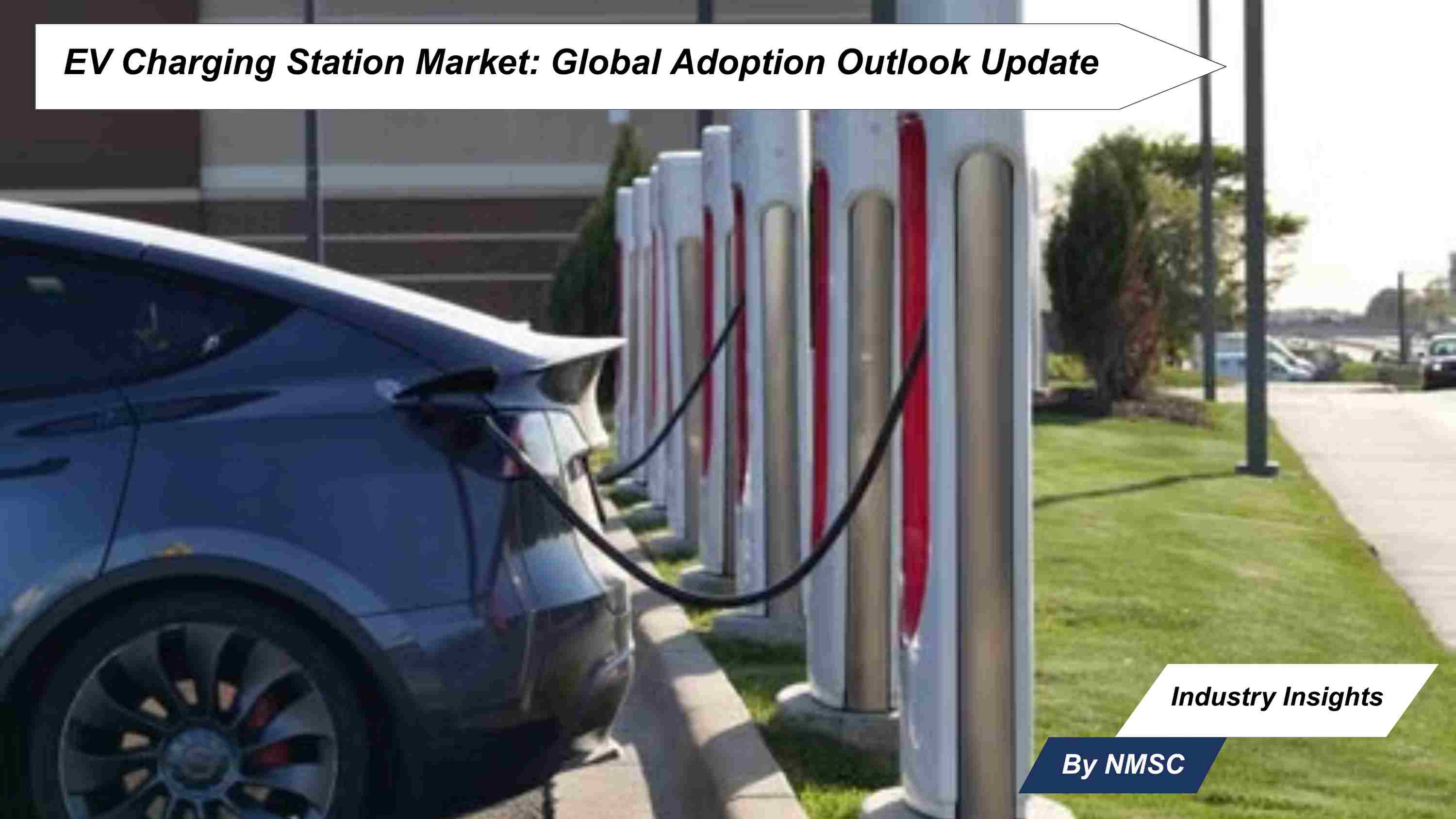
DNV Projects Over 90% Battery-EV Fleet Share by 2050 Amid Uneven Global Transition Timelines
LITTLETON, Colorado, United States — October 14, 2026 — A Reuters analysis published Wednesday highlights that while battery electric vehicles (BEVs) are on course to dominate passenger car fleets worldwide, the pace of transition varies sharply across major automotive markets a development with direct implications for the EV charging station market, which is projected to reach USD 208.87 billion by 2030, growing at a CAGR of 33.4%.
According to global risk management firm DNV, battery electric vehicles will capture more than 90% of passenger car fleet share by 2050 across markets spanning China, Europe, and Southeast Asia. However, the Reuters commentary cautions that the retirement rate of internal combustion engine (ICE) vehicles not merely EV sales figures will be the critical determinant of how quickly fuel demand erodes across regions.
China currently leads global electrification with approximately 37.5 million passenger EVs in operation a figure greater than the rest of the world combined and DNV projects this will rise to over 165 million by 2035 and approximately 360 million by 2050. Europe is projected to record the steepest decline in ICE vehicles, with conventional car numbers expected to contract from approximately 284 million currently to around 77 million by 2050, while the continent's BEV fleet is forecast to expand from 12.5 million to 177 million over the same period.
North America presents a more measured trajectory. Policy reversals and consumer preference for range-extender technology have slowed BEV uptake, with EVs currently numbering approximately 8 million against an ICE fleet of around 290 million. DNV projects North American EV numbers will reach approximately 86 million by 2040, even as ICE vehicles retain a significant presence. India and several emerging markets in Southeast Asia, Sub-Saharan Africa, and Latin America are expected to continue expanding ICE fleets into the 2040s before EVs emerge as the dominant choice, with India's ICE passenger car fleet projected to peak at approximately 165 million in the late 2040s.
Key Highlights:
-
DNV's long-range projection: Battery electric vehicles are forecast to exceed 90% of passenger car fleet share by 2050 across China, Europe, and Southeast Asia, underscoring the structural, long-term demand for charging infrastructure.
-
China's dominance: With approximately 37.5 million EVs currently on the road and a projected 360 million by 2050, China's integrated battery supply chain and extensive charging network continue to set the global benchmark for electrification pace.
-
Europe's ICE phase-out: Europe is on course for the steepest absolute decline in combustion-engine vehicles globally, with ICE car numbers projected to fall by over 200 million between now and 2050, accelerating the need for dense public and private charging networks.
-
Divergent emerging market timelines: India, Latin America, and Sub-Saharan Africa are expected to sustain ICE fleet growth into the 2040s, presenting a phased but substantial future opportunity for charging infrastructure deployment in these regions.
Analyst Insight:
According to analysts at Next Move Strategy Consulting, the divergence in regional EV adoption timelines does not diminish the long-term investment case for charging infrastructure it reframes it. Markets such as China and Europe, where ICE fleet retirement is accelerating most rapidly, will require dense, high-capacity DC fast-charging networks in the near to medium term, while emerging economies represent a longer-horizon but structurally significant growth opportunity as EV penetration eventually scales.
NMSC analysts further note that the EV charging station market's projected expansion from USD 49.44 billion in 2025 to USD 208.87 billion by 2030 at a CAGR of 33.4% reflects precisely this dynamic: infrastructure investment is front-loading in mature markets while policy frameworks and cost reductions progressively unlock demand in developing regions. The interplay between government incentives, fleet electrification mandates, and smart-grid integration will be the primary determinants of how quickly each regional market scales its charging ecosystem.
Industry Outlook:
The Reuters analysis reinforces a nuanced but ultimately constructive outlook for the global EV charging sector. While headline EV sales figures capture attention, the more consequential metric for infrastructure planners and investors is the rate at which ICE vehicles are retired from active fleets a process that is already well advanced in China and Europe, and that will progressively intensify across North America through the 2030s and 2040s.
For charging network operators, utilities, and infrastructure investors, the regional variation in transition timelines necessitates differentiated deployment strategies rather than a uniform global approach. Markets with accelerating ICE phase-outs demand immediate, large-scale network expansion, while emerging economies call for scalable, modular infrastructure models capable of absorbing rapid demand growth once EV adoption inflects. The destination a predominantly electrified global vehicle fleet remains clearly defined; the commercial opportunity lies in navigating the varied speeds at which different markets will arrive there.
Source: Reuters
For More Information: Download FREE Sample on EV Charging Station Market Report
Prepared By: Sanyukta Deb
About the Author
 Sanyukta Deb
— Sanyukta Deb is Digital Marketing Team Lead at Next Move Strategy Consulting, where she has led content strategy and technical SEO for the firm's B2B market research publications for over 2 years. Her editorial process translates NextMSC's primary and secondary research — spanning technology, industrial, and consumer sectors — into commercial narratives, backed by search-intent, keyword, and competitive analysis. She brings 5 years of overall experience in digital marketing and content strategy.
Sanyukta Deb
— Sanyukta Deb is Digital Marketing Team Lead at Next Move Strategy Consulting, where she has led content strategy and technical SEO for the firm's B2B market research publications for over 2 years. Her editorial process translates NextMSC's primary and secondary research — spanning technology, industrial, and consumer sectors — into commercial narratives, backed by search-intent, keyword, and competitive analysis. She brings 5 years of overall experience in digital marketing and content strategy.
About the Reviewer
 Debashree Dey
— Debashree Dey is Assistant Manager at Next Move Strategy Consulting, where she supports cross-vertical market content and communications across diverse industries for 6 years. Her professional background includes senior content writing, communications, and published manuscript authorship, with experience developing audience-focused business narratives and maintaining clear, consistent messaging. Her role supports research-led content development and editorial quality across NextMSC publications.
Debashree Dey
— Debashree Dey is Assistant Manager at Next Move Strategy Consulting, where she supports cross-vertical market content and communications across diverse industries for 6 years. Her professional background includes senior content writing, communications, and published manuscript authorship, with experience developing audience-focused business narratives and maintaining clear, consistent messaging. Her role supports research-led content development and editorial quality across NextMSC publications.

















Add Comment