Smart Railway Systems: Automation Reshapes Global Rail
Siemens Mobility's Nordic Automated Train Milestone Signals a New Era for Global Smart Railway Deployment as EU, Asia, and North America Scale Digital Rail Investment
In March 2026, Siemens Mobility conducted the Nordic region's first-ever automated train operation on a European Train Control System (ETCS)-equipped mainline — a demonstration that crystallised the accelerating convergence of automation, digitalization, and intelligent infrastructure across the global rail sector. Carried out on the 19-kilometre route between Juurikorpi and Hamina in Finland as part of the country's Digirail modernisation programme, the test showcased the integration of Automatic Train Operation (ATO) with ETCS Level 2, achieving automated stops from 100 km/h with a precision of between 30 and 80 centimetres. Marc Ludwig, CEO of Rail Infrastructure at Siemens Mobility, stated that the technology can increase network capacity by 30%, significantly improve punctuality, and reduce energy consumption by over 30%.
The milestone is not an isolated technological achievement. It is emblematic of a structural transformation underway across the global Smart Railway System Market, where governments, infrastructure managers, and technology vendors are converging on a shared agenda: the digitalization, automation, and decarbonization of rail networks at scale. According to the Next Move Strategy Consulting Smart Railway System Market report, the market is positioned for sustained expansion through the forecast period, driven by rising urbanization, government-led infrastructure modernization programmes, and the accelerating adoption of IoT, AI, and advanced signalling technologies across all major geographies.
For More Information: Download FREE Sample on Smart Railway System Market Report
European Commission's High-Speed Rail Plan Reshapes the Policy Landscape
On 5 November 2025, the European Commission unveiled "Connecting Europe through High-Speed Rail" — a comprehensive roadmap to accelerate high-speed rail development across the EU and a landmark policy event with direct implications for smart railway investment globally. The plan targets cutting the duration of many popular rail journeys across Europe by half compared to today, with Berlin to Copenhagen projected to take four hours instead of seven by 2030, and Sofia to Athens just six hours apart by rail by 2035. Commissioner for Sustainable Transport and Tourism Apostolos Tzitzikostas described the initiative as "turning ambition into action: breaking down barriers, mobilising investments for modern infrastructure, and making cross-border rail the backbone of a carbon-neutral, competitive, and secure Europe."
To date, the EU has committed to supporting 804 rail infrastructure projects across the bloc with a total of €34.4 billion through the Connecting Europe Facility, with rail accounting for 68.76% of total CEF investment. The plan's four structural pillars — accelerating investment and harmonising interoperability, establishing a competitive framework for rail services, supporting a strong European rail sector, and strengthening EU-level governance — collectively represent the most ambitious regulatory and financial commitment to rail modernisation in the bloc's history.
ERTMS Deployment Reveals the Scale of the Digital Signalling Gap
The urgency of digital rail deployment is underscored by the European ERTMS Coordinator's Third Work Plan, published in February 2026, which revealed that the European Train Control System had been deployed on only approximately 10% — or 12,400 kilometres — of the Trans-European Transport Network by the end of 2024, with around 19% of the EU railway fleet (8,730 vehicles) equipped with ETCS onboard units. The EU Commission has characterised this deployment rate as "significantly behind schedule," reinforcing the need for accelerated investment in smart signalling infrastructure across member states. The Third Work Plan calls for stronger governance and coordination, sufficient and stable financing, and a long-term approach to deployment that moves beyond project-by-project implementation toward coordinated action plans at network level.
World Bank Scales Rail Investment Portfolio Across Developing Economies
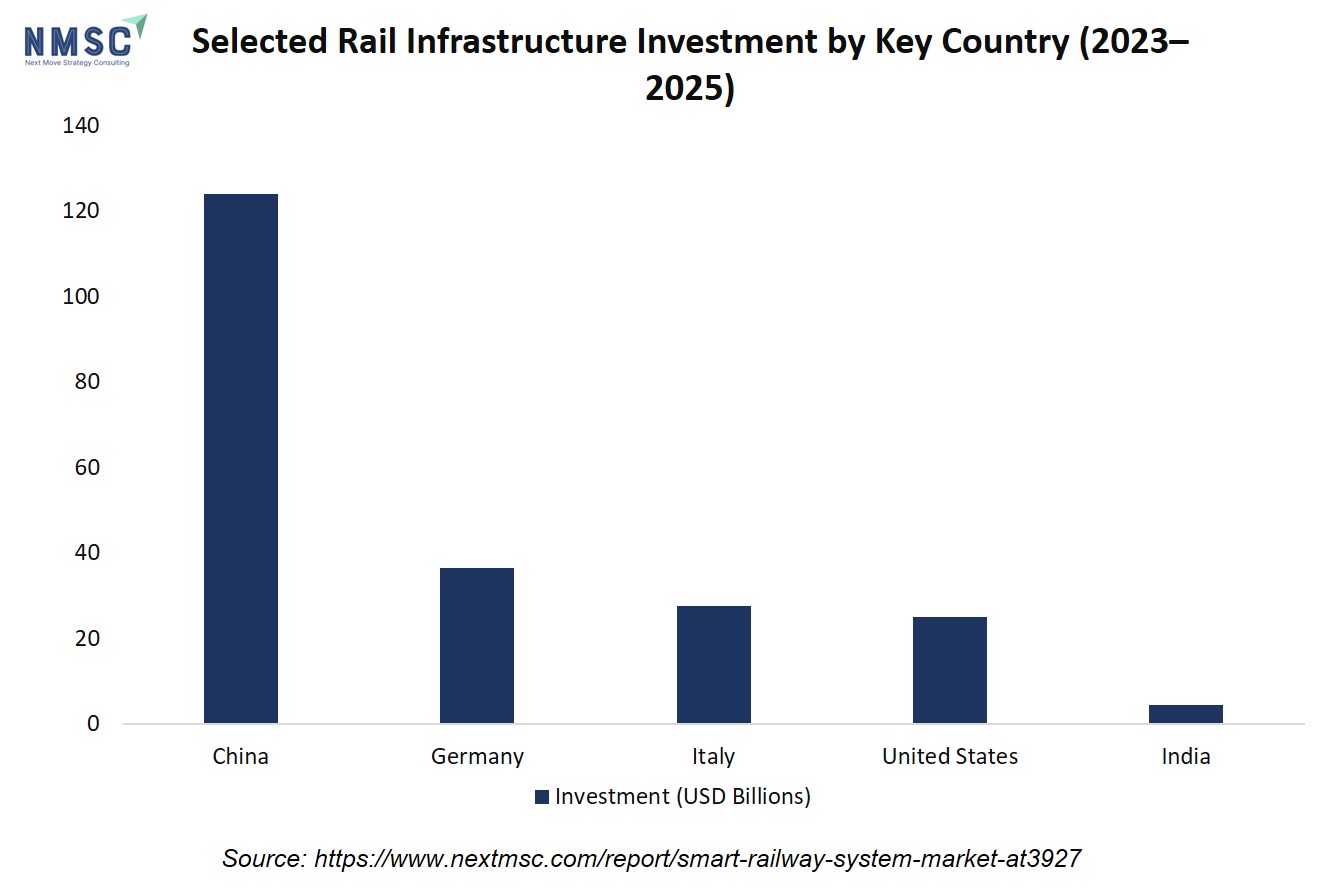
Beyond Europe, the World Bank's August 2025 results brief on rail logistics confirmed that the institution is currently supporting 15 investment projects totalling $4.5 billion in railway development across more than 20 countries, with its rail portfolio expected to grow to more than $6 billion over the next five years. In India, World Bank-supported Eastern Dedicated Freight Corridor (EDFC) projects resulted in the construction of 1,200 kilometres of new dedicated freight tracks between 2011 and 2024, boosting daily freight train capacity fourfold, reducing logistics costs by $58 million, and generating approximately 9 million days of employment during project implementation. By 2042, total cumulative greenhouse gas emissions reductions from the EDFC are projected to reach 13.19 million tonnes — a reduction of 57% from pre-project levels in 2010, underscoring the dual economic and environmental dividend of smart rail investment.
In Uzbekistan, a World Bank-supported rail link improved connectivity for over 740,000 people, cut passenger travel costs by 33%, reduced trip delays from 95% to 10%, and reduced freight costs for key goods by up to 80%. In Serbia, modernised rail infrastructure has reduced the fatality rate per train kilometre by approximately half, from 3.56 per train-kilometre in 2019 to 1.89 per train-kilometre in 2025.
North America: Rail Supply Industry Anchors Economic Output
In North America, the Railway Supply Institute's 2026 Rail Supply Economic Impact Study, released in March 2026 and commissioned in partnership with Oxford Economics, confirmed that the U.S. rail supply industry supports more than 900,000 jobs and contributes $127 billion to U.S. GDP — underscoring the sector's role as a critical driver of domestic manufacturing and infrastructure investment. The study, which for the first time expanded its scope to include transit and commuter rail, reflects the growing recognition of passenger rail supply chains as a strategic economic asset. The U.S. Infrastructure Investment and Jobs Act (IIJA) has allocated $102 billion in total rail funding, including $66 billion from advanced appropriations, providing a multi-year capital commitment that is catalysing upgrades to both freight and passenger rail infrastructure across the country.
Technology Architecture: AI, IoT, and Predictive Maintenance Define the Smart Railway Stack
The technological architecture of the smart railway ecosystem is rapidly maturing. According to research published in March 2026 by Railway-News, over 58% of new rail infrastructure projects globally now incorporate digital signalling technologies such as ETCS or Communication-Based Train Control (CBTC), demonstrating their central role in railway modernisation. AI-based predictive maintenance platforms — which use IoT sensors, machine learning algorithms, and cloud analytics to monitor infrastructure and detect failures before they occur — have demonstrated the capacity to reduce unplanned downtime by 30 to 40% while improving maintenance efficiency across rail networks.
The integration of cloud and edge computing is further enabling real-time decision-making, route optimisation, and multi-operator coordination across interconnected rail networks. Edge computing minimises latency in mission-critical applications such as automatic signalling, surveillance, and emergency response systems, while cloud platforms enable data management and cross-border coordination — both of which are integral to smart rail strategies as governments push for smarter transportation infrastructure as part of national digitalization agendas.
Digital Twin technology is also emerging as a transformative tool in railway infrastructure management. DT-based monitoring frameworks have demonstrated 30–60% improvements in early fault detection and 15–35% reductions in corrective maintenance costs, according to research published in MDPI Sensors in 2026.
AI Adoption in Rail: From Pilot to Operational Deployment
A 2024 study conducted by the International Union of Railways (UIC) and McKinsey & Company identified over 100 potential AI use cases in the rail sector, with approximately 20 applications being actively implemented across railway companies worldwide. These applications span automated timetable optimisation, real-time disruption management, predictive maintenance systems, and intelligent traffic management — all of which are central to the smart railway value proposition. Industry analysts and operators consistently emphasise that AI functions most effectively as a decision-support tool, complementing human expertise rather than replacing it, given the safety-critical nature of railway operations.
Key Rail Infrastructure Investment Highlights by Country (2024–2026)
|
Country / Entity |
Investment Highlight |
Value |
Period |
|
China |
Annual rail infrastructure investment |
€113.8 billion |
2024 |
|
United States |
IIJA total rail funding |
$102 billion |
2021–2026 |
|
European Union |
CEF rail project commitments |
€34.4 billion |
Cumulative |
|
Italy |
EU Recovery Plan HSR allocation |
€25.4 billion |
2021–2026 |
|
United States |
Annual freight railroad capital investment |
$25 billion |
2024 |
|
World Bank |
Active rail investment portfolio |
$4.5 billion |
2025 |
|
U.S. Rail Supply Industry |
Contribution to U.S. GDP |
$127 billion |
2024 |
|
India (EDFC) |
New dedicated freight tracks built |
1,200 km |
2011–2024 |
Competitive Landscape: Consolidation Around Technologically Advanced Players
The competitive landscape of the smart railway system market is dominated by established industrial technology conglomerates. Siemens Mobility, Alstom, Hitachi Rail, Wabtec, Cisco, IBM, Huawei, Honeywell, ABB, and Indra Sistemas are among the principal vendors driving innovation across signalling, rolling stock automation, passenger information systems, and cybersecurity.
In June 2026, Hitachi Rail and Siemens Mobility emerged as the only remaining bidders for Renfe's contract to supply between 30 and 40 high-speed trainsets capable of operating at 350 km/h — a procurement that signals the continued consolidation of the global smart rail supply chain around a small number of technologically advanced players. Separately, in January 2026, Hitachi Rail signed a 274.5 billion yen railway system contract with Swiss National Railways for up to 25 years, further demonstrating the long-term contractual commitments that characterise the smart railway sector. In February 2026, Siemens Mobility and Stadler were selected to supply a new fleet of fully automated trains for Copenhagen's S-Bane suburban rail network — another indicator of the accelerating deployment of autonomous rail technology across European urban transit systems.
Smart Railway Technology Adoption Metrics (2024–2026)
|
Technology / Metric |
Indicator |
Value |
|
Digital Signalling (ETCS/CBTC) |
Share of new rail projects globally incorporating digital signalling |
>58% |
|
ETCS |
Deployment on TEN-T network (end 2024) |
~10% (~12,400 km) |
|
ETCS |
EU railway fleet equipped (end 2024) |
~19% (8,730 vehicles) |
|
AI in Rail |
Identified AI use cases in rail sector |
100+ |
|
AI in Rail |
Actively implemented AI applications |
~20 |
|
Predictive Maintenance |
Reduction in unplanned downtime |
30–40% |
|
ATO (Siemens Mobility) |
Network capacity increase |
Up to 30% |
|
ATO (Siemens Mobility) |
Energy savings |
Over 30% |
|
Digital Twin Technology |
Improvement in early fault detection |
30–60% |
Regional Dynamics: Asia-Pacific Leads Growth, Europe Drives Regulatory Standardisation
Asia-Pacific continues to represent the fastest-growing regional market for smart railway systems, driven by China's sustained rail infrastructure investment — which reached €113.755 billion in 2024 according to CEIC data — alongside India's ambitious freight corridor expansion and Japan's continued leadership in autonomous train technology. The NMSC Smart Railway System Market report identifies Asia-Pacific as the region expected to record the highest growth rate during the forecast period, underpinned by aggressive implementation of advanced technologies and significant investments in digital transformation by emerging economies including China, India, South Korea, Singapore, and Australia. High population density in the region intensifies the need to expand and improve existing rail infrastructure to meet rising transportation demand, while government schemes supporting smart infrastructure and digital communications serve as powerful demand drivers.
Europe's regulatory-driven digitalization agenda, anchored by ERTMS deployment mandates and the EU's High-Speed Rail Plan, positions the region as the primary driver of smart signalling and interoperability investment. The ITF's July 2025 global transport infrastructure investment data update confirmed that Italy, Slovenia, and France are the only countries allocating more than 50% of their inland transport infrastructure investment to rail — a structural commitment that reflects the depth of Europe's rail modernisation agenda.
North America's trajectory is shaped by the $102 billion in total rail funding allocated under the IIJA, which is catalysing upgrades to both freight and passenger rail infrastructure, alongside the growing adoption of AI-assisted inspection technologies and digital train inspection portals by major freight railroads. The Association of American Railroads has confirmed that freight railroads privately invest approximately $25 billion annually in capital expenditures — a rate six times higher than the average for other transportation modes — underscoring the sector's self-funded modernisation capacity.
Bottom Line
The global smart railway system market is entering a period of accelerated structural transformation, driven by the convergence of regulatory mandates, government capital commitments, and maturing digital technologies. The Siemens Mobility Nordic automated train demonstration, the European Commission's High-Speed Rail Plan, the World Bank's expanding rail investment portfolio, and the RSI's confirmation of the U.S. rail supply industry's $127 billion GDP contribution collectively signal that the transition from legacy rail infrastructure to intelligent, data-driven networks is no longer a long-term aspiration — it is an active deployment reality.
For investors and industry participants, the most compelling opportunities lie in digital signalling infrastructure, AI-powered predictive maintenance platforms, passenger information systems, and cybersecurity solutions for connected rail networks. Asia-Pacific presents the highest growth potential, while Europe offers regulatory certainty and long-term contractual visibility. Key risks include the high initial cost of deployment, the complexity of integrating advanced systems with legacy infrastructure, and data security vulnerabilities inherent in IoT-connected rail environments. Supply chain disruptions affecting IoT device manufacturing represent an additional operational risk. Strategic positioning in this market requires a long-term investment horizon, deep technical expertise, and the capacity to navigate complex multi-stakeholder procurement environments across sovereign rail networks globally.
About Next Move Strategy Consulting
Next Move Strategy Consulting is a premier market research and management consulting firm that has been committed to provide strategically analysed well documented latest research reports to its clients. The research industry is flooded with many firms to choose from, what makes NMSC different from the rest is its top-quality research and the obsession of turning data into knowledge by dissecting every bit of it and providing fact-based research recommendation that is supported by information collected from over 500 million websites, paid databases, industry journals and one on one consultations with industry experts across a diverse range of industry sectors. The high-quality customized research reports with actionable insights and excellent end-to-end customer service help our clients to take critical business decisions that enables them to move beyond time and have competitive edge in the industry.
We have been servicing over 1000 customers globally that includes 90% of the Fortune 500 companies over a decade. Our analysts are constantly tracking various high growth markets and identifying hidden opportunities in each sector or the industry. We provide one of the industry's best quality syndicate as well as custom research reports across 10 different industry verticals. We are committed to deliver high quality research solutions in accordance to your business needs. Our industry standard delivery solutions that ranges from the pre consultation to after-sales services, provide an excellent client experience and ensure right strategic decision making for businesses.
For more information, please contact:
Next Move Strategy Consulting
5th Floor 867
Boylston St, STE 500,
Boston, MA 02116, U.S.
E-Mail: [email protected]
Direct: +1-217-650-7991
Website: www.nextmsc.com
About the Author
 Sanyukta Deb
— Sanyukta Deb is Digital Marketing Team Lead at Next Move Strategy Consulting, where she has led content strategy and technical SEO for the firm's B2B market research publications for over 2 years. Her editorial process translates NextMSC's primary and secondary research — spanning technology, industrial, and consumer sectors — into commercial narratives, backed by search-intent, keyword, and competitive analysis. She brings 5 years of overall experience in digital marketing and content strategy.
Sanyukta Deb
— Sanyukta Deb is Digital Marketing Team Lead at Next Move Strategy Consulting, where she has led content strategy and technical SEO for the firm's B2B market research publications for over 2 years. Her editorial process translates NextMSC's primary and secondary research — spanning technology, industrial, and consumer sectors — into commercial narratives, backed by search-intent, keyword, and competitive analysis. She brings 5 years of overall experience in digital marketing and content strategy.
About the Reviewer
 Debashree Dey
— Debashree Dey is Assistant Manager at Next Move Strategy Consulting, where she supports cross-vertical market content and communications across diverse industries for 6 years. Her professional background includes senior content writing, communications, and published manuscript authorship, with experience developing audience-focused business narratives and maintaining clear, consistent messaging. Her role supports research-led content development and editorial quality across NextMSC publications.
Debashree Dey
— Debashree Dey is Assistant Manager at Next Move Strategy Consulting, where she supports cross-vertical market content and communications across diverse industries for 6 years. Her professional background includes senior content writing, communications, and published manuscript authorship, with experience developing audience-focused business narratives and maintaining clear, consistent messaging. Her role supports research-led content development and editorial quality across NextMSC publications.

















Add Comment