FDA AI Stroke Breakthrough Signals a New Era for Wearable Brain Devices
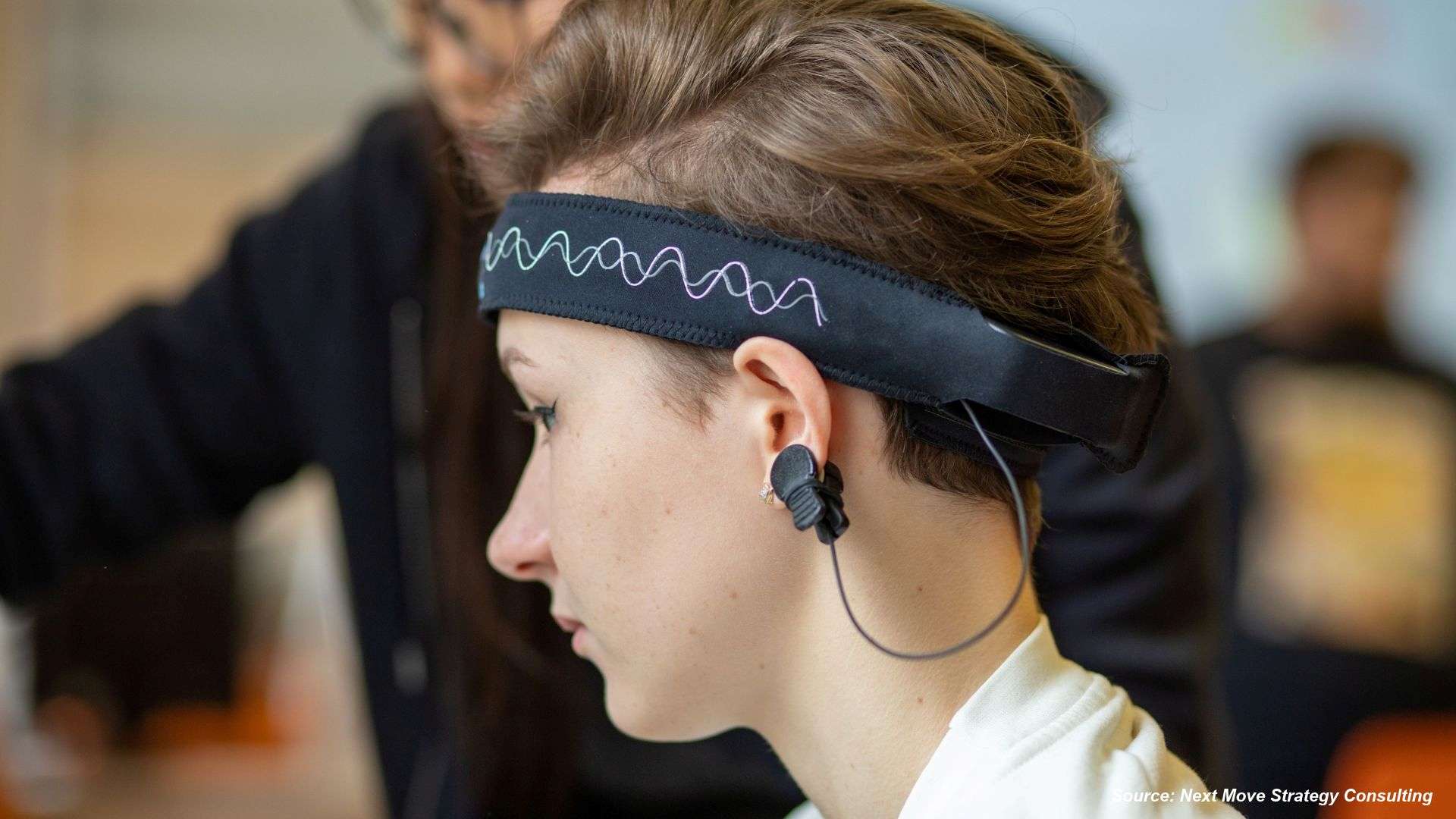
FDA Breakthrough Designation for AI-Powered Stroke Detection and a $200M BCI Financing Round Signal a Structural Shift in the Wearable Brain Devices Market
On January 5, 2026, Ceribell, Inc. (Nasdaq: CBLL) announced that the U.S. Food and Drug Administration had granted Breakthrough Device Designation to its large vessel occlusion (LVO) stroke detection and monitoring solution — a first-in-class application that uses the company's existing wearable EEG headband hardware paired with a new AI-based algorithm to detect in-hospital strokes in real time. The designation followed Ceribell's December 9, 2025 FDA 510(k) clearance for the world's first continuous, AI-powered delirium monitoring solution, making the company the only vendor to hold FDA clearance for both seizure and delirium monitoring on a single wearable EEG platform. These sequential regulatory milestones, combined with Synchron's USD 200 million Series D financing announced in November 2025 and NeuroLife's commercial launch in June 2026, mark a convergence of clinical validation, capital deployment, and platform diversification that is reshaping the competitive and investment landscape for wearable brain devices globally.
According to Next Move Strategy Consulting's Wearable Brain Devices Market report, the global wearable brain devices market was valued at USD 2.95 billion in 2025 and is projected to reach USD 19.68 billion by 2035, growing at a CAGR of 20.9% from 2026 to 2035. NMSC's proprietary research and analysis identifies expanding FDA clearance pathways for wearable EEG indications as the primary structural driver, contributing an estimated +3.8 percentage points to the market's compound annual growth rate through 2035 — a mechanism specific to the regulatory architecture governing point-of-care neurological monitoring, not a generalizable digital health trend.
For More Information: Download FREE Sample on Wearable Brain Devices Market Report
The Clinical Imperative: Why Wearable EEG Is Becoming a Hospital Standard
The urgency behind Ceribell's regulatory push is grounded in a well-documented clinical gap. According to the American Heart Association's 2025 Heart Disease and Stroke Statistics report, nearly 800,000 strokes occur annually in the United States. LVO strokes — the subset Ceribell's new designation targets — contribute to approximately 62% of post-stroke dependence and 96% of post-stroke mortalities, yet up to 17% of all strokes occur in patients already admitted to hospital, where detection is systematically delayed compared to community-onset events.
Dr. Chitra Venkatasubramanian, MBBS, MD, MSc, FNCS, Clinical Professor of Neurology and Neurosurgery, articulated the clinical problem directly in Ceribell's January 2026 announcement: "In-hospital strokes frequently occur in units that aren't specialized in neurology, where bedside teams may not have sufficient training or tools to detect subtle neurological changes concerning a stroke. Many of these patients are recovering from surgery, intubated, ventilated, or on medications that complicate their assessment, making it incredibly difficult to spot the early signs of a stroke. A tool that continuously monitors brain function and alerts the care team the moment something is wrong would allow us to intervene sooner and facilitate achieving better outcomes for patients."
The delirium indication cleared in December 2025 addresses an equally severe unmet need. Delirium affects approximately 31% of ICU patients and up to 80% of those who are mechanically ventilated, and is associated with a 10% higher six-month mortality risk for every additional day a patient experiences it, according to peer-reviewed data cited in Ceribell's FDA clearance announcement. Juliana Barr, MD, professor emerita of anesthesiology, perioperative and pain medicine at Stanford University School of Medicine, stated: "Current detection methods rely on intermittent, labor-intensive bedside assessments that are subject to human variability. Ceribell offers a reliable continuous monitoring solution that has the potential to improve delirium detection rates and management, and reduce the high costs associated with missed or delayed diagnoses."
Jane Chao, Ph.D., co-founder and CEO of Ceribell, framed the company's broader strategic intent in the January 2026 Breakthrough Device announcement: "Stroke is a devastating condition, but one where quick access to treatment can make a lifetime of a difference. At a time when minutes matter, patients with in-hospital stroke often experience hours of delay. Ceribell is proud that this FDA Breakthrough Device Designation recognizes the potential of the Ceribell System to provide accurate and timely detection of LVO stroke for this vulnerable patient population."
The Global Neurological Burden Underpinning Structural Demand
The clinical urgency driving wearable brain device adoption is inseparable from the scale of the underlying disease burden. The World Health Organization's Global Status Report on Neurology — drawing on data from 102 WHO Member States representing 71% of the world population — identifies neurological conditions as the leading cause of ill health and disability globally, affecting more than one in three people worldwide.
This burden is not static. Research published in Neurology in 2024 projects 4.9 billion cases of brain disorders globally by 2050, a trajectory that places wearable neurological monitoring and therapeutic devices at the intersection of the world's largest and fastest-growing unmet medical need. According to NMSC's proprietary research and analysis, rising mental health diagnosis rates — encompassing depression, anxiety, and insomnia — are the second-largest structural driver of the wearable brain devices market, contributing an estimated +3.2 percentage points to the market's CAGR through 2035, as this demand directly accelerates adoption timelines for neurostimulation and hybrid wearable devices across therapeutics and mental health application categories in North America and Europe.
Capital Markets Validate the Neurotechnology Investment Thesis
The regulatory momentum at Ceribell is mirrored by a parallel surge in private capital deployment across the broader neurotechnology sector. On November 6, 2025, Synchron — the developer of the Stentrode™ endovascular brain-computer interface — announced a USD 200 million Series D financing round, bringing the company's total funding to USD 345 million. The round was led by Double Point Ventures, with participation from ARCH Ventures, Khosla Ventures, Bezos Expeditions, the Australian National Reconstruction Fund, the Qatar Investment Authority, and T.Rx Capital, among others.
Tom Oxley, CEO and Founder of Synchron, stated: "We've built the first non-surgical brain-computer interface designed for everyday life for people with paralysis. This funding brings us closer to commercializing the Stentrode BCI platform, while accelerating development of a major breakthrough in the field — a next-generation, transcatheter high-channel whole-brain interface."
The Stentrode™ platform has been placed in 10 patients with paralysis across clinical trials in the United States and Australia, and Synchron has co-developed with Apple a Bluetooth-based iOS protocol that connects brain activity directly to Apple devices — including iPad, iPhone, and Vision Pro — without touch, voice, or eye-tracking input. The Series D proceeds will fund pivotal trials targeting the first Pre-Market Approval (PMA) filing for an implanted BCI.
On June 25, 2026, NeuroLife — the market-facing brand of ActivateNeuro, Inc., formed through a strategic partnership between Battelle and The NeuroTech Institute — launched as a non-invasive neurotechnology company with USD 2.9 million in seed financing. NeuroLife's wearable sleeve reads electrical signals from muscles and nerves, interprets movement intent, and delivers targeted stimulation to support functional hand and arm recovery in stroke and spinal cord injury patients. The Centers for Disease Control and Prevention estimates approximately 7.8 million stroke survivors in the United States, representing the addressable rehabilitation population NeuroLife is targeting.
Jon Snyder, CEO of NeuroLife, stated: "Our goal is to develop a non-invasive platform that supports functional hand and arm use by making therapy more personalized, responsive and aligned with how the body naturally moves."
Segmentation Analysis: Where Growth Is Concentrated
NMSC's proprietary research and analysis reveals that growth within the wearable brain devices market is not uniformly distributed across segments — it is concentrated in the sub-segments most directly aligned with the regulatory and clinical trends described above.
-
By Offering: Hardware Devices held the dominant position at approximately 58% of 2025 revenue (USD 1.71 billion), anchored by EEG headbands, caps, and neurostimulation wearables across clinical and consumer channels. However, Software and Subscriptions is the fastest-growing offering at a 27.0% CAGR from 2026 to 2035, as vendors including Ceribell increasingly monetize AI-powered signal interpretation and multi-indication clinical algorithms through recurring subscription models layered onto installed hardware bases.
-
By Application: Consumer Wellness and Performance remained the largest application segment at USD 1.06 billion in 2025. Therapeutics and Mental Health is the fastest-growing application at a 25.9% CAGR from 2026 to 2035, driven by rising depression, anxiety, and insomnia diagnosis rates that are expanding the addressable market for FDA-cleared therapeutic wearables beyond traditional clinical EEG spend.
-
By End-User: Consumer remained the dominant end-user at USD 1.12 billion in 2025. Enterprise is the fastest-growing end-user at a 28.7% CAGR from 2026 to 2035, reflecting rising employer-sponsored fatigue and cognitive load monitoring pilot programs in safety-critical industries — a demand channel that did not exist at meaningful scale five years ago.
-
By Technology Modality: Electrical Sensing held the largest share at approximately 48% of 2025 revenue (USD 1.42 billion). Hybrid Technologies — combining sensing and stimulation modalities on a single platform — is the fastest-growing technology modality at a 27.2% CAGR from 2026 to 2035.
North America leads the global wearable brain devices market with approximately 44% revenue share in 2025 (USD 1.30 billion), underpinned by the FDA's active 510(k) and Breakthrough Device clearance pipeline and a dense base of venture capital-backed device innovators. The U.S. market alone was valued at approximately USD 1.06 billion in 2025 and is projected to reach USD 5.09 billion by 2035 at a 19.0% CAGR, according to NMSC's proprietary research and analysis.
Asia-Pacific is the fastest-growing region at a 27.3% CAGR from 2026 to 2035, propelled by expanding consumer wellness adoption and domestic device manufacturing capacity in China. India is the fastest-growing individual country market at approximately 28.0% CAGR from 2026 to 2035, as global vendors localize distribution to serve a rapidly expanding digitally engaged consumer base. Europe's market, valued at USD 0.71 billion in 2025, is advancing at a 21.2% CAGR, shaped by national health technology assessment frameworks in Germany, France, and the UK that are accelerating adoption of therapeutic wearable devices for mental health indications.
NMSC Strategic Perspective: The Platform Extensibility Imperative
NMSC's proprietary research and analysis identifies a defining structural shift in competitive positioning within the wearable brain devices market: the transition from single-indication hardware vendors to multi-indication AI software platforms built on existing device infrastructure. Ceribell's sequential regulatory milestones — pediatric seizure clearance (November 2025), delirium monitoring clearance (December 2025), and LVO stroke Breakthrough Device designation (January 2026) — are the clearest current illustration of this shift. Each new cleared indication multiplies the addressable clinical use case per installed device without requiring a hardware redesign, converting a capital equipment sale into a recurring software revenue stream.
This platform extensibility model has direct implications for competitive positioning through 2035. Vendors that cannot demonstrate multi-indication extensibility — whether through AI algorithm development, structured regulatory clearance pipelines, or reimbursement pathway investment — face a structural disadvantage relative to platform-oriented competitors who can offer hospital systems a single wearable EEG device capable of monitoring seizures, delirium, and stroke simultaneously. NMSC's analysis indicates that the Software and Subscriptions segment's 27.0% CAGR from 2026 to 2035 is the financial expression of this platform shift: as hospitals standardize on multi-indication EEG platforms, the recurring software layer — not the hardware — becomes the primary revenue growth engine.
The reimbursement dimension is equally consequential. Ceribell's submission of a New Technology Add-on Payment (NTAP) application to the Centers for Medicare and Medicaid Services for its delirium monitoring indication signals that the most sophisticated vendors are pursuing structured reimbursement pathways in parallel with regulatory clearance — a strategy that smaller device makers without dedicated reimbursement affairs teams cannot easily replicate. NMSC's analysis identifies limited clinical reimbursement pathways outside acute care as the primary restraint on broader hospital adoption, contributing an estimated -1.8 percentage points to the market's CAGR through 2035.
The enterprise and rehabilitation segments represent the market's most underpenetrated growth vectors. NeuroLife's June 2026 launch — targeting the approximately 7.8 million U.S. stroke survivors who require ongoing rehabilitation — illustrates how the wearable brain devices market is expanding beyond acute hospital monitoring into long-term, community-based neuromuscular recovery. NMSC's proprietary research and analysis projects the Enterprise end-user segment to grow at a 28.7% CAGR from 2026 to 2035, the fastest of any end-user category, as employers and defense organizations deploy ruggedized wearable EEG hardware for fatigue and cognitive load monitoring in safety-critical roles.
The USD 16.11 billion absolute dollar opportunity projected by NMSC between 2026 and 2035 is not uniformly accessible. It will accrue disproportionately to vendors that combine three capabilities: regulatory clearance depth across multiple clinical indications, AI-powered software platforms that generate recurring revenue on installed hardware, and structured reimbursement pathways that convert clinical adoption into sustainable hospital procurement contracts. Vendors that achieve all three will define the competitive hierarchy of the wearable brain devices market through 2035.
Key Market Drivers and Restraints
Primary Growth Drivers (NMSC Proprietary Research and Analysis):
-
Expanding FDA clearance pathways for wearable EEG indications (+3.8% CAGR impact): The FDA's 510(k) Premarket Notification Database documents a growing number of cleared wearable neurological monitoring devices across seizure, delirium, and emerging stroke detection indications. Ceribell's three clearances between November 2025 and January 2026 represent the most concentrated regulatory milestone sequence in the market's history.
-
Rising mental health diagnosis rates driving therapeutic device demand (+3.2% CAGR impact): The WHO's Global Status Report on Neurology identifies neurological and mental health conditions as the leading cause of disability globally, affecting more than one in three people worldwide — a burden that directly expands the addressable market for therapeutic wearable devices targeting depression, anxiety, and insomnia.
-
Growing consumer wellness and cognitive performance adoption (+2.6% CAGR impact): Consumer Wellness and Performance remained the largest application segment at USD 1.06 billion in 2025, with established meditation, focus, and cognitive training device adoption sustaining baseline demand.
-
Expansion of AI-powered multi-indication monitoring platforms (+2.1% CAGR impact): Vendors are layering AI-based signal interpretation onto existing wearable EEG hardware to unlock new clinical indications without redesigning devices, multiplying addressable clinical use cases per installed device.
Primary Restraints (NMSC Proprietary Research and Analysis):
- Limited clinical reimbursement pathways outside acute care (-1.8% CAGR impact): Smaller clinical device makers face particular exposure, as limited reimbursement clarity constrains their ability to scale hospital adoption relative to larger vendors with dedicated reimbursement affairs teams.
- Data privacy concerns around continuous neural signal collection (-1.3% CAGR impact): Continuous neural signal collection raises HIPAA and GDPR compliance considerations that are increasingly scrutinized by hospital procurement and enterprise HR teams.
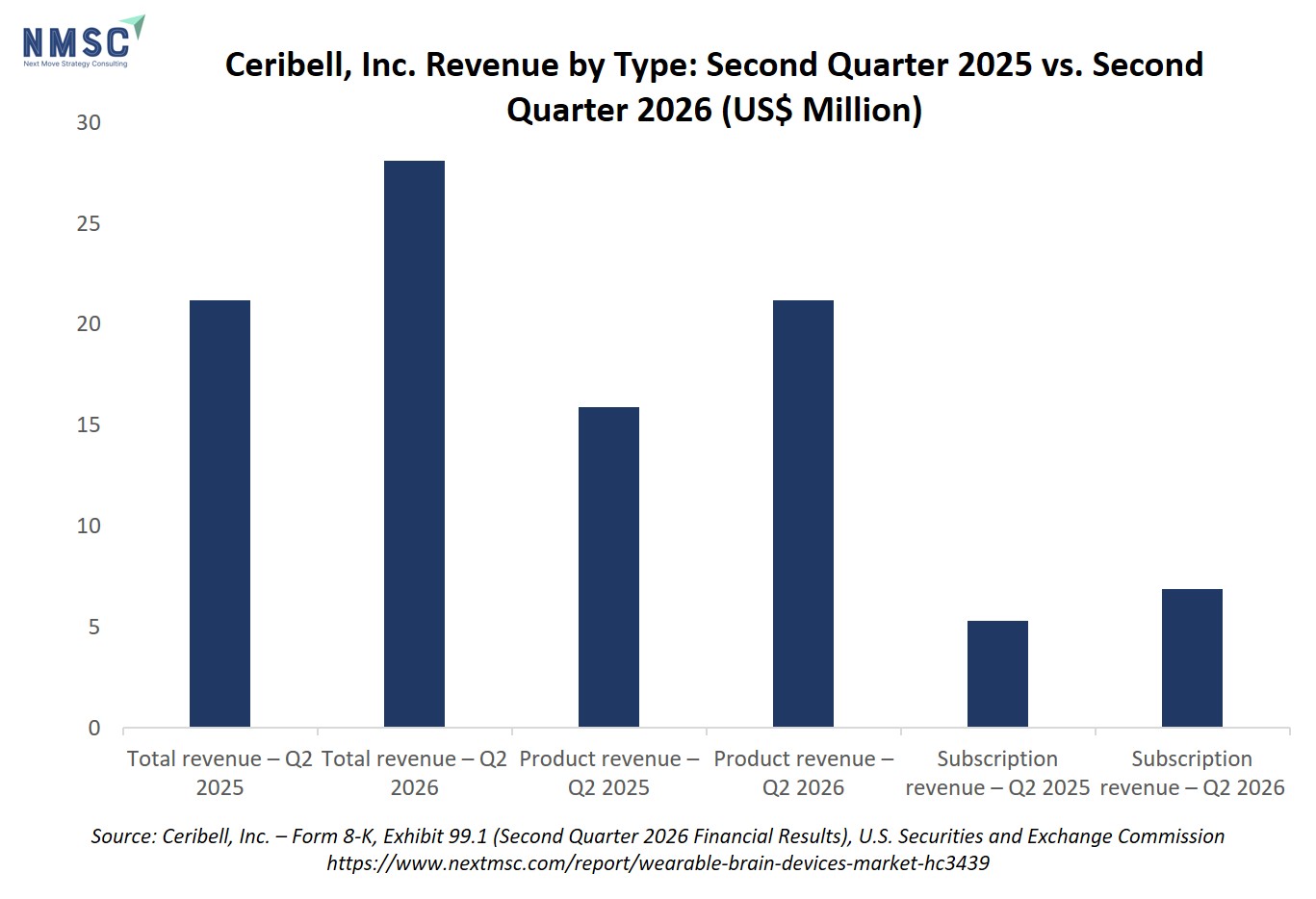
Competitive Landscape
NMSC's proprietary research and analysis identifies 20 companies actively shaping device innovation, regulatory clearance strategy, and go-to-market approach within the global wearable brain devices market. The competitive landscape is fragmented and innovation-led, with two dominant archetypes: clinically regulated device makers pursuing FDA-cleared, multi-indication hospital platforms (Ceribell, Inc.; Zeto, Inc.; Neuroelectrics Barcelona, S.L.U.), and consumer or research-focused hardware vendors prioritizing accessibility and developer ecosystems (EMOTIV Inc.; InteraXon Inc.; OpenBCI, Inc.; NeuroSky, Inc.).
Ceribell's sequence of FDA clearances — extending its existing wearable EEG hardware from seizure detection into delirium monitoring and, pending clearance, LVO stroke detection — illustrates how platform-oriented vendors are maximizing installed hardware value through software-driven indication expansion. Vendors unable to demonstrate this multi-indication extensibility face slower revenue growth relative to platform-oriented competitors, as hospital procurement increasingly favors single-device solutions capable of monitoring multiple neurological conditions simultaneously.
Bottom Line
The wearable brain devices market is undergoing a structural transition from single-indication hardware products to multi-indication AI software platforms built on existing wearable EEG infrastructure. Ceribell's three FDA regulatory milestones between November 2025 and January 2026 — pediatric seizure clearance, the world's first continuous delirium monitoring clearance, and a Breakthrough Device designation for LVO stroke detection — represent the most consequential regulatory sequence in the market's history, establishing a template that competitors will be measured against through 2035. Synchron's USD 200 million Series D and NeuroLife's June 2026 commercial launch confirm that capital markets and new entrants are aligning behind the same thesis: wearable neurotechnology is transitioning from a niche clinical tool into a standard-of-care monitoring modality across acute care, rehabilitation, and enterprise settings. According to NMSC's proprietary research and analysis, the global wearable brain devices market is projected to grow from USD 2.95 billion in 2025 to USD 19.68 billion by 2035 at a 20.9% CAGR, generating a USD 16.11 billion absolute dollar opportunity over the forecast period. The vendors best positioned to capture this opportunity are those that combine regulatory clearance depth, AI-powered platform extensibility, and structured reimbursement pathway investment — capabilities that are already separating the market's leaders from its followers.
About Next Move Strategy Consulting
Next Move Strategy Consulting is a premier market research and management consulting firm that has been committed to provide strategically analysed well documented latest research reports to its clients. The research industry is flooded with many firms to choose from, what makes NMSC different from the rest is its top-quality research and the obsession of turning data into knowledge by dissecting every bit of it and providing fact-based research recommendation that is supported by information collected from over 500 million websites, paid databases, industry journals and one on one consultations with industry experts across a diverse range of industry sectors. The high-quality customized research reports with actionable insights and excellent end-to-end customer service help our clients to take critical business decisions that enables them to move beyond time and have competitive edge in the industry.
We have been servicing over 1000 customers globally that includes 90% of the Fortune 500 companies over a decade. Our analysts are constantly tracking various high growth markets and identifying hidden opportunities in each sector or the industry. We provide one of the industry's best quality syndicate as well as custom research reports across 10 different industry verticals. We are committed to deliver high quality research solutions in accordance to your business needs. Our industry standard delivery solutions that ranges from the pre consultation to after-sales services, provide an excellent client experience and ensure right strategic decision making for businesses.
For more information, please contact:
Next Move Strategy Consulting
5th Floor 867 Boylston St, STE 500,
Boston, MA 02116, U.S.
E-Mail: [email protected]
Direct: +1-217-650-7991
Website: www.nextmsc.com
About the Author
 Sanyukta Deb
— Sanyukta Deb is Digital Marketing Team Lead at Next Move Strategy Consulting, where she has led content strategy and technical SEO for the firm's B2B market research publications for over 2 years. Her editorial process translates NextMSC's primary and secondary research — spanning technology, industrial, and consumer sectors — into commercial narratives, backed by search-intent, keyword, and competitive analysis. She brings 5 years of overall experience in digital marketing and content strategy.
Sanyukta Deb
— Sanyukta Deb is Digital Marketing Team Lead at Next Move Strategy Consulting, where she has led content strategy and technical SEO for the firm's B2B market research publications for over 2 years. Her editorial process translates NextMSC's primary and secondary research — spanning technology, industrial, and consumer sectors — into commercial narratives, backed by search-intent, keyword, and competitive analysis. She brings 5 years of overall experience in digital marketing and content strategy.
About the Reviewer
 Debashree Dey
— Debashree Dey is Assistant Manager at Next Move Strategy Consulting, where she supports cross-vertical market content and communications across diverse industries for 6 years. Her professional background includes senior content writing, communications, and published manuscript authorship, with experience developing audience-focused business narratives and maintaining clear, consistent messaging. Her role supports research-led content development and editorial quality across NextMSC publications.
Debashree Dey
— Debashree Dey is Assistant Manager at Next Move Strategy Consulting, where she supports cross-vertical market content and communications across diverse industries for 6 years. Her professional background includes senior content writing, communications, and published manuscript authorship, with experience developing audience-focused business narratives and maintaining clear, consistent messaging. Her role supports research-led content development and editorial quality across NextMSC publications.

















Add Comment