Genetic Testing Market: Renew Bio & Mayo Clinic cfDNA Partnership
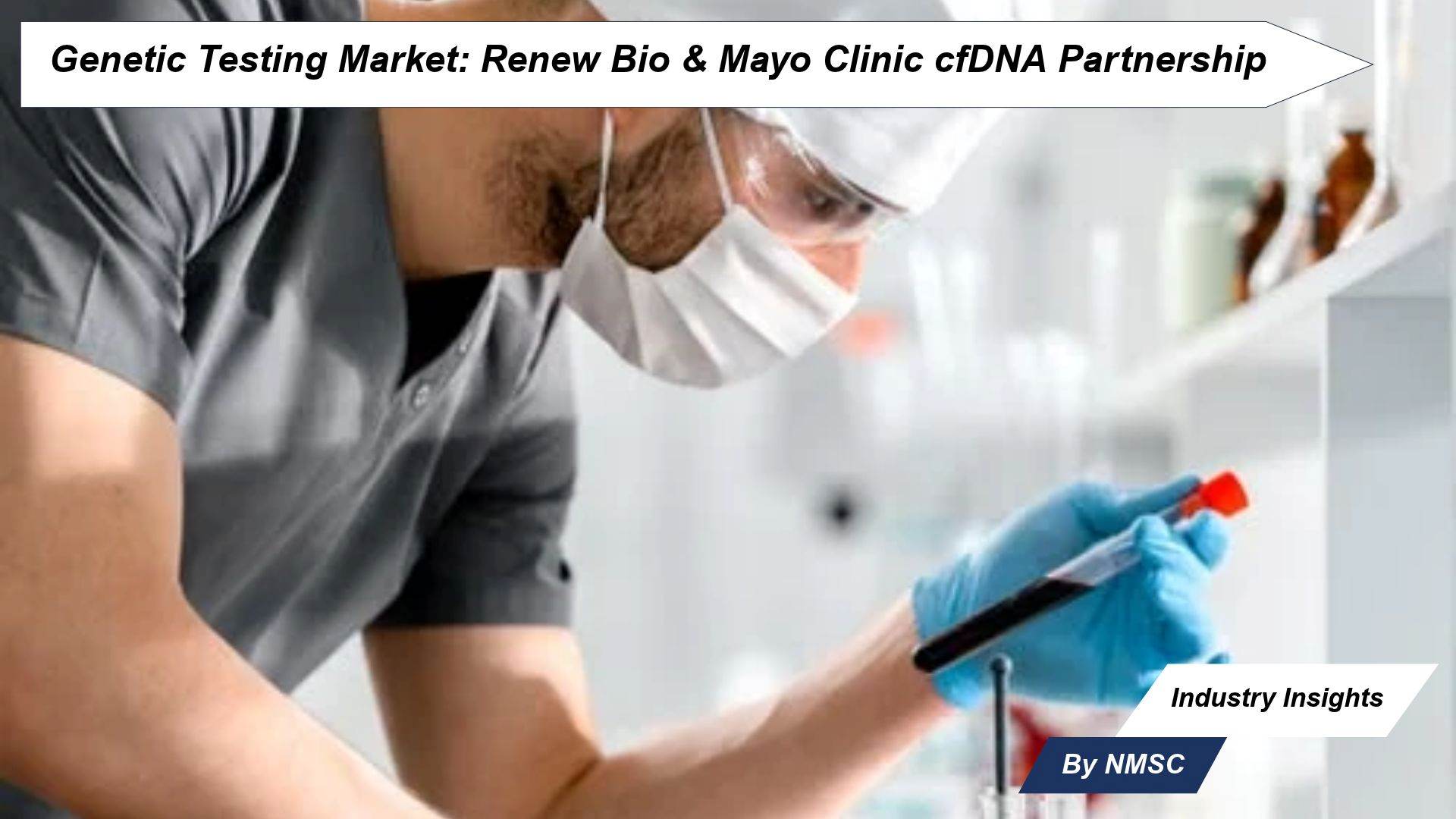
Renew Biotechnologies, Mayo Clinic Partner on cfDNA Assay to Advance Neurological Genetic Testing
PLEASANT GROVE, United States October 1, 2026 Renew Biotechnologies has entered into a clinical development collaboration with Mayo Clinic to evaluate NeuroLens®, a nanopore-based cell-free DNA (cfDNA) testing approach, in multiple sclerosis (MS) and related neuroimmunologic diseases marking a significant expansion of liquid biopsy applications within the Genetic Testing Market, which is projected to reach USD 67.12 billion by 2030 at a compound annual growth rate (CAGR) of 17.4% from 2025 to 2030.
The collaboration, announced on October 1, 2026, seeks to address a critical clinical gap: the absence of minimally invasive biomarkers capable of providing real-time insight into active central nervous system (CNS) injury and tracking disease changes over time to support individualized patient care.
Building on Renew Biotechnologies' prior research in Alzheimer's disease, Parkinson's disease, and amyotrophic lateral sclerosis (ALS), the study will examine cfDNA cell-of-origin signatures associated with cell death across clinically characterized neuroimmunologic disease populations. The investigation will focus specifically on injury signatures tied to neurons, astrocytes, and oligodendroglial cells to determine how these molecular signals correlate with disease differentiation, phenotype, stage, severity, and progression.
Under the terms of the agreement, Mayo Clinic will supply clinical expertise and access to well-characterized biorepository resources. These resources will assist in guiding study designs, identifying relevant clinical endpoints, and providing the patient samples necessary to evaluate how NeuroLens signals correlate with disease presentation. The project is slated to focus initially on MS, with potential expansion into other neuroimmunologic conditions as study milestones are met.
"Complex neurological diseases present clinical questions that require both strong molecular tools and deep clinical context," said Chad Pollard, Co-Founder and CEO of Renew Biotechnologies. "Working with Mayo Clinic will help us explore new applications for NeuroLens, and provide insights as we seek to expand its potential to benefit patients across a broader range of neurological diseases."
Key Highlights:
-
NeuroLens is a nanopore-based liquid biopsy platform that profiles neuron-associated cfDNA methylation signatures from blood without bisulfite conversion or PCR amplification, enabling disease-agnostic detection of neurodegeneration.
-
The collaboration will assess associations between cell-of-origin signals and clinical factors including relapse activity, treatment response, disability progression, and disease phenotype over time.
-
The study builds on proof-of-concept data from 137 plasma samples across Alzheimer's, Parkinson's, and ALS cohorts, where combined neuron classifiers demonstrated strong disease-versus-control performance in multi-disease contexts.
-
The NeuroLens assay is currently available as a Research Use Only (RUO) product, with laboratory-developed test (LDT) validation in progress, positioning it for potential future clinical deployment.
Analyst Insight:
According to analysts at Next Move Strategy Consulting, the global genetic testing market was valued at USD 30.1 billion in 2025 and is on a strong growth trajectory, driven by the integration of advanced sequencing technologies and the expansion of clinical applications beyond traditional oncology and hereditary disease testing. NMSC analysts note that the emergence of cfDNA-based platforms in neurology represents a strategically important frontier, as health systems increasingly seek non-invasive, longitudinal biomarkers to support disease monitoring and personalized treatment decisions. The Renew Biotechnologies–Mayo Clinic collaboration exemplifies the broader industry shift toward applying genetic testing methodologies to complex, previously underserved disease areas, a trend that is expected to accelerate market adoption and diversify revenue streams for diagnostics developers through 2030.
Industry Outlook:
The partnership between Renew Biotechnologies and Mayo Clinic reflects a broader structural shift in the genetic testing landscape one in which cfDNA-based liquid biopsy platforms are moving beyond oncology into neurology, autoimmune disease, and other complex therapeutic areas. As nanopore sequencing costs continue to decline and brain methylation atlases expand in scope and diversity, the clinical utility of cell-of-origin cfDNA profiling is expected to grow substantially.
Regulatory pathways for laboratory-developed tests in this space remain an area of active development, and the outcomes of this collaboration could provide critical real-world evidence to support future coverage and reimbursement decisions. If validated in MS cohorts, NeuroLens could serve as a model for how genetic testing platforms are adapted to address longitudinal disease monitoring needs across a range of neurological conditions further broadening the addressable market for precision diagnostics.
Source: CLP Magazine
For More Information – Download FREE Sample on Genetic Testing Market Report
Prepared By: Sanyukta Deb
About the Author
 Sanyukta Deb
— Sanyukta Deb is Digital Marketing Team Lead at Next Move Strategy Consulting, where she has led content strategy and technical SEO for the firm's B2B market research publications for over 2 years. Her editorial process translates NextMSC's primary and secondary research — spanning technology, industrial, and consumer sectors — into commercial narratives, backed by search-intent, keyword, and competitive analysis. She brings 5 years of overall experience in digital marketing and content strategy.
Sanyukta Deb
— Sanyukta Deb is Digital Marketing Team Lead at Next Move Strategy Consulting, where she has led content strategy and technical SEO for the firm's B2B market research publications for over 2 years. Her editorial process translates NextMSC's primary and secondary research — spanning technology, industrial, and consumer sectors — into commercial narratives, backed by search-intent, keyword, and competitive analysis. She brings 5 years of overall experience in digital marketing and content strategy.
About the Reviewer
 Debashree Dey
— Debashree Dey is Assistant Manager at Next Move Strategy Consulting, where she supports cross-vertical market content and communications across diverse industries for 6 years. Her professional background includes senior content writing, communications, and published manuscript authorship, with experience developing audience-focused business narratives and maintaining clear, consistent messaging. Her role supports research-led content development and editorial quality across NextMSC publications.
Debashree Dey
— Debashree Dey is Assistant Manager at Next Move Strategy Consulting, where she supports cross-vertical market content and communications across diverse industries for 6 years. Her professional background includes senior content writing, communications, and published manuscript authorship, with experience developing audience-focused business narratives and maintaining clear, consistent messaging. Her role supports research-led content development and editorial quality across NextMSC publications.

















Add Comment