Fertiliser Recommendation Market: World Bank Price Outlook
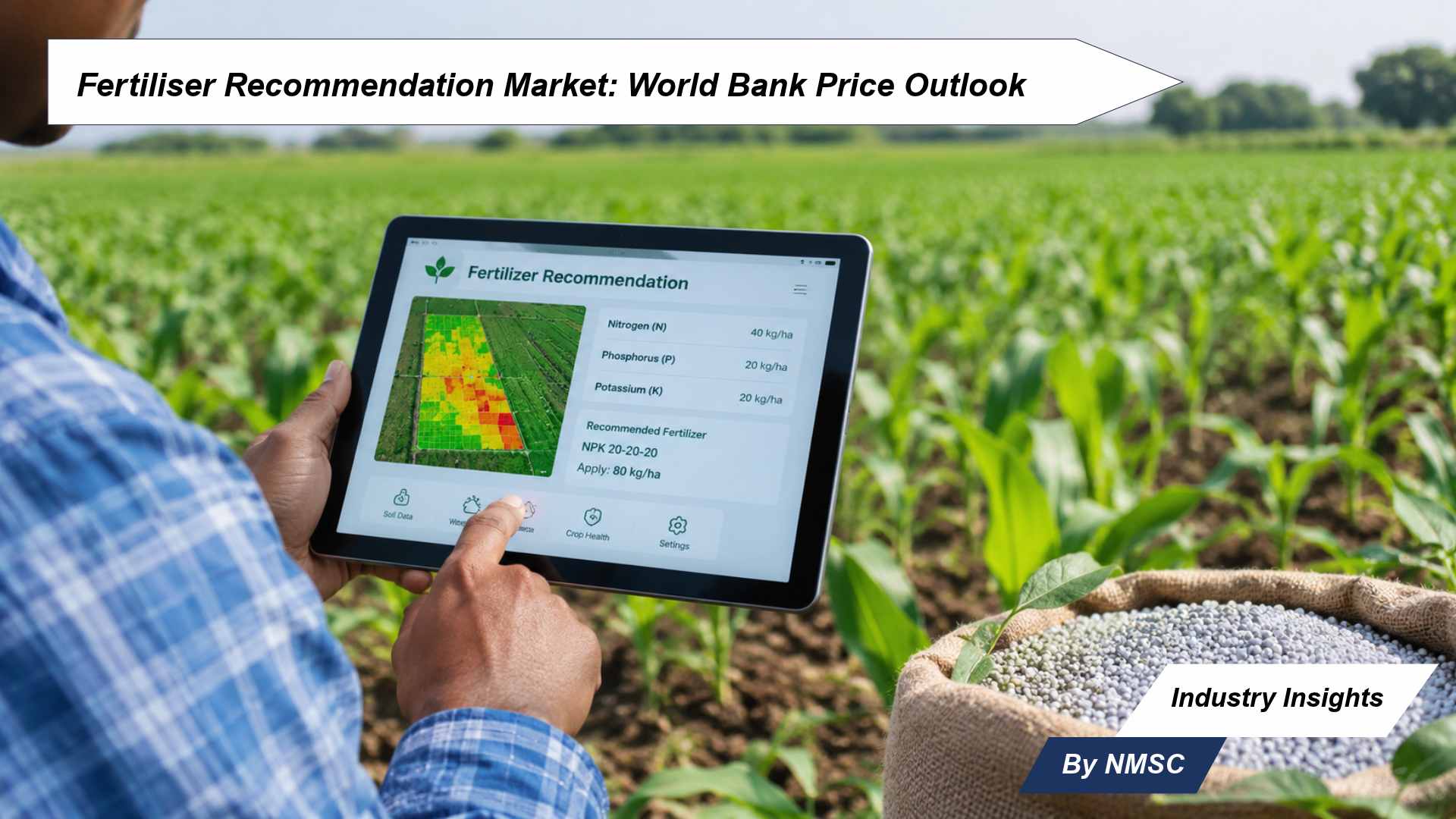
World Bank Projects 14% Fertiliser Price Rise in 2026 as Commodity Prices Climb 23%
WASHINGTON, United States — October 28, 2026 — The World Bank Group has projected that global fertiliser prices will rise 14% in 2026 before returning to 2025 levels in 2027, according to its latest Commodity Markets Outlook. The forecast is relevant to the Fertiliser Recommendation Market, which covers software, services and embedded systems that generate site-specific nutrient application guidance.
The report forecasts overall commodity prices to rise 23% in 2026 before declining 7% in 2027. Energy prices are projected to rise 32% in 2026, with Brent crude averaging USD 91 per barrel, compared with USD 69 in 2025. The World Bank attributed the pressure to the conflict in the Middle East, disrupted grain shipments and El Niño risks to harvests.
On fertilisers, the World Bank said prices would rise 14% in 2026 after a surge in urea prices early in the year that has since eased. It also listed high fuel and fertiliser prices among the factors increasing agricultural costs. Food commodity prices are expected to rise about 10% in 2026 and a further 7% in 2027.
The forecasts assume no major intensification of conflicts affecting global commodity supplies. According to Next Move Strategy Consulting, the Fertiliser Recommendation Market was valued at USD 1.95 billion in 2025 and is estimated at USD 2.22 billion in 2026. It is projected to reach USD 6.84 billion by 2035, at a CAGR of 13.3% over 2026–2035.
Key Highlights:
-
Fertiliser prices are projected to rise 14% in 2026, after an early-year urea surge that has since eased, and to return to 2025 levels in 2027.
-
Overall commodity prices are forecast to rise 23% in 2026, with energy up 32% and food up about 10%.
-
The World Bank cites high fuel and fertiliser prices among the factors raising agricultural production costs.
-
In an adverse scenario, the World Bank says Brent could average USD 105 a barrel in 2027, with food prices 12% above its baseline forecast.
Analyst Insight:
According to analysts at Next Move Strategy Consulting, rising fertiliser input costs are the primary driver of the Fertiliser Recommendation Market, with an estimated positive impact of 2.3 percentage points on CAGR over 2026–2035. NMSC analysts note that the World Bank forecast measures input prices and does not, on its own, indicate adoption of recommendation tools. Regulatory pressure to reduce nutrient runoff and wider use of AI-powered imagery and sensors are separate growth drivers.
Industry Outlook:
The World Bank expects fertiliser prices to return to 2025 levels in 2027, while its outlook flags upside risks if conflicts escalate. NMSC projects the Fertiliser Recommendation Market to expand through 2035, with multi-nutrient platforms (19.6% CAGR) and Asia-Pacific (18.6% CAGR) the fastest-growing segment and region. Future World Bank updates on energy and agricultural input costs will show how price pressures evolve.
Source: World Bank Group
For More Information: Download FREE Sample on Fertiliser Recommendation Market
Prepared By: Sanyukta Deb
About the Author
 Sanyukta Deb
— Sanyukta Deb is Digital Marketing Team Lead at Next Move Strategy Consulting, where she has led content strategy and technical SEO for the firm's B2B market research publications for over 2 years. Her editorial process translates NextMSC's primary and secondary research — spanning technology, industrial, and consumer sectors — into commercial narratives, backed by search-intent, keyword, and competitive analysis. She brings 5 years of overall experience in digital marketing and content strategy.
About the Reviewer
 Debashree Dey
— Debashree Dey is Assistant Manager at Next Move Strategy Consulting, where she supports cross-vertical market content and communications across diverse industries for 6 years. Her professional background includes senior content writing, communications, and published manuscript authorship, with experience developing audience-focused business narratives and maintaining clear, consistent messaging. Her role supports research-led content development and editorial quality across NextMSC publications.

















Add Comment