Food Colors Market: RTI Study Flags Natural Dye Supply ChainRisk
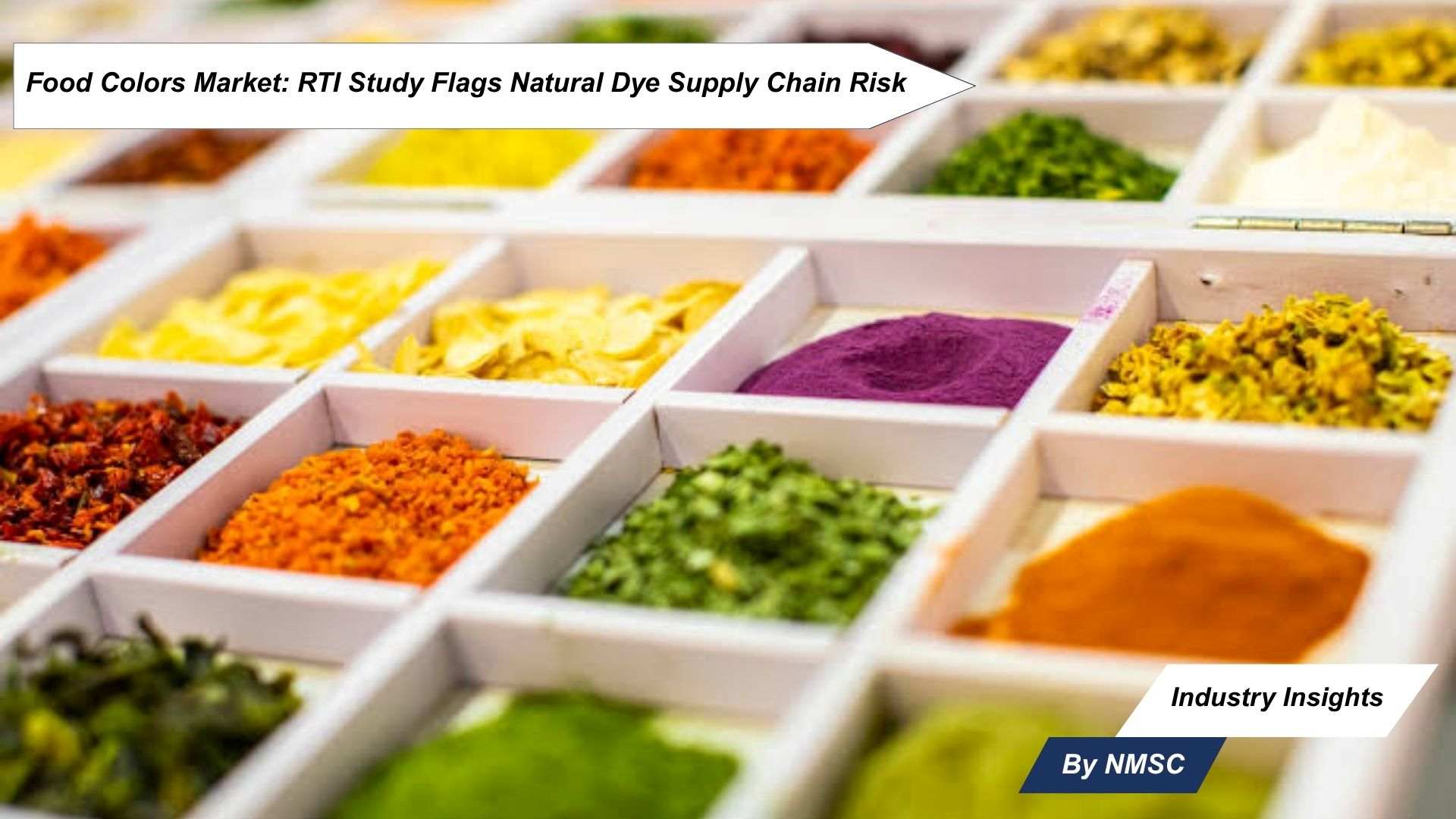
RTI InternationalStudy Warns Natural Food Dye Transition Requires Systemic Supply Chain Overhaul
WASHINGTON, United States — August 19, 2026 — A new report by RTI International, commissioned by the National Confectioners Association (NCA), has found that transitioning the U.S. food supply from synthetic food dyes to naturally sourced alternatives will require far more than ingredient reformulation — demanding coordinated investment across agriculture, manufacturing, and supply chains. The findings carry direct implications for the global Food Colors Market, where accelerating regulatory pressure and consumer demand for clean-label products are reshaping sourcing strategies and capital allocation across the industry.
The report, titled "Recoloring the U.S. Food Industry's Future," provides one of the first comprehensive analyses of the practical considerations involved in scaling naturally sourced food colors across the U.S. food system. Drawing on stakeholder interviews, market analysis, regulatory review, and scenario modeling, the study concludes that meaningful progress will require coordinated investment, realistic implementation timelines, and a nationally consistent, science-based regulatory framework.
"This research makes clear that replacing synthetic food dyes is far more than a reformulation challenge — it's a supply chain transformation," said John Downs, President and CEO of the National Confectioners Association. The ingredients, agricultural capacity, manufacturing systems, and infrastructure needed to support this transition cannot be built overnight. Companies need regulatory certainty before they can make the long-term investments required to expand supply, strengthen domestic manufacturing, and ensure products remain safe, affordable, and available for consumers.
Key Highlights:
-
Broad Operational Impact: The report finds that replacing synthetic food dyes affects shelf life, product performance, packaging, storage, shipping, and manufacturing processes — extending well beyond a straightforward ingredient substitution.
-
Global Supply Chain Dependency: Several key naturally sourced color ingredients are currently sourced primarily outside the United States, creating trade and sourcing vulnerabilities while simultaneously presenting opportunities to expand domestic agricultural and processing capacity.
-
Investment and Timeline Constraints: Farmers, ingredient suppliers, and manufacturers require regulatory certainty and realistic implementation timelines before committing to the long-term capital investments necessary to support product availability and consumer affordability at scale.
-
Regulatory Uniformity as a Critical Enabler: The report identifies nationally uniform, science-based food safety standards as essential to reducing regulatory uncertainty, supporting interstate commerce, and preventing a fragmented patchwork of state-level regulations that would increase transition costs and complexity.
Analyst Insight:
According to analysts at Next Move Strategy Consulting, the RTI International findings underscore a structural challenge that the food colors industry has been navigating with increasing urgency: the gap between regulatory timelines and the operational readiness of natural color supply chains. NMSC analysts note that as the global Food Colors Market — valued at USD 3.36 billion in 2023 and projected to reach USD 6.85 billion by 2030 at a CAGR of 10.9% — continues its shift toward natural and clean-label colorants, the bottleneck is no longer consumer demand or regulatory intent, but rather the agricultural capacity, processing infrastructure, and supply chain coordination required to deliver naturally sourced alternatives at commercial scale. The report's emphasis on nationally uniform standards is particularly significant, as regulatory fragmentation across U.S. states has been identified as a key deterrent to the capital investment needed to build out domestic natural color supply chains.
Industry Outlook:
The RTI International report arrives at a pivotal moment for the food colors industry, as major food manufacturers — including Nestlé USA, WK Kellogg, General Mills, and Campbell's — have made public commitments to eliminate synthetic dyes from their U.S. product portfolios within defined timelines. The convergence of these corporate pledges with ongoing FDA regulatory action, including the revocation of authorization for Orange B and the proposed revocation of Citrus Red No. 2, is compressing the window available for supply chain adaptation. The report's conclusion — that policymakers, ingredient suppliers, manufacturers, distributors, retailers, and agricultural stakeholders must coordinate their efforts — reflects the systemic nature of the transition underway. For the global food colors market, the near-term outlook will be shaped by the pace at which regulatory frameworks stabilize, domestic agricultural capacity expands, and natural color technology advances to match the performance benchmarks set by synthetic alternatives across heat stability, pH tolerance, and shelf life.
Source: Quality Assurance & Food Safety
For More Information: Download FREE Sample on Food Colors Market Report
Prepared By: Sanyukta Deb
About the Author
 Sanyukta Deb
— Sanyukta Deb is Digital Marketing Team Lead at Next Move Strategy Consulting, where she has led content strategy and technical SEO for the firm's B2B market research publications for over 2 years. Her editorial process translates NextMSC's primary and secondary research — spanning technology, industrial, and consumer sectors — into commercial narratives, backed by search-intent, keyword, and competitive analysis. She brings 5 years of overall experience in digital marketing and content strategy.
Sanyukta Deb
— Sanyukta Deb is Digital Marketing Team Lead at Next Move Strategy Consulting, where she has led content strategy and technical SEO for the firm's B2B market research publications for over 2 years. Her editorial process translates NextMSC's primary and secondary research — spanning technology, industrial, and consumer sectors — into commercial narratives, backed by search-intent, keyword, and competitive analysis. She brings 5 years of overall experience in digital marketing and content strategy.
About the Reviewer
 Debashree Dey
— Debashree Dey is Assistant Manager at Next Move Strategy Consulting, where she supports cross-vertical market content and communications across diverse industries for 6 years. Her professional background includes senior content writing, communications, and published manuscript authorship, with experience developing audience-focused business narratives and maintaining clear, consistent messaging. Her role supports research-led content development and editorial quality across NextMSC publications.
Debashree Dey
— Debashree Dey is Assistant Manager at Next Move Strategy Consulting, where she supports cross-vertical market content and communications across diverse industries for 6 years. Her professional background includes senior content writing, communications, and published manuscript authorship, with experience developing audience-focused business narratives and maintaining clear, consistent messaging. Her role supports research-led content development and editorial quality across NextMSC publications.


















Add Comment