Immunotherapy Breakthrough in Colon Cancer Care Standard
Industry Insights from Next Move Strategy Consulting
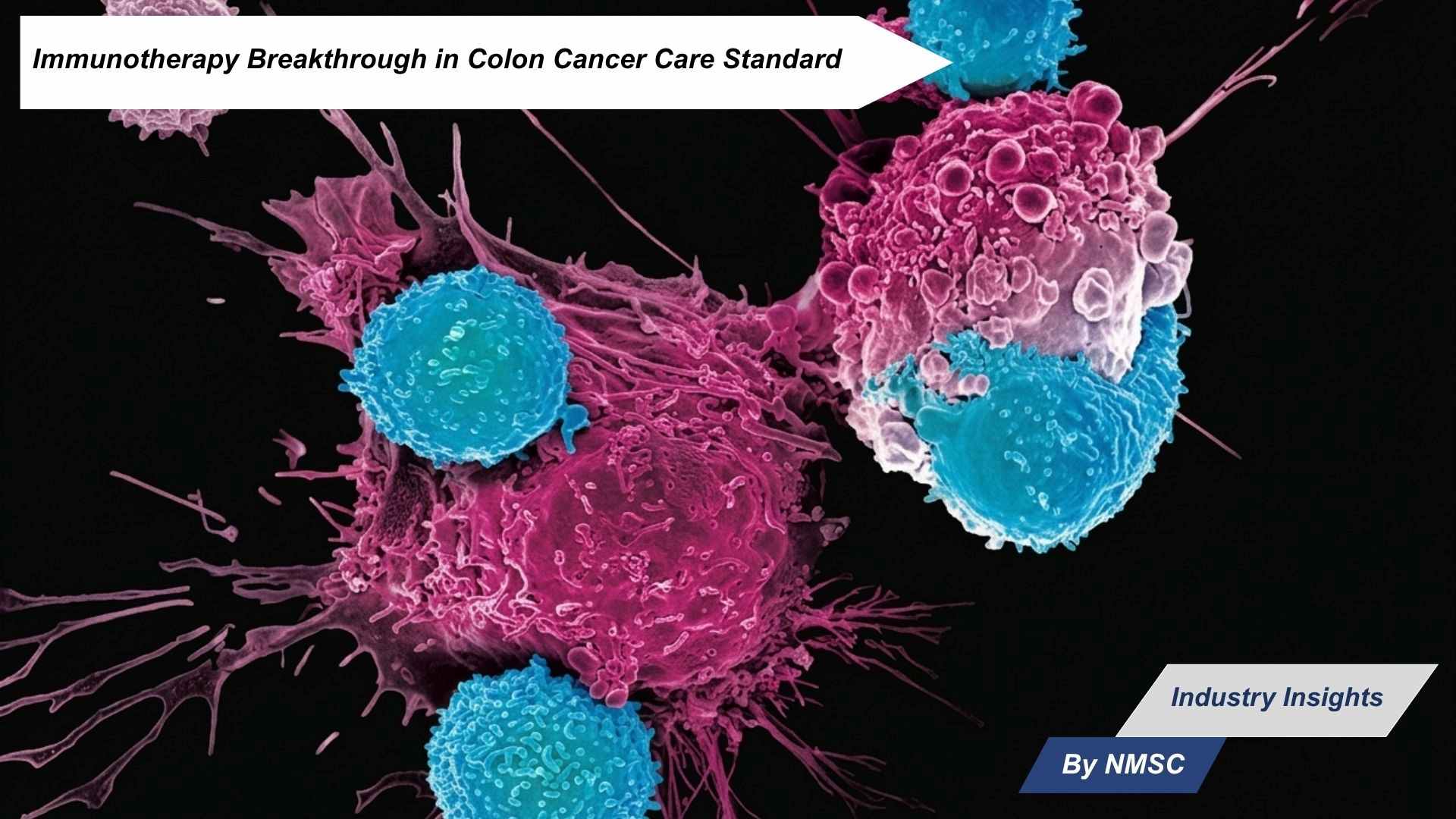
The landscape of cancer therapeutics is witnessing a significant breakthrough as findings from a large-scale phase III clinical trial introduce a new standard of care for patients with stage III colon cancer characterized by deficient DNA mismatch repair (dMMR). The study, supported by VCU Massey Comprehensive Cancer Center and its National Cancer Institute Community Oncology Research Program (NCORP) affiliates, underscores the transformative potential of integrating immunotherapy into conventional treatment pathways.
A Landmark Advancement in Cancer Treatment
The recently published findings in The New England Journal of Medicine mark the first randomized phase III evidence demonstrating the effectiveness of immunotherapy in the adjuvant treatment setting for dMMR colon cancer following surgery. The trial highlights how combining immunotherapy with chemotherapy can significantly improve patient outcomes, setting a new benchmark in post-surgical cancer care.
Khalid Matin, M.D., a medical oncologist and associate director of global oncology at Massey, contributed to the research in collaboration with the Alliance for Clinical Trials in Oncology. He emphasized that the study not only validates the clinical benefit of immunotherapy but also reinforces its safety when used alongside standard chemotherapy. The findings suggest a meaningful increase in cure rates, offering renewed hope for patients undergoing treatment.
The ATOMIC Trial: Expanding Access to Innovation
The international ATOMIC trial evaluated adjuvant treatment strategies for patients with stage III colon cancer with dMMR. Through Massey’s NCORP network, including participation from affiliated centers such as the Virginia Cancer Institute and Centra Health in Lynchburg, patients contributed critical data to the study. Out of 712 enrolled participants, several were treated within this network, reflecting the importance of community-based clinical research in advancing therapeutic innovation.
Clinical trial participation proved instrumental in enabling patients to access next-generation treatments earlier. According to Massey’s clinical research leadership, such initiatives not only broaden treatment accessibility but also accelerate the development of improved care standards through diverse patient inclusion.
Significant Clinical Outcomes
The trial results demonstrated a notable improvement in disease-free survival among patients who received the immunotherapy drug atezolizumab in combination with standard chemotherapy. Specifically, the risk of cancer recurrence or death was reduced by 50% compared to chemotherapy alone. At the three-year mark, 86.3% of patients in the combination therapy group remained disease-free, compared to 76.2% in the chemotherapy-only group.
These findings represent a pivotal shift in treatment strategy for non-metastatic dMMR colon cancer. Clinical experts associated with the study highlighted that the results provide strong evidence to redefine adjuvant therapy approaches for this molecular subgroup, ultimately elevating the standard of care.
Implications for Clinical Guidelines
Colorectal cancer remains one of the leading causes of cancer-related mortality globally, with treatment protocols for stage III colon cancer largely unchanged since the 1990s. The integration of immunotherapy into adjuvant treatment marks a major evolution in this space.
The latest National Comprehensive Cancer Network (NCCN) guidelines have incorporated the findings of the ATOMIC trial, extending their application to patients with stage II T4bN0 dMMR colon cancer. This inclusion reflects growing confidence in immunotherapy-based approaches and signals broader adoption across clinical practice.
Collaborative Effort Driving Innovation
The ATOMIC trial was sponsored by the National Cancer Institute (NCI) and conducted by the Alliance for Clinical Trials in Oncology, with participation from the National Clinical Trials Network (NCTN). The study also involved collaboration with Genentech, part of the Roche Group, under a Cooperative Research and Development Agreement (CRADA). Additionally, the German research group Arbeit gemeinschaft Internistische Onkologie (AIO) contributed to the trial’s execution.
Such multi-institutional collaboration underscores the importance of coordinated research efforts in accelerating breakthroughs in cancer therapeutics. By combining expertise, infrastructure, and patient access across regions, the study successfully generated robust clinical evidence to support a new treatment paradigm.
Next Move Strategy Consulting’s View
According to Next Move Strategy Consulting, advancements such as the ATOMIC trial highlight a broader shift within the Cancer Therapeutics Market toward precision medicine and immunotherapy-driven treatment models. The integration of targeted therapies with established treatment regimens is expected to reshape clinical protocols and drive innovation across oncology care.
The growing emphasis on biomarker-driven therapies, such as treatments tailored for dMMR cancer subtypes, reflects increasing demand for personalized approaches that enhance efficacy while minimizing risk. Furthermore, the role of large-scale clinical trials and collaborative research networks is becoming central to accelerating drug development and regulatory adoption.
As pharmaceutical and biotechnology companies continue to invest in immuno-oncology, the market is likely to witness sustained growth driven by improved patient outcomes, expanded indications, and evolving clinical guidelines. The success of trials like ATOMIC reinforces the importance of combining scientific innovation with real-world clinical application to address unmet medical needs.
Redefining the Future of Oncology Care
The findings from the ATOMIC trial mark a decisive step forward in the treatment of stage III colon cancer, demonstrating the tangible benefits of integrating immunotherapy into standard care. By significantly improving survival outcomes and reducing recurrence risks, this approach sets a new precedent for oncology treatment strategies.
As research continues to unlock new therapeutic possibilities, the convergence of clinical innovation, collaborative research, and patient-centered care is expected to redefine the future of cancer therapeutics.
Source: Eurekalert
Prepared by: Next Move Strategy Consulting
About the Author
 Sanyukta Deb
— Sanyukta Deb is Digital Marketing Team Lead at Next Move Strategy Consulting, where she has led content strategy and technical SEO for the firm's B2B market research publications for over 2 years. Her editorial process translates NextMSC's primary and secondary research — spanning technology, industrial, and consumer sectors — into commercial narratives, backed by search-intent, keyword, and competitive analysis. She brings 5 years of overall experience in digital marketing and content strategy.
Sanyukta Deb
— Sanyukta Deb is Digital Marketing Team Lead at Next Move Strategy Consulting, where she has led content strategy and technical SEO for the firm's B2B market research publications for over 2 years. Her editorial process translates NextMSC's primary and secondary research — spanning technology, industrial, and consumer sectors — into commercial narratives, backed by search-intent, keyword, and competitive analysis. She brings 5 years of overall experience in digital marketing and content strategy.
About the Reviewer
 Debashree Dey
— Debashree Dey is Assistant Manager at Next Move Strategy Consulting, where she supports cross-vertical market content and communications across diverse industries for 6 years. Her professional background includes senior content writing, communications, and published manuscript authorship, with experience developing audience-focused business narratives and maintaining clear, consistent messaging. Her role supports research-led content development and editorial quality across NextMSC publications.
Debashree Dey
— Debashree Dey is Assistant Manager at Next Move Strategy Consulting, where she supports cross-vertical market content and communications across diverse industries for 6 years. Her professional background includes senior content writing, communications, and published manuscript authorship, with experience developing audience-focused business narratives and maintaining clear, consistent messaging. Her role supports research-led content development and editorial quality across NextMSC publications.
















Add Comment