India and France Reinforce Air Defence Partnership Through Rafale Co-Production
Insights by Next Move Strategy Consulting
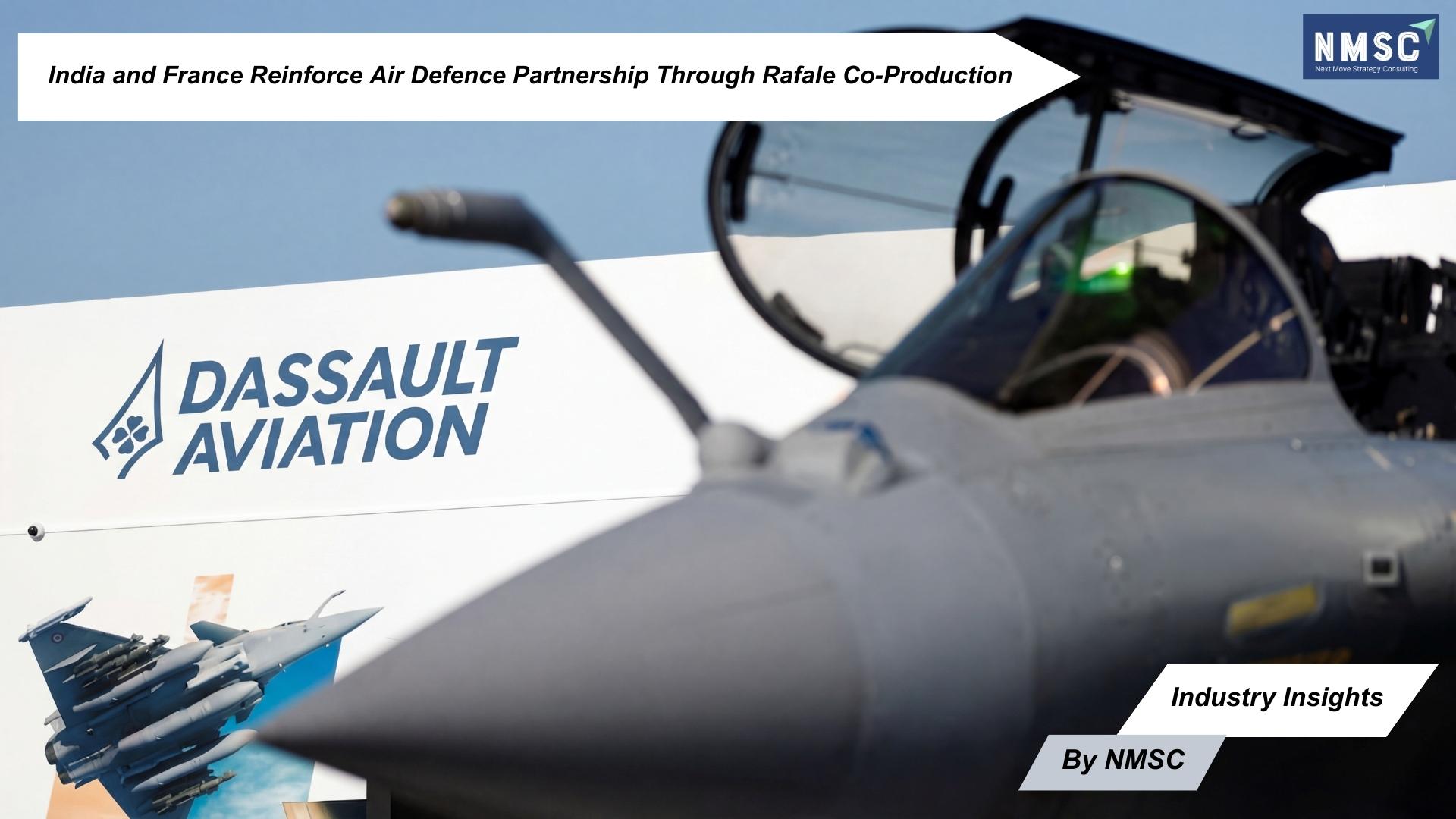
In a significant move to strengthen their defence relationship, India and France announced plans to jointly produce Dassault Rafale fighter jets and expand cooperation across air defence systems and platforms. French President Emmanuel Macron highlighted this enhanced collaboration as a key outcome of his recent visit to India, reaffirming the two nations’ commitment to deepening military ties.
Elevating Bilateral Defence Engagement
France and India have agreed to elevate their defence cooperation beyond traditional procurement arrangements. At the core of this new agreement is the co-production of Rafale multi-role fighter aircraft, marking a notable shift toward shared manufacturing and capability development within India. This initiative builds on India’s previous acquisition of Rafale jets and aligns with broader strategic objectives in the region.
“Rafale is absolutely key,” Macron stated, underscoring the importance of collaborative defence manufacturing and the mutual benefits it brings to both nations’ security landscapes.
Key Defence Collaboration Elements
-
Joint Rafale Production: Plans to co-produce Rafale aircraft in India, with preliminary clearance given for an additional order of 114 jets for the Indian Air Force.
-
Expanded Platforms: Beyond fighter jets, the cooperation includes discussions to sell additional submarines to India and partnerships for helicopter assembly lines.
-
Missile Manufacturing: Agreements were announced to jointly manufacture HAMMER precision-guided missiles in India through a partnership between French and Indian defence firms.
This defence collaboration reflects a broader strategic alignment, aimed at reinforcing air dominance and deterrent capabilities amid evolving regional security dynamics.
Strategic Outlook for Defence Industry Ties
The move toward joint defence production signifies a deepening of military-industrial cooperation. Experts view this enhanced partnership as indicative of both countries’ efforts to expand indigenous defence manufacturing capacity while securing advanced systems to address emerging threats.
As these collaborative initiatives proceed through technical and commercial negotiations, India and France are positioning their defence industries for a long-term strategic alliance that goes beyond traditional supplier-buyer dynamics.
Next Move Strategy Consulting’s Viewpoint
According to Next Move Strategy Consulting (NMSC), the decision by India and France to move toward Rafale co-production marks a structural evolution in bilateral Air Defence System industry. The transition from direct procurement to collaborative manufacturing reflects a deeper strategic alignment and a shared commitment to strengthening long-term air defence capabilities.
NMSC observes that the inclusion of additional aircraft, helicopter assembly cooperation, submarine discussions, and joint missile manufacturing signals a comprehensive expansion of defence industrial ties. This broader framework enhances operational readiness while reinforcing domestic production capacity.
The Rafale co-production initiative, along with agreements surrounding precision-guided missile manufacturing, underscores a strategic emphasis on capability development within India. NMSC believes this model of defence collaboration positions both nations to reinforce supply chain integration, industrial cooperation, and long-term strategic resilience in the evolving global security landscape.
Source: Reuters
Prepared by: Next Move Strategy Consulting
About the Author
 Prakhyat Chowdhury is a results-driven Market Analyst and data strategist specializing in business intelligence, trend forecasting, and performance-focused market growth. His competitive intelligence frameworks, and data-driven insights enhances strategic planning, operational efficiency, and organizational authority. Known for strong communication, analytical thinking, and multilingual proficiency, he delivers rigorous, objective-led solutions that support scalable business outcomes across industries with professionalism. He consistently aligns quantitative and qualitative analysis with global business goals.
About the Reviewer
 Debashree Dey is Assistant Manager at Next Move Strategy Consulting, where she supports cross-vertical market content and communications across diverse industries for 6 years. Her professional background includes senior content writing, communications, and published manuscript authorship, with experience developing audience-focused business narratives and maintaining clear, consistent messaging. Her role supports research-led content development and editorial quality across NextMSC publications.
















Add Comment