India's Hydrogen Train Debut Signals Global Rail Shift
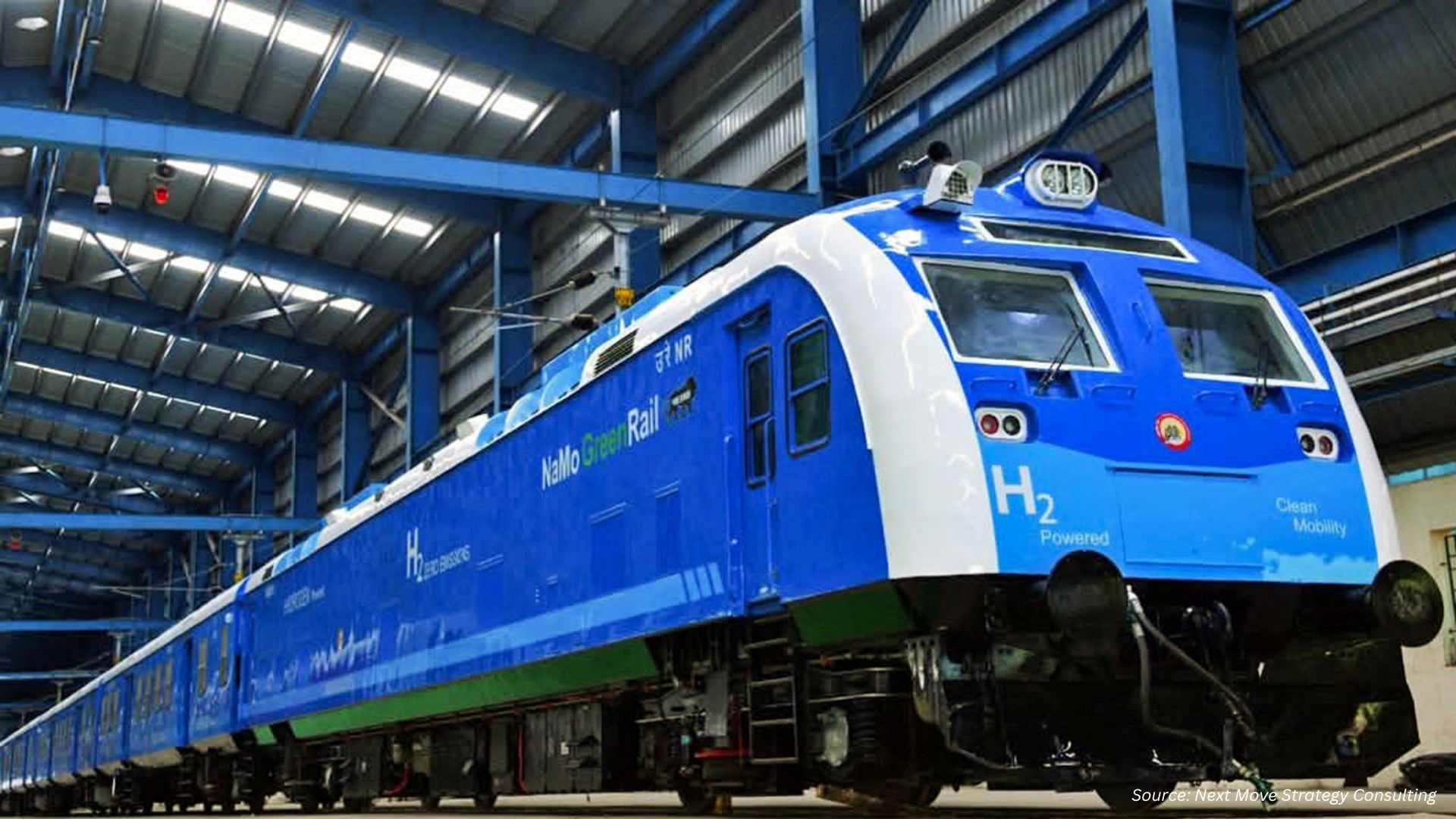
India Inaugurates First Domestically Built Hydrogen-Powered Train, Accelerating the Global Zero-Emission Rail Transition Amid Diverging Industry Signals
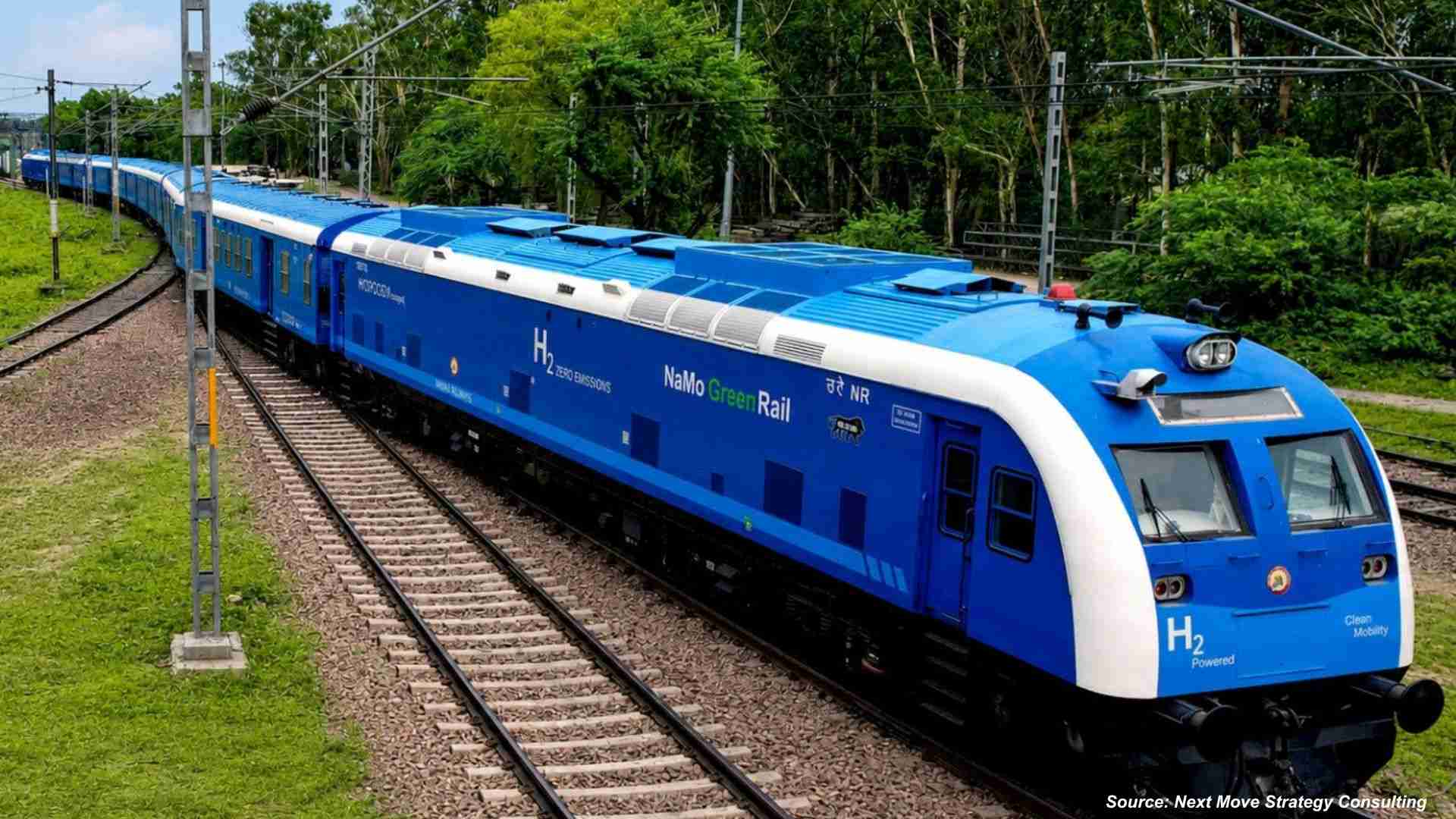
On 17 July 2026, Prime Minister Narendra Modi inaugurated India's first domestically engineered hydrogen fuel cell-powered train — the "NaMo Green Rail" — on the Jind-Sonipat section of Northern Railway in Haryana, marking a pivotal moment in the global decarbonisation of rail transport. The 10-coach trainset, powered by a 1,200 kW Proton Exchange Membrane Fuel Cell (PEMFC) propulsion system, is capable of carrying approximately 2,600 passengers and operates at speeds of up to 75 km/h, with a design ceiling of 110 km/h. Designed, engineered, and manufactured entirely in India under the Atmanirbhar Bharat initiative, the train emits only water vapour and heat during operation.
The inauguration positions India alongside Germany, Japan, China, and the United States as one of a select group of nations to have successfully deployed hydrogen-powered rail technology in commercial or pilot operations. The development carries significant implications for the global Hydrogen-Powered Train Market, which is projected to surge to $9.25 billion by 2030, according to Next Move Strategy Consulting.
For More Information: Download FREE Sample on Hydrogen Powered Train Market Report
India's Hydrogen Rail Infrastructure: A National First
To support the NaMo Green Rail, Indian Railways has established what it describes as the country's largest railway hydrogen storage and refuelling facility at Jind, Haryana. The facility stores approximately 3,000 kg of compressed hydrogen at a time and has received operational clearance from the Petroleum and Explosives Safety Organisation (PESO). The entire infrastructure has been independently certified by TÜV SÜD, Germany, in accordance with NFPA-2 and ISO 19880 Series international standards.
The train's propulsion architecture comprises two Hydrogen Driving Power Cars (DPCs) and eight Trailer Coaches (TCs). Each DPC houses fuel cells, lithium iron phosphate (LFP) batteries, and hydrogen storage cylinders. The maintenance facility has been established at Shakurbasti, Delhi, with trained and certified personnel assigned to manage critical operations. The hydrogen refuelling system operates under 24×7 monitoring, with automated safety systems capable of cutting off hydrogen supply upon detection of heat, flame, or smoke anomalies.
The project aligns with India's National Green Hydrogen Mission and the government's stated objective of achieving net-zero carbon emissions across its railway network by 2030. India's railway network spans approximately 70,000 km — one of the largest in the world — and while nearly all of it has been electrified, hydrogen trains are positioned to serve non-electrified or difficult-to-electrify segments.
Italy Commits €367 Million to Alpine Hydrogen Rail
India's deployment follows a significant European commitment finalized in March 2025. Italy's transport company FNM, controlled by the Lombardy Region, executed a €367 million ($396 million) investment to introduce 14 hydrogen-powered Alstom Coradia Stream trains on the 110-kilometre Valcamonica route in northern Italy—a mountainous Alpine stretch currently served by diesel trains. The project, the first of its kind in Italy, is co-funded by the regional government and the EU-backed post-COVID Recovery and Resilience Plan (PNRR), with rolling stock transitioning through active track testing ahead of its formal 2027 commercial rollout.
FNM Chairman Andrea Gibelli noted that electrifying the Valcamonica line would cost approximately €450 million in infrastructure alone, making hydrogen the more economically viable option for this specific corridor. The project incorporates on-site electrolysers to produce green hydrogen from renewable energy sources, addressing supply chain concerns that have challenged other European deployments. Travellers will not face increased fares, as project costs are ringfenced within the public funding structure.
Alstom's Strategic Retreat: A Cautionary Signal for the Sector
Against this backdrop of expanding deployments, Alstom — the manufacturer that pioneered commercial hydrogen rail with the Coradia iLint in Germany in 2022 — has paused further development of its hydrogen train technology following the French government's withdrawal of financial support. The decision also blocks access to matching EU funding under the Important Projects of Common European Interest (IPCEI) framework.
Alstom CEO Henri Poupart-Lafarge stated that hydrogen technology is "not yet mature," a position that reflects broader operational challenges encountered across European deployments. In Germany's Lower Saxony, EVB — which replaced 15 diesel railcars with 14 hydrogen iLint units — was forced to revert to diesel operations following hydrogen delivery disruptions. In August 2025, replacement fuel-cell modules failed to arrive, leaving only four of the 14 units in service. RMV subsequently withdrew its fleet of 18 iLints following repeated technical issues with fuel-cell systems. Siemens Mobility has faced similar hydrogen resupply challenges with its Mireo Plus H units ordered by Bavaria and Berlin-Brandenburg.
Despite the R&D pause, Alstom has confirmed it will honour existing contractual obligations for hydrogen train deliveries and maintenance in France, Italy, and Germany. In France, 12 Régiolis hydrogen units have been ordered by four regional authorities — Bourgogne-Franche-Comté, Occitanie, Grand Est, and Auvergne-Rhône-Alpes. The episode underscores the sector's dependence on sustained public funding and the technical maturity challenges that remain before hydrogen rail can achieve large-scale commercial viability.
Global Hydrogen Landscape: IEA Assessment
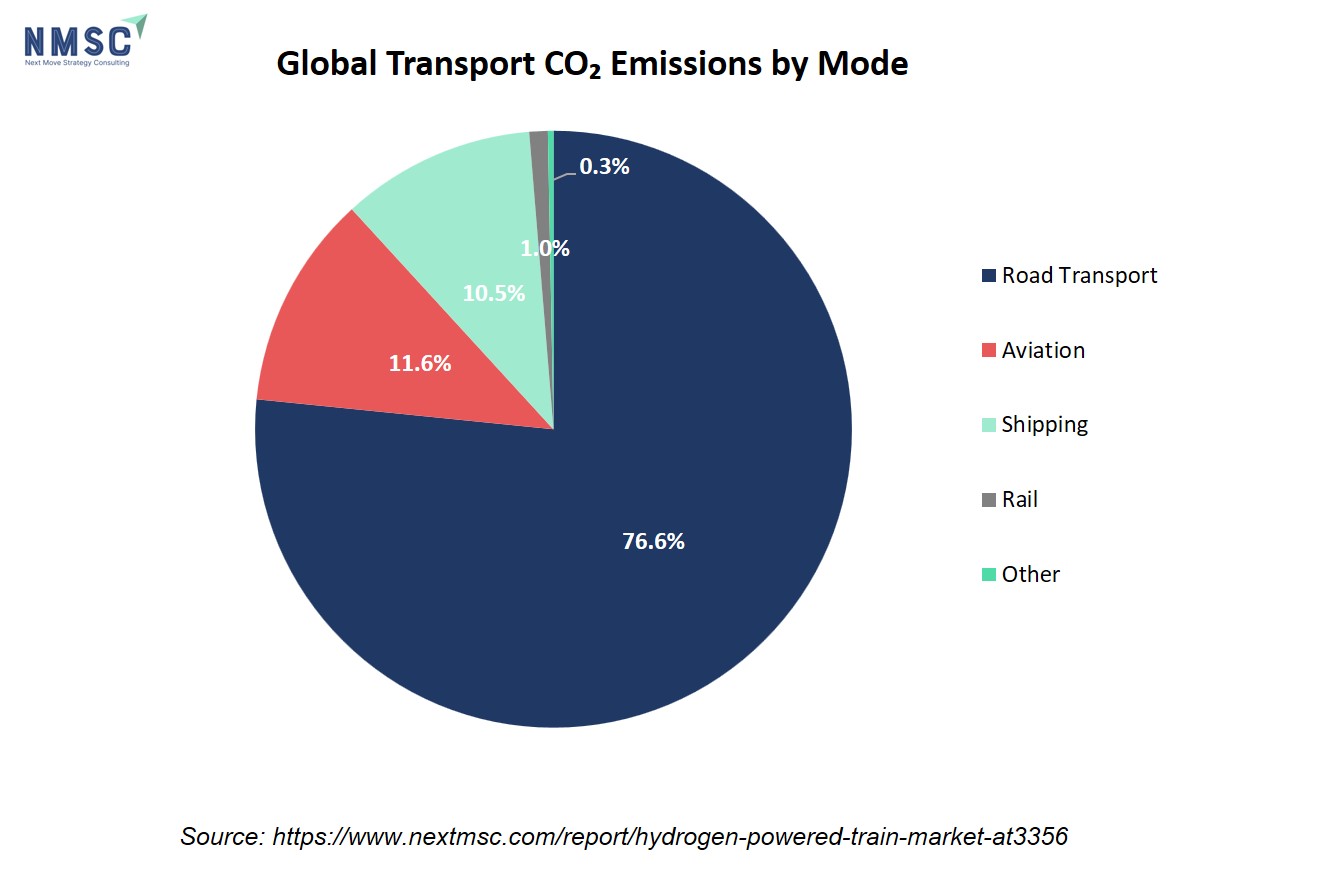
The International Energy Agency's Global Hydrogen Review 2025 provides critical context for the hydrogen rail sector's trajectory. Global hydrogen demand reached approximately 100 million tonnes (Mt) in 2024, up 2% from 2023, driven primarily by traditional applications in oil refining and industrial processes. Low-emissions hydrogen production grew by 10% in 2024 and is on track to reach 1 Mt in 2025, though it still accounts for less than 1% of global production.
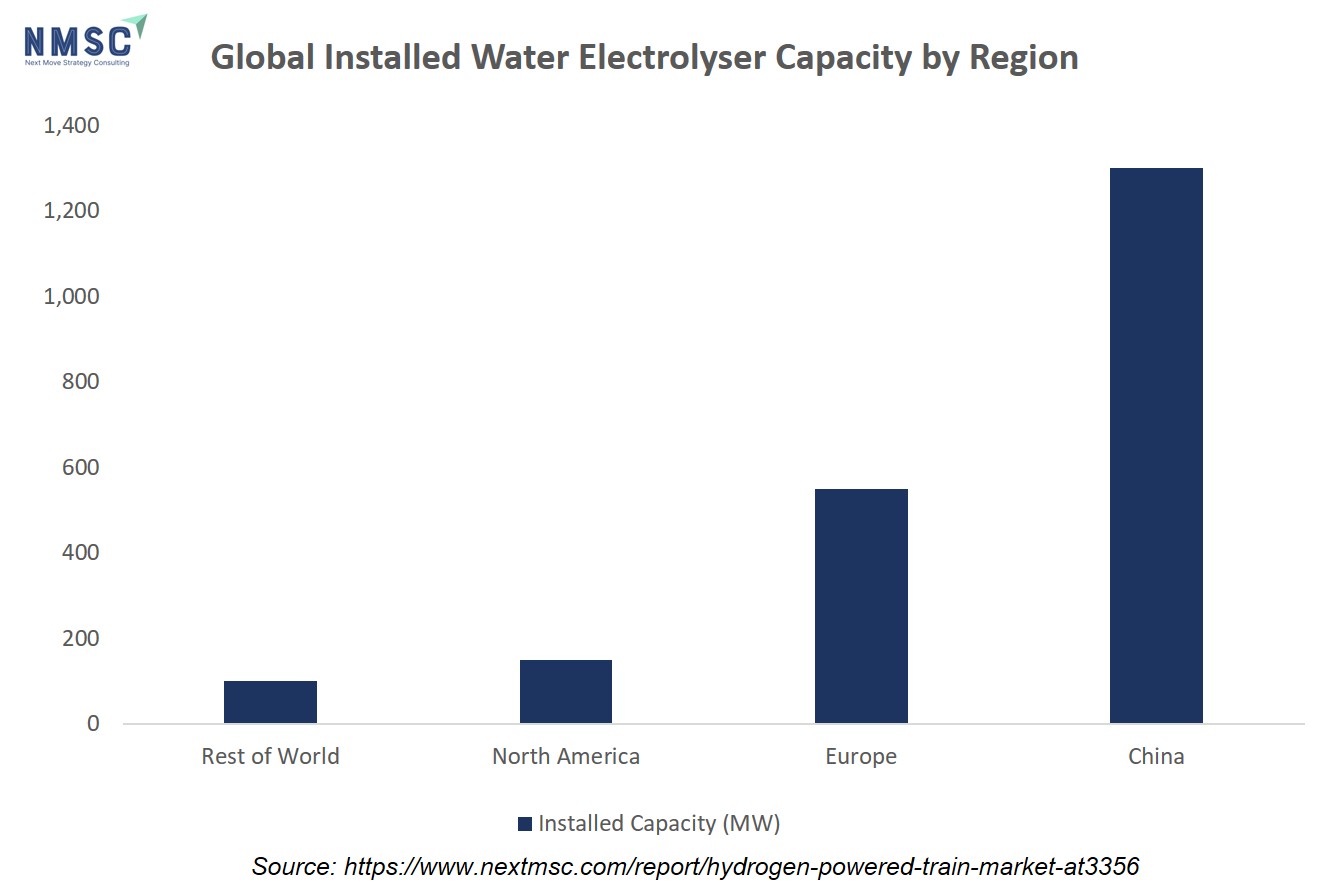
Global installed water electrolysis capacity reached 2 GW in 2024, with China accounting for 65% of global installed capacity and capacity that has reached a final investment decision. The IEA projects that low-emissions hydrogen production from projects that are operational or have reached FID will reach 4.2 Mtpa by 2030 — a fivefold increase from 2024 levels. However, a wave of project delays and cancellations has reduced the total pipeline of announced projects from 49 Mtpa to 37 Mtpa by 2030.
The cost gap between low-emissions hydrogen and fossil-based production remains a key barrier. Hydrogen currently costs approximately €10–15 per kilogram in European markets, compared to significantly lower costs for diesel and electrified alternatives. The IEA expects this gap to narrow by 2030, particularly in China, where renewable hydrogen could approach cost-competitiveness by the end of the decade. In Europe, the gap is expected to shrink due to CO₂ pricing mechanisms and high renewable energy potential in select regions.
Market Segmentation and Regional Dynamics
According to Next Move Strategy Consulting's analysis, the Hydrogen-Powered Train Market is segmented by train type (passenger and freight), technology (fuel cell and hydrogen combustion engine), and component (fuel cell system, hydrogen storage, powertrain, and ancillary systems). The passenger segment currently dominates commercial deployments, driven by regulatory pressure to decarbonise regional rail networks across Europe and Asia.
Regionally, Europe has led early-stage commercialisation, anchored by Germany's 2022 deployment of the world's first hydrogen passenger train fleet in Lower Saxony. Asia-Pacific is emerging as the fastest-growing region, with India's July 2026 inauguration, China's ongoing CRRC hydrogen train trials, and Japan's JR East prototype testing on the Tohoku network. North America is at an earlier stage, with Stadler Rail's Flirt H2 entering service in southern California in September 2025, followed by subsequent orders from operators in Austria and Italy.
Hydrogen-Powered Train Deployments by Country (2022–2026)
|
Country |
Operator / Project |
Train Units |
Route / Region |
Technology |
Status |
Year |
|
Germany |
EVB / Lower Saxony |
14 |
Cuxhaven–Bremervörde |
Alstom Coradia iLint |
Operational (disruptions reported) |
2022 |
|
Germany |
RMV / Frankfurt Region |
18 |
Frankfurt regional network |
Alstom Coradia iLint |
Withdrawn (technical issues) |
2022–2025 |
|
Germany |
Südostbayernbahn |
TBC |
Bavaria |
Siemens Mireo Plus H |
In production / deployment |
2025–2026 |
|
Italy |
FNM / Lombardy |
14 |
Valcamonica (110 km) |
Alstom Coradia Stream H |
Planned (€367M investment) |
2026 |
|
India |
Indian Railways / RDSO |
10-car trainset |
Jind–Sonipat, Haryana |
Indigenous PEMFC |
Inaugurated (pilot) |
2026 |
|
USA |
Stadler / California |
TBC |
Southern California |
Stadler Flirt H2 |
Operational |
2025 |
|
Japan |
JR East |
Prototype |
Tohoku network |
Domestic fuel cell |
Testing phase |
Ongoing |
|
China |
CRRC |
Multiple |
Various |
Domestic fuel cell |
Testing / limited operations |
Ongoing |
Note: Deployment status reflects publicly confirmed operational or pilot-phase information as of August 2026.
Key Industry Players and Strategic Positioning
The competitive landscape of the hydrogen-powered train sector is concentrated among a small number of established rail technology manufacturers. Alstom (France), Siemens Mobility (Germany), Stadler Rail (Switzerland), CRRC (China), and Hyundai Rotem (South Korea) represent the primary players advancing hydrogen traction technology at scale.
Stadler Rail has demonstrated stronger near-term operational momentum relative to its European peers. Following its Flirt H2's California debut in September 2025, the Swiss manufacturer secured subsequent orders from operators in Austria and Italy, establishing a multi-market commercial footprint.
India's NaMo Green Rail, developed entirely by Indian Railways' Research, Design & Standards Organisation (RDSO), represents a significant entry of a state-owned entity into hydrogen rail manufacturing — a development that could influence procurement strategies across South and Southeast Asia, where non-electrified rail corridors remain prevalent and diesel dependency is high.
Key Global Hydrogen Rail Policy and Investment Milestones (2022–2026)
|
Year |
Country / Region |
Policy / Initiative |
Investment / Value |
Significance |
|
2022 |
Germany |
World's first commercial hydrogen train fleet (Lower Saxony) |
Undisclosed |
Global proof-of-concept for hydrogen passenger rail |
|
2022 |
European Union |
IPCEI Hydrogen Framework launched |
EUR 5 billion (R&D) |
Structured EU co-financing for hydrogen technology development |
|
2023 |
India |
National Green Hydrogen Mission |
USD 2.3 billion (govt. outlay) |
Policy mandate for 5 Mt/year green hydrogen production by 2030 |
|
2025 |
Italy |
Valcamonica hydrogen rail project (FNM/Lombardy) |
EUR 367 million |
First hydrogen rail deployment in Italy; EU PNRR co-funded |
|
2025 |
USA |
Stadler Flirt H2 enters service (California) |
Undisclosed |
First commercial hydrogen train operation in North America |
|
2026 |
France |
Withdrawal of IPCEI co-financing (Alstom) |
N/A |
Signals policy risk and funding fragility in European hydrogen rail |
|
2026 |
India |
NaMo Green Rail inauguration (Jind–Sonipat) |
Pilot programme |
India joins select group of hydrogen rail-operating nations |
Note: EU IPCEI funding figures reflect total programme allocation, not hydrogen rail-specific disbursements.
Regulatory and Policy Environment
The regulatory environment for hydrogen rail is evolving rapidly across key markets. The European Union's Renewable Energy Directive (RED) includes sectoral quotas for hydrogen use in transport and industry, though full transposition into national legislation by EU member states remains incomplete. Until this process is finalised, the IEA notes, there will be no clear demand signal to the hydrogen sector, as approaches can vary significantly across member states.
The EU has committed EUR 5 billion in research funding under the IPCEI framework to support hydrogen technology development. However, France's withdrawal from co-financing obligations — which directly triggered Alstom's R&D suspension — has exposed the structural vulnerability of a funding model that requires mandatory national co-financing. This development is likely to prompt a reassessment of IPCEI programme design among EU policymakers.
India's National Green Hydrogen Mission, launched in 2023, targets the production of 5 million metric tonnes of green hydrogen annually by 2030, with railways identified as a key end-use sector. Japan and South Korea have initiated ambitious hydrogen programmes focused primarily on power generation, while China's state-directed industrial policy continues to drive electrolyser manufacturing scale and hydrogen train prototype development through CRRC. The International Maritime Organization's (IMO) Net-Zero Framework, while focused on shipping, is expected to generate broader hydrogen infrastructure investment that could benefit rail supply chains.
Bottom Line
India's inauguration of the NaMo Green Rail on 17 July 2026 represents the most consequential hydrogen rail milestone of the year, both for its geopolitical symbolism and its demonstration that emerging economies can develop indigenous hydrogen traction technology. The event reinforces the directional trajectory of the Hydrogen-Powered Train Market, which Next Move Strategy Consulting projects will expand from $1.92 billion in 2024 to $9.25 billion by 2030.
However, the sector's near-term outlook is defined by a fundamental tension: expanding deployment ambitions on one side, and persistent technical, financial, and supply-chain challenges on the other. Alstom's R&D suspension, operational disruptions in Germany, and the IEA's downward revision of the global low-emissions hydrogen project pipeline collectively signal that the path to large-scale commercialisation remains non-linear.
For investors and policymakers, the key risk factors are hydrogen production cost competitiveness, the durability of public funding frameworks, and fuel-cell system reliability at scale. The primary opportunities lie in non-electrified rail corridors across Asia-Pacific and Southern Europe, where hydrogen offers a technically viable and increasingly cost-competitive alternative to diesel. Strategic positioning in fuel-cell system manufacturing, green hydrogen infrastructure, and indigenous train development — as demonstrated by India — will define competitive advantage in this market over the next decade.
About Next Move Strategy Consulting
Next Move Strategy Consulting is a premier market research and management consulting firm that has been committed to provide strategically analysed well documented latest research reports to its clients. The research industry is flooded with many firms to choose from, what makes NMSC different from the rest is its top-quality research and the obsession of turning data into knowledge by dissecting every bit of it and providing fact-based research recommendation that is supported by information collected from over 500 million websites, paid databases, industry journals and one on one consultations with industry experts across a diverse range of industry sectors. The high-quality customized research reports with actionable insights and excellent end-to-end customer service help our clients to take critical business decisions that enables them to move beyond time and have competitive edge in the industry.
We have been servicing over 1000 customers globally that includes 90% of the Fortune 500 companies over a decade. Our analysts are constantly tracking various high growth markets and identifying hidden opportunities in each sector or the industry. We provide one of the industry's best quality syndicate as well as custom research reports across 10 different industry verticals. We are committed to deliver high quality research solutions in accordance to your business needs. Our industry standard delivery solutions that ranges from the pre consultation to after-sales services, provide an excellent client experience and ensure right strategic decision making for businesses.
For more information, please contact:
Next Move Strategy Consulting
5th Floor 867 Boylston St, STE 500,
Boston, MA 02116, U.S.
E-Mail: [email protected]
Direct: +1-217-650-7991
Website: www.nextmsc.com
About the Author
 Sanyukta Deb
— Sanyukta Deb is Digital Marketing Team Lead at Next Move Strategy Consulting, where she has led content strategy and technical SEO for the firm's B2B market research publications for over 2 years. Her editorial process translates NextMSC's primary and secondary research — spanning technology, industrial, and consumer sectors — into commercial narratives, backed by search-intent, keyword, and competitive analysis. She brings 5 years of overall experience in digital marketing and content strategy.
Sanyukta Deb
— Sanyukta Deb is Digital Marketing Team Lead at Next Move Strategy Consulting, where she has led content strategy and technical SEO for the firm's B2B market research publications for over 2 years. Her editorial process translates NextMSC's primary and secondary research — spanning technology, industrial, and consumer sectors — into commercial narratives, backed by search-intent, keyword, and competitive analysis. She brings 5 years of overall experience in digital marketing and content strategy.
About the Reviewer
 Debashree Dey
— Debashree Dey is Assistant Manager at Next Move Strategy Consulting, where she supports cross-vertical market content and communications across diverse industries for 6 years. Her professional background includes senior content writing, communications, and published manuscript authorship, with experience developing audience-focused business narratives and maintaining clear, consistent messaging. Her role supports research-led content development and editorial quality across NextMSC publications.
Debashree Dey
— Debashree Dey is Assistant Manager at Next Move Strategy Consulting, where she supports cross-vertical market content and communications across diverse industries for 6 years. Her professional background includes senior content writing, communications, and published manuscript authorship, with experience developing audience-focused business narratives and maintaining clear, consistent messaging. Her role supports research-led content development and editorial quality across NextMSC publications.















Add Comment