JAMA’s ICECAP Trial Finds Longer Therapeutic Hypothermia Adds No Benefit
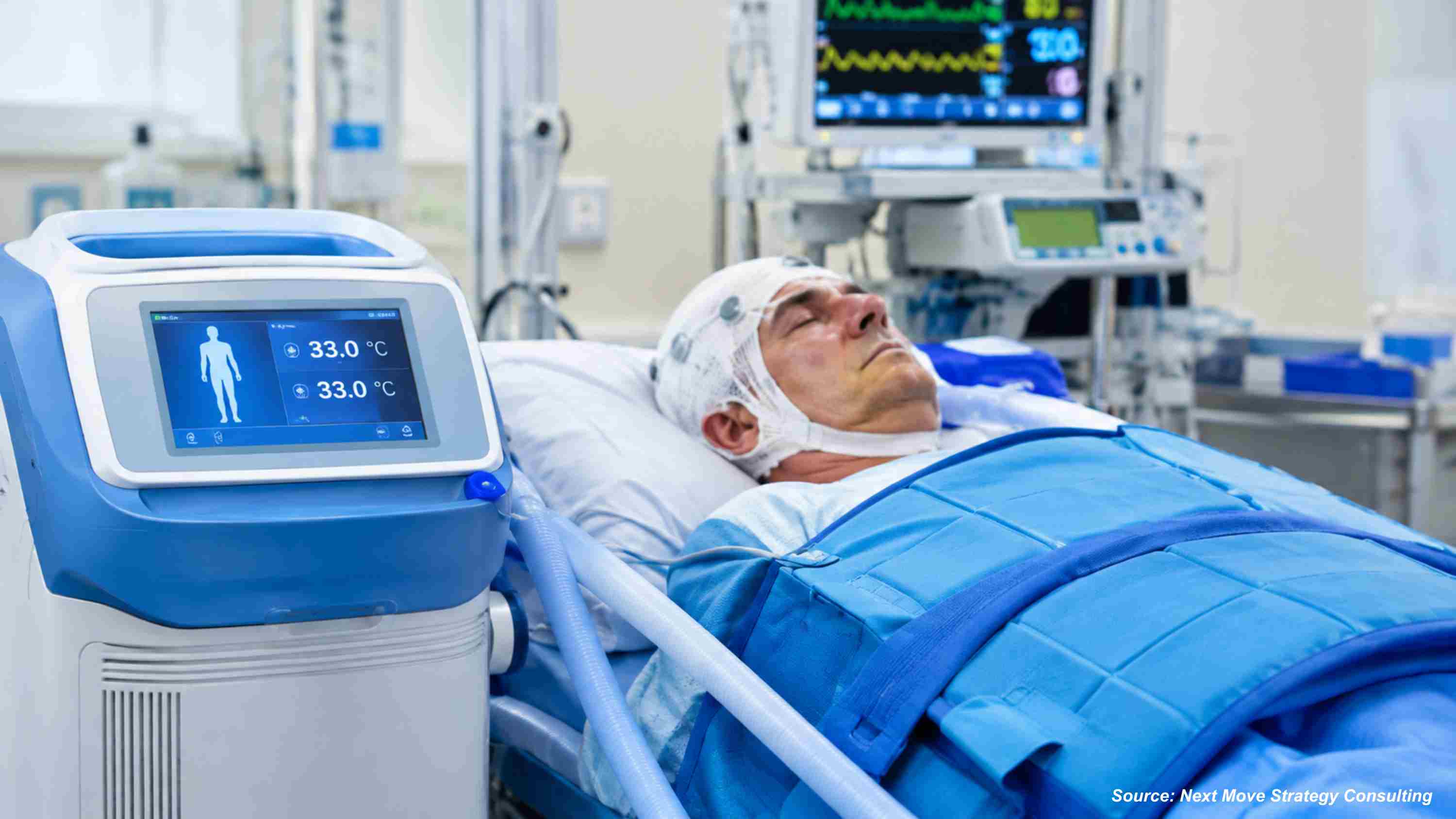
A 1,158-Patient Randomized Trial Finds No Neurological Gain From Longer Cooling After Cardiac Arrest, Moving the Focus to Cooling Speed, Device Precision and Fever Control
On August 5, 2026, JAMA published online the results of the ICECAP trial, short for Influence of Cooling Duration on Efficacy in Cardiac Arrest Patients, a randomized study of 1,158 comatose survivors of out-of-hospital cardiac arrest at 71 U.S. hospitals that asked how long therapeutic hypothermia at 33 °C should be maintained. Led by William J. Meurer of the University of Michigan and described by Michigan Medicine as the largest U.S. trial on the question, ICECAP allocated patients to cooling durations of 6 to 48 hours and found that longer cooling did not improve neurological function at 90 days; the trial stopped at a prespecified interim analysis. Every patient was cooled with a closed-loop temperature control device, which places the result at the point where clinical protocols, hospital purchasing of cooling hardware and consumables, and device regulation intersect.
According to Next Move Strategy Consulting's Therapeutic Hypothermia Systems Market report, the global therapeutic hypothermia systems market was valued at USD 305.3 million in 2024 and is projected to reach USD 422.9 million by 2030, growing at a CAGR of 5.6% from 2025 to 2030. NextMSC primary research and analysis places the 2025 market at USD 322.3 million and attributes the outlook to the rising incidence of cardiac arrest and stroke, technology advances in cooling devices such as intranasal systems, and wider clinical awareness, with fragmented regulatory approval pathways across regions as the principal restraint.
For More Information: Download FREE Sample on Therapeutic Hypothermia Systems Market Report
The Clinical Logic: A High-Mortality Patient Pool and Hardware-Dependent Care
The patient pool behind the market is large and its outcomes remain poor. Citing the American Heart Association Heart Disease and Stroke Statistics update, the association said on February 12, 2026 that about 350,000 people in the United States experience an out-of-hospital cardiac arrest each year and that 90% of these events end in death. The Cardiac Arrest Registry to Enhance Survival, in a national report dated April 20, 2026 that covers non-traumatic arrests from 2013 through 2025, recorded 1,266,616 cases in which a 911 responder attempted resuscitation. Of those patients, 10.2% survived to hospital discharge. Nonshockable rhythms accounted for 81.9% of arrests and carried a 6.2% survival to discharge, against 28.5% for shockable rhythms, so most resuscitated patients begin with the less favorable rhythm.
Temperature management is already routine in hospital care. According to the same registry report, 141,556 patients received in-hospital hypothermia or targeted temperature management, equal to 42.3% of patients admitted alive, and 33.3% of them survived to discharge. Separately, field hypothermia was recorded in 56,342 arrests, or 4.4%. The registry figures describe how often cooling is used and do not compare treated with untreated patients, so they indicate the size of the installed clinical practice rather than a treatment effect.
Out-of-Hospital Cardiac Arrest in the United States: National Registry Totals, 2013 to 2025 (All Ages)
|
Measure |
Registry value |
|
Non-traumatic arrests with resuscitation attempted by a 911 responder |
1,266,616 |
|
Survival to hospital admission |
26.4% (334,669 patients) |
|
Survival to hospital discharge |
10.2% (129,581 patients) |
|
Initial rhythm nonshockable |
81.9% of arrests (1,037,098); 6.2% survived to discharge |
|
Initial rhythm shockable |
18.1% of arrests (229,318); 28.5% survived to discharge |
|
In-hospital hypothermia or targeted temperature management, among admitted patients |
42.3% (141,556); 33.3% survived to discharge (47,162) |
|
Field hypothermia |
4.4% of arrests (56,342); 17.0% survived to discharge (9,575) |
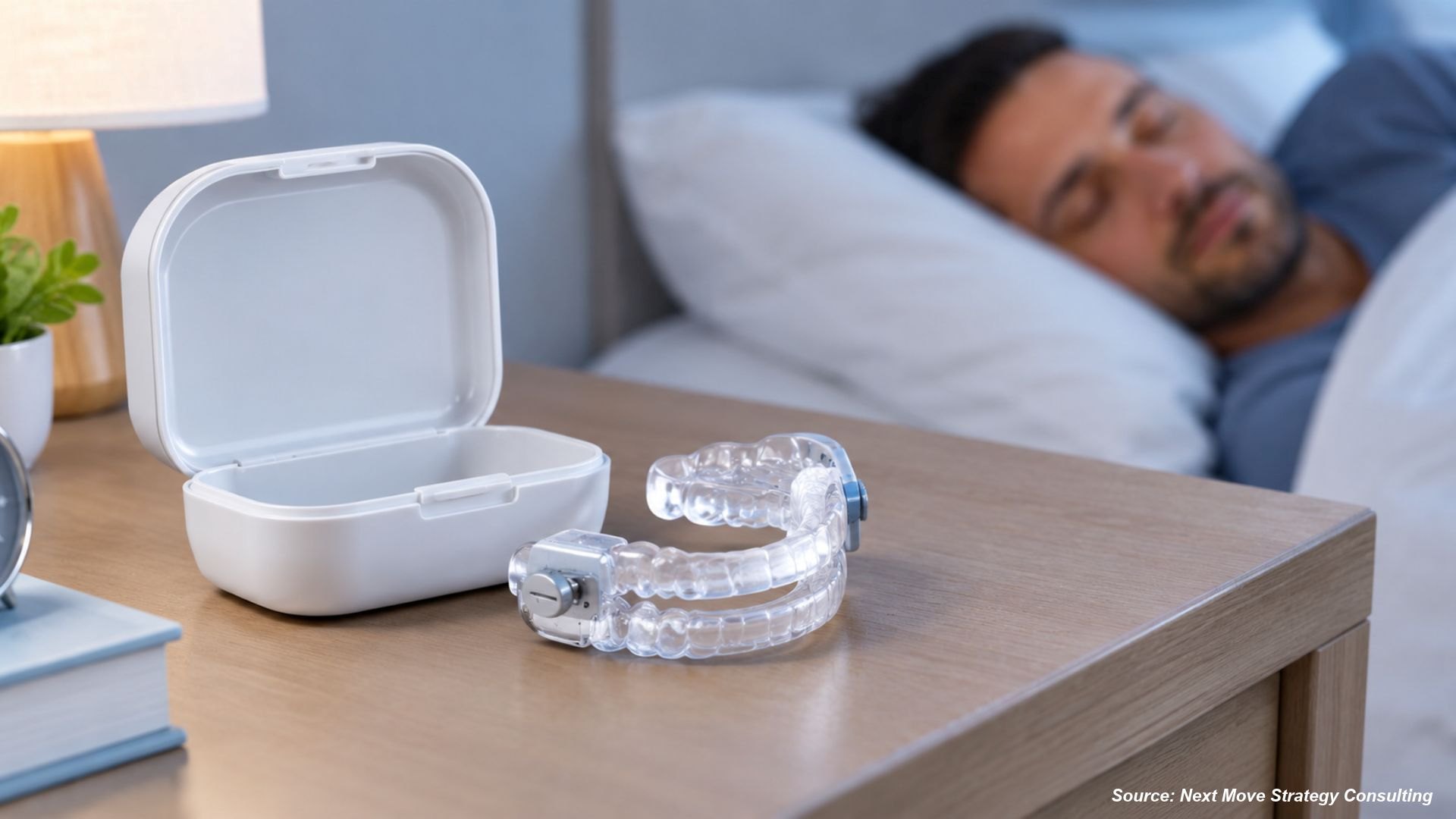
ICECAP shows how closely cooling depends on hardware. Eligibility required that hypothermia be started with a closed-loop feedback temperature control device and that the patient reach below 34 °C within 4 hours of arrest; the median time from arrest to device start was 151 minutes. JAMA reports that surface devices were used in 55% of trial patients and endovascular devices in 45%. In the trial's screening flow, 5,130 of the 13,112 patients assessed for eligibility, 1,907 with shockable and 3,223 with nonshockable rhythms, were recorded as ineligible because no cooling device was used, and 9,367 did not reach 34 °C within 4 hours; a patient could have more than one reason for exclusion. The authors of an editorial in Acta Anaesthesiologica Scandinavica noted that the lack of an available cooling device was often the reason the temperature window was missed.
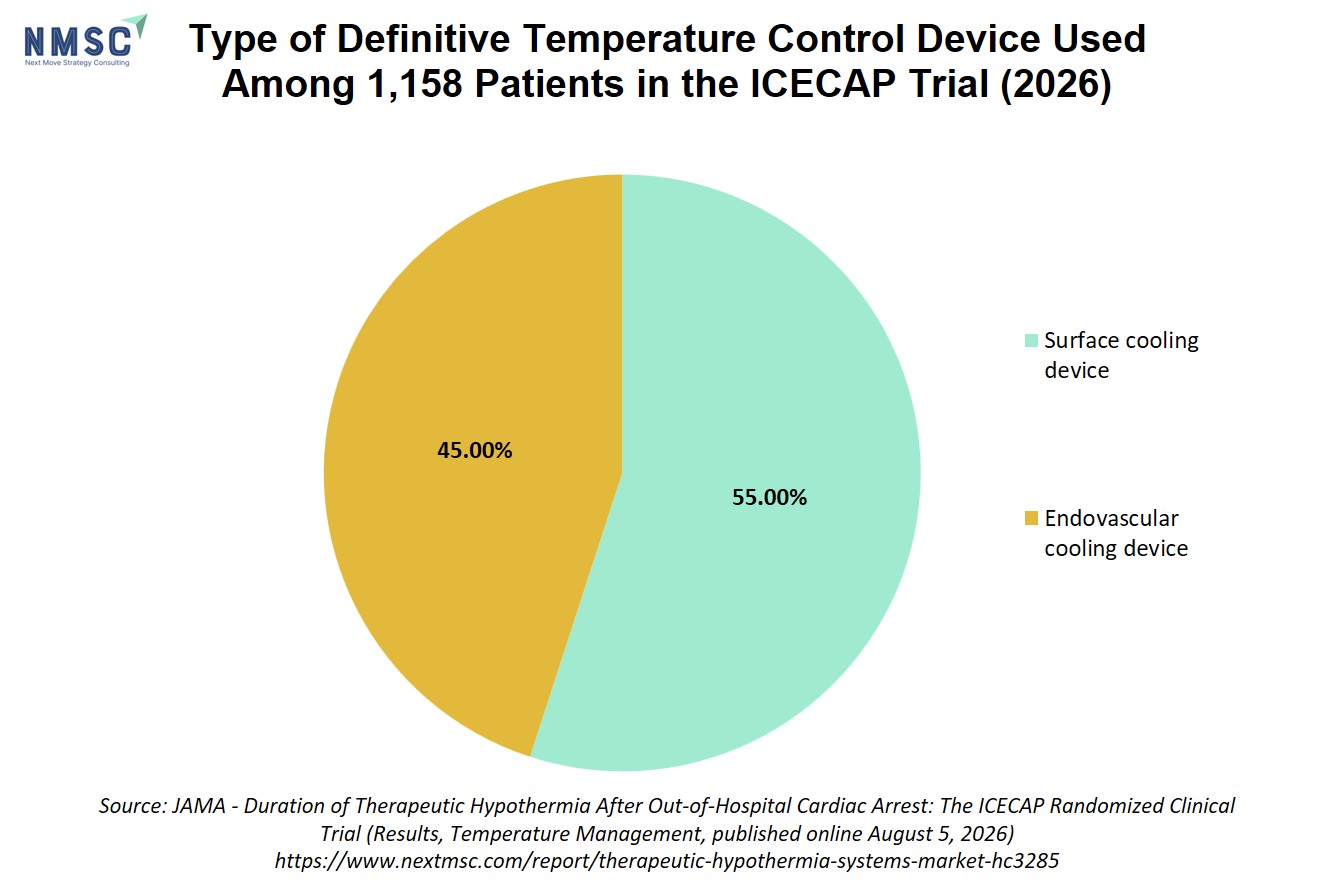
The shares are the figures published in the ICECAP results. They describe the devices used for trial patients at 71 U.S. hospitals and are not a measure of market share.
Key Industry Developments: Five Dated Events Behind the Shift
The ICECAP result rests on a demanding design. The trial used response-adaptive randomization, with the first 200 patients assigned equally to 12, 24 or 48 hours and later patients steered toward the durations most likely to be optimal, separately for 883 nonshockable and 275 shockable arrests. The primary outcome was a weighted modified Rankin Scale score at 90 days, scaled from 0 to 10. The posterior probability that 6 hours was the shortest duration achieving the maximal score was 0.51 in the nonshockable cohort and 0.49 in the shockable cohort, no patients were allocated to 60 or 72 hours, and JAMA reported no differences in secondary outcomes or mortality across durations. Overall 90-day mortality was 74.4%, at 81.3% in the nonshockable cohort and 52% in the shockable cohort. Michigan Medicine noted that survival among nonshockable patients was higher than in earlier cooling studies.
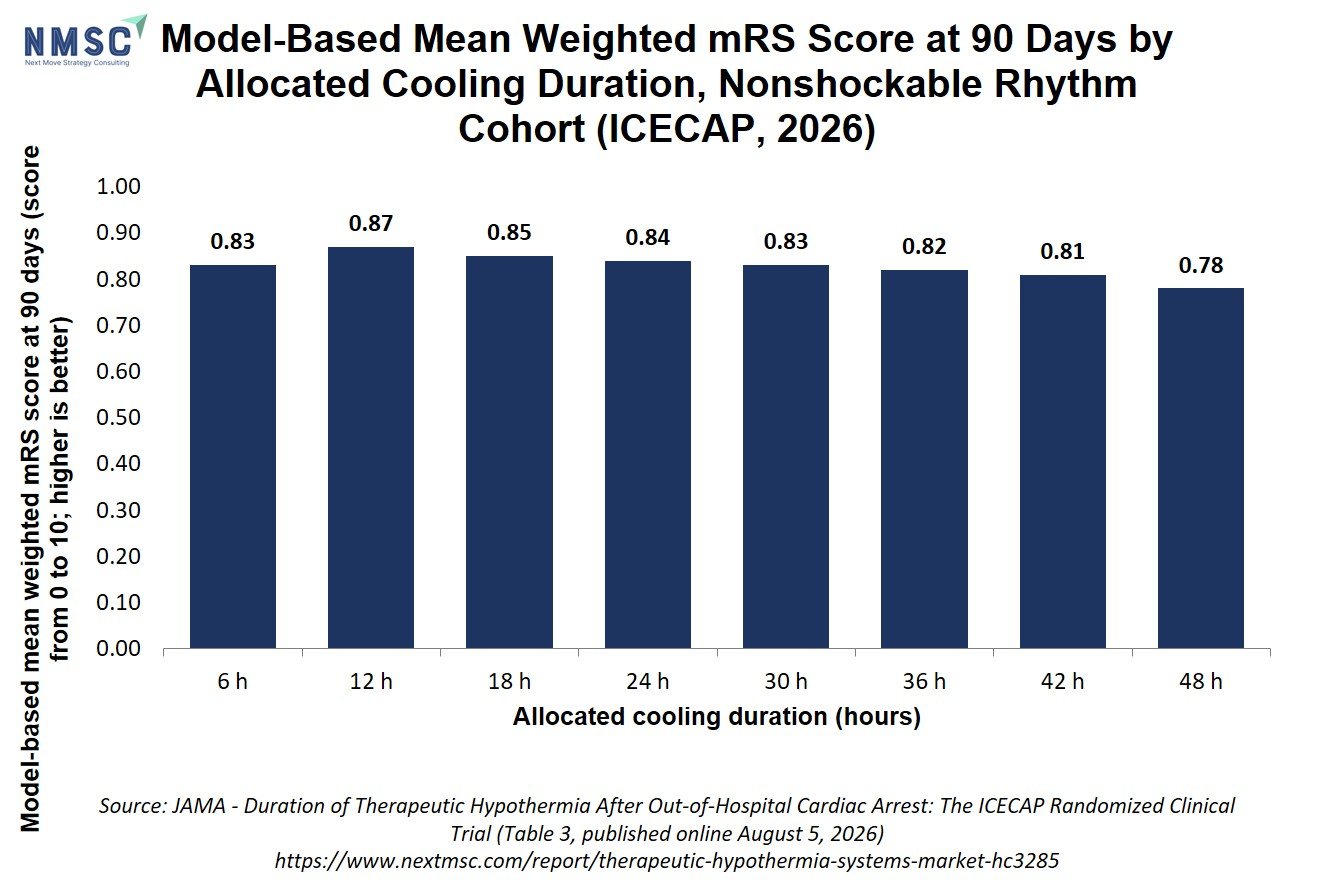
The model-based mean weighted score is the trial's primary outcome, scaled from 0 to 10, with higher values indicating better 90-day function. The nonshockable rhythm cohort comprised 883 of the 1,158 patients randomized. Values are shown as published in Table 3 of the JAMA article for the 6, 12, 18, 24, 30, 36, 42 and 48-hour groups.
“…some patients undergoing therapeutic hypothermia can wake up even after two weeks.”
- William J. Meurer, Professor of Emergency Medicine and Neurology, University of Michigan, Michigan Medicine news release, Trial focuses on duration of therapeutic hypothermia for out-of-hospital cardiac arrests, August 6, 2026.
In an editorial published on September 15, 2026 in Acta Anaesthesiologica Scandinavica, Anders Aneman, Niklas Nielsen and Markus B. Skrifvars described ICECAP as delivering one clear and immediately actionable message: in patients already cooled rapidly to 33 °C, extending hypothermia beyond the shortest duration studied does not improve neurological recovery. They cautioned that a posterior probability near 0.5 is not evidence that 6 hours is optimal, because the probability accumulates at the shortest permitted duration when the response curve is flat, and that the absence of a normothermic control arm leaves open whether even a short period of hypothermia outperforms normothermia. They concluded that the balance of evidence on whether to induce hypothermia at all has not moved.
Three further events in the same period bear on the market. On August 14, 2026, the U.S. Food and Drug Administration posted a Class 2 recall of Gentherm Medical's Blanketrol III hyper-hypothermia system, Model 233, initiated by the firm on July 13, 2026 and covering 9,714 units distributed worldwide. The agency's record states that overheating of the 115V CPU board may cause the device to shut down and assigns the cause to device design. It adds that the firm advised users in an urgent notice emailed on July 17, 2026 that they may continue using the device given the low probability of harm while keeping an alternative means of providing therapy available. On August 13, 2026, the ClinicalTrials.gov record for the IH-TTM trial, sponsored by Nantes University Hospital and last updated on September 14, 2026, lists an actual start date for a study that randomizes comatose patients resuscitated after in-hospital cardiac arrest to hypothermia at 33 °C or controlled normothermia, with primary completion estimated for August 13, 2029.
Dated Developments in Therapeutic Hypothermia, July to September 2026
|
Date |
Development |
Recorded detail |
Source |
|
July 13, 2026 (initiated); August 14, 2026 (posted) |
Class 2 recall of Gentherm Medical Blanketrol III, Model 233 |
9,714 units; overheating of the 115V CPU board may cause shutdown; FDA-determined cause: device design; recall status open |
U.S. Food and Drug Administration |
|
August 5, 2026 |
ICECAP trial published online |
1,158 patients randomized at 71 U.S. hospitals; longer cooling did not improve neurological outcomes |
JAMA |
|
August 12, 2026 |
BrainCool AB quarterly report, April to June 2026 |
Net sales of SEK 11,328 thousand against SEK 6,591 thousand a year earlier, an increase of 72% |
BrainCool AB |
|
August 13, 2026 |
IH-TTM trial start date recorded |
Hypothermia at 33 °C versus controlled normothermia after in-hospital cardiac arrest; primary completion estimated for August 13, 2029 |
ClinicalTrials.gov |
|
September 15, 2026 |
Editorial on ICECAP published |
Authors state that the balance of evidence on inducing hypothermia at all has not moved |
Acta Anaesthesiologica Scandinavica |
Segment Dynamics: Devices, Applications and the Neonatal Anchor
NextMSC primary research and analysis segments the market by product type into cooling devices, cooling catheters, cooling packs, water blankets, cool caps and others; by application into neurology, cardiology, neonatal care and others; and by end user into hospitals, ambulatory surgical centers and others. Segment-level values are published in the full report. The independent evidence gathered here bears on each axis. On product type, ICECAP's 55% surface and 45% endovascular split indicates that pad and blanket systems and catheter systems are both in routine use for the highest-acuity patients, and the Acta Anaesthesiologica Scandinavica editorial reports that the absence of benefit from longer cooling held across prespecified subgroups that included the cooling device.
On application, cardiology and neurology demand is anchored by cardiac arrest care, while neonatal care rests on a more settled evidence base. The ICECAP authors note that guidelines recommend therapeutic hypothermia in the mechanistically similar condition of neonatal birth asphyxia, and they cite the American Academy of Pediatrics clinical report on therapeutic hypothermia for neonatal hypoxic-ischemic encephalopathy, published in Pediatrics in February 2026. That report's evidence review addresses optimal temperature and duration, later initiation of cooling and cooling in mild encephalopathy, where the COMET trial compares 48 and 72 hours of cooling and the TIME trial examines safety, feasibility and neurodevelopmental outcomes at one year of age. Michigan Medicine added that the University of Michigan team is running a similar duration study in pediatric cardiac arrest that examines cooling for up to four days.
Regional Outlook: Guidelines Converge on Temperature Control
According to NextMSC primary research and analysis, North America continues to lead the market, supported by healthcare infrastructure, awareness and investment in medical research, with the United States and Canada at the forefront of clinical studies of cooling technology. Europe is growing steadily on healthcare policy, government spending on medical technology and the integration of therapeutic hypothermia into post-resuscitation protocols in several countries, with Germany, the United Kingdom and France named in the report. NextMSC identifies Asia-Pacific, led by China, India and Japan, as a region with considerable room to grow as hospital infrastructure expands, and sees adoption rising in Latin America, the Middle East and parts of Africa, citing Brazil, Mexico and Saudi Arabia.
How Three Guideline Bodies Frame Temperature Control After Cardiac Arrest
|
Body |
Document |
Temperature recommendation |
Duration and technique |
|
American Heart Association |
2025 Guidelines, Part 11: Post-Cardiac Arrest Care (October 2025) |
Maintain 32 °C to 37.5 °C in adults unresponsive to verbal commands after return of spontaneous circulation (Class of Recommendation 1, Level of Evidence B-R) |
At least 36 hours of total temperature control is the shortest recommended duration (Class 2a, Level B-R) |
|
European Resuscitation Council |
ERC and ESICM Guidelines 2025: Post-Resuscitation Care (October 2025) |
Actively prevent fever by targeting a temperature of 37.5 °C or below in patients who remain comatose after return of spontaneous circulation |
Fever prevention generally for 36 to 72 hours, as characterized by Acta Anaesthesiologica Scandinavica (September 15, 2026) |
|
ANZCOR |
Guideline 11.8 (2024), Temperature Control after Cardiac Arrest (2026) |
Suggests actively preventing fever by targeting 37.5 °C or below; whether subpopulations benefit from 32 °C to 34 °C remains uncertain |
Suggests fever prevention for at least 72 hours and surface or endovascular techniques when temperature control is used |
The three sources reflect different emphases rather than a single standard. The American Heart Association keeps a range from 32 °C to 37.5 °C, while the European Resuscitation Council and ANZCOR center on fever prevention at or below 37.5 °C and ANZCOR describes benefit from 32 °C to 34 °C in subpopulations as uncertain. NextMSC primary research and analysis reads this as a requirement that systems support both hypothermic and normothermic set points. In Asia-Pacific, the BrainCool AB quarterly report records approval by the Taiwan Food and Drug Administration on June 4, 2026 for the BrainCool system and its disposables, with ZOLL Medical Corporation as distributor, and a Japanese marketing approval that the company expects in the second half of 2026.
Growth Drivers and Restraints
The matrix below sets out the drivers and restraints that can be traced to named, independent sources, each tied to a dated measurement. It does not assign market-impact percentages, because none of the sources publishes one.
Therapeutic Hypothermia Systems: Evidence Matrix of Drivers and Restraints
|
Factor |
Type |
Evidence |
Source |
Date |
|
Large patient pool with high mortality |
Driver |
About 350,000 U.S. out-of-hospital cardiac arrests a year, with death in 90% of cases |
American Heart Association Heart Disease and Stroke Statistics |
February 12, 2026 |
|
Guideline-endorsed temperature control |
Driver |
Range of 32 °C to 37.5 °C recommended (Class 1); at least 36 hours (Class 2a) |
American Heart Association |
October 2025 |
|
Routine hospital use |
Driver |
In-hospital hypothermia or targeted temperature management in 42.3% of patients admitted alive, 2013 to 2025 |
Cardiac Arrest Registry to Enhance Survival |
April 20, 2026 |
|
Neonatal standard of care |
Driver |
Guidelines recommend therapeutic hypothermia for neonatal birth asphyxia, as cited in the ICECAP article |
American Academy of Pediatrics |
February 2026 |
|
No gain from longer cooling |
Restraint |
Posterior probability of 0.51 (nonshockable) and 0.49 (shockable) that 6 hours was the shortest duration achieving the maximal outcome; no mortality differences across durations |
JAMA |
August 5, 2026 |
|
Hypothermia versus normothermia unresolved |
Restraint |
No normothermic control arm in ICECAP; balance of evidence on inducing hypothermia at all has not moved |
Acta Anaesthesiologica Scandinavica |
September 15, 2026 |
|
Device access gap |
Restraint |
5,130 of 13,112 patients assessed were recorded as ineligible because no cooling device was used; patients could have more than one reason for exclusion |
JAMA |
August 5, 2026 |
|
Device reliability |
Restraint |
Class 2 recall of 9,714 Blanketrol III units for CPU board overheating |
U.S. Food and Drug Administration |
August 14, 2026 |
|
Divergent guidance |
Restraint |
32 °C to 37.5 °C range (American Heart Association) against fever prevention at or below 37.5 °C (European Resuscitation Council and ANZCOR) |
American Heart Association; European Resuscitation Council; ANZCOR |
October 2025 to 2026 |
NMSC Strategic Perspective: Demand Moves From Depth of Cooling to Precision of Control
NextMSC primary research and analysis reads ICECAP as a shift in what hospitals will ask of their equipment rather than a reduction in the number of patients who need temperature management. The trial answered a narrow question, the duration of cooling at 33 °C in patients already cooled quickly by a device, and its commentators were explicit about what it did not answer. Without a normothermic control arm, the Acta Anaesthesiologica Scandinavica editorial argues, the result cannot show whether even a short period of hypothermia beats normothermia. Guideline bodies have already moved toward fever prevention at or below 37.5 °C, and ICECAP itself maintained normothermia with a definitive device until ventilator liberation or up to 120 hours in every patient, which shows that fever control still requires continuous core temperature measurement and an actively controlled system.
Three demand channels follow from the evidence. The first is utilization: the registry records in-hospital hypothermia or targeted temperature management in 42.3% of patients admitted alive, and the ICECAP screening flow recorded 5,130 patients without a cooling device, so access may matter more to unit volumes than protocol length. The second is consumables: BrainCool AB attributed its 72% second-quarter sales growth mainly to disposables such as cooling pads, and because pad use depends on the installed base and on treatment time, shorter protocols may lower pad-hours per patient even as installed bases grow. The third is speed: the median interval from arrest to device start in ICECAP was 151 minutes, and the editorial notes that patients in the 6-hour group spent most of that period moving to and from 33 °C, which sharpens interest in earlier induction, including the cooling during arrest that the PRINCESS 2 trial is testing.
Reliability is becoming a procurement criterion alongside price. The FDA record for the Blanketrol III recall states that the firm advised users to keep an alternative means of providing therapy available, and in a treatment with a 4-hour induction window in ICECAP, NextMSC primary research and analysis expects hospital buyers to weigh redundancy, service response and uptime when they replace or add systems. Divergent guidance across the American Heart Association, the European Resuscitation Council and ANZCOR adds a configuration requirement, because one platform must serve hypothermic and normothermic set points across regions.
For vendors, NextMSC's analysis points to recurring consumable revenue, induction speed and demonstrated device uptime as the differentiators most closely tied to the evidence reviewed here. For hospital buyers, the more consequential decision is whether every critical care unit that treats arrest survivors has a closed-loop device available within the first hours. For investors, the neonatal segment's settled guideline position and the pending adult comparisons against normothermia, including IH-TTM, define the main evidence catalysts through 2029.
Competitive Landscape
NextMSC's report profiles 15 companies, including ZOLL Medical Corporation, Becton, Dickinson and Company, Stryker Corporation, Gentherm Medical, Brain Cool AB and Belmont Medical Technologies, and provides market share for 10 of them. Recent events that can be traced to primary documents involve three of these names. In its quarterly report signed on August 12, 2026, BrainCool AB reported second-quarter net sales of SEK 11,328 thousand against SEK 6,591 thousand a year earlier, an increase of 72%, and stated that its BrainCool and IQool systems are installed at about 100 hospitals in the United States, where ZOLL Medical Corporation acts as its distributor.
The same report states that a supplementary agreement with ZOLL Medical Corporation for Japan carries a volume commitment of 90 BrainCool systems worth about SEK 20 million, with deliveries to follow Japanese marketing approval that BrainCool AB expects in the second half of 2026. It also reports that the PRINCESS 2 cardiac arrest trial, led by Karolinska Institutet and linked to BrainCool's RhinoChill intranasal cooling system, had included 276 of the 400 patients planned before its interim analysis. BrainCool AB said it is evaluating direct sales, distributor partnerships or a structured sale of the RhinoChill program, which signals that intranasal cooling remains a pre-commercial technology in this market.
Gentherm Medical's position is shaped by the FDA's recall record. The U.S. Food and Drug Administration lists the overheating issue for Blanketrol III Model 233, Innercool CoolBlue Model STx and Blanketrol II Model 222S in its records, and the Class 2 recall of Blanketrol III remained open when the record was posted on August 14, 2026. For the remaining profiled players, no 2026 event traceable to a regulatory filing, company report or other primary document was found during research for this article, and none is asserted.
Bottom Line
The ICECAP trial, published in JAMA on August 5, 2026, closed one question and left another open: longer cooling at 33 °C did not improve neurological outcomes across 1,158 patients, while the case for inducing hypothermia rather than maintaining controlled normothermia remains unresolved. The American Heart Association, the European Resuscitation Council and ANZCOR now frame post-arrest care as temperature control with fever prevention, and the trial itself depended on closed-loop devices, 55% surface and 45% endovascular. According to NextMSC primary research and analysis, the therapeutic hypothermia systems market, valued at USD 305.3 million in 2024, is projected to reach USD 422.9 million by 2030 at a 5.6% CAGR. The evidence points to value moving from depth and duration of cooling toward induction speed, control precision and device availability, as shown by 5,130 screened patients without a cooling device, BrainCool AB's 72% second-quarter sales growth and the FDA's Class 2 recall of 9,714 Blanketrol III units. NextMSC's analysis indicates that vendors pairing reliable hardware with recurring consumables are best placed.
About Next Move Strategy Consulting
Next Move Strategy Consulting is a premier market research and management consulting firm that has been committed to provide strategically analysed well documented latest research reports to its clients. The research industry is flooded with many firms to choose from, what makes NMSC different from the rest is its top-quality research and the obsession of turning data into knowledge by dissecting every bit of it and providing fact-based research recommendation that is supported by information collected from over 500 million websites, paid databases, industry journals and one on one consultations with industry experts across a diverse range of industry sectors. The high-quality customized research reports with actionable insights and excellent end-to-end customer service help our clients to take critical business decisions that enables them to move beyond time and have competitive edge in the industry.
We have been servicing over 1000 customers globally that includes 90% of the Fortune 500 companies over a decade. Our analysts are constantly tracking various high growth markets and identifying hidden opportunities in each sector or the industry. We provide one of the industry’s best quality syndicate as well as custom research reports across 10 different industry verticals. We are committed to deliver high quality research solutions in accordance to your business needs. Our industry standard delivery solutions that ranges from the pre consultation to after-sales services, provide an excellent client experience and ensure right strategic decision making for businesses.
For more information, please contact:
Next Move Strategy Consulting
5th Floor 867 Boylston St, STE 500,
Boston, MA 02116, U.S.
E-Mail: [email protected]
Direct: +1-217-650-7991
Website: www.nextmsc.com
About the Author
 Sanyukta Deb
— Sanyukta Deb is Digital Marketing Team Lead at Next Move Strategy Consulting, where she has led content strategy and technical SEO for the firm's B2B market research publications for over 2 years. Her editorial process translates NextMSC's primary and secondary research — spanning technology, industrial, and consumer sectors — into commercial narratives, backed by search-intent, keyword, and competitive analysis. She brings 5 years of overall experience in digital marketing and content strategy.
About the Reviewer
 Debashree Dey
— Debashree Dey is Assistant Manager at Next Move Strategy Consulting, where she supports cross-vertical market content and communications across diverse industries for 6 years. Her professional background includes senior content writing, communications, and published manuscript authorship, with experience developing audience-focused business narratives and maintaining clear, consistent messaging. Her role supports research-led content development and editorial quality across NextMSC publications.













Add Comment