Modular Data Centres Drive Next-Gen Infrastructure
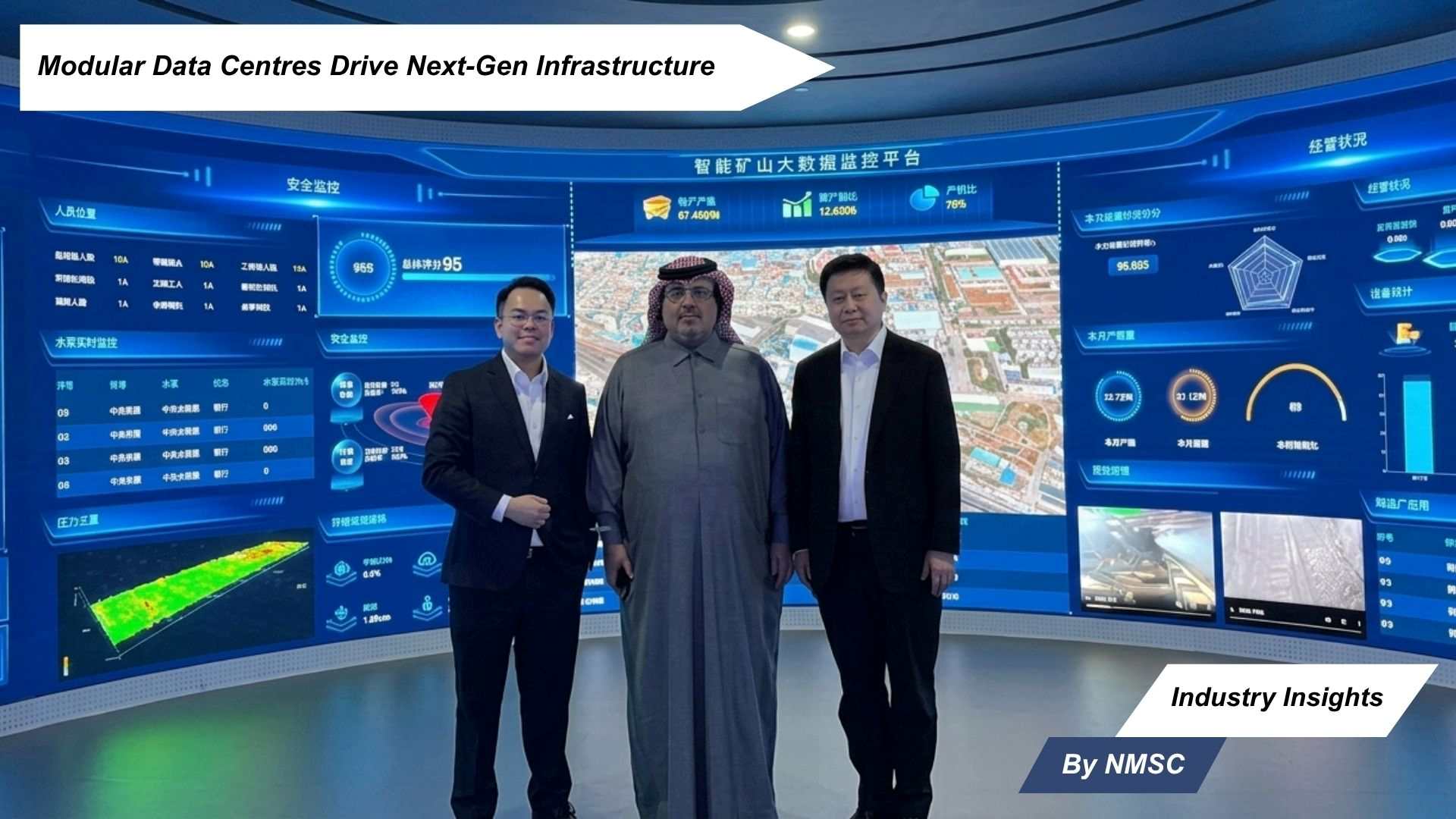
Industry Insights from Next Move Strategy Consulting
As digital transformation accelerates across industries, Asprofin Bank’s latest financing initiative for modular “nanocenter” data infrastructure signals a notable shift in how computing resources are deployed and managed. Announced in collaboration with Wow Global Technologies, the initiative introduces a distributed and flexible model designed to support emerging demands in artificial intelligence (AI), edge computing, and cybersecurity.
Positioned as an alternative to conventional hyperscale data centers, the project reflects a growing focus on modularity, scalability, and localized processing capabilities within the global data infrastructure landscape.
A Strategic Move Toward Distributed Data Models
Traditional large-scale data centers have long dominated the digital ecosystem, but limitations related to infrastructure requirements and deployment constraints continue to challenge expansion. Asprofin Bank’s involvement in financing modular nanocenters represents an exploration of a more adaptable framework, centered on smaller, prefabricated units.
These nanocenters are designed to operate with a reduced physical footprint while supporting targeted, high-performance computing workloads. The concept also introduces the possibility of deployment across multiple regions, subject to regulatory approvals and operational feasibility. While the initiative is associated with entities reportedly linked to the Al Thani family in Qatar, independent confirmation of this affiliation has not been publicly disclosed.
Modular, Scalable, and Deployment-Ready
At the core of the initiative is a modular architecture that emphasizes flexibility and ease of deployment. Unlike traditional facilities requiring extensive construction and infrastructure investment, these prefabricated units can be installed in diverse environments, making them suitable for regions where large-scale development may be restricted.
This approach enables tailored deployment strategies, allowing infrastructure to be aligned with localized computing demands. However, specific technical specifications and performance benchmarks remain unverified, with further validation expected as the project progresses.
Security-Centric Design with Future Readiness
Security considerations play a central role in the proposed infrastructure. The nanocenters are being designed with references to zero-trust architecture and compatibility with emerging cryptographic standards. Additionally, the framework takes into account future developments in areas such as quantum computing.
Despite these forward-looking elements, detailed technical validation or third-party certification has not yet been disclosed. The effectiveness of these security features will ultimately depend on real-world implementation and operational performance over time.
High-Density Performance and Operational Efficiency
According to Asprofin Bank, the nanocenters are intended to support high-density computing environments, including GPU-based processing for AI-driven workloads. The facilities are also described as incorporating liquid cooling systems alongside energy management technologies to enhance efficiency.
While these features align with broader industry trends, performance claims remain subject to confirmation as deployments move forward.
Enabling Edge and Localized Computing
A key aspect of the initiative lies in its distributed infrastructure model. By positioning computing resources closer to end users, the nanocenter approach aims to reduce latency and enable localized data processing. This model supports use cases where real-time data analysis and responsiveness are critical.
Each potential deployment will be evaluated individually, taking into account technical, regulatory, and economic factors. At present, no confirmed deployment timeline or detailed rollout plan has been announced.
Sustainability and Energy Optimization
The project also highlights energy efficiency as a core consideration. Thermal management systems and monitoring tools are expected to play a role in optimizing power usage, aligning with broader industry efforts to enhance environmental performance.
However, further details regarding sustainability metrics or compliance with international standards have not been independently verified.
Industry Outlook and Strategic Implications
Asprofin Bank’s participation underscores a wider trend of financial institutions investing in digital infrastructure tied to AI and advanced computing technologies. The initiative reflects a strategic expansion into projects that integrate data infrastructure with evolving technological requirements.
According to Next Move Strategy Consulting, the Modular Data Centre Market is gaining traction as organizations increasingly prioritize scalability, faster deployment, and proximity-based computing. The shift toward distributed infrastructure models is expected to influence future investment patterns, particularly in regions seeking efficient and adaptable alternatives to hyperscale facilities.
Redefining the Data Infrastructure Landscape
As the demand for agile and high-performance computing environments continues to rise, modular nanocenter initiatives such as this highlight a transformative direction for the industry. By combining flexibility, localized deployment, and emerging technology integration, the model introduces new possibilities for how data infrastructure is designed and delivered.
Through this financing initiative, Asprofin Bank reinforces its role in supporting next-generation infrastructure projects, contributing to the evolution of modular data centres in an increasingly decentralized digital world.
Source: Global Banking & Finance Review
Prepared by: Next Move Strategy Consulting
About the Author
 Sanyukta Deb
— Sanyukta Deb is Digital Marketing Team Lead at Next Move Strategy Consulting, where she has led content strategy and technical SEO for the firm's B2B market research publications for over 2 years. Her editorial process translates NextMSC's primary and secondary research — spanning technology, industrial, and consumer sectors — into commercial narratives, backed by search-intent, keyword, and competitive analysis. She brings 5 years of overall experience in digital marketing and content strategy.
Sanyukta Deb
— Sanyukta Deb is Digital Marketing Team Lead at Next Move Strategy Consulting, where she has led content strategy and technical SEO for the firm's B2B market research publications for over 2 years. Her editorial process translates NextMSC's primary and secondary research — spanning technology, industrial, and consumer sectors — into commercial narratives, backed by search-intent, keyword, and competitive analysis. She brings 5 years of overall experience in digital marketing and content strategy.
About the Reviewer
 Debashree Dey
— Debashree Dey is Assistant Manager at Next Move Strategy Consulting, where she supports cross-vertical market content and communications across diverse industries for 6 years. Her professional background includes senior content writing, communications, and published manuscript authorship, with experience developing audience-focused business narratives and maintaining clear, consistent messaging. Her role supports research-led content development and editorial quality across NextMSC publications.
Debashree Dey
— Debashree Dey is Assistant Manager at Next Move Strategy Consulting, where she supports cross-vertical market content and communications across diverse industries for 6 years. Her professional background includes senior content writing, communications, and published manuscript authorship, with experience developing audience-focused business narratives and maintaining clear, consistent messaging. Her role supports research-led content development and editorial quality across NextMSC publications.


















Add Comment