New ANSI Safety Standard Reshapes Industrial Automation Market
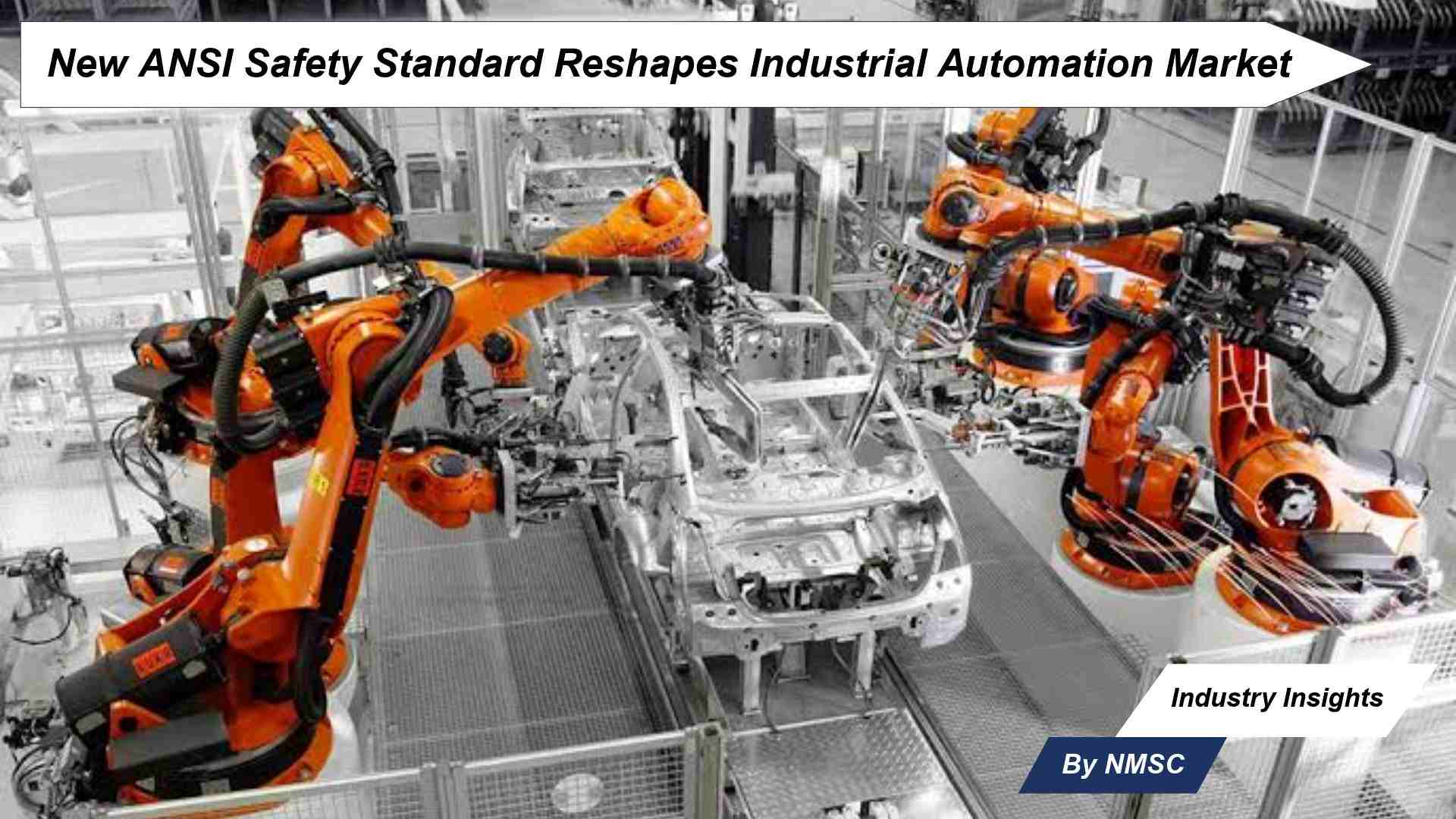
A3 Completes Industrial Mobile Robot Safety Standard Series with New ANSI/A3 R15.08-3-2026
ANN ARBOR, United States September 30, 2026, the Association for Advancing Automation (A3) has officially released ANSI/A3 R15.08-3-2026, the third and final installment of the American National Standard for Industrial Mobile Robots Safety Requirements, completing a comprehensive regulatory framework that is set to significantly influence operational practices across the Industrial Automation Market. The new standard addresses user responsibilities for the safe day-to-day operation of industrial mobile robot (IMR) applications in manufacturing environments.
The release of Part 3 marks the culmination of A3's multi-year effort to establish end-to-end safety guidance for industrial mobile robots, spanning product design through active deployment. The standard provides structured requirements and guidance for maintaining acceptable risk levels throughout the machinery lifecycle, encompassing risk assessment, management of change, employee training, and periodic reviews and inspections.
Part 3 was developed in conjunction with Part 3 of the ANSI/A3 R15.06 industrial robot safety standard, ensuring consistent guidance for the safe continued operation of both fixed industrial robots and industrial mobile robots. This alignment is expected to simplify compliance for manufacturers operating mixed-robot environments and accelerate broader adoption of mobile automation solutions on the factory floor.
According to Next Move Strategy Consulting, the global Industrial Automation Market is projected to reach USD 363.31 billion by 2030, expanding at a compound annual growth rate (CAGR) of 9.60% during the forecast period from 2024 to 2030. The finalization of a standardized safety framework for industrial mobile robots is expected to reduce deployment barriers and accelerate market expansion across discrete and process industries alike.
Key Highlights:
-
Standard Completion: ANSI/A3 R15.08-3-2026 finalizes the three-part safety series for industrial mobile robots, covering the full application lifecycle from design to daily operations.
-
User-Centric Requirements: Part 3 specifically targets end-user responsibilities, including risk assessment protocols, change management procedures, workforce training mandates, and scheduled operational reviews.
-
Cross-Standard Alignment: The new standard was co-developed alongside ANSI/A3 R15.06 Part 3, providing unified safety guidance applicable to both fixed and mobile industrial robot systems.
-
Market Compliance Impact: The standardized framework is expected to streamline regulatory compliance for manufacturers deploying autonomous mobile robots (AMRs) and other IMR technologies across global production facilities.
Analyst Insight:
According to analysts at Next Move Strategy Consulting, the completion of the ANSI/A3 R15.08 series represents a pivotal regulatory milestone for the industrial automation sector. The establishment of a clear, enforceable safety framework for industrial mobile robots is anticipated to reduce liability concerns that have historically slowed enterprise-scale IMR deployments, particularly among small and medium-sized manufacturers. NMSC analysts further note that as AI-integrated robotics and autonomous mobile systems become central to smart manufacturing strategies, standardized safety protocols will serve as a critical enabler of accelerated adoption, supporting the market's projected trajectory toward USD 363.31 billion by 2030.
Industry Outlook:
The release of ANSI/A3 R15.08-3-2026 signals a maturing regulatory environment for industrial mobile robotics, one that is increasingly aligned with the pace of technological advancement on the factory floor. As manufacturers scale automation initiatives beyond pilot programs and into full production environments, compliance with standardized safety requirements will become a baseline expectation rather than a differentiator.
The convergence of regulatory clarity, AI-driven robotics capabilities, and rising demand for operational efficiency positions the industrial automation sector for sustained structural growth. Stakeholders across the value chain from robot manufacturers and system integrators to end-user enterprises are expected to incorporate the new ANSI standard into procurement specifications, deployment protocols, and workforce training programs in the near term.
Source: Automation World
For More Information: Download FREE Sample on Industrial Automation Market Report
Prepared By: Sanyukta Deb
About the Author
 Sanyukta Deb
— Sanyukta Deb is Digital Marketing Team Lead at Next Move Strategy Consulting, where she has led content strategy and technical SEO for the firm's B2B market research publications for over 2 years. Her editorial process translates NextMSC's primary and secondary research — spanning technology, industrial, and consumer sectors — into commercial narratives, backed by search-intent, keyword, and competitive analysis. She brings 5 years of overall experience in digital marketing and content strategy.
Sanyukta Deb
— Sanyukta Deb is Digital Marketing Team Lead at Next Move Strategy Consulting, where she has led content strategy and technical SEO for the firm's B2B market research publications for over 2 years. Her editorial process translates NextMSC's primary and secondary research — spanning technology, industrial, and consumer sectors — into commercial narratives, backed by search-intent, keyword, and competitive analysis. She brings 5 years of overall experience in digital marketing and content strategy.
About the Reviewer
 Debashree Dey
— Debashree Dey is Assistant Manager at Next Move Strategy Consulting, where she supports cross-vertical market content and communications across diverse industries for 6 years. Her professional background includes senior content writing, communications, and published manuscript authorship, with experience developing audience-focused business narratives and maintaining clear, consistent messaging. Her role supports research-led content development and editorial quality across NextMSC publications.
Debashree Dey
— Debashree Dey is Assistant Manager at Next Move Strategy Consulting, where she supports cross-vertical market content and communications across diverse industries for 6 years. Her professional background includes senior content writing, communications, and published manuscript authorship, with experience developing audience-focused business narratives and maintaining clear, consistent messaging. Her role supports research-led content development and editorial quality across NextMSC publications.















Add Comment