Physical AI Deployments Reshape Global Factory and Warehouse Automation
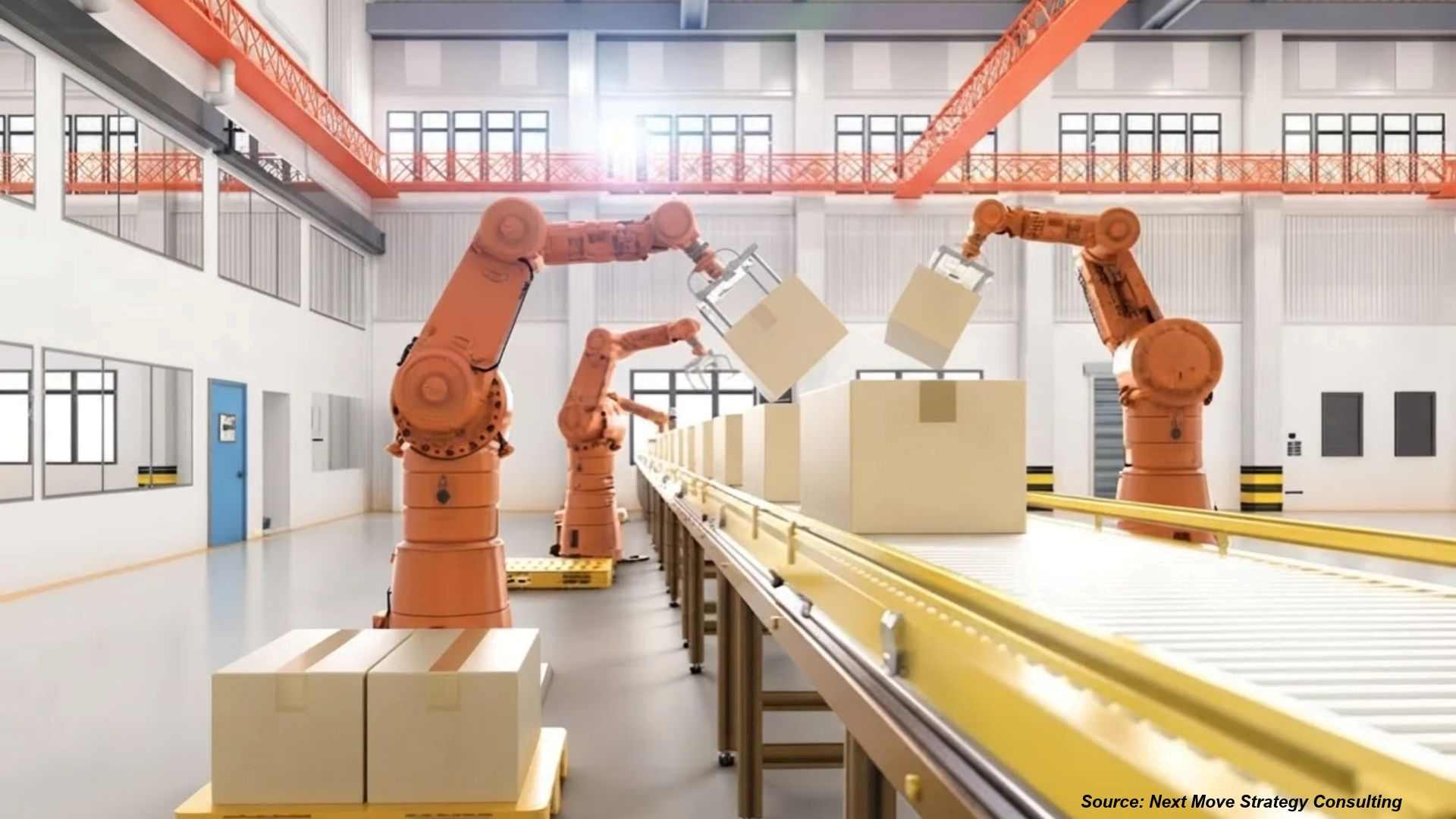
Physical AI Moves Beyond Simulation as FANUC–Google and KION–NVIDIA Transform Factory and Warehouse Automation
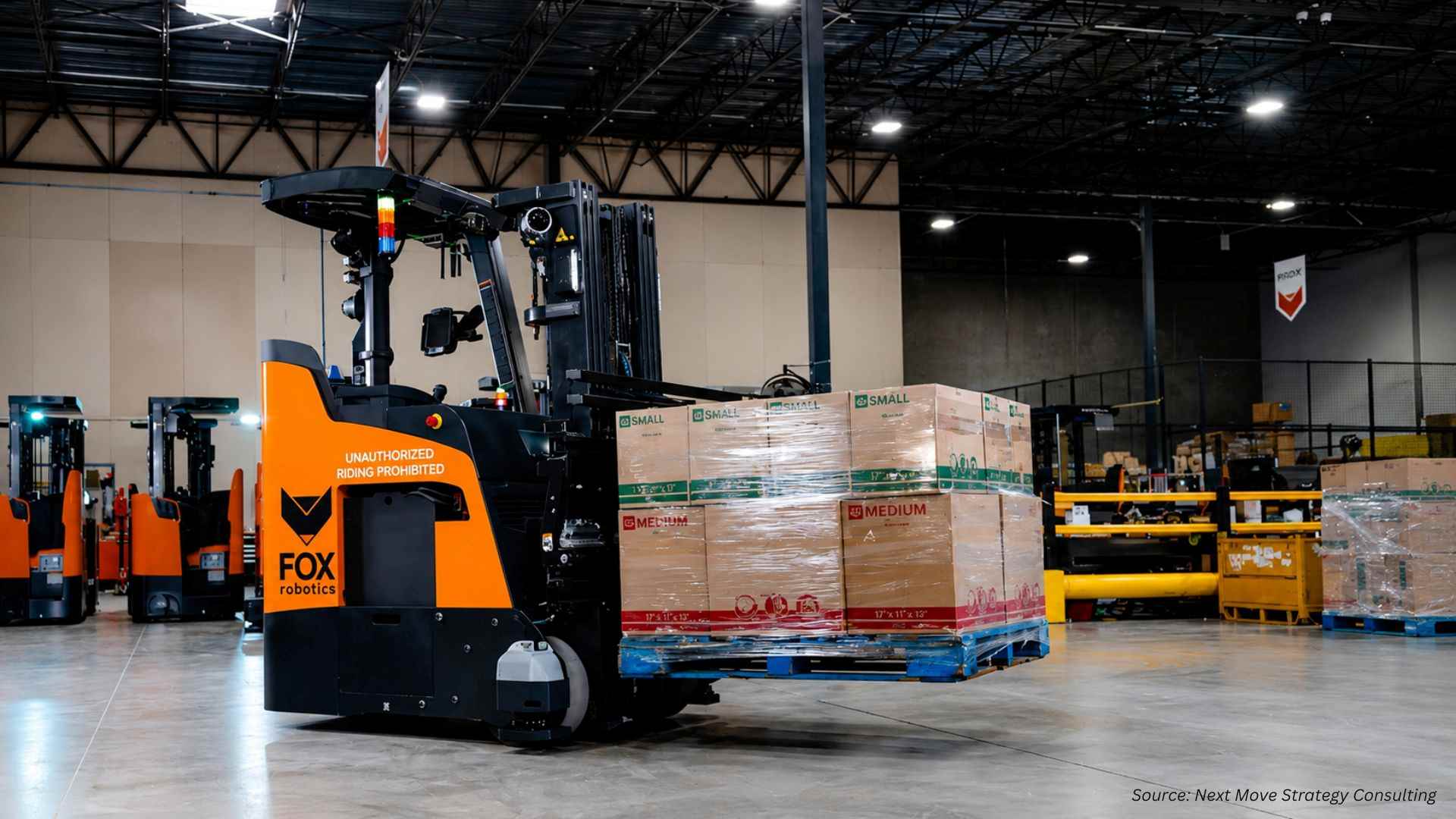
In a development that marks a decisive inflection point for industrial automation, FANUC Corporation — the world's largest supplier of industrial robots — announced on May 19, 2026, a strategic collaboration with Google to embed Physical AI directly into its commercial robot lineup, enabling factory-floor machines to perceive their environment through sensors, make autonomous decisions, and execute variable production tasks without human reprogramming. The announcement arrived within weeks of KION Group's March 16, 2026, demonstration at NVIDIA's GTC conference in San José, California, where the company deployed its first AI-supported autonomous industrial truck in a live GXO Logistics warehouse in Épinoy, France — a site operating more than 200 manual trucks — using NVIDIA Omniverse digital twins to validate the system before physical installation. Together, these two events represent the clearest evidence yet that Physical AI has moved from controlled pilots into commercially operational environments — and they are reshaping the investment calculus across the entire factory and warehouse automation sector.
According to Next Move Strategy Consulting's Factory and Warehouse Automation Market report, the global factory and warehouse automation market is projected to grow at a robust CAGR between 2025 and 2030, underpinned by three structural forces: persistent labour shortages across manufacturing and logistics, the relentless pressure on order-fulfilment speed generated by e-commerce growth, and the cost-reduction imperative that Industry 4.0 technologies — IoT-enabled devices, autonomous mobile robots (AMRs), and AI-driven warehouse management systems — are now demonstrably delivering at scale. The NMSC analysis covers the full spectrum of automation hardware and software, from articulated and collaborative robots to automated guided vehicles (AGVs), warehouse execution systems (WES), and Robotics-as-a-Service (RaaS) subscription models, across 28 countries and four major regions.
For More Information: Download FREE Sample on Factory and Warehouse Automation Market Report
The Physical AI Inflection: What the FANUC–Google and KION–NVIDIA Announcements Actually Mean
The significance of the FANUC–Google collaboration lies not in the partnership itself but in the commercial velocity it has already generated. Since FANUC unveiled its Physical AI system at the International Robot Exhibition in Tokyo in December 2025, the company has shipped more than 1,000 robots for Physical AI-related applications, with demand continuing to accelerate as of the May 2026 announcement. The system integrates Google's large language model capabilities with FANUC's open ROS (Robot Operating System) platform, allowing manufacturers to deploy robots that can handle variable production tasks — a capability that traditional rule-based automation cannot replicate without costly reprogramming.
"Manufacturers are moving beyond the question of whether to use AI and focusing on how to apply it where it matters most — on the factory floor," said Mike Cicco, President and CEO of FANUC America, in the company's May 19, 2026, press release. "By combining FANUC's industrial-grade robotics with Google's advanced AI, we're enabling customers to take on more complex, variable production while maintaining the reliability and performance that production environments demand."
The KION–NVIDIA deployment at GXO Logistics addresses a different but equally critical bottleneck: the safety certification of autonomous industrial trucks operating alongside human workers in high-density warehouse environments. KION is working with NVIDIA to certify a functional safety solution using NVIDIA Halos Outside-In Safety agents — a system that uses 360-degree perception to detect and localize objects, workers, and robots simultaneously — specifically designed for automated trailer loading, where space constraints and low-visibility occlusions make human-robot coexistence particularly hazardous.
"Our customers are facing increasing labour shortage and have a high need to increase operational efficiency. KION solves this challenge with the use of intelligent automated mobile robots and AI-cameras in supply chain operations. Our GXO pilot marks an important step forward in demonstrating how physical AI solutions deliver clear, tangible value for customers," said Rob Smith, CEO of KION GROUP AG, in the company's March 16, 2026, press release.
Patrick Kelleher, CEO of GXO Logistics — the world's largest pure-play contract logistics provider, managing outsourced supply chains across 27 countries — added: "We're focused on turning advanced AI into tangible value across our operations and this pilot helps explore what's possible for the future of supply chain."
IFR Data: Industrial Robot Market Reaches All-Time High of USD 16.7 Billion
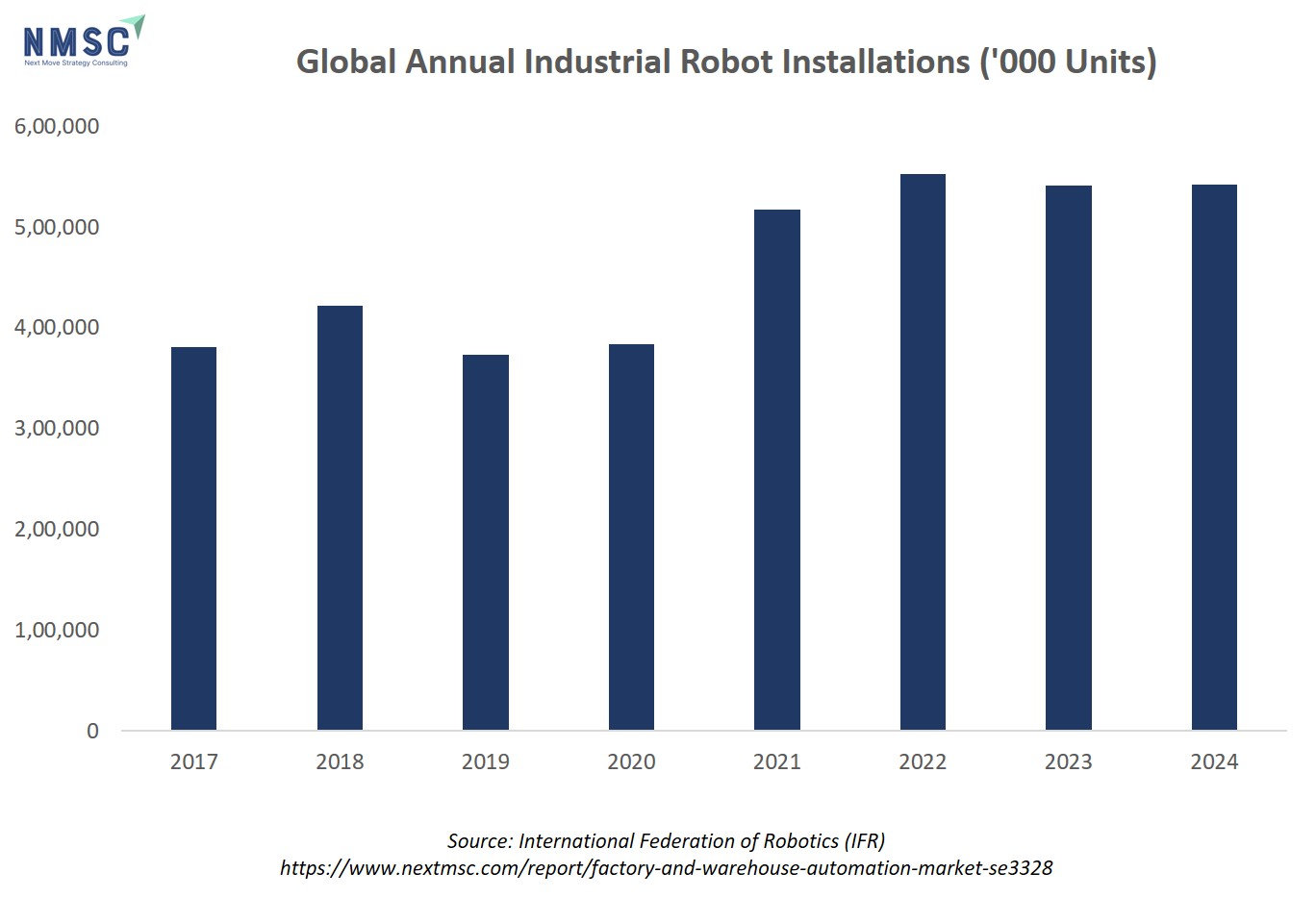
The macro backdrop against which these deployments are occurring is one of sustained structural demand. The International Federation of Robotics (IFR) reported on January 8, 2026, that the global market value of industrial robot installations has reached an all-time high of USD 16.7 billion, driven by five converging trends: AI-driven autonomy, IT/OT convergence, the emergence of humanoid robots in industrial settings, evolving safety and cybersecurity governance frameworks, and the use of robotics to address chronic labour gaps.
The IFR's identification of Agentic AI — a hybrid approach combining analytical AI for structured decision-making with generative AI for adaptability — as the defining autonomy trend for 2026 directly validates the technical architecture underlying both the FANUC–Google and KION–NVIDIA deployments. The IFR also noted that the global average robot density reached a record 162 units per 10,000 employees in 2023 — more than double the 74 units recorded seven years prior — a trajectory that NMSC's primary research and analysis identifies as a primary structural driver of continued market expansion through 2030.
Amazon's USD 25 Billion Robotics Commitment: Quantifying the Cost Case
The financial rationale for automation investment has been most explicitly quantified by Amazon, whose Amazon's Sequoia system can reduce order-processing time through a fulfillment center by up to 25%, according to Amazon reporting by the Financial Times. Amazon has surpassed one million robots deployed across its fulfilment and logistics network and is investing up to USD 25 billion in a next generation of robotics-led warehouses, with the Symbotic has stated that a USD 50 million investment in one of its automation modules could generate approximately USD 250 million in savings over 25 years.
This cost-reduction evidence base is materially expanding the addressable market for automation vendors beyond the largest e-commerce operators. As the payback period for automation investment shortens — driven by falling hardware costs, the RaaS subscription model, and AI-enabled faster commissioning via digital twins — mid-market manufacturers and third-party logistics providers are entering the automation market for the first time, broadening the demand base that NMSC's proprietary research and analysis captures in its 2025–2030 forecast.
US Reshoring Wave Creates a Structural Demand Catalyst for Factory Automation
A demand driver that is specific to the North American market — and that distinguishes the current growth cycle from prior automation investment waves — is the accelerating reshoring of US manufacturing. According to the Reshoring Initiative's 2026 survey data, 36% of original equipment manufacturers (OEMs) surveyed in 2026 reported that they had reshored or were actively engaged in additional reshoring activity, up from 29% in the prior year. The 2022–2026 reshoring cycle has been described as the largest US manufacturing investment cycle since the post-war industrial buildout, with CHIPS Act funding, the Inflation Reduction Act, and tariff-driven supply chain reconfiguration collectively driving new factory construction.
Critically, reshored factories are being built with automation as a baseline design assumption rather than a retrofit consideration. Labour costs in the United States make fully manual operations economically unviable for most manufacturing categories, meaning that every new greenfield factory commissioned as part of the reshoring wave represents a direct, incremental demand event for industrial robots, AMRs, automated storage and retrieval systems (ASRS), and the software layers — WMS, WES, WCS — that orchestrate them. NMSC's primary research and analysis identifies North America as the region currently holding the dominant revenue share in the global factory and warehouse automation market, a position reinforced by this reshoring-driven capital expenditure cycle.
NMSC Strategic Perspective: Five Structural Observations on the 2026 Market Shift
Next Move Strategy Consulting's proprietary research and analysis of the factory and warehouse automation market identifies five structural observations that distinguish the current market environment from prior automation investment cycles:
1. Physical AI Eliminates the Reprogramming Bottleneck That Capped Automation ROI
Traditional industrial robots required costly, time-consuming reprogramming each time a product variant or production sequence changed. The FANUC–Google Physical AI architecture — which allows robots to learn new tasks autonomously through simulation and natural language commands — directly eliminates this bottleneck. For manufacturers operating high-mix, low-volume production environments (a growing segment as consumer demand for product customisation increases), this capability expansion materially widens the ROI case for automation beyond the high-volume, low-mix applications that dominated prior adoption cycles.
2. Digital Twin Pre-Commissioning Compresses Deployment Timelines
KION's use of NVIDIA Omniverse to create digital twins of customer warehouses before physical installation — allowing safety-critical scenarios to be tested under variable conditions without disrupting live operations — addresses one of the most significant adoption barriers identified in NMSC's market analysis: the complexity and cost of integrating new automation with existing legacy infrastructure. By validating system behaviour in simulation first, vendors can reduce physical commissioning time and the risk of costly operational disruptions, making automation more accessible to operators with complex existing environments.
3. RaaS Subscription Models Are Democratising Access Beyond Tier-1 Operators
The Robotics-as-a-Service model — which converts large upfront capital expenditure into a predictable operating expense — is structurally expanding the addressable market for automation vendors. NMSC's analysis identifies RaaS as the most significant demand-side opportunity for the 2025–2030 forecast period, particularly for small and mid-sized manufacturers and 3PL operators that have historically been priced out of full automation deployments.
4. Safety Certification Is Becoming a Competitive Differentiator, Not a Compliance Checkbox
KION's investment in NVIDIA Halos-based safety certification for autonomous forklifts operating alongside human workers signals that safety architecture is transitioning from a regulatory requirement into a commercial differentiator. Operators selecting automation vendors are increasingly evaluating the robustness of human-robot coexistence frameworks as a primary procurement criterion, particularly as humanoid robots — identified by the IFR as a key 2026 trend — begin entering industrial environments where ISO safety standards and liability frameworks are still being defined.
5. The IT/OT Convergence Is Generating a Software Revenue Layer That Did Not Exist in Prior Cycles
The integration of Information Technology (data processing, cloud connectivity, AI analytics) with Operational Technology (physical robot control, sensor networks, conveyor systems) is creating a durable software and services revenue stream — WMS, WES, WCS, vision and perception software, robot control software — that is growing faster than hardware revenues and carries structurally higher margins. NMSC's segmentation analysis covers this software layer in detail, and the firm's proprietary research identifies it as a key driver of market value expansion through 2030.
Competitive Landscape: Key Developments Reshaping Market Positioning
|
Company |
Development |
Strategic Significance |
|
FANUC Corporation |
Strategic collaboration with Google to deploy Physical AI across commercial robot lineup; 1,000+ Physical AI robots shipped since December 2025 |
Converts FANUC's installed base of industrial robots into an AI-upgradeable platform, extending product lifecycle and creating recurring software revenue |
|
KION Group (Dematic / Linde) |
Deployed first AI-supported autonomous industrial truck at GXO Logistics (Épinoy, France) using NVIDIA Omniverse digital twin; pursuing NVIDIA Halos safety certification |
Transitions KION from hardware vendor to integrated physical AI solutions provider; GXO pilot validates commercial-scale deployment in live operations |
|
Amazon Robotics |
Surpassed 1 million robots deployed; USD 25B robotics investment programme; Sparrow and Sequoia systems delivering 25% reduction in per-unit handling costs |
Sets the cost-reduction benchmark that all automation vendors must match; Amazon's scale creates a technology demonstration effect that accelerates adoption across the broader market |
|
ABB Ltd. |
2024 acquisition of Sevensense bolsters AI-driven 3D navigation for mobile robots |
Strengthens ABB's AMR portfolio with autonomous navigation capabilities that reduce dependence on fixed infrastructure |
|
Symbotic |
Walmart robotics partnership strengthening micro-fulfilment capabilities |
Expands Symbotic's footprint in grocery and general merchandise fulfilment, a segment with high automation potential |
Regional Analysis: Where Capital Is Flowing
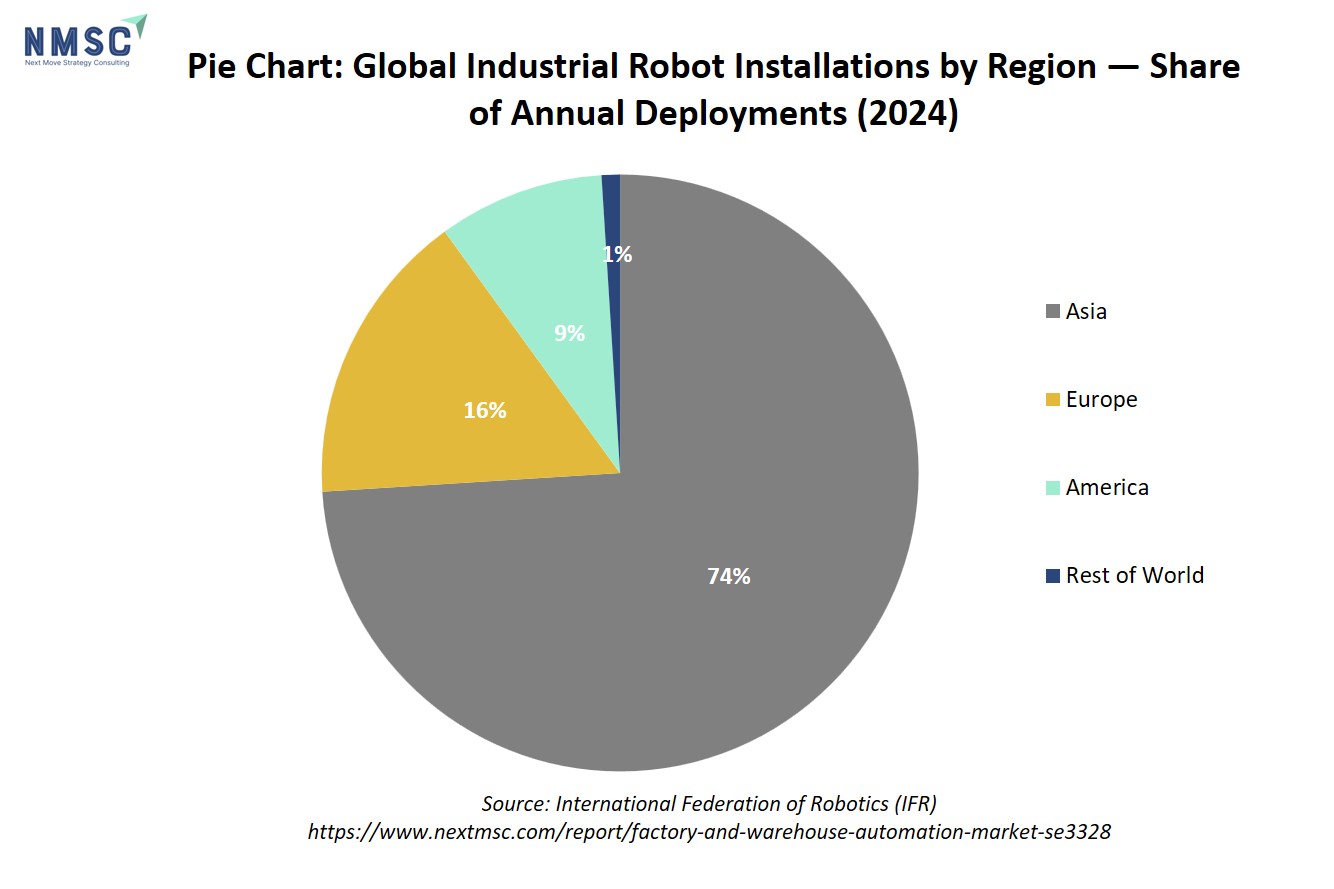
North America retains the largest revenue share in the global factory and warehouse automation market, according to NMSC's primary research and analysis. The region's dominance reflects three concurrent demand drivers: the e-commerce fulfilment imperative (US e-commerce sales reached USD 326.7 billion in Q1 2026 alone), the reshoring-driven greenfield factory construction cycle, and the labour market tightness that makes automation economically necessary rather than merely desirable.
Asia-Pacific is the fastest-growing region, led by China, Japan, South Korea, and India. China has made AI-powered robots a core element of its national industrial strategy, according to the IFR. India's warehousing sector is experiencing structural expansion driven by the government's Make in India initiative and post-GST warehouse consolidation, creating demand for automation solutions across a logistics network that is being built largely from greenfield.
Europe presents a more complex picture: strong long-term demand fundamentals — driven by labour cost pressures and the EU's Industry 4.0 policy framework — are partially offset by the challenge of integrating new automation with legacy manufacturing infrastructure. KION's GXO pilot in France, which used digital twin pre-commissioning to address precisely this integration challenge, is directly relevant to the European market's adoption trajectory.
Key Restraint: Legacy Integration Complexity Remains the Primary Adoption Barrier
Despite the acceleration in Physical AI deployments, NMSC's primary research and analysis identifies the complexity of integrating new automation technologies with existing legacy systems — ERP platforms, warehouse management systems, and proprietary machinery control protocols — as the most significant restraint on market growth through 2030. Many manufacturing plants and distribution centres have operated for decades with established system architectures that are incompatible with modern automation software stacks. Overcoming these integration barriers requires significant investment in middleware, APIs, and in some cases complete system overhauls, creating a cost and timeline burden that is particularly acute for mid-market operators.
The digital twin pre-commissioning approach demonstrated by KION at GXO Logistics — which allows integration scenarios to be tested virtually before physical deployment — represents the most commercially viable near-term solution to this restraint. As digital twin tooling becomes more accessible and standardised, NMSC's analysis anticipates a gradual reduction in integration-related adoption friction, particularly for operators commissioning new facilities rather than retrofitting existing ones.
Bottom Line
The factory and warehouse automation market is undergoing a structural transition in 2026 that is qualitatively different from prior automation investment cycles. The simultaneous deployment of Physical AI by FANUC (in collaboration with Google) and KION (in collaboration with NVIDIA and Accenture) in live operational environments, including customer pilot deployments— signals that the technology has crossed the reliability threshold required for industrial-scale adoption. The IFR's confirmation that the global industrial robot market has reached an all-time high of USD 16.7 billion, combined with Amazon's documented 25% reduction in per-unit handling costs from its Sparrow and Sequoia systems, provides the financial evidence base that is accelerating procurement decisions across the sector. The US reshoring wave — with 36% of OEMs actively engaged in reshoring activity in 2026 — is generating a structural, multi-year demand catalyst for factory automation that is independent of cyclical e-commerce fluctuations. The primary constraint on faster adoption remains legacy system integration complexity, but digital twin pre-commissioning and the RaaS subscription model are progressively lowering both the technical and financial barriers to entry. According to Next Move Strategy Consulting's proprietary research and analysis, the market's trajectory through 2030 is supported by durable structural forces that are unlikely to reverse regardless of near-term macroeconomic conditions.
About Next Move Strategy Consulting
Next Move Strategy Consulting is a premier market research and management consulting firm that has been committed to provide strategically analysed well documented latest research reports to its clients. The research industry is flooded with many firms to choose from, what makes NMSC different from the rest is its top-quality research and the obsession of turning data into knowledge by dissecting every bit of it and providing fact-based research recommendation that is supported by information collected from over 500 million websites, paid databases, industry journals and one on one consultations with industry experts across a diverse range of industry sectors. The high-quality customized research reports with actionable insights and excellent end-to-end customer service help our clients to take critical business decisions that enables them to move beyond time and have competitive edge in the industry.
We have been servicing over 1000 customers globally that includes 90% of the Fortune 500 companies over a decade. Our analysts are constantly tracking various high growth markets and identifying hidden opportunities in each sector or the industry. We provide one of the industry's best quality syndicate as well as custom research reports across 10 different industry verticals. We are committed to deliver high quality research solutions in accordance to your business needs. Our industry standard delivery solutions that ranges from the pre consultation to after-sales services, provide an excellent client experience and ensure right strategic decision making for businesses.
For more information, please contact:
Next Move Strategy Consulting
5th Floor 867 Boylston St, STE 500,
Boston, MA 02116, U.S.
E-Mail: [email protected]
Direct: +1-217-650-7991
Website: www.nextmsc.com
About the Author
 Sanyukta Deb
— Sanyukta Deb is Digital Marketing Team Lead at Next Move Strategy Consulting, where she has led content strategy and technical SEO for the firm's B2B market research publications for over 2 years. Her editorial process translates NextMSC's primary and secondary research — spanning technology, industrial, and consumer sectors — into commercial narratives, backed by search-intent, keyword, and competitive analysis. She brings 5 years of overall experience in digital marketing and content strategy.
Sanyukta Deb
— Sanyukta Deb is Digital Marketing Team Lead at Next Move Strategy Consulting, where she has led content strategy and technical SEO for the firm's B2B market research publications for over 2 years. Her editorial process translates NextMSC's primary and secondary research — spanning technology, industrial, and consumer sectors — into commercial narratives, backed by search-intent, keyword, and competitive analysis. She brings 5 years of overall experience in digital marketing and content strategy.
About the Reviewer
 Debashree Dey
— Debashree Dey is Assistant Manager at Next Move Strategy Consulting, where she supports cross-vertical market content and communications across diverse industries for 6 years. Her professional background includes senior content writing, communications, and published manuscript authorship, with experience developing audience-focused business narratives and maintaining clear, consistent messaging. Her role supports research-led content development and editorial quality across NextMSC publications.
Debashree Dey
— Debashree Dey is Assistant Manager at Next Move Strategy Consulting, where she supports cross-vertical market content and communications across diverse industries for 6 years. Her professional background includes senior content writing, communications, and published manuscript authorship, with experience developing audience-focused business narratives and maintaining clear, consistent messaging. Her role supports research-led content development and editorial quality across NextMSC publications.
















Add Comment