Industrial Automation Market: Humanoid Robots in Factories
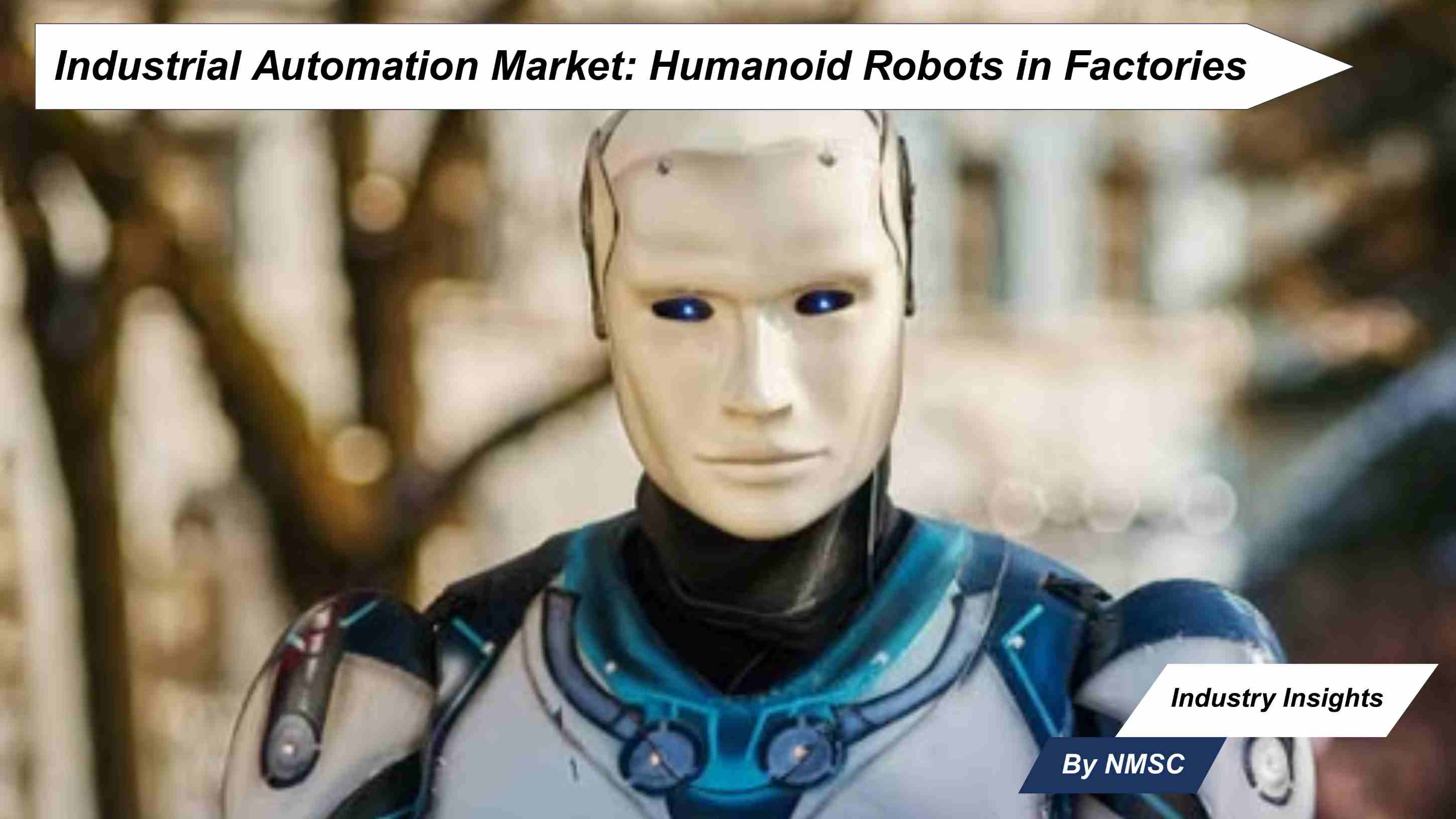
UBTECH and FAW-Volkswagen Expand Humanoid Robot Testing Into Automotive Factory Logistics
QINGDAO, China — October 12, 2026 — Chinese robotics developer UBTECH Robotics and automotive joint venture FAW-Volkswagen have expanded their strategic collaboration on humanoid robots, moving beyond vehicle-inspection trials to explore applications in factory logistics and smart manufacturing a development that underscores the accelerating pace of adoption within the Industrial Automation Market is projected to reach USD 363.31 billion by 2030, growing at a CAGR of 9.60%.
The two companies announced a strategic cooperation agreement on October 8, focused on developing and testing embodied artificial intelligence applications for automotive manufacturing. The partnership includes establishing demonstration scenarios to evaluate how humanoid robots could perform logistics tasks within active production facilities.
The agreement builds on earlier work at FAW-Volkswagen's Qingdao factory, where UBTECH's Walker S Lite humanoid robot participated in vehicle quality-inspection trials. That earlier phase involved integrating the robot directly with the factory's automation control system, enabling evaluation of its capabilities in a live industrial environment rather than a controlled laboratory setting.
Factory logistics introduces a more demanding set of operational challenges than inspection tasks. Robots deployed in this context must navigate dynamic environments, handle materials, coordinate with existing equipment, and execute tasks without disrupting established production workflows — requirements that will serve as a rigorous benchmark for the Walker S Lite's commercial readiness.
Key Highlights:
-
UBTECH Robotics and FAW-Volkswagen signed a strategic cooperation agreement on October 8, targeting embodied AI applications in automotive manufacturing.
-
The Walker S Lite humanoid robot previously completed vehicle quality-inspection trials at FAW-Volkswagen's Qingdao facility, with full integration into the factory's automation control system.
-
The expanded collaboration introduces factory logistics as a new area of development, requiring more complex movement, manipulation, and coordination with existing industrial equipment.
-
UBTECH is simultaneously scaling manufacturing capacity for its Walker series industrial humanoid robots to support a broader range of customer evaluations and commercial deployments.
Analyst Insight:
According to analysts at Next Move Strategy Consulting, the UBTECH–FAW-Volkswagen collaboration reflects a broader industry shift toward deploying humanoid robots in structured industrial environments, particularly in automotive manufacturing where operational requirements are well-defined and measurable. NMSC analysts note that as embodied AI matures, partnerships between robotics developers and established automakers are likely to accelerate, providing the real-world operational data necessary to validate commercial viability and drive wider adoption across the industrial automation sector. The progression from inspection to logistics tasks is a critical indicator of how quickly humanoid robotics is moving from demonstration to deployment-readiness.
Industry Outlook:
The expansion of humanoid robot testing into factory logistics marks a meaningful step in the commercialization of general-purpose robotic systems. Automotive factories with their established automation infrastructure, defined production requirements, and measurable performance benchmarks offer one of the most rigorous environments for evaluating task completion rates, operating availability, and integration with existing systems. As the industrial automation market continues its strong growth trajectory toward USD 363.31 billion by 2030, the outcomes of collaborations such as the UBTECH–FAW-Volkswagen agreement will inform investment decisions and deployment strategies across manufacturing sectors globally. The next critical milestone will not be another demonstration, but verifiable evidence that humanoid robots can perform useful tasks consistently, safely, and economically at scale.
Source: Association for Advancing Automation (A3)
For More Information: Download FREE Sample on Industrial Automation Market Report
Prepared By: Sanyukta Deb
About the Author
 Sanyukta Deb
— Sanyukta Deb is Digital Marketing Team Lead at Next Move Strategy Consulting, where she has led content strategy and technical SEO for the firm's B2B market research publications for over 2 years. Her editorial process translates NextMSC's primary and secondary research — spanning technology, industrial, and consumer sectors — into commercial narratives, backed by search-intent, keyword, and competitive analysis. She brings 5 years of overall experience in digital marketing and content strategy.
Sanyukta Deb
— Sanyukta Deb is Digital Marketing Team Lead at Next Move Strategy Consulting, where she has led content strategy and technical SEO for the firm's B2B market research publications for over 2 years. Her editorial process translates NextMSC's primary and secondary research — spanning technology, industrial, and consumer sectors — into commercial narratives, backed by search-intent, keyword, and competitive analysis. She brings 5 years of overall experience in digital marketing and content strategy.
About the Reviewer
 Debashree Dey
— Debashree Dey is Assistant Manager at Next Move Strategy Consulting, where she supports cross-vertical market content and communications across diverse industries for 6 years. Her professional background includes senior content writing, communications, and published manuscript authorship, with experience developing audience-focused business narratives and maintaining clear, consistent messaging. Her role supports research-led content development and editorial quality across NextMSC publications.
Debashree Dey
— Debashree Dey is Assistant Manager at Next Move Strategy Consulting, where she supports cross-vertical market content and communications across diverse industries for 6 years. Her professional background includes senior content writing, communications, and published manuscript authorship, with experience developing audience-focused business narratives and maintaining clear, consistent messaging. Her role supports research-led content development and editorial quality across NextMSC publications.
















Add Comment