Numa Advances Automotive AI Integration to Enhance Dealership Efficiency
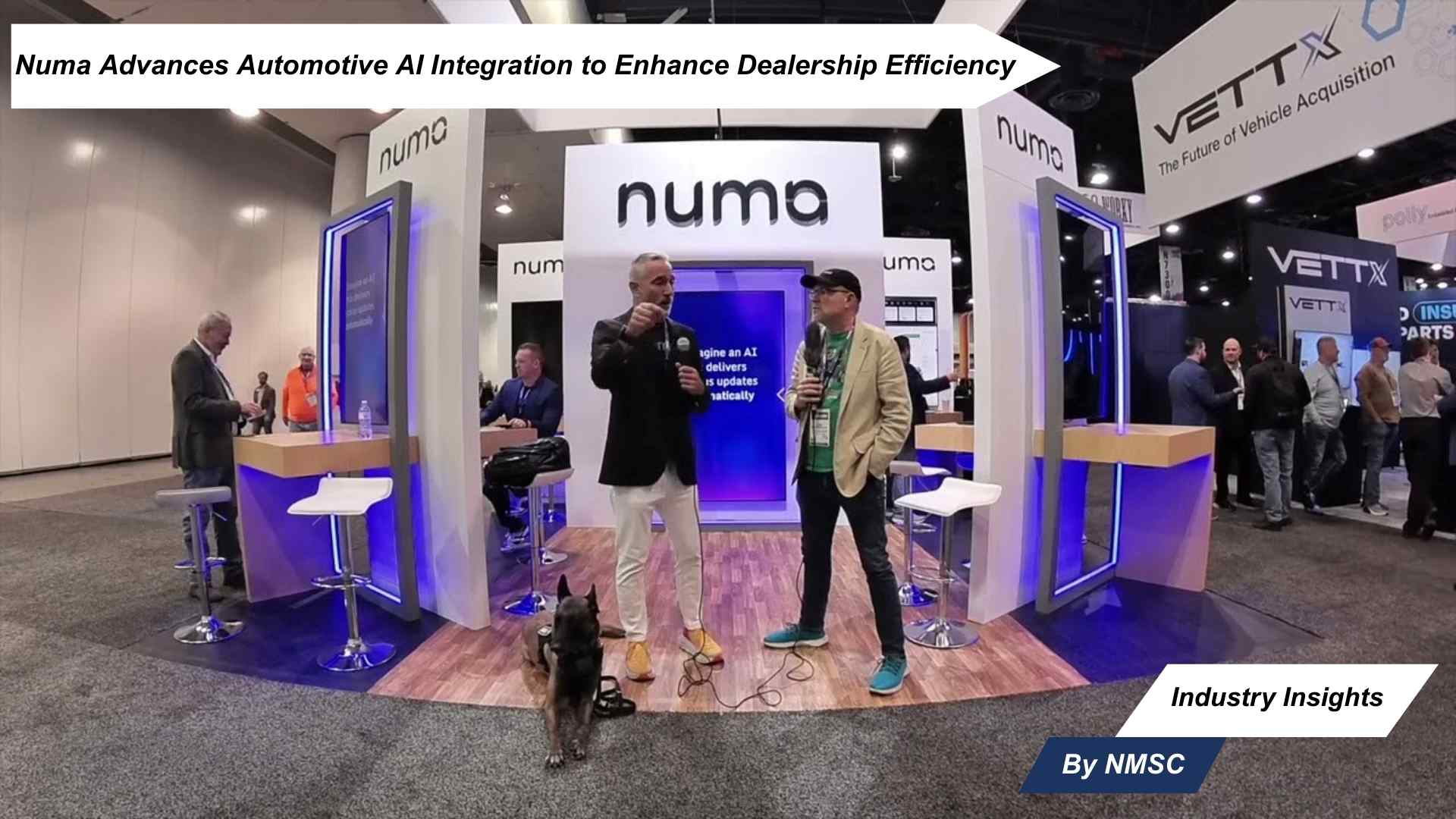
Industry Insights from Next Move Strategy Consulting
As artificial intelligence continues to reshape operational frameworks across industries, Numa’s expanding Automotive AI capabilities are redefining how car dealerships manage customer interactions and service workflows. By embedding intelligent automation into dealership operations, the company is demonstrating measurable efficiency improvements while helping retailers manage increasing communication demands and operational complexity.
This development marks a notable shift in the automotive retail technology landscape, where AI is increasingly deployed not only to automate routine tasks but also to improve customer engagement and operational visibility.
Strengthening the Role of AI in Dealership Operations
Dealerships often face operational bottlenecks driven by high call volumes, missed service opportunities, and fragmented communication processes. Numa’s Automotive AI solutions address these challenges by integrating AI agents into dealership customer operations, enabling more streamlined appointment management and service coordination.
Through API-based integrations with automotive retail platforms, the company’s AI tools can directly schedule service appointments and synchronize information across dealership systems. This approach eliminates redundant data entry while strengthening coordination between voice AI platforms, service departments, and business development teams.
The technology also enables dealerships to handle customer inquiries around the clock, allowing service bookings through AI-driven voice interactions. By automating routine communication tasks, dealership staff can shift their focus toward higher-value activities that improve customer relationships and operational productivity.
Intelligent Automation Enhancing Customer Communications
Beyond appointment scheduling, Numa has expanded its Automotive AI ecosystem with tools designed to orchestrate dealership communication workflows. Voice AI agents and centralized communication platforms consolidate customer interactions—including calls, texts, and service information—into a unified operational environment.
This integrated communication infrastructure allows AI systems to interpret customer intent, provide automated responses when appropriate, and escalate issues to human staff when necessary. Managers also gain real-time visibility into dealership interactions through AI-generated summaries, conversation categorization, and operational insights that support better oversight and team performance.
By reducing missed calls, delayed responses, and internal communication gaps, these systems contribute to improved customer satisfaction and more efficient service department workflows.
Operational Efficiency and Revenue Opportunities
AI adoption in dealership environments is increasingly driven by the need to capture missed revenue opportunities linked to communication failures. Internal data cited by the company indicates that the average dealership can miss a significant number of service appointment calls each month, highlighting a major source of unrealized service revenue.
Numa’s AI-powered platform is designed to address this challenge by ensuring consistent call coverage and automated appointment handling. By managing large volumes of customer interactions efficiently, dealerships can reduce operational strain while improving service conversion rates and profitability.
Industry Outlook
The rapid adoption of Automotive AI reflects a broader transformation in how dealerships operate and engage with customers. As communication demands increase and customer expectations evolve, intelligent automation is emerging as a core technology for dealership management.
According to Next Move Strategy Consulting, the growing deployment of AI-driven communication platforms signals a structural shift toward data-driven, automated dealership operations. As retailers continue to integrate AI into customer service, scheduling, and workflow management, Automotive AI solutions are expected to play an increasingly central role in improving operational efficiency and customer experience.
Next Move Strategy Consulting Viewpoint
Numa’s expanding Automotive AI integration highlights a broader trend toward intelligent automation in the Automotive Artificial Intelligence sector. By embedding AI agents into customer communication and service management workflows, dealerships can transform fragmented processes into coordinated, data-driven operations.
As automotive retailers face rising service demand and operational complexity, AI-powered platforms are likely to become foundational infrastructure—enabling dealerships to deliver faster responses, capture missed revenue opportunities, and improve overall operational performance.
Source: TipRanks
Prepared by: Next Move Strategy Consulting

















Add Comment