NVIDIA and Uber Advance Autonomous Ride-Hailing with Global Robotaxi Vision
Industry Insights from Next Move Strategy Consulting
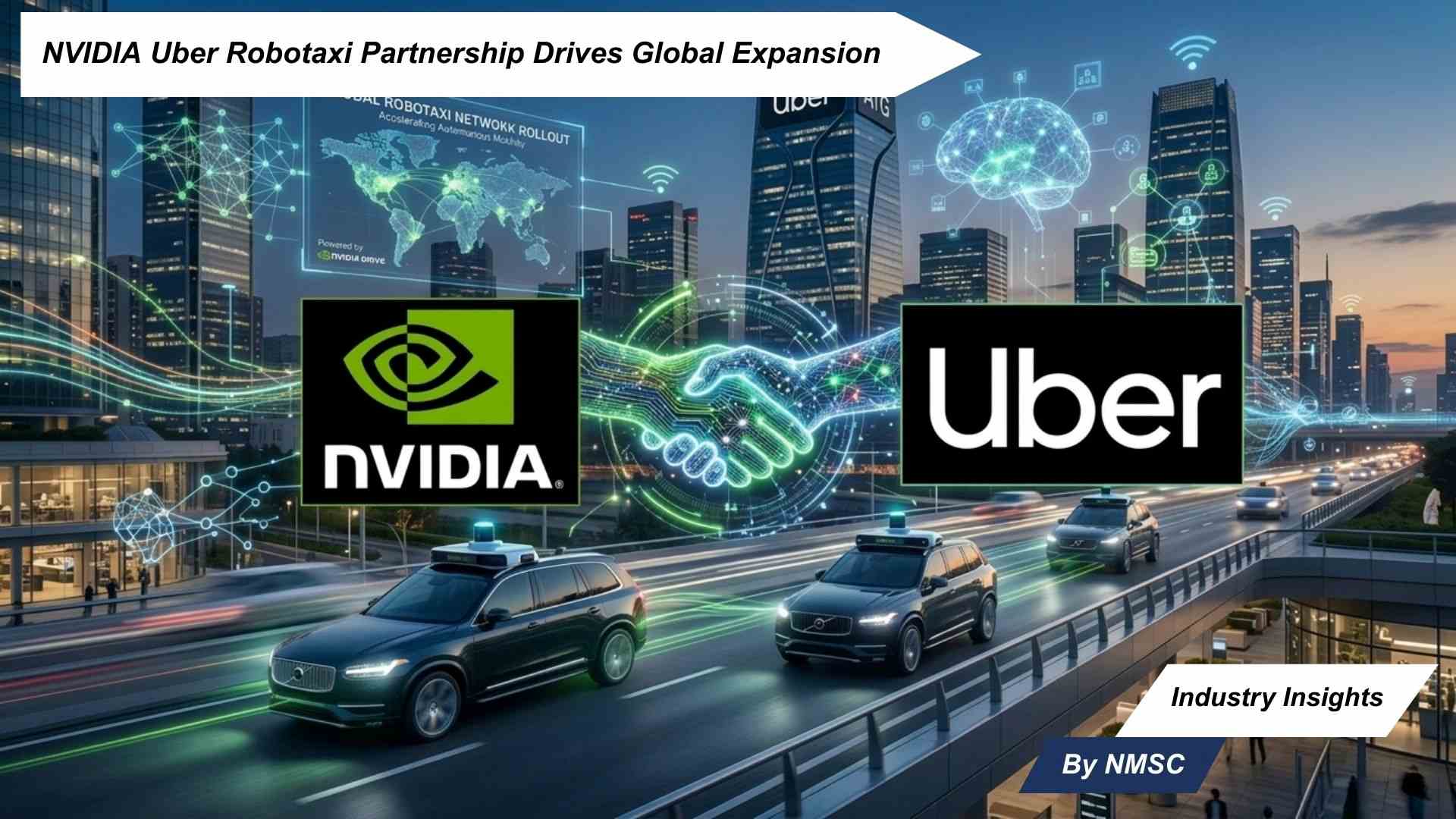
As the autonomous vehicle ecosystem continues to evolve, NVIDIA and Uber have expanded their strategic collaboration to accelerate the global rollout of robotaxi services. Announced at NVIDIA’s GTC 2026 conference, the partnership represents a significant step toward large-scale deployment of AI-powered, self-driving mobility solutions.
By combining Uber’s extensive ride-hailing network with NVIDIA’s advanced autonomous driving technologies, the collaboration aims to enable faster commercialization of Level 4 autonomous vehicles capable of operating without human intervention under defined conditions.
Accelerating the Path to Autonomous Mobility
The strengthened alliance focuses on building a scalable global robotaxi ecosystem. At the core of this initiative is NVIDIA’s DRIVE Hyperion architecture and its AI software stack, which will power next-generation autonomous vehicles integrated into Uber’s platform.
Uber plans to incorporate these vehicles into its existing network, allowing users to access a blended fleet of human-driven and self-driving rides. This hybrid approach is expected to streamline adoption while maintaining operational flexibility across diverse markets.
The long-term roadmap includes scaling to tens of thousands of robotaxis worldwide, with initial deployments anticipated in the coming years and broader expansion targeted by the end of the decade.
Enabling a Multi-Partner Autonomous Ecosystem
A defining aspect of the partnership is its ecosystem-driven model. NVIDIA’s full-stack autonomous vehicle solution comprising high-performance computing hardware, simulation capabilities, and safety frameworks enables automakers and technology partners to develop and deploy self-driving vehicles more efficiently.
This approach reduces the burden on mobility providers like Uber, allowing them to collaborate with multiple vehicle manufacturers instead of building proprietary autonomous systems. The result is a more flexible and scalable pathway to commercialization.
Phased Global Rollout Strategy
The Robotaxi Market is currently in its early stages and is not yet available in India. Initial launches are planned in cities such as Los Angeles and San Francisco starting in 2027, with expansion to approximately 28 global cities expected by 2028.
India is not part of the initial rollout, primarily due to regulatory complexities, safety approval requirements, and the challenges posed by dense and mixed traffic conditions. Additionally, the absence of mature autonomous driving infrastructure and policy frameworks remains a key barrier to entry.
Industry Shift Toward Collaborative Innovation
The NVIDIA-Uber partnership reflects a broader transformation within the autonomous mobility sector, where collaboration between technology providers, automakers, and platform operators is becoming essential for scaling innovation.
As investments in AI-driven transportation continue to rise, such alliances are expected to play a crucial role in accelerating deployment timelines and ensuring safety, efficiency, and interoperability across global markets.
Next Move Strategy Consulting’s View
According to Next Move Strategy Consulting, this collaboration marks a pivotal advancement in the evolution of autonomous ride-hailing. By leveraging complementary strengths NVIDIA’s AI and computing leadership and Uber’s global mobility platform the partnership demonstrates how integrated ecosystems can overcome traditional development barriers.
The firm notes that this model of shared innovation is likely to influence future industry strategies, encouraging increased cooperation across stakeholders to bring autonomous transportation closer to mainstream adoption.
Redefining the Future of Urban Mobility
As autonomous technologies mature, the expanded partnership between NVIDIA and Uber signals a decisive move toward making robotaxis a practical and scalable reality. With a clear roadmap, robust technological foundation, and collaborative framework, the initiative is poised to reshape the future of urban transportation.
Source: Telematics Wire
Prepared by: Next Move Strategy Consulting



















Add Comment