Nvidia Robotics Push Sparks Physical AI Update Overview
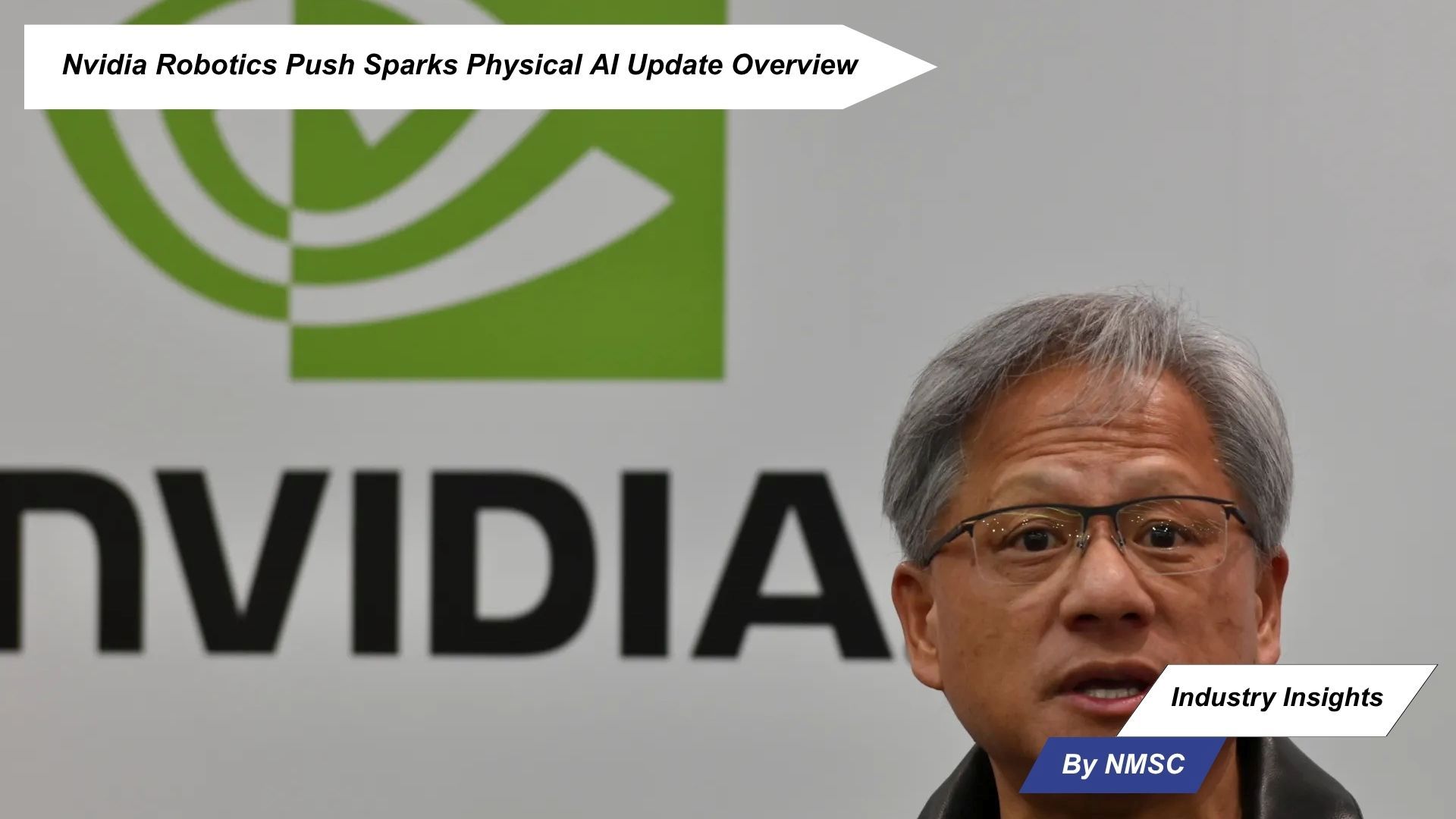
Nvidia CEO Signals Physical AI Boom as Robotics Innovation Accelerates
TAIPEI, Taiwan — May 11, 2026 — The global physical AI and robotics industry received a major boost this week after Jensen Huang highlighted the transformative potential of robotics powered by advanced artificial intelligence, reinforcing expectations of accelerated investment across autonomous systems and industrial automation.
Speaking on the future of robotics and AI integration, Huang emphasized that the next frontier of artificial intelligence lies in enabling machines to interact intelligently with the physical world. His remarks come amid growing global competition to develop humanoid robots, autonomous manufacturing systems, and AI-driven industrial platforms.
A Defining Shift Toward Physical AI
The comments from the NVIDIA Corporation chief executive underscore the rapid evolution of “physical AI,” a category focused on machines capable of perceiving, reasoning, and acting in real-world environments.
Industry observers note that physical AI is increasingly becoming central to sectors such as:
Advanced manufacturing and smart factories
-
Autonomous mobility and logistics
-
Healthcare robotics and surgical systems
-
Warehouse automation and industrial inspection
Huang reportedly stressed the importance of building robust AI infrastructure capable of supporting large-scale robotic learning and real-time decision-making, signaling a deeper convergence between generative AI and robotics engineering.
Market Momentum Builds Around Robotics Infrastructure
The announcement arrives at a time when technology companies and governments are accelerating investments in robotics ecosystems, AI chips, and simulation platforms. Analysts believe Nvidia’s continued focus on robotics could significantly influence enterprise adoption trends over the next several years.
According to analysts at Next Move Strategy Consulting, the growing demand for intelligent automation is expected to reshape capital allocation across industrial and technology sectors.
“Physical AI represents the next major phase of artificial intelligence commercialization,” notes an NMSC technology analyst. “The ability of robots to understand and operate within dynamic physical environments will redefine productivity standards across industries.”
Key Industry Implications
Rising demand for AI accelerators and edge computing hardware
-
Increased investments in humanoid robotics research
-
Expansion of AI simulation and digital twin technologies
-
Stronger collaboration between semiconductor and robotics firms
Redefining the Future of Intelligent Machines
As global enterprises seek higher operational efficiency and resilient automation systems, Nvidia’s strategic emphasis on robotics and physical AI is expected to intensify innovation across the broader AI economy. Industry experts believe the sector is entering a pivotal growth phase where intelligent machines move beyond software-driven tasks into real-world autonomous execution.
Source: The Times of India
Prepared By: Prakhyat Chowdhury
About the Author
 Sanyukta Deb
— Sanyukta Deb is Digital Marketing Team Lead at Next Move Strategy Consulting, where she has led content strategy and technical SEO for the firm's B2B market research publications for over 2 years. Her editorial process translates NextMSC's primary and secondary research — spanning technology, industrial, and consumer sectors — into commercial narratives, backed by search-intent, keyword, and competitive analysis. She brings 5 years of overall experience in digital marketing and content strategy.
Sanyukta Deb
— Sanyukta Deb is Digital Marketing Team Lead at Next Move Strategy Consulting, where she has led content strategy and technical SEO for the firm's B2B market research publications for over 2 years. Her editorial process translates NextMSC's primary and secondary research — spanning technology, industrial, and consumer sectors — into commercial narratives, backed by search-intent, keyword, and competitive analysis. She brings 5 years of overall experience in digital marketing and content strategy.
About the Reviewer
 Debashree Dey
— Debashree Dey is Assistant Manager at Next Move Strategy Consulting, where she supports cross-vertical market content and communications across diverse industries for 6 years. Her professional background includes senior content writing, communications, and published manuscript authorship, with experience developing audience-focused business narratives and maintaining clear, consistent messaging. Her role supports research-led content development and editorial quality across NextMSC publications.
Debashree Dey
— Debashree Dey is Assistant Manager at Next Move Strategy Consulting, where she supports cross-vertical market content and communications across diverse industries for 6 years. Her professional background includes senior content writing, communications, and published manuscript authorship, with experience developing audience-focused business narratives and maintaining clear, consistent messaging. Her role supports research-led content development and editorial quality across NextMSC publications.















Add Comment