OpenAI’s OpenClaw Acquisition Signals New Era in Agentic AI
Industry Insights from Next Move Strategy Consulting
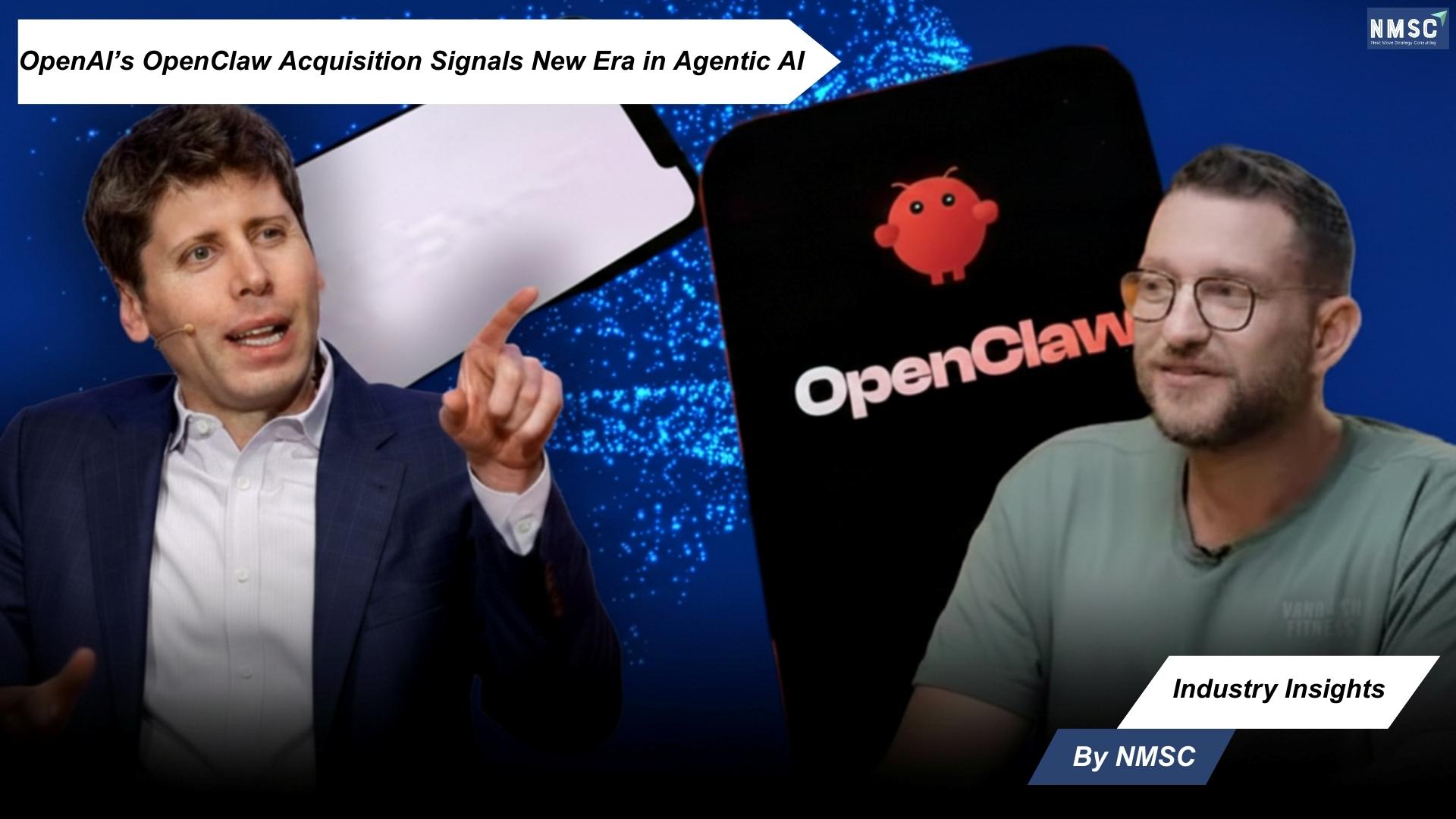
In a move that highlights a fundamental shift in artificial intelligence strategies, OpenAI’s recent acquisition of the viral open-source AI agent OpenClaw underscores a transition from traditional conversational models toward autonomous, task-executing artificial agents. The development, announced by Peter Steinberger and confirmed by OpenAI, reflects a broader industry recalibration toward what experts characterize as “agentic AI.”
A Turning Point for AI Beyond Chat Interfaces
For several years, generative AI platforms like chatbots have dominated both public discourse and enterprise deployment. However, OpenAI’s acquisition - described as “the beginning of the end of the ChatGPT era” - signals that the future emphasis lies not on what AI can articulate, but on what it can autonomously accomplish.
OpenClaw - originally launched as “Clawdbot” - rapidly gained notoriety for combining multiple capabilities previously seen only in isolated tools: integrated messaging interfaces, persistent memory, sandboxed code execution, and autonomous interaction with diverse applications. These features enabled the system to execute real-world tasks on users’ behalf.
In his public announcement, Steinberger acknowledged the project’s remarkable growth but stressed that commercializing OpenClaw as a large company was not his primary goal. Instead, he emphasized a focus on creating practical agents accessible to everyday users - a mission he believes will benefit from OpenAI’s research resources.
OpenAI CEO Sam Altman confirmed Steinberger’s new role, positioning him to lead the development of personal agents that could become central to the company’s future offerings. Importantly, the OpenClaw project itself will be transitioned into an open-source foundation with ongoing support from OpenAI - an approach intended to balance community engagement with strategic advancement.
Implications for the AI Ecosystem
The acquisition also raises questions about competitive dynamics in the AI landscape. OpenClaw initially operated in close association with other platform ecosystems, and during its rapid adoption phase it drew attention from major developers and security analysts alike. The project’s journey from independent tool to being backed by one of the largest AI labs illuminates how open-source innovation can influence broader industry trends.
Moreover, this strategic shift challenges enterprise leaders to reconsider AI deployment strategies. Autonomous agents capable of performing complex tasks with minimal human intervention present both promise and risk, driving organizations to evaluate how agentic AI aligns with operational goals, security postures, and user-centric outcomes.
Redefining the Future of AI Interaction
As the industry continues to evolve, OpenAI’s acquisition of OpenClaw marks a moment of definitive change: the focal point of innovation is moving beyond dialog systems to systems that can act autonomously in digital environments. Whether this shift heralds the next generation of personal and enterprise AI solutions remain contingent on how developers, researchers, and organizations harness these agentic capabilities.
Next Move Strategy Consulting’s Viewpoint
According to Next Move Strategy Consulting, OpenAI’s acquisition of OpenClaw represents a structural turning point in Agentic Artificial Intelligence Market. The firm observes that the competitive landscape is rapidly moving toward agent-driven architectures that emphasize execution, workflow automation, and cross-platform operability.
The transition from chatbot-centric engagement to autonomous task orchestration signals rising enterprise demand for AI systems that deliver measurable productivity outcomes. Next Move Strategy Consulting notes that such acquisitions indicate a broader industry realignment, where agentic capabilities may define the next phase of AI investment and innovation cycles.
Prepared By: Next Move Strategy Consulting
Source: VentureBeat
About the Author
 Sanyukta Deb
— Sanyukta Deb is Digital Marketing Team Lead at Next Move Strategy Consulting, where she has led content strategy and technical SEO for the firm's B2B market research publications for over 2 years. Her editorial process translates NextMSC's primary and secondary research — spanning technology, industrial, and consumer sectors — into commercial narratives, backed by search-intent, keyword, and competitive analysis. She brings 5 years of overall experience in digital marketing and content strategy.
Sanyukta Deb
— Sanyukta Deb is Digital Marketing Team Lead at Next Move Strategy Consulting, where she has led content strategy and technical SEO for the firm's B2B market research publications for over 2 years. Her editorial process translates NextMSC's primary and secondary research — spanning technology, industrial, and consumer sectors — into commercial narratives, backed by search-intent, keyword, and competitive analysis. She brings 5 years of overall experience in digital marketing and content strategy.
About the Reviewer
 Debashree Dey
— Debashree Dey is Assistant Manager at Next Move Strategy Consulting, where she supports cross-vertical market content and communications across diverse industries for 6 years. Her professional background includes senior content writing, communications, and published manuscript authorship, with experience developing audience-focused business narratives and maintaining clear, consistent messaging. Her role supports research-led content development and editorial quality across NextMSC publications.
Debashree Dey
— Debashree Dey is Assistant Manager at Next Move Strategy Consulting, where she supports cross-vertical market content and communications across diverse industries for 6 years. Her professional background includes senior content writing, communications, and published manuscript authorship, with experience developing audience-focused business narratives and maintaining clear, consistent messaging. Her role supports research-led content development and editorial quality across NextMSC publications.
















Add Comment