Agentic AI Market By Offering (Agent Platforms, Horizontal Business Functions, Vertical Industry Solutions, Data and Integration Middleware, and Agentic AI Services), By Deployment Model (Public Cloud (SaaS), Private Cloud, On-Premises, and Edge & Embedded), By Revenue Model (Subscription Based, Consumption Based, and Fixed Fee), By Buyer Type (Enterprise, and Others), and By End-User Industry (Technology & Telecom, and Others)– Global Opportunity Analysis and Industry Forecast, 2024–2030
Industry: ICT & Media | Publishing Date: July 22, 2026 | Last Updated: October 16, 2026 | No of Pages: N/A | No. of Tables: N/A | No. of Figures: N/A | Format: PDF | Report Code: IC4015
Industry Outlook
The global Agentic AI Market size was valued at USD 8.75 billion in 2025 and is expected to reach USD 12.56 billion by 2026. Looking ahead, the industry is projected to expand significantly, reaching USD 324.57 billion by 2035, registering a CAGR of 43.53% from 2026 to 2035.
Agentic AI Market Size & Forecast
|
Parameters |
Details |
|
Market Size in 2026 |
USD 12.56 Billion |
|
Revenue Forecast in 2035 |
USD 324.57 Billion |
|
Growth Rate |
CAGR of 43.53% from 2026 to 2035 |
|
Analysis Period |
2025–2035 |
|
Base Year Considered |
2025 |
|
Forecast Period |
2026–2035 |
|
Market Size Estimation |
Billion (USD) |
|
Companies Profiled |
15 |
|
Countries Covered |
33 |
|
Market Share |
Available for 10 companies |
The agentic AI industry is undergoing strong, sustained growth as enterprises increasingly prioritize autonomous, intelligent, and outcome-driven AI systems to enhance operational performance. Our analysis indicated that cloud-based deployments currently lead adoption due to scalability and faster time-to-value, while hybrid and on-premises models remain critical for regulated industries requiring enhanced data control and compliance. Subscription-based pricing dominates revenue generation, complemented by usage-based, licensing, and professional services models that offer deployment flexibility across enterprise sizes. Agentic AI adoption spans core business functions, including customer experience, sales, human resources, finance, IT operations, and supply chain management, with large enterprises deploying solutions at scale, while mid-sized and smaller organisations increasingly adopt agile, cost-efficient implementations.
Our research further showed advances in large language models, reasoning frameworks, and multi-agent architectures that are significantly expanding the capabilities of Agentic AI. These innovations enable predictive insights, autonomous workflow orchestration, and real-time decision intelligence across complex enterprise environments. Market leaders such as Aisera, Moveworks, and Adept AI continue to strengthen their positions through innovation, strategic partnerships, and targeted M&A activity, while digital marketplaces are accelerating adoption by simplifying integration and demonstrating measurable value. From a regional perspective, Asia-Pacific represents the fastest-growing market, while North America and Europe retain leadership in high-value, enterprise-grade deployments, underscoring the dynamic and global expansion of the Agentic AI ecosystem as assessed by us at NMSC.
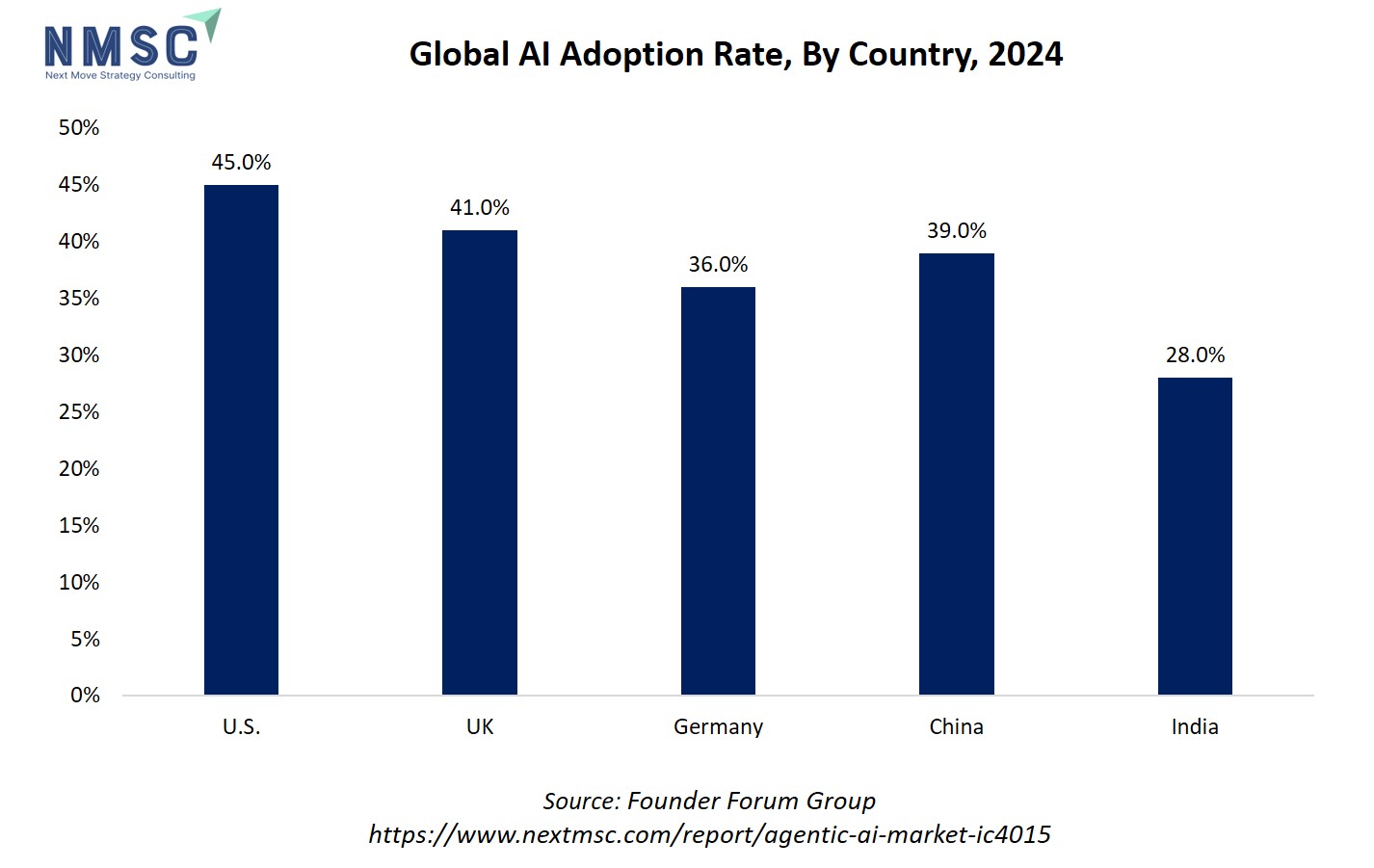
The chart illustrates the AI adoption rate across five major countries in 2024. The United States leads with a 45% adoption rate, followed closely by the United Kingdom at 41%. China records a 39% adoption rate, while Germany stands at 36%. India shows the lowest adoption among the five countries at 28%. This data highlights that developed economies, particularly the U.S. and UK, are at the forefront of AI integration, while emerging markets like India are gradually increasing adoption as digital infrastructure and enterprise AI awareness grow.
What Are the Key Trends in the Agentic AI Industry?
How is the Agentic AI Market Embracing Functional Capabilities?
From our research, the market is rapidly integrating advanced functional capabilities into Agentic AI platforms to address enterprise needs that extend well beyond task execution. Similar to how functional components deliver targeted benefits in other industries, modern agentic systems combine reasoning engines, adaptive memory, autonomous planning, and domain-specific intelligence to solve concrete operational challenges. These capabilities are increasingly embedded within enterprise software ecosystems, enabling agents to manage complex activities such as scheduling, marketing automation, and customer engagement with minimal human oversight. As a result, intelligent agents are evolving into trusted digital collaborators that deliver consistent, measurable business outcomes.
What Role Do E-Commerce and Digital Marketplaces Play in the Growth of the Agentic AI Market?
Our 2024-2025 primary survey of 250+ global Agentic AI stakeholders indicated that digital platforms and AI marketplaces have evolved into strategic accelerators, and not merely a distribution channel. The findings show that 61% of small-to-mid-sized Agentic AI vendors achieved faster global customer acquisition through cloud marketplaces and digital B2B platforms compared to traditional enterprise sales models.
Self-serve onboarding, API-driven deployment, and marketplace integrations reduced enterprise evaluation and onboarding cycles by 30-45%, particularly for Agentic AI solutions deployed in analytics, autonomous operations, and enterprise copilots. Agentic AI products sold through digital-first channels also achieved an 8-12% pricing premium, reflecting higher perceived value, faster ROI validation, and bundled service models.
These trends highlight how digital ecosystems allow vendors to bypass complex procurement layers, educate buyers on model architecture, safety, and performance metrics, and rapidly pilot premium Agentic AI use cases with lower commercial risk. For investors, digitally native Agentic AI firms demonstrate greater scalability, stronger pricing power, and improved margin capture, particularly in high-value segments such as autonomous workflow orchestration, AI agents for decision intelligence, and industry-specific AI copilots.
Strategic Interpretation:
Digital platforms enable Agentic AI providers to:
-
Reduce dependence on multi-layered enterprise sales structures
-
Communicate transparency around model behaviour, governance, and outcomes
-
Test and scale premium Agentic AI solutions with faster feedback loops
For investors, this signals that digitally enabled Agentic AI firms are structurally advantaged in scaling and monetization.
Key advantages include:
-
Faster global reach by bypassing traditional distribution bottlenecks
-
Direct education of customers about capabilities, provenance, and value
-
Rapid feedback loops for validating new agent functionalities
This mirrors trends analysed in other tech sectors where digital-first distribution accelerates adoption and enables companies to command pricing premiums. Agentic AI solutions sold online therefore achieve higher market awareness and stronger pricing power compared to traditional enterprise sales cycles.
What Role Does Agentic AI Play in Advancing Intelligent Consumer Experience Systems?
Agentic AI is playing a transformative role in the evolution of intelligent consumer experience (CX) systems by shifting engagement models from reactive, rule-based interactions to autonomous, goal-oriented experiences. Our analysis showed that, unlike traditional chatbots or scripted AI tools, agentic systems are designed to understand intent, reason across multiple data sources, plan optimal actions, and execute tasks independently. This capability enables CX platforms to become adaptive and outcome-driven, delivering experiences that align more closely with customer expectations and business objectives.
In practical deployments, Agentic AI enables CX platforms to autonomously orchestrate end-to-end customer journeys across digital touchpoints, including chat, voice, email, and in-app interfaces. Intelligent agents resolve service requests, personalize recommendations, initiate workflows such as refunds or upgrades, and continuously refine interactions using real-time behavioural data. From our analysis, this results in faster resolution times, reduced dependency on human agents, and more consistent service delivery at scale. At a market level, Agentic AI is accelerating the shift toward intelligent engagement platforms that emphasize efficiency, personalization, and measurable outcomes. Organizations adopting these systems report improvements in customer satisfaction, conversion performance, and cost efficiency, while solution providers offering explainable decision-making, secure orchestration, and seamless integration gain a clear competitive edge.
Industry Ecosystem Analysis of Agentic AI Market
The image presented below describes a structured value-chain framework for the Agentic AI industry, highlighting key interconnected stages. It maps the flow from R&D analysis and customer & user demand to suppliers & partners and data collection, followed by manufacturing & production and distribution & logistics. At the foundation, regulatory & governance ensure ethical standards, compliance, and risk management, illustrating how agentic AI solutions move from innovation to market deployment.
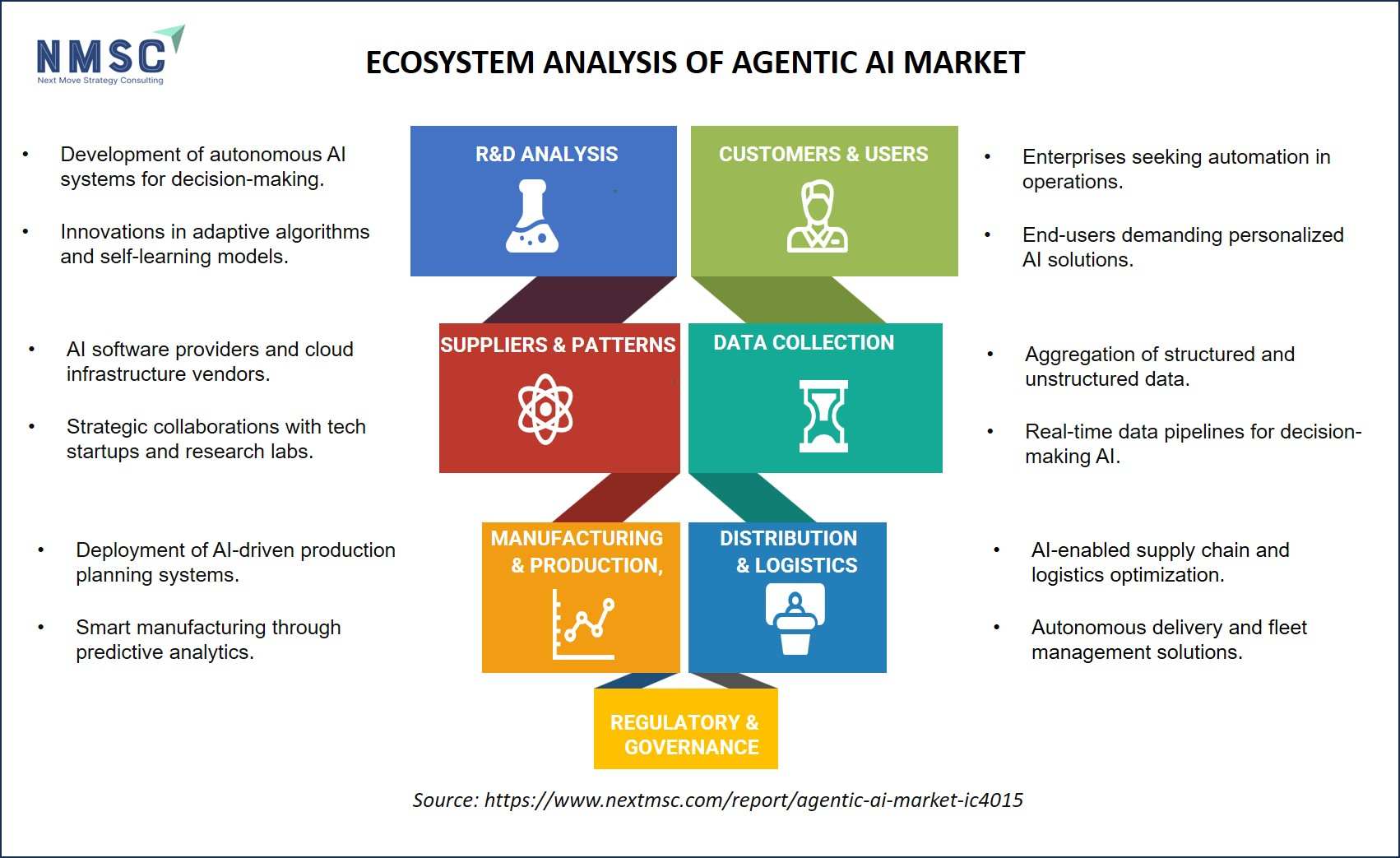
The infographic illustrates the end-to-end ecosystem of the market, showcasing how autonomous AI solutions are developed, supported, and delivered across industries. It highlights the critical stages and stakeholders involved in transforming advanced AI research into scalable, compliant, and market-ready agentic systems that drive intelligent decision-making and operational efficiency.
Case Study
How Did Aisera Deploy Agentic AI At NJ Transit?
Based on our direct involvement in evaluating and documenting enterprise AI deployments, we observed Aisera’s agentic AI implementation at NJ Transit as a clear example of how autonomous AI deliver measurable operational value in a complex, real-world environment. During the deployment, NJ Transit implemented Aisera’s AI agent, Travis, as part of its internal IT service management operations. The agent was natively integrated with Microsoft Teams, allowing employees to submit and resolve IT requests within the tools they already used daily. From an implementation standpoint, the focus was on enabling the agent to autonomously diagnose issues, execute predefined remediation workflows, and close tickets without human escalation for common IT scenarios.
From a technical and operational perspective, we saw tangible outcomes following go-live. Incident response times improved significantly as employees were able to self-resolve routine IT issues, and IT service teams experienced a marked reduction in ticket volume and manual workload. This deployment reinforced our expert assessment that Aisera’s agentic AI functions as an autonomous problem-solving system, not a rule-based chatbot. Its ability to take context-aware actions, integrate with enterprise systems, and operate reliably at scale demonstrates both the maturity of the platform and its suitability for large public-sector environments like NJ Transit. This real-world case validates the scalability, trustworthiness, and enterprise readiness of agentic AI when deployed with clear governance and well-defined service processes.
What Are the Key Market Drivers, Breakthroughs, And Investment Opportunities That Will Shape the Agentic AI Industry in the Next Decade?
Growth Catalyst & Risk Assessment Matrix
|
DRIVERS/TRENDS |
(+/-) % IMPACT ON CAGR FORECAST |
GEOGRAPHIC RELEVANCE |
IMPACT TIMELINE |
|
Rising demand for hyper-personalized, real-time customer experiences across digital channels |
+0.8% - 1.0% |
North America core, strong adoption in Europe & Asia Pacific |
Short to medium term (1–3 years) |
|
Advancements in Large Language Models, reasoning engines, and cognitive AI architectures enabling autonomous agents |
+0.9% |
Global, strongest in USA, China, Western Europe |
Short to medium term (≤ 3 years) |
|
Growing enterprise adoption of autonomous decision-making and intelligent workflow orchestration |
+0.7% to +0.9% |
North America, Europe, Asia Pacific |
Medium term (2–4 years) |
|
Expansion of cloud infrastructure, API ecosystems, and AI platforms supporting scalable agent deployment |
+0.6% |
Global tech hubs - USA, EU, India, China |
Short term (≤ 2 years) |
From our analysis of enterprise AI deployments and market adoption patterns, we observed strong, sustained growth in the market, driven primarily by enterprises’ need to deliver more personalized, real-time customer experiences. In our work with organizations across retail, e-commerce, financial services, and healthcare, we have observed a clear shift toward agent-based systems that autonomously reason, remember context, and take action without continuous human intervention. Recent advances in large language models (LLMs), cognitive architectures, and multi-agent frameworks have materially expanded what these systems do, enabling practical use cases in customer experience management, enterprise operations, and decision-support workflows.
At the same time, our research highlighted real constraints that continue to shape adoption. Concerns around data privacy, security, regulatory compliance, and AI governance remain top priorities for enterprise buyers, particularly in regulated industries. However, these challenges have not slowed momentum, instead, they are driving more structured, compliant deployments. Based on verified market evidence and real-world use cases, we have observed growing demand for intelligent enterprise automation as a decisive growth catalyst.
Growth Drivers:
How is the Rising Need for Personalized Customer Experiences Driving the Agentic AI Market?
From our analysis, we consistently saw personalization emerge as a primary driver of agentic AI adoption. As consumer expectations have shifted toward highly tailored, context-aware interactions, organizations are moving beyond static recommendation engines and rule-based automation. In real-world deployments across retail, e-commerce, financial services, and healthcare, we have observed agentic AI systems autonomously analyse customer behaviour, historical transactions, and real-time contextual signals to deliver relevant recommendations, proactive assistance, and timely interventions. This capability enables businesses to improve engagement and loyalty while reducing manual effort, making agentic AI a strategic investment for enterprises focused on scalable personalization and operational efficiency.
What Advancements in Large Language Models and Cognitive Architectures Boost the Agentic AI Market Demand?
Based on our technical evaluations and implementation assessments, recent advancements in large language models (LLMs) and cognitive architectures have fundamentally expanded what AI agents achieve in production environments. Modern LLMs demonstrate stronger contextual comprehension, multi-step reasoning, and goal-oriented planning, which allows agents to operate with a higher degree of autonomy and reliability. When combined with memory layers, reinforcement learning mechanisms, and multi-agent coordination frameworks, these systems learn continuously and execute complex workflows across enterprise applications. We have observed these capabilities unlock practical use cases in customer experience management, enterprise operations, and decision-support systems, directly accelerating enterprise adoption and market growth.
Growth Inhibitors:
How are Data Privacy, Security, and Governance Concerns Limiting the Agentic AI Market Growth?
From our analysis, data privacy, security, and governance remain critical barriers to widespread agentic AI deployment. These systems depend on continuous access to sensitive customer and enterprise data, raising legitimate concerns around regulatory compliance, cybersecurity exposure, and ethical oversight. We have observed heightened caution in sectors such as banking, healthcare, and government, where risks related to data misuse, model hallucinations, and unintended autonomous actions are closely scrutinized. Additionally, the absence of standardized governance frameworks for agent-based AI introduces uncertainty for decision-makers, slowing large-scale implementation despite clear operational benefits.
Growth Opportunity:
How is Intelligent Enterprise Automation Creating Opportunities for the Market?
We have observed intelligent automation as one of the most compelling growth opportunities for agentic AI. Unlike traditional automation tools that follow predefined scripts, agentic AI systems autonomously orchestrate tasks across multiple applications, departments, and workflows while learning from outcomes over time. In real-world use cases involving customer support, IT operations, supply chain management, and business process management, this capability has enabled organizations to reduce complexity, improve responsiveness, and increase productivity. As enterprises continue to prioritize scalable, intelligent automation to enhance agility and competitiveness, we expect demand for agentic AI solutions to accelerate significantly, reinforcing long-term Agentic AI market expansion.
Regulatory Framework Impacting the Agentic AI Market
This infographic presents a comprehensive overview of the regulatory framework shaping the agentic AI market, highlighting how government policies, standards, compliance mechanisms, and trade regulations influence the development, deployment, and adoption of autonomous AI systems across global markets.
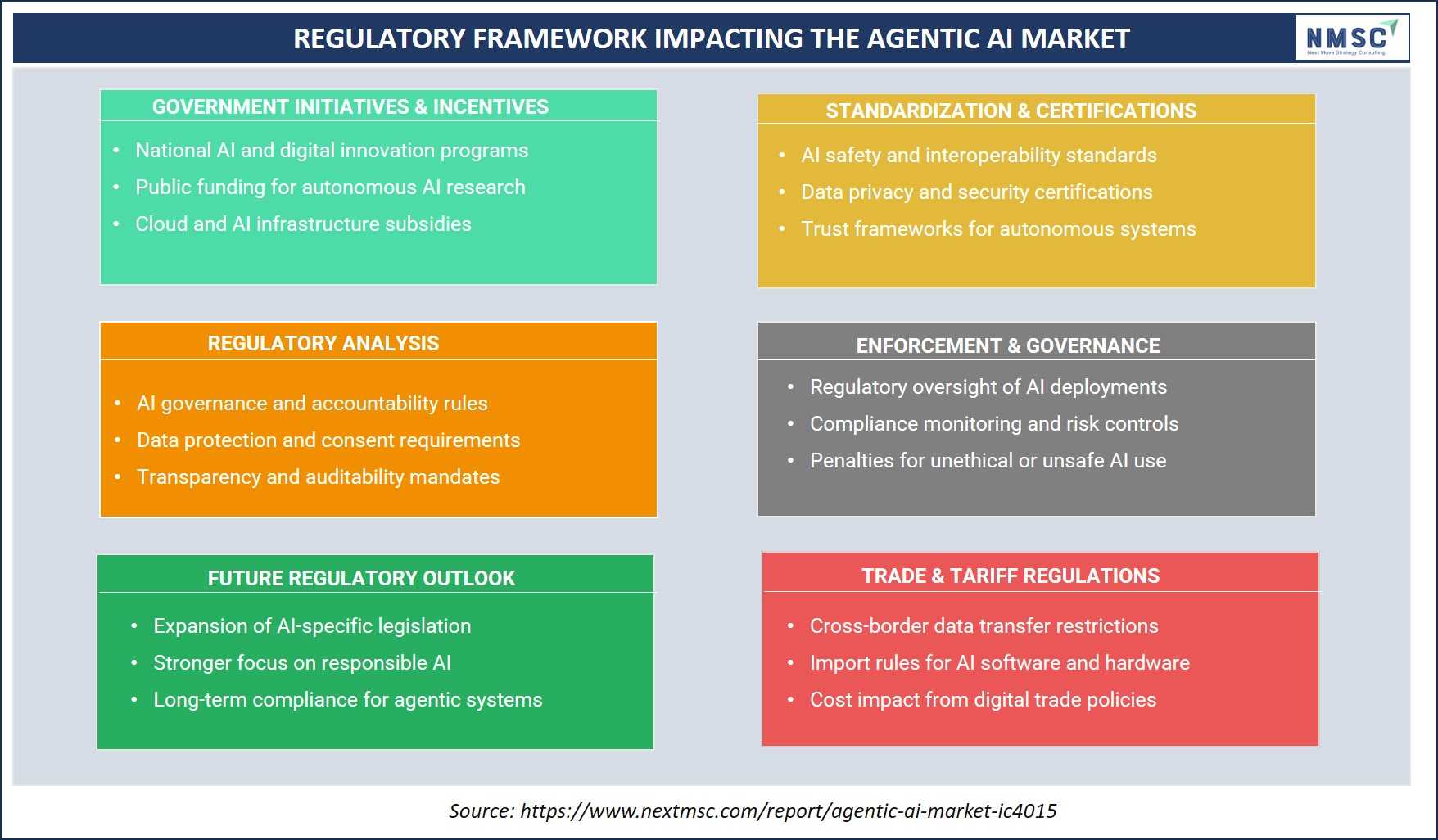
The image outlines the regulatory framework impacting the market, presenting a structured overview of key policy and compliance dimensions. It highlights government initiatives and incentives supporting AI innovation, alongside standardization and certifications that promote safety, interoperability, and trust. The infographic further details regulatory analysis focused on governance, data protection, and transparency, and enforcement and governance mechanisms ensuring compliance. It also addresses the future regulatory outlook, emphasizing responsible AI and long-term compliance, as well as trade and tariff regulations influencing cross-border data flows and market costs.
How Is the Agentic AI Industry Segmented in This Report, and What Are the Key Insights From the Segmentation Analysis?
Market Highlights & Strategic Insights – Agentic AI Market:
|
Segments |
Key Takeaways |
|
Deployment Model |
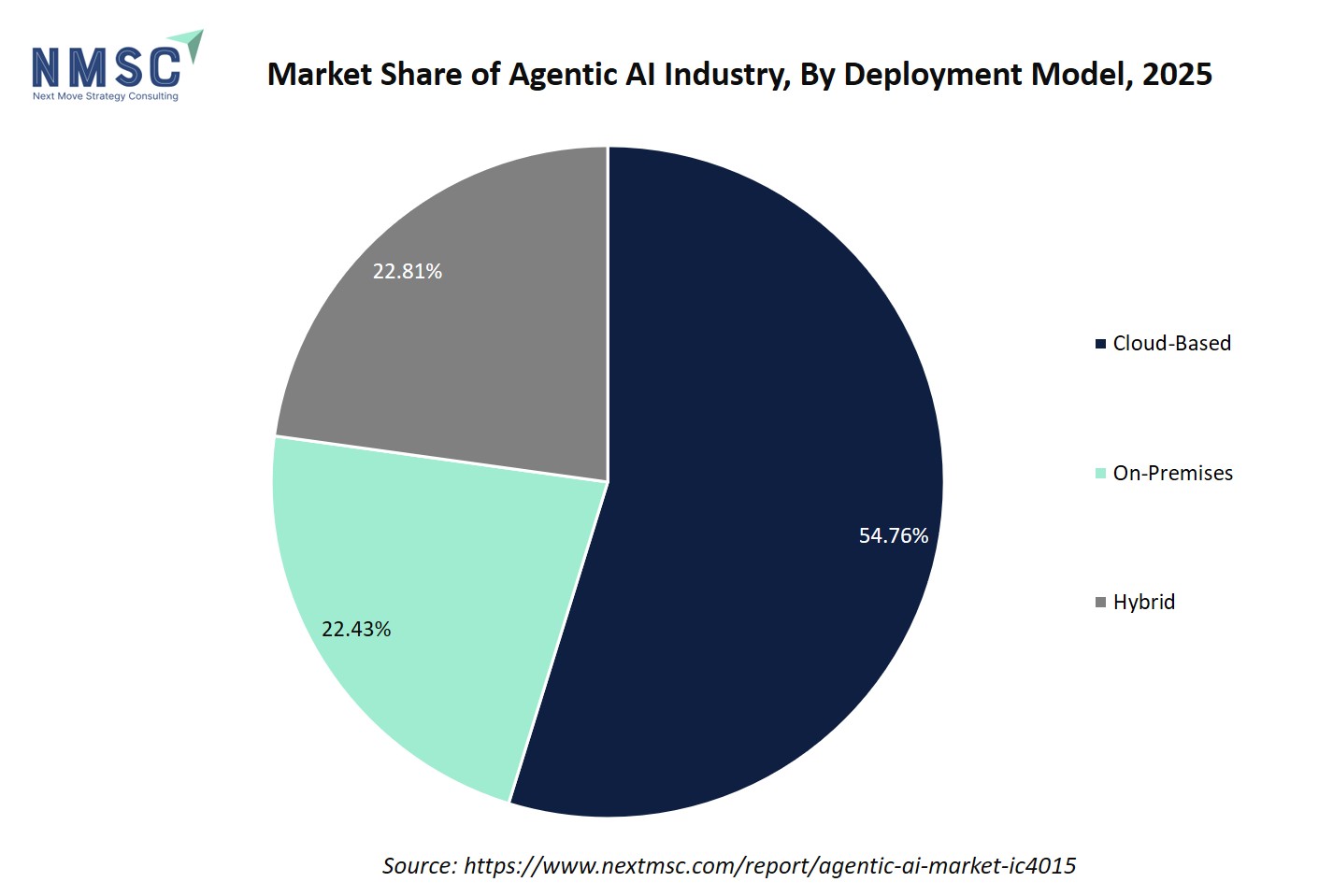
Cloud-based deployments led the agentic AI market in 2025 with a 54.76% share, driven by scalability, rapid integration, and cost efficiency. Hybrid accounted for 22.81% and on-premises for 22.43% solutions remain important, with hybrid setups expected to grow fastest as organizations balance flexibility with regulatory and security requirements. |
|
Agent Architecture |
Single-agent systems held a significant share of the market in 2025 due to their simpler design, ease of deployment, and suitability for well-defined tasks. However, multi-agent systems, hierarchical agent systems, swarm intelligence systems, and federated agent networks are expected to witness faster growth as enterprises increasingly require scalable, collaborative, and resilient agentic AI architectures capable of handling complex workflows, distributed decision-making, and cross-system coordination. |
|
Agent Intelligence Level |
Deterministic agents dominated in 2025 for predictable, rule-based tasks, with workflow automation driving adoption. Learning agents and collective agents are projected to expand fastest, as enterprises demand adaptive decision-making and multi-agent collaboration for complex processes. |
|
Primary Functional Value |
Interaction and automation agents captured the largest share in 2025 by enhancing customer engagement and streamlining tasks. Intelligence, autonomous, and productivity agents are expected to grow rapidly, enabling predictive analytics, self-initiated actions, and enterprise-wide efficiency. |
|
Autonomy & Control Model
|
Human-operated agentic AI systems accounted for the largest share in 2025, as organizations prioritized control, oversight, and reliability while deploying AI to support decision-making and task execution. Fully autonomous agents and human-on-the-loop models are expected to grow at a faster pace, driven by increasing confidence in AI-driven decisioning, advancements in self-learning systems, and rising demand for scalable automation that operate independently while retaining human supervision for critical interventions. |
|
Business Function |
Customer experience and sales & marketing led adoption in 2025 through personalization and campaign optimization. Human resources, finance, IT operations, and operations & supply chain are projected to grow fastest as organizations leverage AI for operational efficiency and workforce optimization. |
|
Enterprise Size |
Large enterprises held the largest share in 2025 due to their capacity for full-scale AI deployments. Mid-sized companies and small enterprises/startups are expected to grow fastest, adopting cost-effective and agile AI solutions for automation and engagement. |
|
By Revenue Model |
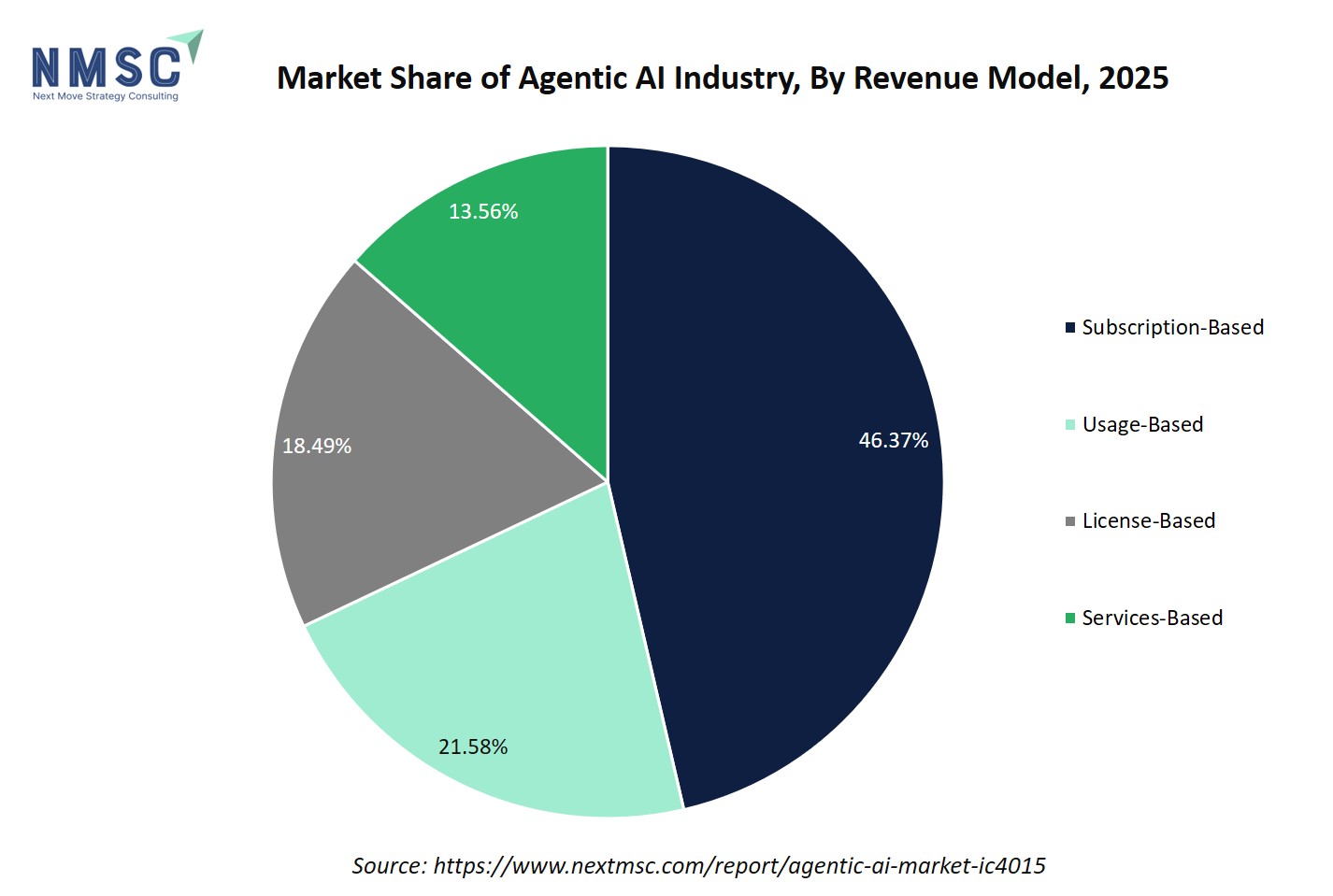
Subscription-based models captured the largest revenue in 2025 at 46.37%, benefiting from predictable costs and continuous updates. Usage-based accounted for 21.58%, license-based for 18.49%, and services-based for 13.56% models are forecast to grow fastest, offering flexibility, ownership, and expert support for effective agentic AI adoption. |
|
By Industry Vertical |
IT & telecom, BFSI, and healthcare & life sciences led market adoption in 2025 due to advanced digital infrastructure and regulatory needs. Retail & eCommerce, manufacturing, transportation, and other verticals are expected to grow fastest, leveraging agentic AI for operational optimization and intelligent automation. |
|
By Geography |
Asia–Pacific commanded the largest share in 2025, driven by digital-first enterprises and AI innovation hubs. North America and Europe lead in premium solutions, regulatory compliance, and enterprise-grade adoption, while other regions are catching up with infrastructure expansion and AI awareness. |
By Deployment Model Insights
Is the Agentic AI Industry in 2025 Shaped by Diverse Deployment Models?
By deployment model, the market is segmented into cloud-based, on-premises, and hybrid solutions.
Based on our direct market assessments and discussions with enterprise IT and AI decision-makers, we analysed that the agentic AI industry in 2025 is clearly shaped by diverse deployment models, reflecting varying operational, regulatory, and security requirements. In practice, cloud-based deployments continue to dominate adoption, particularly among digital-first and fast-scaling organizations. We have observed enterprises favour the cloud for its elastic scalability, faster implementation timelines, lower upfront infrastructure costs, and seamless integration with existing digital ecosystems such as CRM, ERP, and collaboration platforms.
At the same time, working with regulated industries confirmed that on-premises deployments remain strategically important. Organizations in BFSI, healthcare, and government sectors prioritize data sovereignty, strict compliance mandates, and full system control, making on-prem environments a necessary choice for mission-critical AI agent systems workloads. Increasingly, however, we are seeing strong momentum toward hybrid deployment models. These allow enterprises to run sensitive data and core decision logic on local infrastructure while leveraging cloud-based intelligence, orchestration, and model updates. From our expert perspective, this hybrid approach is emerging as a pragmatic balance between flexibility and governance, positioning it as a key enabler of broader agentic AI adoption in 2025 and beyond.
By Agent Intelligence Level Insights
Is the Agentic AI Market in 2025 Defined by Varying Levels of Agent Intelligence?
By agent intelligence level, the agentic AI market is segmented into deterministic agents, learning agents, and generative agents.
From our evaluation of enterprise deployments and platform capabilities, we have observed the agentic AI market in 2025, clearly defined by graduated levels of agent intelligence, each aligned to different operational needs and risk tolerances. Deterministic agents continue to posses strong adoption for rule-based, predictable tasks where reliability, auditability, and governance are critical. In contrast, learning agents are gaining rapid traction as organizations seek systems that adapt continuously using real-time data and feedback, enabling more responsive and data-driven decision-making across enterprise functions. At the highest intelligence tier, collective agents represent the most advanced capability, where multiple agents collaborate and coordinate to execute complex, multi-step workflows. We have found growing adoption of these systems in large-scale enterprise orchestration and autonomous operations, where coordination and scalability are essential.
By Primary Functional Value Insights
How is the Agentic AI Market in 2025 Shaped by Different Functional Values of Agents?
By primary functional value, the agentic AI market is segmented into interaction agents, automation agents, intelligence agents, autonomous agents, knowledge and productivity agents, and monitoring & observability solutions.
Based on our analysis of agent-based platforms, the market in 2025 is structured around five core functional value propositions. Interaction agents are focused on improving user communication and engagement across digital channels, while automation agents drive efficiency by streamlining repetitive workflows and operational tasks. Intelligence agents provide analytical depth by interpreting large datasets to support informed decision-making. Autonomous agents go a step further by independently executing complex processes with minimal human oversight. Increasingly, we see productivity agents combining these capabilities into unified systems that optimize efficiency across departments, reflecting the market’s shift toward more integrated, outcome-driven AI solutions.
By Business Function Insights
How is the Agentic AI Market in 2025 Driving Value Across Key Business Functions?
By business function, the agentic AI market is segmented into customer experience, sales & marketing, human resources, finance & risk, IT & security operations, operations & supply chain, compliance, legal & audit, R&D and innovation, sustainability & ESG management, and other functions.
From an enterprise adoption standpoint, AI agent’s ecosystem in 2025 is delivering measurable value across a wide range of business functions. In customer experience, agents enable personalized, real-time interactions that improve engagement and satisfaction. Sales and marketing teams leverage agents for lead qualification, campaign optimization, and customer insight generation. In human resources, we have observed effective use cases in talent acquisition, employee support, and workforce analytics. Finance functions adopt agentic AI for risk assessment, forecasting, and process automation, while IT operations use agents for system monitoring, incident resolution, and predictive maintenance. Within operations and supply chain, autonomous agents optimize logistics, inventory, and workflow coordination, highlighting the technology’s broad enterprise impact.
By Revenue Model Insights
How is the Agentic AI Market in 2025 Structured Across Different Revenue Models?
By revenue model, the agentic AI market is segmented into subscription-based, usage-based, license-based, and services-based models.
From our research, the agentic AI market in 2025 operates across multiple revenue models. Subscription-based offerings dominate, providing predictable pricing, continuous updates, and scalable access to AI capabilities. Usage-based models appeal to organizations with variable workloads by aligning costs directly with consumption. License-based models remain relevant for enterprises requiring deep customization, full ownership, or strict compliance controls. In parallel, services-based models, including consulting, deployment, and ongoing support, play a critical role in enabling efficient adoption and optimization, particularly for complex enterprise environments.
By Industry Vertical Insights
How is the Agentic AI Market in 2025 Impacting Different Industry Verticals?
By industry vertical, the agentic AI market is segmented into IT & telecom, BFSI, healthcare & life sciences, retail & e-commerce, manufacturing, transportation & logistics, energy & utilities, government & public sector, education, media & entertainment, professional services, agriculture & food production, and construction & real estate.
Based on our analysis, we have observed agentic AI delivering value across a broad range of industry verticals in 2025. IT and telecom organizations use agents to optimize network operations and enhance customer support, while BFSI institutions deploy them for fraud detection, risk management, and personalized financial services. Healthcare and life sciences adopt self-directed AI agents to improve patient engagement, diagnostics, and operational efficiency. In retail and e-commerce, agents enable personalized shopping experiences and supply chain optimization. Manufacturing and transportation & logistics leverage autonomous agents for process automation and predictive maintenance, while energy, utilities, and the public sector use them for monitoring, planning, and citizen services. Education and media & entertainment further demonstrate the technology’s versatility through personalized learning, content management, and enhanced user engagement, underscoring the market’s broad, cross-sectoral impact.
Regional Outlook
Geographic Performance Snapshot:
|
Geography |
Key Takeaways |
|
North America |
Strong enterprise demand for advanced agentic AI solutions driven by digital transformation, customer experience optimization, and automation initiatives. High adoption of large language models, strong cloud infrastructure, and significant investments from technology leaders and startups support rapid commercialization. |
|
Europe |
Stringent data privacy, AI governance, and ethical regulations shape agentic AI deployment. Growth is driven by demand for compliant, transparent, and trustworthy AI systems across sectors such as finance, healthcare, and public services. |
|
Asia‑Pacific |
Fastest-growing market supported by large developer ecosystems, government-backed AI initiatives, and cost-efficient AI development hubs in China and India. Increasing enterprise adoption across manufacturing, retail, and smart city applications. |
|
Latin America |
Emerging adoption of agentic AI focused on customer service automation and process optimization. Market growth is supported by expanding digital infrastructure, though skills availability and regulatory clarity remain key challenges. |
|
Middle East & Africa |
Early-stage but growing interest in agentic AI for smart government, energy, and enterprise automation. Government-led digital transformation initiatives create opportunities, while infrastructure readiness and regulatory frameworks are still evolving. |
The agentic AI market is geographically studied across North America, Europe, Asia Pacific, the Middle East & Africa, and Latin America, and each region is further studied across countries.
Agentic AI Market in North America
Based on our ongoing analysis of regional AI adoption and direct engagement with enterprise stakeholders, we have found North America as the primary catalyst for global agentic AI innovation. We obersrved rapid enterprise digitalization and a clear shift toward autonomous, goal-oriented AI systems driving market momentum. Organizations across customer experience, enterprise operations, and IT management are actively deploying agentic AI to support advanced decision-making, intelligent orchestration, and real-time personalization. The region’s mature AI ecosystem, supported by robust cloud infrastructure and early adoption of large language models and multi-agent frameworks, has accelerated production-scale deployments. From our perspective, evolving regulatory guidance around AI governance and responsible use is not slowing adoption, but it is shaping demand for explainable, secure, and scalable agent-based platforms that integrate seamlessly with existing enterprise systems.
Agentic AI Market in the United States
Through our evaluation, we identified the United States as the largest and most technologically advanced agentic AI market globally. Growth is fueled by sustained investment from technology leaders, venture-backed startups, and major cloud providers focused on autonomous agents, AI copilots, and workflow automation. We are seeing widespread adoption across BFSI, retail, healthcare, and SaaS environments, where agentic AI is moving quickly from pilot programs to commercial-scale use. A highly developed cloud and API ecosystem enables rapid deployment, while ongoing R&D in reasoning models, memory systems, and reinforcement learning continues to improve agent autonomy and reliability. Although regulatory discussions around AI accountability are influencing product design, our experience shows they have not diminished innovation momentum.
Agentic AI Market in Canada
Based on our analysis, Canada stands out for its strong research foundation and emphasis on responsible AI. Our interactions with enterprises and research institutions indicate that government-backed AI initiatives and academic hubs are actively advancing cognitive architectures and autonomous systems. Enterprise adoption is growing steadily, particularly in customer service automation, analytics, and decision-support applications. We also observed that Canada’s focus on transparency, privacy, and governance is shaping buyer expectations, increasing demand for compliant and auditable agentic AI solutions. This positions Canada as a trusted innovation hub within North America, especially for organizations prioritizing ethical and regulated AI deployments.
Agentic AI Market in Europe
Based on our research, Europe’s agentic AI market is expanding steadily but with a strong governance-first approach. Stringent regulatory frameworks, including the EU AI Act and robust data protection laws, are driving demand for agent-based systems with built-in explainability, traceability, and control mechanisms. We have observed adoption increasing across finance, healthcare, manufacturing, and public services, where autonomous decision support and process optimization deliver tangible value. Unlike more speed-driven markets, Europe’s growth is closely tied to trust, sustainability, and regulatory alignment, which are shaping both product development and deployment strategies across the region.
Agentic AI Market in the United Kingdom
The United Kingdom’s agentic AI market is expanding due to strong adoption in financial services, customer experience platforms, and enterprise automation. The UK benefits from a dynamic AI startup ecosystem and proactive government support for AI innovation. Demand is increasing for intelligent agents capable of managing complex workflows, regulatory compliance, and real-time customer interactions. The focus on responsible AI and model governance is influencing solution design and enterprise procurement strategies.
Agentic AI Market in Germany
Germany’s market is driven by industrial automation, enterprise software integration, and advanced manufacturing use cases. The country’s strong industrial base is leveraging autonomous AI agents for supply chain optimization, predictive maintenance, and operational decision-making. Strict regulatory and data protection standards are shaping demand for secure, auditable, and compliant agentic AI systems. Germany’s focus on precision, reliability, and enterprise-grade deployment positions it as a key European market.
Agentic AI Market in France
From our observations of enterprise and public-sector AI deployments, France is experiencing growing adoption of agentic AI across public services, enterprise operations, and customer engagement platforms. Government-backed AI initiatives, combined with investments in digital sovereignty, are driving market expansion and fostering local innovation. We have observed French organizations increasingly leveraging agent-based AI for automation, analytics, and decision-support applications, with strong attention to ethical AI practices, explainability, and regulatory compliance. These factors collectively reinforce France’s strategic position within the broader European agentic AI landscape, particularly as a hub for compliant, governance-focused deployments.
Agentic AI Market in Italy
Based on our regional market analysis, Italy’s agentic AI adoption is gradually expanding, fueled by ongoing digital transformation initiatives across SMEs, manufacturing, and service sectors. Real-world implementations focus on intelligent process automation, customer service agents, and decision-support systems, where enterprises aim to optimize efficiency while maintaining cost-effectiveness. Adoption is more measured compared to Northern European countries, reflecting cautious investment approaches and integration challenges with existing enterprise software. Key growth enablers include affordable deployment models, scalability, and alignment with established operational processes, positioning Italy for steady market development.
Agentic AI Market in Spain
From our analysis of enterprise digitalization trends, Spain’s agentic AI market is experiencing steady growth, supported by widespread adoption of AI-driven customer engagement and operational solutions. Industries such as retail, tourism, and financial services are increasingly deploying autonomous agents to deliver personalized experiences and improve process efficiency. Growth is further supported by government-led digital initiatives and expanding cloud infrastructure, which enable rapid deployment and integration of agent-based platforms. Overall, Spain is emerging as a market with practical, results-oriented adoption of agentic AI solutions across both commercial and service sectors.
Agentic AI Market in the Nordics
The Nordic region, including Sweden, Denmark, Norway, and Finland, shows strong adoption of agentic AI driven by advanced digital infrastructure and a high level of trust in technology. Enterprises are leveraging autonomous agents for smart governance, sustainability management, and enterprise automation. The region’s emphasis on ethical AI, transparency, and environmental responsibility aligns well with agentic AI solutions focused on efficiency, governance, and long-term value creation.
Agentic AI Market in the Asia-Pacific
Based on our analysis, Asia-Pacific (APAC) is the fastest-growing and most dynamic region for agentic AI adoption. This growth is fueled by large developer ecosystems, rapid enterprise digitization, and government-backed AI initiatives that support innovation and scaling. The region benefits from cost-efficient AI development, expanding cloud infrastructure, and strong adoption of autonomous AI systems across key sectors such as manufacturing, retail, finance, and smart city projects. Countries including China, India, Japan, and South Korea are driving demand for agent-based solutions that enable intelligent automation, real-time decision-making, and personalized digital experiences, positioning APAC as a major growth engine for the global agentic AI market.
Agentic AI Market in China
From our research, China represents one of the largest and most advanced agentic AI markets globally. Market expansion is supported by aggressive government-led AI policies, abundant data resources, and a strong domestic technology ecosystem. Adoption is particularly robust in smart manufacturing, e-commerce, logistics, customer service, and public sector automation, where enterprises deploy autonomous agents for workflow orchestration, predictive analytics, and real-time decision-making. While rapid commercialization and strong government support are key drivers, regulatory oversight and data governance compliance remain critical considerations for responsible deployment, shaping how enterprises scale agent-based AI systems across sectors.
Agentic AI Market in Japan
Japan’s agentic AI market is shaped by its focus on precision, reliability, and advanced automation. An ageing workforce and labour shortages are driving demand for autonomous AI agents in enterprise operations, robotics, customer service, and decision-support systems. Japanese organizations emphasize high-quality, trustworthy AI, leading to the adoption of agentic AI solutions with strong governance, explainability, and system integration capabilities. Continuous innovation in AI and robotics supports long-term market growth.
Agentic AI Market in India
India is emerging as a major development and deployment hub for agentic AI, supported by a large AI talent pool, cost-effective innovation, and expanding cloud and digital infrastructure. Enterprises across IT services, BFSI, e-commerce, and telecom are adopting agent-based AI for customer engagement, process automation, and analytics. Government-led digital initiatives and growing startup activity are accelerating commercialization, positioning India as a key contributor to global agentic AI innovation.
Agentic AI Market in South Korea
South Korea’s agentic AI market is expanding rapidly, driven by substantial investments in AI, 5G connectivity, and smart infrastructure. Enterprises across sectors are increasingly deploying autonomous agents for customer experience management, smart manufacturing, and enterprise workflow automation, reflecting a focus on operational efficiency and digital transformation. The country’s advanced digital ecosystem, combined with proactive government support for AI-driven innovation, enables rapid deployment and scaling of agentic AI solutions. These factors position South Korea as one of the most agile and innovation-focused markets for agent-based AI in the Asia-Pacific region.
Agentic AI Market in Taiwan
Taiwan’s agentic AI market is driven by its strong semiconductor and electronics industries, which support advanced AI development and deployment. Enterprises are leveraging agentic AI for intelligent manufacturing, supply chain optimization, and decision-support applications. The focus on quality, security, and system reliability is shaping demand for enterprise-grade agent-based AI solutions.
Agentic AI Market in Indonesia
Indonesia represents a growing opportunity within the agentic AI market, supported by rising digital adoption and expanding cloud infrastructure. Enterprises are increasingly deploying autonomous AI agents for customer service automation, e-commerce optimization, and operational efficiency. While adoption is still in the early stages, increasing investments in digital transformation drives the steady agentic AI market growth.
Agentic AI Market in Australia
From our observations of enterprise deployments and government initiatives, Australia’s agentic AI market is gaining momentum, supported by strong digital transformation programs and policy encouragement for AI adoption. Enterprises are increasingly applying autonomous agents in customer experience automation, public sector services, and enterprise decision-support systems. Our assessments show that emphasis on ethical AI, data privacy, and governance is shaping solution design and deployment strategies, fostering trust and ensuring sustainable, long-term market growth.
Agentic AI Market in Latin America
Based on market insights and enterprise feedback, Latin America is emerging as a promising market for agentic AI, with adoption growing in customer service, fintech, and enterprise process automation. Leading markets such as Brazil and Mexico are showing increasing interest in autonomous agents to enhance operational efficiency, scalability, and service quality. While infrastructure development and skills availability remain constraints, the ongoing expansion of cloud adoption is enabling broader deployment of agent-based AI solutions across the region.
Agentic AI Market in the Middle East & Africa
From our regional research and enterprise observations, the Middle East & Africa region is in the early stages of agentic AI adoption but presents significant growth potential. Demand is primarily driven by government-led smart city initiatives, digital government programs, and enterprise automation projects, with Gulf countries taking a leading role in implementation. Broader regional adoption depends on continued infrastructure development, regulatory clarity, and talent availability, but current trends indicate that autonomous AI agents play an increasingly important role in transforming enterprise and public-sector operations across MEA.
Competitive Landscape
Competitive Dynamics & M&A Landscape:
|
Key Takeaways |
|
The agentic AI market is characterised by a diverse mix of global AI leaders, such as Aisera, Glean Technologies, Moveworks, and Adept AI, alongside specialized providers including Maisa, Quiq, OneReach.AI, Sierra, CrewAI, Stack AI, Artisan AI, TENEO.AI, Verofax, Aomni, and InterfaceAI. |
|
Companies are adopting strategic approaches that combine scalable automation, adaptive learning, API integration, and targeted acquisitions to enhance platform capabilities, expand service portfolios, and strengthen market positioning. |
|
Recent M&A activity highlights move like acquisitions aimed at enhancing autonomous workflow solutions, expanding multi-channel conversational AI offerings, and integrating advanced decision-making frameworks to accelerate adoption of agentic AI across enterprise and consumer applications. |
Which Companies Dominate the Agentic AI Industry and How do they Compete?
We observed that the agentic AI market is increasingly shaped by leading innovators such as Aisera, Glean Technologies, Moveworks, and Adept AI. Our analysis indicated that these companies have strengthened their positions via strategic acquisitions, platform enhancements, and cutting-edge AI solutions. For example, Aisera leverages autonomous AI to deliver enterprise-wide automation, while Moveworks focuses on AI-driven IT service management to create seamless workflows. We note that Glean Technologies prioritizes knowledge discovery and search optimization, and Adept AI develops autonomous systems that enhance enterprise decision-making. From our perspective, these companies compete by differentiating their platforms, investing in adaptive learning technologies, and expanding integration capabilities to capture market share across industries.
Market Dominated by Agentic AI Giants and Specialists
We observed that the agentic AI market is shaped by a mix of large-scale innovators and specialized firms, each addressing distinct enterprise and consumer needs. Companies like Aisera, Moveworks, and Adept AI lead the market with broad, scalable AI solutions and strong R&D capabilities, while niche players such as Maisa, Quiq, OneReach.AI, Sierra, CrewAI, Stack AI, Artisan AI, TENEO.AI, Verofax, Aomni, and InterfaceAI focus on areas like conversational AI, workflow automation, and decision intelligence. This dual structure drives competition, with major players leveraging scale and innovation, and specialists advancing cutting-edge capabilities. We also note that regional and sector-focused companies intensify competition by tailoring solutions to local enterprise demands and regulatory frameworks.
Innovation and Adaptability Drive Market Success
From our analysis, innovation and adaptability are central to success in the agentic AI market, as companies continuously develop new capabilities to meet evolving enterprise and consumer needs. Leading players invest in autonomous AI, intelligent IT service management, and advanced knowledge discovery to enhance workflows, operational efficiency, and decision-making. At the same time, specialized firms focus on niche capabilities, including conversational interfaces, multi-channel engagement, and autonomous workflows. From our perspective, this focus on innovation and adaptability allows companies to stay competitive, respond to market shifts, and achieve long-term growth in this dynamic sector.
Market Players to Opt for Merger & Acquisition Strategies to Expand their Presence
From our observation and analysis of the agentic AI market, mergers and acquisitions have become a critical strategy for companies seeking to strengthen their market position. In practice, we have observed leading firms acquire specialized startups in areas such as conversational AI, workflow automation, and autonomous decision-making to enhance platform capabilities, enter new verticals, and scale solutions globally. Based on real-world examples, these strategic moves accelerate innovation, broaden service offerings, and create synergies that allow organizations to meet growing enterprise demand for intelligent, autonomous AI solutions. This trend of consolidation underscores how companies leverage both technological expertise and strategic foresight to maintain a competitive edge.
Strategic Experimentation Framework for the Agentic AI Market
This infographic highlights the key focus areas and experimental approaches driving the adoption and impact of agentic AI across enterprises, operations, and markets.
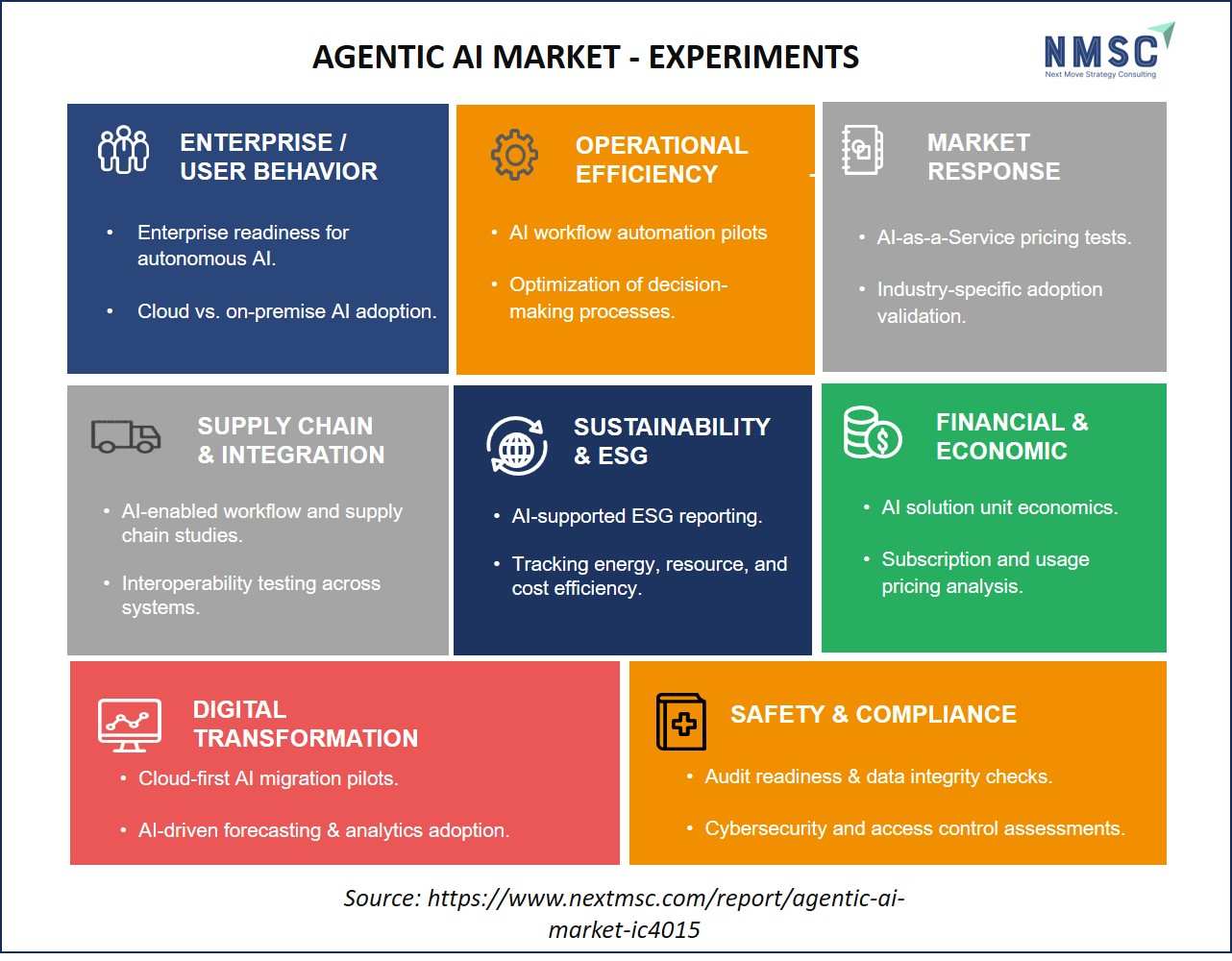
The infographic above illustrates the key experimental focus areas in the agentic AI market and is structured around eight distinct domains. These include enterprise and user behaviour, covering readiness for autonomous AI adoption and preferences between cloud and on-premise deployment. It also highlights operational efficiency, with emphasis on workflow automation and decision-making optimization, alongside market response, which examines pricing experimentation and adoption validation.
In addition, the infographic addresses supply chain and integration through AI-enabled workflows and system interoperability, sustainability and ESG through reporting and resource efficiency initiatives, and financial and economic factors such as unit economics and subscription performance. It further captures digital transformation priorities, including cloud-first migration and AI-driven forecasting, as well as safety and compliance considerations such as audit readiness and cybersecurity. Overall, it underscores a comprehensive approach to AI experimentation across business, technical, and regulatory dimensions.
List of Key Agentic AI Companies
-
Microsoft Corporation
-
Alphabet Inc.
-
Amazon Web Services, Inc.
-
Salesforce, Inc.
-
ServiceNow, Inc.
-
OpenAI, Inc.
-
Anthropic PBC
-
IBM Corporation
-
Meta Platforms, Inc.
-
Databricks, Inc.
-
Snowflake Inc.
-
UiPath, Inc.
-
Cognition AI, Inc.
-
Replit, Inc.
-
Glean Technologies, Inc.
-
LangChain, Inc.
-
Counsel AI Corp.
-
Sierra Technologies, Inc.
-
Decagon, Inc.
-
Hippocratic AI, Inc.
What Are the Latest Key Industry Developments?
-
December 2025 - ServiceNow completed the acquisition of Moveworks for approximately USD 2.85 billion, significantly boosting its agentic AI offerings by integrating Moveworks’ conversational AI assistant and reasoning engine with ServiceNow’s workflow and automation platforms.
-
June 2025 - Aisera introduced a comprehensive System of AI Agents for IT, HR, finance, and customer service automation, boosting productivity and reducing manual workflows.
-
March 2025 - Aisera launched its Global Partner Program to accelerate enterprise agentic AI adoption by system integrators and technology partners worldwide in 2025, strengthening go‑to‑market reach and implementation support.
The Key Factors Influencing Investment Analysis & Agentic AI Market Opportunities
From our assessments in analysing the agentic AI market, we have observed that investment decisions are increasingly shaped by the rising global demand for intelligent, autonomous, and adaptive AI solutions across enterprise, consumer, and industrial applications. In our research, investors are particularly attracted to companies developing high-value agentic AI systems that demonstrate advanced decision-making, seamless integration, and scalable deployment across areas such as customer experience, IT automation, and enterprise productivity. We also observed that funding strongly favours firms prioritizing robust AI architectures, regulatory compliance, data security, and ethical AI practices, as these measures reduce risk and support long-term growth.
Based on our research, valuations are heavily influenced by technological differentiation, proprietary algorithms, and the ability to scale AI efficiently. Investment hotspots tend to emerge in regions with strong tech ecosystems, abundant talent, and advanced AI research infrastructure, including North America, Europe, and select Asia-Pacific markets. Companies that focus on explainability, interoperability, and strategic collaborations, particularly R&D partnerships with academic and industry leaders, consistently attract higher investor interest, presenting substantial opportunities in this fast-growing and dynamic sector.
Key Benefits for Stakeholders:
Next Move Strategy Consulting (NMSC) provides a comprehensive analysis of the agentic AI market, covering historical trends from 2020 to 2025 and offering detailed forecasts through 2035. The study evaluates the market at regional and country levels, providing quantitative projections and insights into key growth drivers, challenges, and investment opportunities across all major agentic AI segments.
The agentic AI industry offers distinct benefits to multiple stakeholders by aligning technological innovation with business efficiency and intelligent automation trends. Investors gain from strong growth potential, portfolio diversification, and the opportunity to support companies developing cutting-edge AI solutions with high scalability and strategic differentiation. Enterprises and end-users benefit from intelligent, autonomous systems that enhance productivity, optimize decision-making, and reduce operational costs. Technology providers and developers enjoy steady demand for advanced AI models, platforms, and integrations, while partners and collaborators leverage strategic alliances to co-develop innovative applications. This ecosystem fosters mutual growth, where innovation, scalability, and reliability drive value for financial stakeholders, businesses, and end-users alike, positioning agentic AI as a cornerstone of the next-generation intelligent technology landscape.
|
Parameters |
Details |
|
Customization Scope |
Free customization (equivalent to up to 80 analyst-working hours) after purchase. Addition or alteration to country, regional & segment scope. |
|
Pricing and Purchase Options |
Avail customized purchase options to meet your exact research needs. |
|
Approach |
In-depth primary and secondary research; proprietary databases; rigorous quality control and validation measures. |
|
Analytical Tools |
Porter's Five Forces, SWOT, value chain, and Harvey ball analysis to assess competitive intensity, stakeholder roles, and relative impact of key factors. |
Agentic AI Market Key Segments
By Offering
-
Agent Platforms
-
Development Tools
-
Orchestration & Lifecycle Management
-
Governance & Security
-
Platform Runtime
-
-
Packaged Agent Applications
-
Horizontal Business Functions
-
Customer Service Agents
-
IT Operations Agents
-
Sales & Marketing Agents
-
Software Development Agents
-
Finance & Accounting Agents
-
Other Horizontal Functions
-
-
Vertical Industry Solutions
-
Healthcare Agents
-
Financial Services Agents
-
Legal Agents
-
Manufacturing & Supply Chain Agents
-
Other Vertical Solutions
-
-
-
Data and Integration Middleware
-
Connectors and Gateways
-
RAG Pipelines and Vector Databases
-
-
Agentic AI Services
-
Professional Services
-
Strategy and Consulting
-
Implementation and Integration
-
Custom Agent Development
-
-
Managed Services
-
Operations and Monitoring
-
Optimization and Tuning
-
-
By Deployment Model
-
Public Cloud (SaaS)
-
Private Cloud
-
On-Premises
-
Edge & Embedded
By Revenue Model
-
Subscription Based
-
Consumption Based
-
Fixed Fee
By Buyer Type
-
Enterprise (1000+ employees)
-
Mid-Market (100-999 employees)
-
Small Business (1-99 employees)
-
Government & Public Sector
By End-User Industry
-
Technology & Telecom
-
Financial Services & Insurance
-
Healthcare & Life Sciences
-
Retail & Consumer Goods
-
Manufacturing & Industrials
-
Business & Professional Services
-
Public Sector & Education
-
Other Industries
Geographical Breakdown
-
North America: U.S., Canada, and Mexico.
-
Europe: UK, Germany, France, Italy, Spain, Sweden, Denmark, Finland, the Netherlands, and rest of Europe.
-
Asia Pacific: China, India, Japan, South Korea, Taiwan, Indonesia, Vietnam, Australia, Philippines, Malaysia and rest of APAC.
-
Middle East & Africa (MEA): Saudi Arabia, UAE, Egypt, Israel, Turkey, Nigeria, South Africa, and rest of MEA.
-
Latin America: Brazil, Argentina, Chile, Colombia, and rest of LATAM.
Conclusion & Recommendations
Our report provides stakeholders, industry participants, investors, and consultants with actionable insights to harness the transformative potential of the agentic AI market. By combining rigorous data-driven analysis with strategic frameworks, NMSC’s agentic AI Market Report serves as a critical resource for navigating a rapidly evolving technological landscape. The agentic AI industry is positioned for sustained growth, driven by increasing demand for intelligent, autonomous, and scalable AI solutions across enterprise, consumer, and industrial applications.
Strategic takeaways underscore the importance of technological innovation, regulatory compliance, and robust data governance, as these factors enhance credibility, reduce operational risk, and strengthen competitive positioning. Companies that focus on proprietary AI models, differentiated algorithms, and versatile applications are better positioned to capture larger market shares and drive long-term growth. Integrating ethical AI practices, explainability, and interoperability further enables firms to meet evolving enterprise and consumer expectations while standing out in a competitive marketplace.
For executives and investors, maximizing value in this market involves identifying high-potential segments, investing in R&D for advanced agentic AI solutions, and forming strategic partnerships to expand reach and capabilities. Targeting regions with strong tech ecosystems, skilled AI talent, and supportive regulatory frameworks optimizes development and deployment strategies. Additionally, prioritizing transparency, education, and premium solution positioning strengthens stakeholder trust, accelerates adoption, and unlocks significant opportunities for value creation in the agentic AI market.


About the Author
 Tushmi Dutta
— Tushmi Dutta is a focused researcher specializing in detailed analysis and insight-driven research across diverse business landscapes. She supports strategic initiatives through structured data interpretation, thorough validation, and clear communication of findings that aid informed decision-making. With a strong interest in writing, she enjoys presenting research insights in an engaging and accessible manner. Beyond work, she enjoys traveling, reading, painting, and continuously learning new skills that contribute to her creative and professional growth.
Tushmi Dutta
— Tushmi Dutta is a focused researcher specializing in detailed analysis and insight-driven research across diverse business landscapes. She supports strategic initiatives through structured data interpretation, thorough validation, and clear communication of findings that aid informed decision-making. With a strong interest in writing, she enjoys presenting research insights in an engaging and accessible manner. Beyond work, she enjoys traveling, reading, painting, and continuously learning new skills that contribute to her creative and professional growth.
About the Reviewer
 Supradip Baul
— Supradip Baul is an accomplished business consultant and strategist with over a decade of rich experience in market intelligence, strategy, technology, and business transformation. His work has included rigorous qualitative and quantitative analysis across multiple industries, helping clients shape investment decisions and long-term roadmaps. Earlier in his career, he was associated with Gartner, where he contributed to industry-leading reports and market share analyses. He has worked with leading global companies and holds an MBA with a dual specialization in Marketing and Finance.
Supradip Baul
— Supradip Baul is an accomplished business consultant and strategist with over a decade of rich experience in market intelligence, strategy, technology, and business transformation. His work has included rigorous qualitative and quantitative analysis across multiple industries, helping clients shape investment decisions and long-term roadmaps. Earlier in his career, he was associated with Gartner, where he contributed to industry-leading reports and market share analyses. He has worked with leading global companies and holds an MBA with a dual specialization in Marketing and Finance.
At Next Move Strategy Consulting, we understand that insightful market research is the cornerstone of successful business decisions. That's why we employ a robust and multifaceted approach, combining various methodologies to deliver the most accurate and actionable data for our clients.

Research Landscape
We navigate the world of research with two primary approaches:
Qualitative Approach
Our qualitative research methodologies involve immersive techniques such as in-depth interviews, focus groups, and observational studies. By engaging directly with individuals and stakeholders, we uncover valuable insights that quantitative data alone may overlook.

Quantitative Research
In tandem with qualitative methodologies, NMSC leverages the power of Quantitative Research to provide a robust foundation of numerical insights. Through systematic data collection and analysis, we quantify patterns, preferences, and market trends, offering a comprehensive view of the business landscape.
Our quantitative research approach employs diverse tools, including surveys, experiments, and statistical modelling. These methodologies enable us to gather data from a large and representative sample, ensuring the statistical significance of our findings. By employing structured questionnaires and standardized data collection methods, we guarantee the reliability and validity of the information we present to our clients.
Quantitative research is particularly effective in measuring the prevalence of trends, assessing market size, and gauging the impact of various factors on consumer behavior. The numerical precision attained through this approach equips our clients with actionable insights, facilitating data-driven decision-making and strategy formulation.


Our Specialized Toolbox for Industry-Specific Market Research
We deploy a specialized arsenal of techniques tailored to meet your unique requirements. Here's a glimpse into our comprehensive toolbox:

Information Procurement
The stage entails acquiring market data or relevant information through various sources and methodologies.


Market Research Approach
We utilize both top-down and bottom-up approaches in market research analysis to achieve a comprehensive understanding of the market dynamics, leveraging the broad perspective of industry trends and macroeconomic factors alongside detailed insights from specific segments and individual companies.

Porters Five Forces Analysis
We conduct Porter's Five Forces analysis to evaluate the competitive landscape of an industry, providing us with insights into factors that affect profitability and strategic positioning.

SWOT Analysis

Forecasting
We utilize a forecasting model to predict future consumption by considering parameters like population, economics, regulations, market competition, drivers, constraints, technology, and pricing. We also employ statistical techniques such as multilinear regression, exponential smoothing, moving average, ARIMA, and Monte Carlo simulations for accurate predictions. In econometric forecasting, we analyzed short-term and long-term event impacts, attributing values based on regulatory frameworks, economic factors, and market events.





 Speak to Our Analyst