Plastics Dialogue Advances Global Trade Cooperation at MC14
Industry Insights from Next Move Strategy Consulting
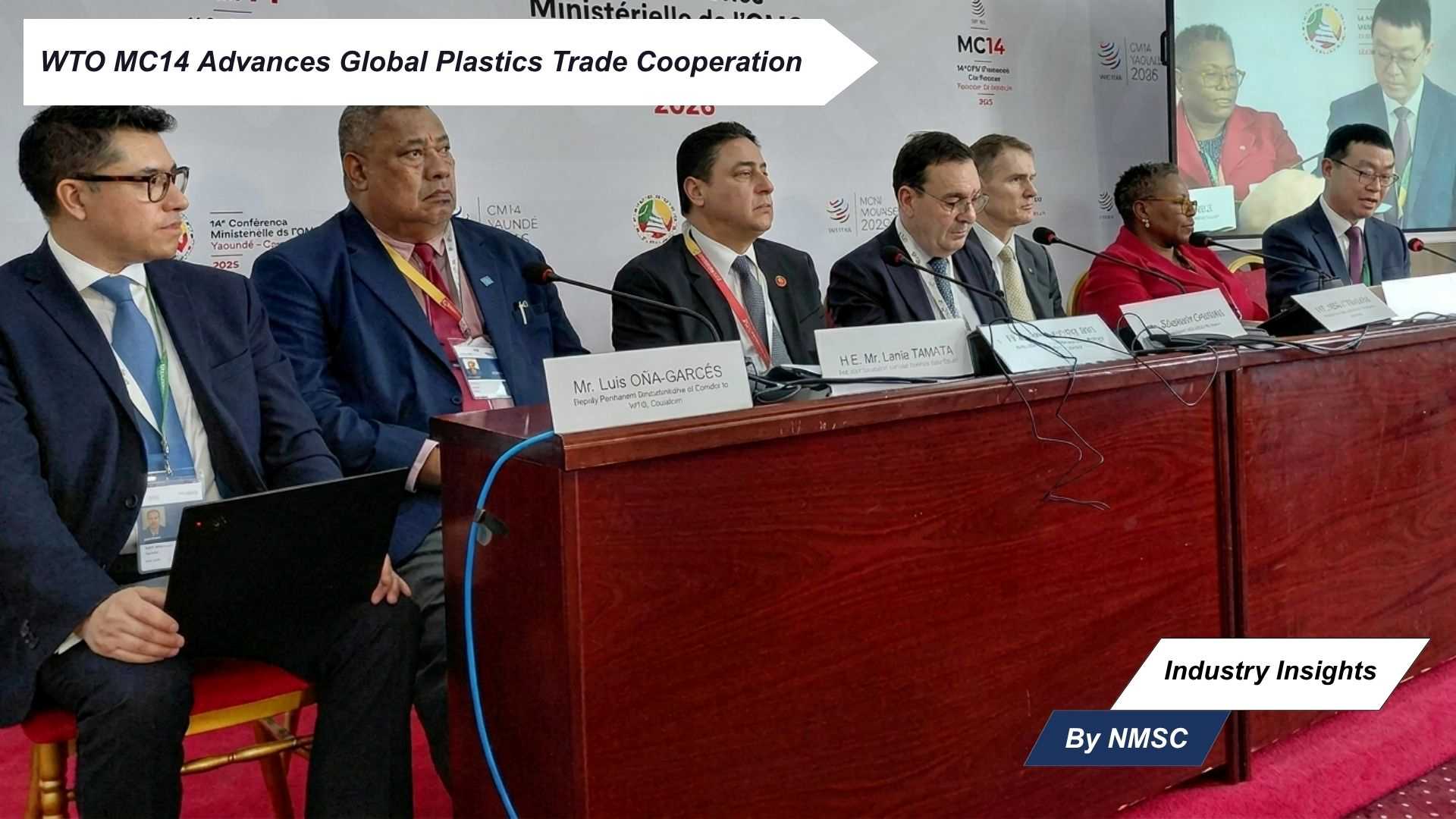
As global attention intensifies around environmental sustainability, the outcomes presented at the 14th WTO Ministerial Conference (MC14) mark a significant step forward in addressing plastics pollution through coordinated trade efforts. On 26 March, the co-coordinators of the Dialogue on Plastics Pollution and Environmentally Sustainable Plastics Trade (DPP) Australia, Barbados, China, Ecuador, Fiji, and Morocco introduced a ministerial statement alongside a comprehensive package of technical documents, reflecting measurable progress since MC13 and outlining a clear path for future collaboration.
From Dialogue to Action-Oriented Frameworks
The ministerial statement reaffirms participating members’ commitment to strengthening international cooperation aimed at reducing plastics pollution while promoting environmentally sustainable plastics trade. It highlights the Dialogue’s evolution from exploratory discussions to structured, policy-oriented outputs, emphasizing priority areas for continued engagement.
Accompanying the statement are five technical outcome documents, representing two years of intensive work by members and stakeholders. These documents provide a detailed, evidence-based perspective on key trade-related dimensions of plastics pollution, including monitoring plastics trade flows, designing trade-related measures, regulating single-use plastics, advancing waste management and clean-up solutions, and scaling environmentally sound alternatives.
Deputy Director-General Jean-Marie Paugam, who moderated the session, underscored the significance of the initiative, noting that the Dialogue has shifted decisively toward practical implementation. The framework aims to enhance coherence, predictability, and effectiveness in national-level measures addressing plastics pollution.
Global Perspectives Highlight Urgency and Collaboration
Leaders and representatives from participating nations emphasized the urgency of collective action and the diverse challenges faced across regions. Morocco’s Secretary of State for Foreign Trade, H.E. Omar Hejira, reaffirmed the importance of international cooperation, highlighting that 83 co-sponsors now represent nearly 90% of global plastics trade.
Barbados’ Director General of Foreign Affairs and Foreign Trade, Mrs. Donna Forde, stressed the acute impact on small island developing states, where plastics pollution poses an existential threat.
Australia and Ecuador further highlighted the broader implications, from threats to livelihoods and ecosystems to the role of trade policies in balancing economic growth with environmental protection. China’s representative pointed to both the risks and opportunities, noting that while plastics pollution challenges sectors such as fisheries and agriculture, the development of bio-based alternatives could create new economic opportunities, particularly in regions rich in natural resources.
Strengthening Trade’s Role in Environmental Solutions
During discussions with media, DPP coordinators reinforced the importance of addressing the trade dimension of plastics pollution. The Dialogue focuses on sharing regulatory experiences, promoting common standards for alternatives, and improving access to technologies efforts that complement wider global initiatives aimed at mitigating environmental impact.
Since its launch in November 2020, the Dialogue has expanded from 78 co-sponsors at MC13 to 83 participants, demonstrating growing global alignment on tackling plastics pollution through trade-related mechanisms. The WTO continues to serve as a critical platform for fostering collaboration, ensuring that trade policies contribute to sustainable environmental outcomes.
Parallel Environmental Initiatives at MC14
In addition to the DPP outcomes, other WTO-led environmental initiatives also released key documents. The Trade and Environmental Sustainability Structured Discussions (TESSD) presented progress across areas such as climate measures, environmental goods and services, circular economy, and subsidies. Meanwhile, the Fossil Fuel Subsidy Reform initiative issued a joint statement outlining progress toward phasing out harmful subsidies and enhancing transparency in energy-related trade policies.
Next Move Strategy Consulting’s View
According to Next Move Strategy Consulting, the developments at MC14 signal a growing integration of trade policy with environmental sustainability objectives within the Plastic Market ecosystem. The structured approach adopted by the DPP reflects a shift toward actionable frameworks that align regulatory practices, encourage innovation in alternatives, and support global value chain transformation.
The increasing participation of countries representing a substantial share of global plastics trade indicates strong momentum toward harmonized standards and cooperative solutions. As policy clarity improves and technical guidance becomes more robust, the plastic market is expected to witness a gradual transition toward sustainable materials, improved waste management systems, and enhanced cross-border collaboration.
Shaping the Future of Sustainable Plastics Trade
The outcomes of MC14 demonstrate a decisive move from dialogue to implementation, positioning trade as a key enabler in addressing plastics pollution. With continued international cooperation, the initiatives launched under the DPP are set to play a pivotal role in shaping a more sustainable and resilient global plastics ecosystem.
Source: World Trade Organization
Prepared by: Next Move Strategy Consulting
About the Author
 Sanyukta Deb
— Sanyukta Deb is Digital Marketing Team Lead at Next Move Strategy Consulting, where she has led content strategy and technical SEO for the firm's B2B market research publications for over 2 years. Her editorial process translates NextMSC's primary and secondary research — spanning technology, industrial, and consumer sectors — into commercial narratives, backed by search-intent, keyword, and competitive analysis. She brings 5 years of overall experience in digital marketing and content strategy.
Sanyukta Deb
— Sanyukta Deb is Digital Marketing Team Lead at Next Move Strategy Consulting, where she has led content strategy and technical SEO for the firm's B2B market research publications for over 2 years. Her editorial process translates NextMSC's primary and secondary research — spanning technology, industrial, and consumer sectors — into commercial narratives, backed by search-intent, keyword, and competitive analysis. She brings 5 years of overall experience in digital marketing and content strategy.
About the Reviewer
 Debashree Dey
— Debashree Dey is Assistant Manager at Next Move Strategy Consulting, where she supports cross-vertical market content and communications across diverse industries for 6 years. Her professional background includes senior content writing, communications, and published manuscript authorship, with experience developing audience-focused business narratives and maintaining clear, consistent messaging. Her role supports research-led content development and editorial quality across NextMSC publications.
Debashree Dey
— Debashree Dey is Assistant Manager at Next Move Strategy Consulting, where she supports cross-vertical market content and communications across diverse industries for 6 years. Her professional background includes senior content writing, communications, and published manuscript authorship, with experience developing audience-focused business narratives and maintaining clear, consistent messaging. Her role supports research-led content development and editorial quality across NextMSC publications.
















Add Comment