Retro Electric Cars Reshape Competition in the Electric Vehicle Market
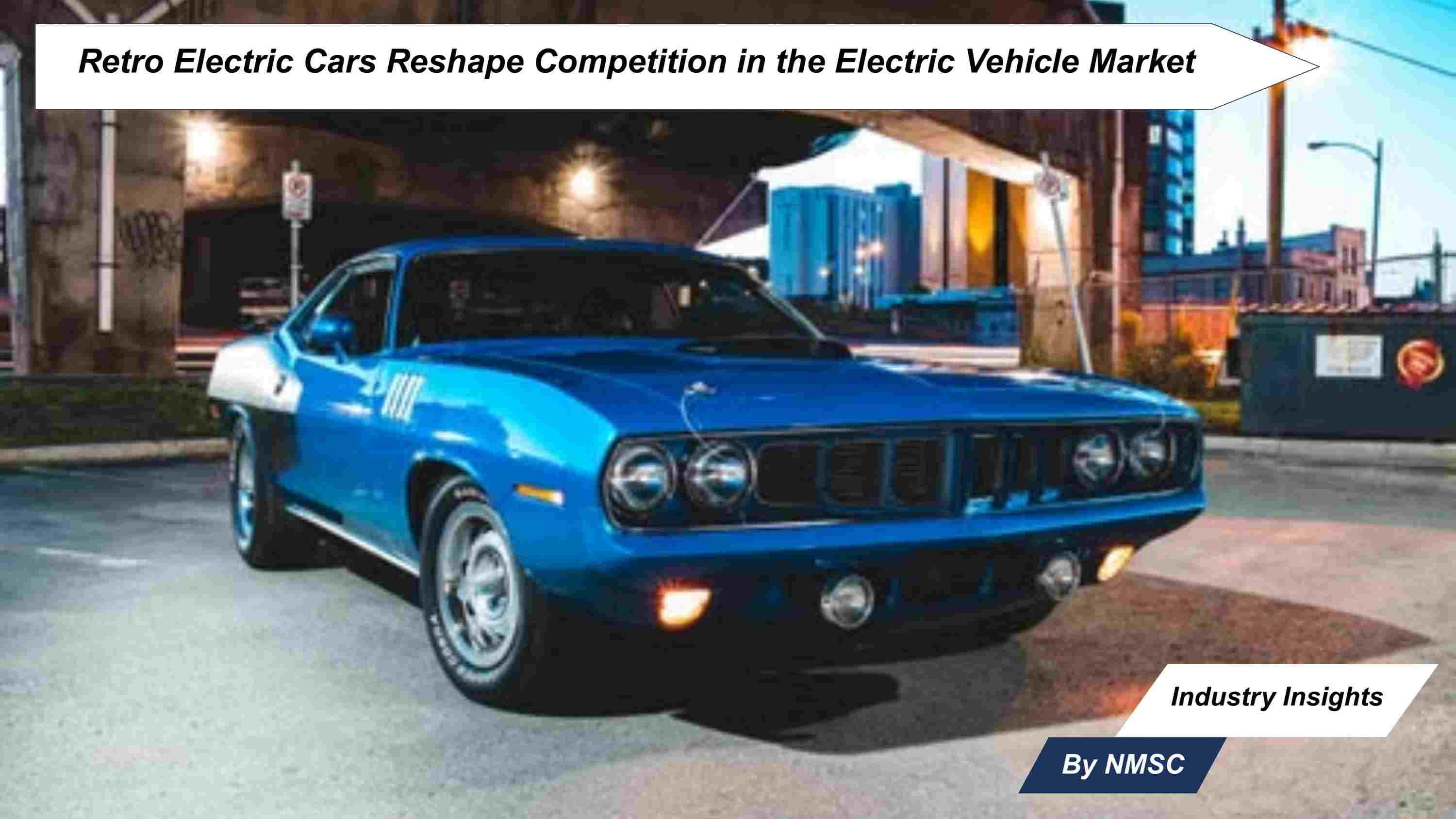
European Automakers Revive Iconic Models to Counter Chinese EV Rivals at Paris Show
PARIS, France — October 13, 2026 — Europe's leading automakers Renault, Stellantis, and Volkswagen are deploying a heritage-driven product strategy to differentiate themselves within the rapidly expanding Electric Vehicle Market, betting that nostalgia and brand legacy can offset the price and technology advantages held by Chinese rivals. The move, highlighted at this week's Paris Autoshow, signals a structural shift in competitive positioning as Chinese manufacturers deepen their foothold across the continent.
Chinese manufacturers including BYD and Geely already commanded nearly 11% of the European market in the second quarter of 2026, according to Schmidt Automotive Research, with models that frequently undercut European brands on price while offering increasingly advanced technology. The competitive pressure is most acute in the small, affordable EV segment precisely where European automakers carry the thinnest margins and where Chinese entrants have concentrated their market push.
The strategy has already demonstrated commercial viability for Renault. The electric version of the Renault 5 a model first launched in 1972 has become the best-selling mid-sized EV in Europe so far this year, contributing to a 9% increase in the group's first-half revenue. Stellantis followed at the Paris Autoshow by unveiling an electric version of the Citroen 2CV a model produced from 1948 to 1990 while Volkswagen's electric Polo draws heavily on the aesthetic language of the 1980s Golf, including an optional retro dashboard mode that mimics a classic speedometer and plays music on a virtual cassette tape.
According to the Electric Vehicle Market report by Next Move Strategy Consulting, the global electric vehicle market was valued at USD 326.6 billion in 2022 and is projected to reach USD 1,869.9 billion by 2030, expanding at a compound annual growth rate of 24.4% over the forecast period. Europe represents a strategically critical growth corridor within this trajectory, with surging fuel prices and tightening emissions regulations accelerating consumer adoption of battery electric vehicles.
Key Highlights:
-
Renault's electric R5 is the best-selling mid-sized EV in Europe year-to-date, with the model's heritage appeal credited as a primary purchase driver among consumers who grew up with the original 1972 version.
-
Stellantis unveiled the electric Citroen 2CV at the 2026 Paris Autoshow, targeting both loyal collectors of the original compact car and a broader audience seeking affordable electric mobility.
-
Volkswagen's ID. Polo incorporates retro design elements from the classic Golf era, with Volkswagen chief designer Andreas Mindt noting that the opt-in nostalgic features have resonated strongly with consumers.
-
Chinese brands held approximately 11% of the European EV market in Q2 2026, underscoring the urgency for European manufacturers to establish non-price-based competitive differentiators.
Analyst Insight:
According to analysts at Next Move Strategy Consulting, the heritage-revival strategy adopted by European automakers reflects a calculated response to structural cost disadvantages in the small EV segment, where Chinese manufacturers benefit from vertically integrated supply chains and lower production costs. NMSC analysts note that while brand nostalgia can generate meaningful consumer pull and support premium pricing in markets with multi-generational brand loyalty particularly in France and Germany this approach is unlikely to serve as a standalone competitive moat. Sustained competitiveness will require European OEMs to simultaneously close the technology gap in areas such as fast-charging capability, battery energy density, and software-defined vehicle features, even as they leverage heritage positioning to defend market share in the near term.
Industry Outlook:
The European EV competitive landscape is entering a period of intensified bifurcation, with Chinese manufacturers competing primarily on price and technology, while established European brands increasingly seek to compete on identity, heritage, and emotional resonance. Robert Dooley, senior design strategist at Car Design Research, noted that the retro trend is concentrated in the small, affordable EV segment precisely because that is where price pressure from Chinese brands is most acute, and where any incremental value addition is commercially significant.
Renault design chief Laurens van den Acker cautioned, however, that heritage-based positioning has inherent limitations noting that "icons are not eternal" and that automakers must identify the right moment to deploy such strategies before generational relevance fades. Volkswagen's Mindt echoed this view, stressing that European automakers must excel in future-critical technologies including autonomous driving and fast charging rather than rely solely on historical brand equity. As the global electric vehicle market advances toward its projected USD 1,869.9 billion valuation by 2030, the ability of European manufacturers to combine cultural differentiation with technological parity will be a defining factor in determining their long-term competitive standing.
Source: Reuters
For More Information: Download FREE Sample on Electric Vehicle Market Report
Prepared By: Sanyukta Deb
About the Author
 Sanyukta Deb
— Sanyukta Deb is Digital Marketing Team Lead at Next Move Strategy Consulting, where she has led content strategy and technical SEO for the firm's B2B market research publications for over 2 years. Her editorial process translates NextMSC's primary and secondary research — spanning technology, industrial, and consumer sectors — into commercial narratives, backed by search-intent, keyword, and competitive analysis. She brings 5 years of overall experience in digital marketing and content strategy.
Sanyukta Deb
— Sanyukta Deb is Digital Marketing Team Lead at Next Move Strategy Consulting, where she has led content strategy and technical SEO for the firm's B2B market research publications for over 2 years. Her editorial process translates NextMSC's primary and secondary research — spanning technology, industrial, and consumer sectors — into commercial narratives, backed by search-intent, keyword, and competitive analysis. She brings 5 years of overall experience in digital marketing and content strategy.
About the Reviewer
 Debashree Dey
— Debashree Dey is Assistant Manager at Next Move Strategy Consulting, where she supports cross-vertical market content and communications across diverse industries for 6 years. Her professional background includes senior content writing, communications, and published manuscript authorship, with experience developing audience-focused business narratives and maintaining clear, consistent messaging. Her role supports research-led content development and editorial quality across NextMSC publications.
Debashree Dey
— Debashree Dey is Assistant Manager at Next Move Strategy Consulting, where she supports cross-vertical market content and communications across diverse industries for 6 years. Her professional background includes senior content writing, communications, and published manuscript authorship, with experience developing audience-focused business narratives and maintaining clear, consistent messaging. Her role supports research-led content development and editorial quality across NextMSC publications.
















Add Comment