Samsung Biologics Labor Dispute Signals Structural Risks in Biologics Market
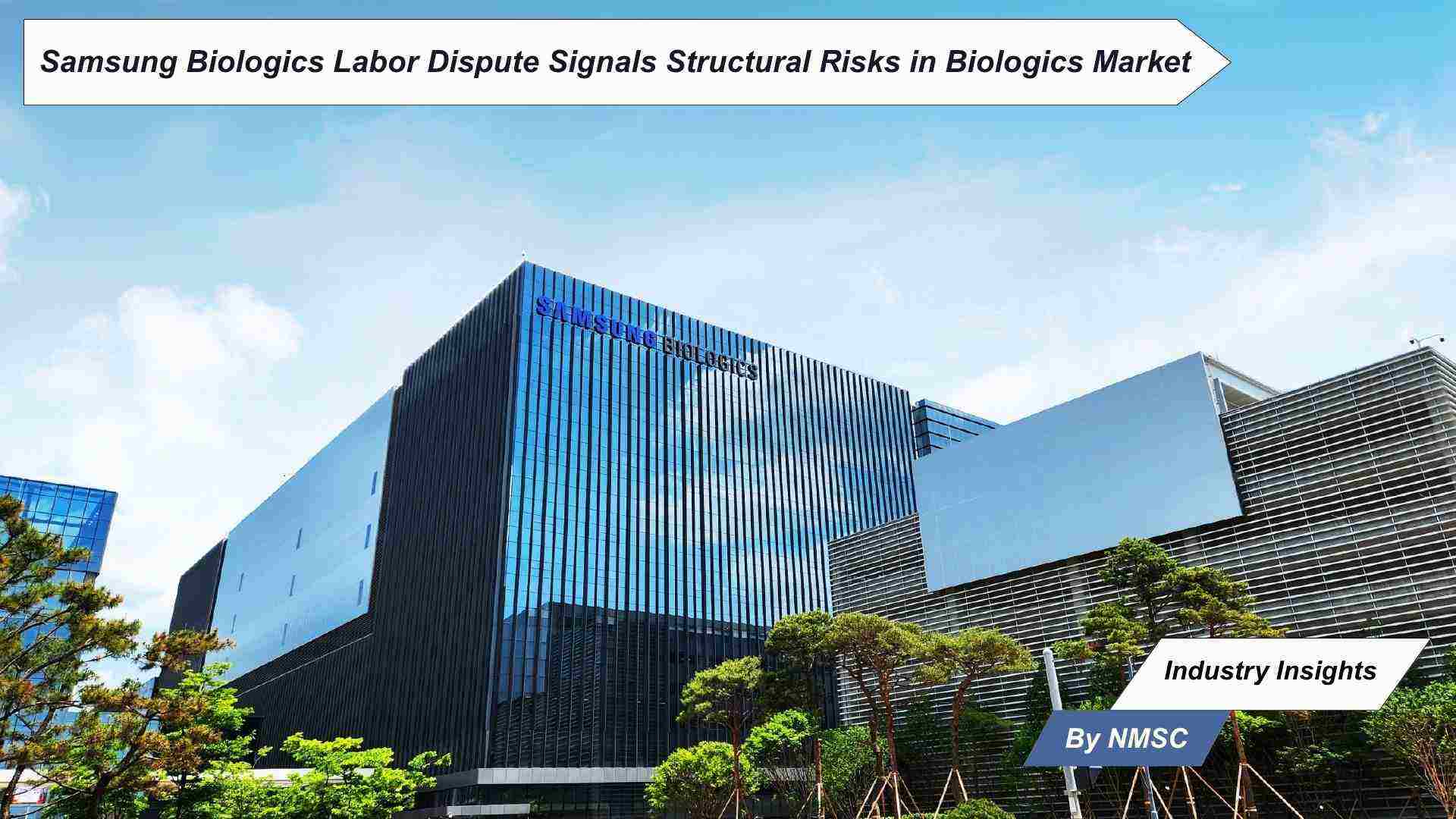
Industry Insights from Next Move Strategy Consulting
As the global Biologics Market continues to expand, maintaining uninterrupted manufacturing and strong governance frameworks has become increasingly critical. Recent developments at Samsung Biologics have brought these priorities into focus, as an escalating labor dispute raises concerns over structural risks to supply chains and corporate governance within the biopharmaceutical sector.
Escalating Conflict Highlights Systemic Challenges
Samsung Biologics, a leading contract development and manufacturing organization (CDMO), is currently facing a deepening labor dispute with its union, which represents a significant share of the company’s workforce. The union has emphasized that the issue extends beyond a traditional labor disagreement, framing it instead as a broader structural challenge rooted in corporate governance and labor compliance systems.
According to the union, the absence of an effective internal mechanism to resolve recurring labor conflicts reflects systemic limitations that could impact operational continuity. The situation has now progressed toward a legal phase, as the union seeks the right to strike, intensifying concerns across the biologics manufacturing landscape.
Supply Chain Risk in Continuous Manufacturing
At the center of the dispute is the union’s warning of a “structural supply chain risk” affecting global biopharmaceutical operations. The biologics industry depends heavily on uninterrupted 24/7 manufacturing processes, where even minor disruptions can have significant downstream effects.
The union has stated that management’s inability to address ongoing labor issues, combined with limited experience in structured labor relations, poses a direct threat to maintaining continuous production. This raises concerns about the resilience of supply chains that rely on consistent output from large-scale CDMO facilities.
Governance Structure Under Scrutiny
The dispute has also drawn attention to corporate governance practices within Samsung Biologics. The union has alleged that internal decision-making processes are influenced by Samsung Electronics’ Business Support Office, potentially limiting the company’s operational independence despite its status as a publicly listed entity.
Leaked internal documents, referenced by the union, reportedly indicate the presence of unfair labor practices aimed at suppressing union activities. Additionally, the involvement of leadership personnel with prior affiliations to Samsung Electronics has been cited as reinforcing concerns around centralized control and governance transparency.
Union representatives have argued that such structural dynamics hinder autonomous negotiations, prolong disputes, and complicate efforts to reach effective resolutions at the organizational level.
Compliance Concerns and ESG Implications
Beyond governance, the conflict has highlighted broader compliance and ESG-related issues. The union has criticized management for failing to uphold commitments outlined in a previously signed labor-management agreement intended to resolve multiple legal disputes.
In response, criminal complaints have been filed against company executives for alleged violations of the collective bargaining agreement and labor relations laws. The union maintains that failure to adhere to such agreements undermines ESG standards that are increasingly prioritized by global pharmaceutical stakeholders.
These developments position the dispute not only as a labor issue but also as a potential reputational and compliance challenge within the global biologics ecosystem.
Industry Response and Market Significance
The situation underscores the critical role CDMOs play in global drug manufacturing and the importance of stable labor relations in ensuring uninterrupted production. As pharmaceutical companies continue to depend on outsourcing partners for biologics manufacturing, structural risks tied to governance and workforce management are becoming increasingly significant.
The warning of supply chain vulnerabilities from within a major CDMO highlights the need for stronger internal systems capable of addressing labor disputes without disrupting essential manufacturing operations.
According to Next Move Strategy Consulting
According to Next Move Strategy Consulting, the ongoing developments at Samsung Biologics emphasize the growing importance of governance transparency and operational resilience in the biologics market. The situation illustrates how internal structural challenges, particularly in labor relations, can translate into broader supply chain risks for global pharmaceutical production networks.
The firm notes that such developments may influence future outsourcing strategies, with increased focus on CDMO partners that demonstrate robust compliance systems, independent governance structures, and the ability to sustain uninterrupted manufacturing under complex operational conditions.
A Defining Moment for Biologics Manufacturing
As the biologics sector continues to scale globally, the dispute at Samsung Biologics serves as a critical example of how governance structures and labor dynamics can directly impact supply chain stability.
The outcome of this situation may shape not only the company’s operational trajectory but also broader industry expectations around transparency, compliance, and resilience in biologics manufacturing.
Source: BusinessWire
Prepared by: Next Move Strategy Consulting
About the Author
 Sanyukta Deb
— Sanyukta Deb is Digital Marketing Team Lead at Next Move Strategy Consulting, where she has led content strategy and technical SEO for the firm's B2B market research publications for over 2 years. Her editorial process translates NextMSC's primary and secondary research — spanning technology, industrial, and consumer sectors — into commercial narratives, backed by search-intent, keyword, and competitive analysis. She brings 5 years of overall experience in digital marketing and content strategy.
Sanyukta Deb
— Sanyukta Deb is Digital Marketing Team Lead at Next Move Strategy Consulting, where she has led content strategy and technical SEO for the firm's B2B market research publications for over 2 years. Her editorial process translates NextMSC's primary and secondary research — spanning technology, industrial, and consumer sectors — into commercial narratives, backed by search-intent, keyword, and competitive analysis. She brings 5 years of overall experience in digital marketing and content strategy.
About the Reviewer
 Debashree Dey
— Debashree Dey is Assistant Manager at Next Move Strategy Consulting, where she supports cross-vertical market content and communications across diverse industries for 6 years. Her professional background includes senior content writing, communications, and published manuscript authorship, with experience developing audience-focused business narratives and maintaining clear, consistent messaging. Her role supports research-led content development and editorial quality across NextMSC publications.
Debashree Dey
— Debashree Dey is Assistant Manager at Next Move Strategy Consulting, where she supports cross-vertical market content and communications across diverse industries for 6 years. Her professional background includes senior content writing, communications, and published manuscript authorship, with experience developing audience-focused business narratives and maintaining clear, consistent messaging. Her role supports research-led content development and editorial quality across NextMSC publications.


















Add Comment