Schneider India Data Center Boom Alters Market Size Data
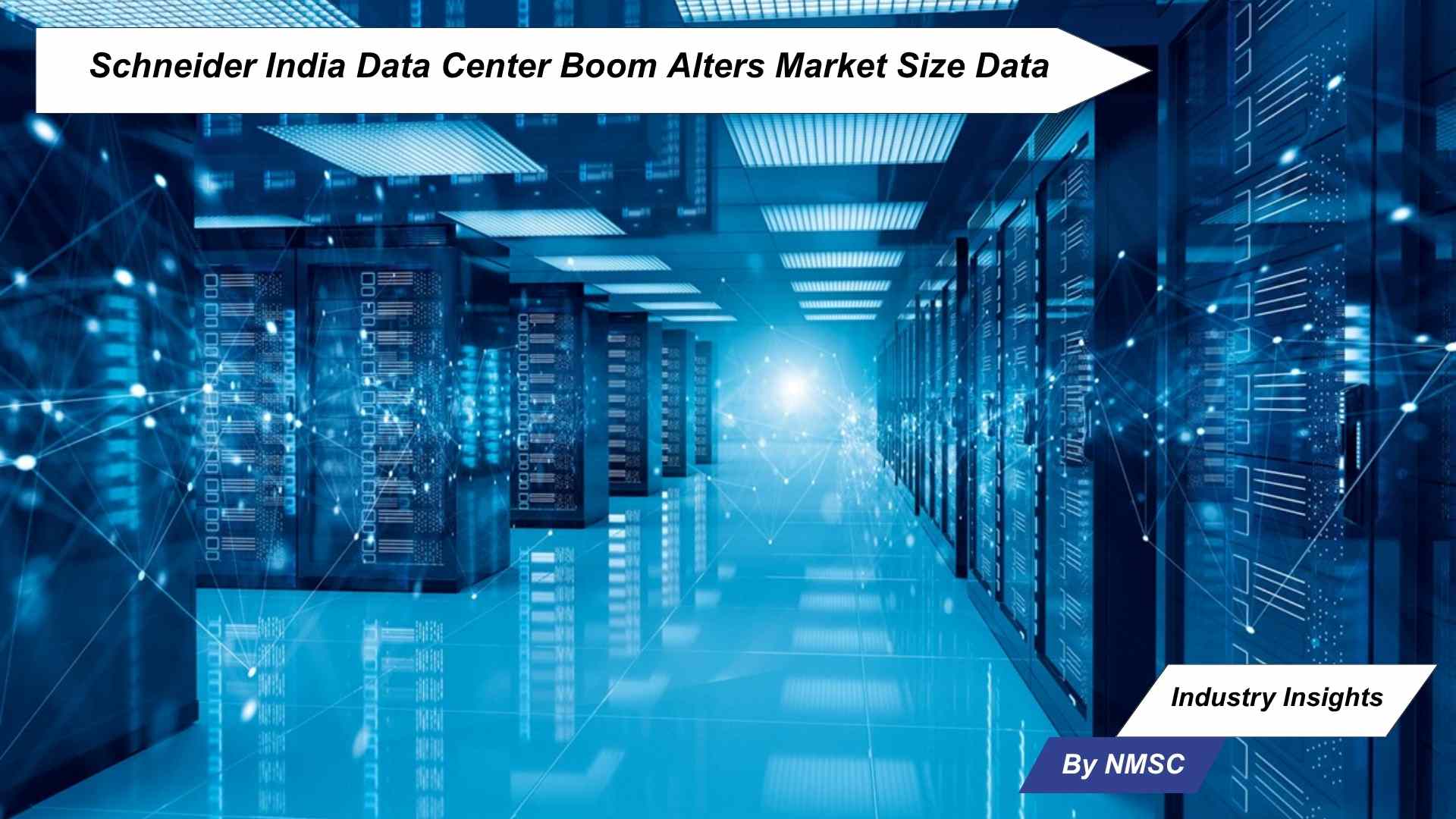
Schneider Electric's India Data Center Business Set to Outpace Core Growth Amid AI Infrastructure Boom; Market Forecast Adjusted
NEW DELHI, India — May 27, 2026 — Driven by an unprecedented surge in demand for artificial intelligence infrastructure, global energy management and automation giant Schneider Electric expects its India data center business to outpace its broader domestic operations over the next four to five years. The specialized digital infrastructure segment currently accounts for 15% to 20% of the multinational’s total revenue in India and is sustaining robust double-digit growth. This sharp operational acceleration highlights India's swift transformation into both a high-volume consumer and an export-oriented manufacturing powerhouse for advanced power and cooling solutions.
AI Workloads Outgrowing Traditional Grid Capacities
The rapid commercialization of large language models and high-performance computing clusters has triggered an infrastructure bottleneck across the subcontinent. Traditional server frameworks are increasingly inadequate for handling the high thermal densities and power distribution loads mandated by modern AI architecture. To capitalize on this shift, Schneider Electric is rapidly expanding local manufacturing lines for its specialized product matrix, which includes high-capacity uninterruptible power supply (UPS) systems, automated switchgears, and precision liquid-cooling hardware.
“The exponential rise of specialized artificial intelligence workloads is driving a complete structural overhaul of traditional digital infrastructure,” notes Ridip Gogoi, Lead Researcher at Next Move Strategy Consulting. “According to NMSC analysts, enterprise operators are swiftly moving away from legacy server rooms toward localized, high-density edge deployments and hyper-scale architectures designed to process complex real-time computational models.”
Key Technological Capabilities of Schneider Electric's AI Infrastructure:
-
High-Density Thermal Management: Next-generation precision cooling solutions engineered to handle localized heat generation from heavy AI processing chips.
-
Intelligent Power Architecture: Modular, high-capacity UPS networks and automated switchgears that ensure continuous uptime and prevent power spikes.
-
Advanced Grid Modernization: Specialized energy management software that dynamically balances power consumption between data hubs and local municipal grids.
Decentralization and Future Market Outlook
The aggressive expansion plan comes at a pivotal moment, with industry projections indicating that India’s overall data center capacity could skyrocket to 6–7 Gigawatts (GW) by 2030, up from just 1.5 GW today. This massive capital influx is also driving geographic diversification. While investment has traditionally concentrated within coastal connectivity hubs like Mumbai and Chennai, hyperscalers and colocation operators are increasingly establishing major facilities deeper inland across states like Gujarat and Rajasthan to place processing cores closer to regional enterprise end-users.
"This decentralized infrastructure footprint is fundamentally altering standard utility investment cycles," adds Deb. "NMSC data indicates that as clean energy markets approach storage parity, data center developers are actively favoring regions capable of delivering hybrid renewable energy microgrids. This localized generation strategy successfully isolates high-intensity AI data hubs from macro supply chain volatility and grid-level bottlenecks."
As the corporate race toward artificial intelligence integration intensifies, the rapid expansion of localized hardware manufacturing cements India's role as a primary anchor for the broader global digital economy. By anchoring its high-growth trajectory to critical power and thermal electronics, Schneider Electric has positioned its specialized data center portfolio at the absolute center of the next great industrial computing expansion.
Source: Reuters
Prepared By: Prakhyat Chowdhury
About the Author
 Prakhyat Chowdhury
— Prakhyat Chowdhury is a results-driven Market Analyst and data strategist specializing in business intelligence, trend forecasting, and performance-focused market growth. His competitive intelligence frameworks, and data-driven insights enhances strategic planning, operational efficiency, and organizational authority. Known for strong communication, analytical thinking, and multilingual proficiency, he delivers rigorous, objective-led solutions that support scalable business outcomes across industries with professionalism. He consistently aligns quantitative and qualitative analysis with global business goals.
Prakhyat Chowdhury
— Prakhyat Chowdhury is a results-driven Market Analyst and data strategist specializing in business intelligence, trend forecasting, and performance-focused market growth. His competitive intelligence frameworks, and data-driven insights enhances strategic planning, operational efficiency, and organizational authority. Known for strong communication, analytical thinking, and multilingual proficiency, he delivers rigorous, objective-led solutions that support scalable business outcomes across industries with professionalism. He consistently aligns quantitative and qualitative analysis with global business goals.
About the Reviewer
 Sanyukta Deb
— Sanyukta Deb is Digital Marketing Team Lead at Next Move Strategy Consulting, where she has led content strategy and technical SEO for the firm's B2B market research publications for over 2 years. Her editorial process translates NextMSC's primary and secondary research — spanning technology, industrial, and consumer sectors — into commercial narratives, backed by search-intent, keyword, and competitive analysis. She brings 5 years of overall experience in digital marketing and content strategy.
Sanyukta Deb
— Sanyukta Deb is Digital Marketing Team Lead at Next Move Strategy Consulting, where she has led content strategy and technical SEO for the firm's B2B market research publications for over 2 years. Her editorial process translates NextMSC's primary and secondary research — spanning technology, industrial, and consumer sectors — into commercial narratives, backed by search-intent, keyword, and competitive analysis. She brings 5 years of overall experience in digital marketing and content strategy.
















Add Comment