Seed Patents Threaten Sustainable Agriculture Market Growth
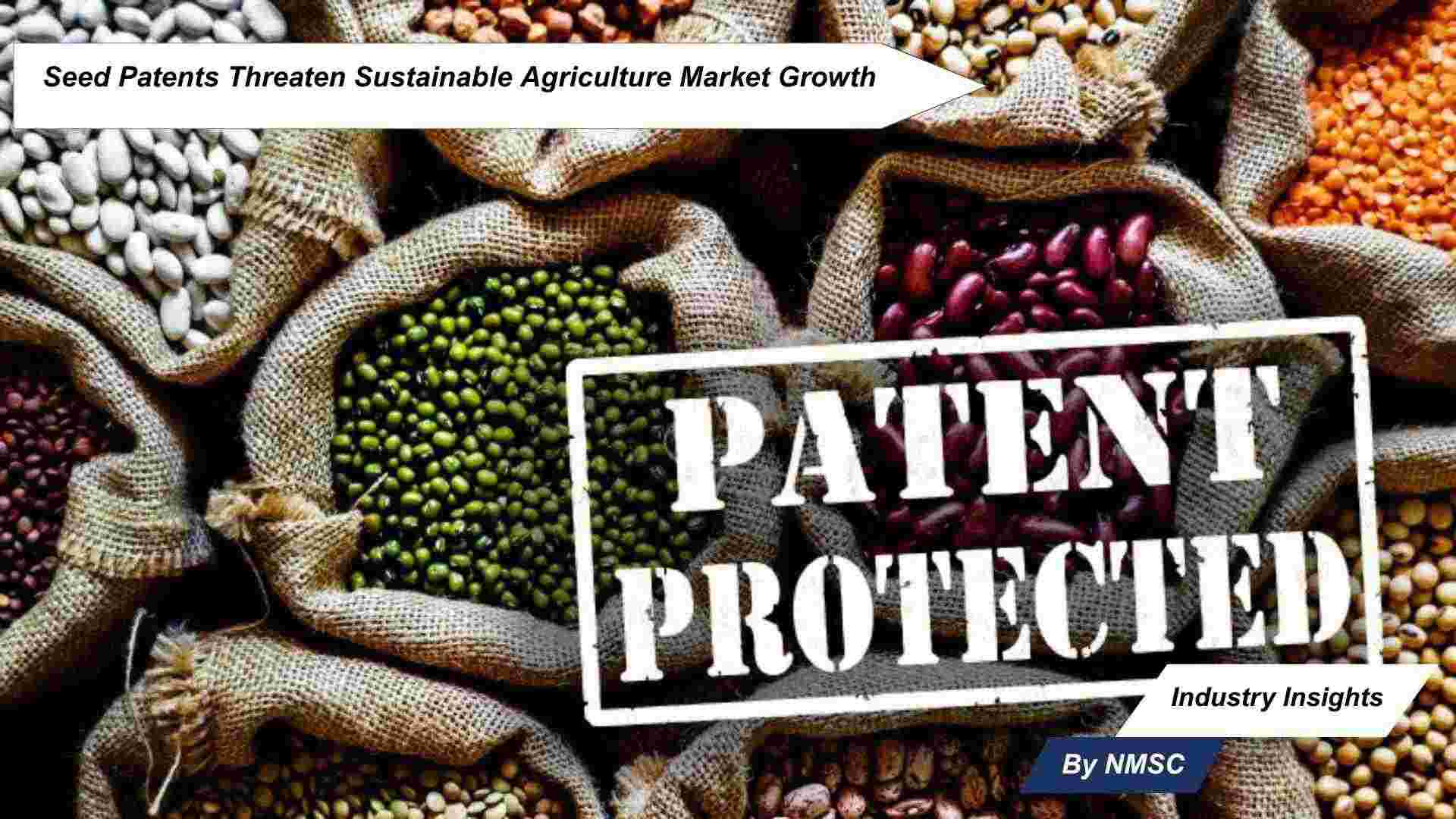
DOJ Flags Seed Patents as Key Barrier to Sustainable Agriculture Competition
WASHINGTON, D.C., United States — August 10, 2026 — The U.S. Department of Justice has formally identified seed patents as a significant barrier to competition and research in the agriculture sector, a development with direct implications for the sustainable agriculture market, which was valued at USD 15.36 billion in 2024 and is projected to reach USD 28.36 billion by 2030, growing at a CAGR of 10.8% through 2030, according to Next Move Strategy Consulting.
In a May 2026 court filing related to a legal dispute between two U.S. seed companies — Corteva and genetic engineering startup Inari — the DOJ's antitrust division stated that seed patents are obstructing competition and research across the agriculture industry. The department's filing argued that companies should not be permitted to restrict the public from sequencing genetic material deposited as part of the patent protection process, a position that signals growing federal scrutiny of intellectual property practices in the seed sector.
According to data from the USDA's Economic Research Service, two companies currently control more than 70 percent of U.S. corn and soybean seed sales, while the top four cottonseed companies account for nearly 94 percent of that market. The price for genetically engineered seeds has risen by 463 percent since 1990, while the prices farmers receive for their crops have increased by only 56 percent over the same period — a widening gap that has placed sustained financial pressure on farming operations across the country.
Research published in August 2025 further revealed that for every 1 percent increase in farm subsidies, seed companies raise their prices by 0.5 percent, effectively redirecting taxpayer-funded agricultural support away from farmers and toward corporate shareholders. Researchers from the University of Wisconsin-Madison, who authored the analysis, noted that dominant seed companies also prevent competitors from developing new breeding programs through a complex web of patents and restrictive licensing contracts.
Key Highlights:
-
The DOJ's antitrust division filed a court statement in May 2026 identifying seed patents as an obstruction to competition and research in the U.S. agriculture sector.
-
Two companies control more than 70% of U.S. corn and soybean seed sales; the top four cottonseed companies control nearly 94% of the cottonseed market, per USDA data.
-
Genetically engineered seed prices have risen 463% since 1990, compared to only a 56% increase in crop prices received by farmers over the same period.
-
For every 1% increase in farm subsidies, seed companies raise prices by 0.5%, diverting public agricultural support from farmers to corporate entities.
Analyst Insight:
According to analysts at Next Move Strategy Consulting, the concentration of seed market power in the hands of a few corporations represents a structural headwind for the broader sustainable agriculture sector. NMSC analysts note that open innovation in plant breeding and access to diverse seed varieties are foundational to the adoption of regenerative, precision, and organic farming practices — all of which are primary growth drivers in the sustainable agriculture market. A more competitive seed landscape, as signaled by the DOJ's antitrust intervention, could meaningfully reduce input costs for smallholder and mid-sized farmers, thereby accelerating the transition toward sustainable production systems. NMSC analysts further observe that the outcome of the Corteva-Inari litigation could set a precedent that reshapes intellectual property norms across the global agri-input industry.
Industry Outlook:
The DOJ's intervention in the Corteva-Inari case marks a potential inflection point for the U.S. seed industry and, by extension, for sustainable agriculture adoption at scale. Should the court rule in favor of greater access to genetic sequencing of patented seeds, it could catalyze increased competition, lower input costs, and renewed investment in public plant breeding programs — all of which would support the long-term growth trajectory of the sustainable agriculture market. The global sustainable agriculture market is projected to expand at a CAGR of 10.8% through 2030, driven by booming organic farming, net-zero carbon commitments, and the integration of AI in farming systems. However, the structural dominance of a small number of major seed companies is likely to persist in the near term, and the litigation's outcome remains subject to judicial determination.
Source: Civil Eats
For More Information: Download FREE Sample on Sustainable Agriculture Market Report
Prepared By: Sanyukta Deb
About the Author
 Sanyukta Deb
— Sanyukta Deb is Digital Marketing Team Lead at Next Move Strategy Consulting, where she has led content strategy and technical SEO for the firm's B2B market research publications for over 2 years. Her editorial process translates NextMSC's primary and secondary research — spanning technology, industrial, and consumer sectors — into commercial narratives, backed by search-intent, keyword, and competitive analysis. She brings 5 years of overall experience in digital marketing and content strategy.
Sanyukta Deb
— Sanyukta Deb is Digital Marketing Team Lead at Next Move Strategy Consulting, where she has led content strategy and technical SEO for the firm's B2B market research publications for over 2 years. Her editorial process translates NextMSC's primary and secondary research — spanning technology, industrial, and consumer sectors — into commercial narratives, backed by search-intent, keyword, and competitive analysis. She brings 5 years of overall experience in digital marketing and content strategy.
About the Reviewer
 Debashree Dey
— Debashree Dey is Assistant Manager at Next Move Strategy Consulting, where she supports cross-vertical market content and communications across diverse industries for 6 years. Her professional background includes senior content writing, communications, and published manuscript authorship, with experience developing audience-focused business narratives and maintaining clear, consistent messaging. Her role supports research-led content development and editorial quality across NextMSC publications.
Debashree Dey
— Debashree Dey is Assistant Manager at Next Move Strategy Consulting, where she supports cross-vertical market content and communications across diverse industries for 6 years. Her professional background includes senior content writing, communications, and published manuscript authorship, with experience developing audience-focused business narratives and maintaining clear, consistent messaging. Her role supports research-led content development and editorial quality across NextMSC publications.


















Add Comment