Smart Harvest Market Update: John Deere Deploys Smart Equipment Software
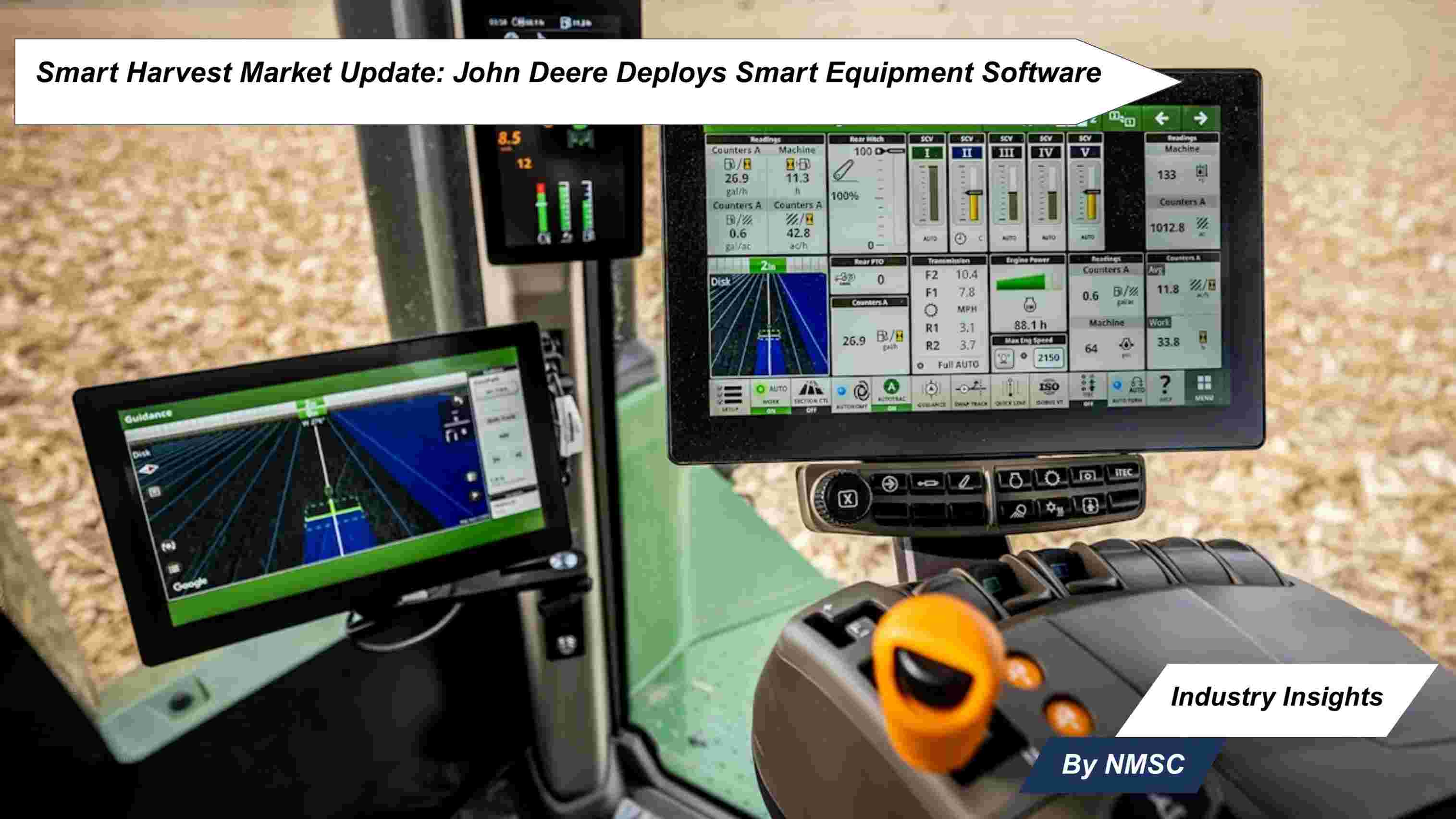
John Deere Rolls Out Smart Software Updates Across Farm Equipment to Boost Harvest Uptime
MOLINE, Illinois August 24, 2026 John Deere (NYSE: DE), a leading manufacturer in the global Smart Harvest Market, has commenced a broad rollout of software updates across its agriculture, construction, and forestry equipment lines, designed to extend machine uptime and reduce operational disruptions during critical harvest windows. The updates, implemented in response to revised U.S. Environmental Protection Agency (EPA) guidelines, represent a significant advancement in the company's strategy to deliver smarter, more responsive technology to farmers operating under time-sensitive field conditions.
The software updates address diesel exhaust fluid (DEF) and selective catalytic reduction (SCR) system fault management extending the operational window available to operators before a machine reaches a power restriction from approximately four hours to approximately 20 hours. According to John Deere, the change directly responds to documented customer feedback regarding the need for more practical repair timelines, less severe power derates, and improved DEF quality diagnostics during active harvest operations.
The updated software also revises the fault-related operating restriction from idle-only to approximately 30% of rated engine power remaining available a meaningful operational improvement for farmers managing narrow harvest schedules. John Deere expects nearly 80% of in-scope software updates to be available to customers by the end of 2026, with the remainder rolling out through 2027. The company is proactively deploying updates to connected machines via its Operations Center™ PRO Service platform.
Key Highlights:
-
Extended operational window: Operators now have approximately 20 hours to address DEF/SCR-related faults before reaching an operating restriction, compared to approximately four hours under previous software a fivefold improvement in field flexibility.
-
Enhanced diagnostics: The updated software delivers improved DEF quality diagnostic performance, enabling more accurate fault identification and reducing unnecessary machine downtime during harvest.
-
Broad equipment coverage: Updates span agriculture, construction, and forestry equipment platforms, with connected machines receiving proactive over-the-air (OTA) deployments via the John Deere Operations Center™.
-
Regulatory alignment: The rollout follows revised EPA guidance that expanded options available to equipment manufacturers, allowing John Deere to redesign fault management protocols in alignment with real-world farming operational demands.
Analyst Insight:
According to analysts at Next Move Strategy Consulting, John Deere's software deployment strategy reflects a broader structural shift in the Smart Harvest Market toward connected, over-the-air technology management in agricultural equipment. NMSC analysts note that the global Smart Harvest Market is projected to reach USD 33.31 billion by 2030 at a CAGR of 11.4% is increasingly shaped by the ability of major original equipment manufacturers (OEMs) to deliver real-time software improvements that reduce downtime and enhance operational efficiency. As harvest windows tighten due to climate variability and persistent labor constraints, the capacity to remotely update and optimize equipment performance is becoming a critical competitive differentiator in the smart harvest technology landscape.
Industry Outlook:
John Deere's software rollout underscores the growing importance of digital connectivity, over-the-air update capabilities, and intelligent fault management in modern agricultural equipment. As the Smart Harvest Market continues to evolve driven by rising government initiatives, technological integration of IoT, AI, and machine learning, and increasing global agricultural production demands the integration of real-time diagnostics and remote software management is expected to become standard across major equipment platforms.
The EPA's revised guidance on DEF systems has created a regulatory opening for equipment manufacturers to realign fault management protocols with the operational realities of farming. John Deere's proactive response to this shift, combined with its connected machine infrastructure, positions the company to maintain its leadership in the smart harvest equipment segment as the market advances toward its projected USD 33.31 billion valuation by 2030. For the broader industry, this development signals that software-driven operational improvements not just hardware innovation will play an increasingly central role in defining competitive advantage in smart agricultural technology.
Source: Michigan Farm News
For More Information: Download FREE Sample on Smart Harvest Market Update Report
Prepared By: Sanyukta Deb
About the Author
 Sanyukta Deb
— Sanyukta Deb is Digital Marketing Team Lead at Next Move Strategy Consulting, where she has led content strategy and technical SEO for the firm's B2B market research publications for over 2 years. Her editorial process translates NextMSC's primary and secondary research — spanning technology, industrial, and consumer sectors — into commercial narratives, backed by search-intent, keyword, and competitive analysis. She brings 5 years of overall experience in digital marketing and content strategy.
Sanyukta Deb
— Sanyukta Deb is Digital Marketing Team Lead at Next Move Strategy Consulting, where she has led content strategy and technical SEO for the firm's B2B market research publications for over 2 years. Her editorial process translates NextMSC's primary and secondary research — spanning technology, industrial, and consumer sectors — into commercial narratives, backed by search-intent, keyword, and competitive analysis. She brings 5 years of overall experience in digital marketing and content strategy.
About the Reviewer
 Debashree Dey
— Debashree Dey is Assistant Manager at Next Move Strategy Consulting, where she supports cross-vertical market content and communications across diverse industries for 6 years. Her professional background includes senior content writing, communications, and published manuscript authorship, with experience developing audience-focused business narratives and maintaining clear, consistent messaging. Her role supports research-led content development and editorial quality across NextMSC publications.
Debashree Dey
— Debashree Dey is Assistant Manager at Next Move Strategy Consulting, where she supports cross-vertical market content and communications across diverse industries for 6 years. Her professional background includes senior content writing, communications, and published manuscript authorship, with experience developing audience-focused business narratives and maintaining clear, consistent messaging. Her role supports research-led content development and editorial quality across NextMSC publications.

















Add Comment