Sodium-Ion Batteries Enter Commercial Era with CATL's 60 GWh Grid Deal
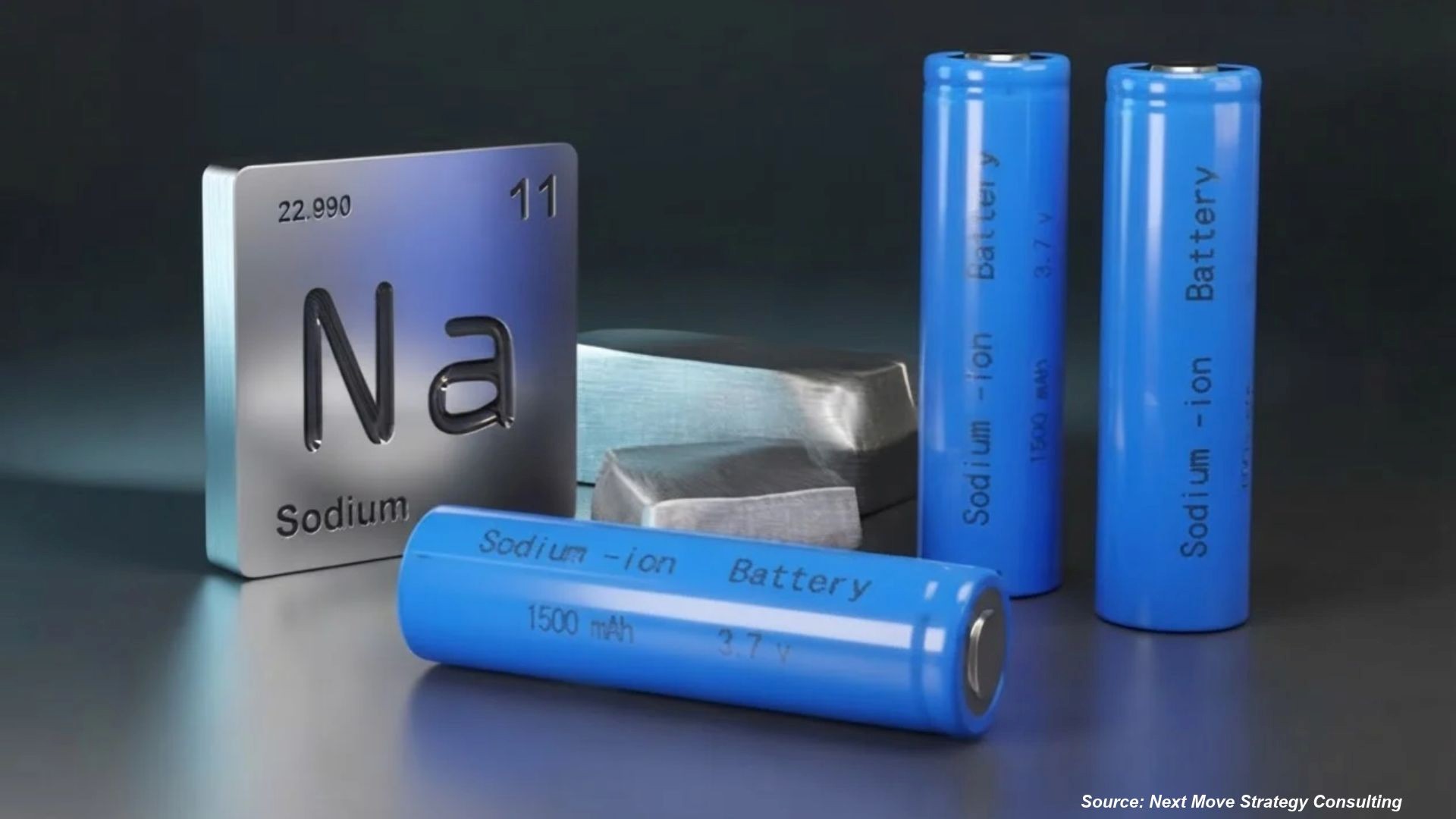
CATL's 60 GWh Grid Deal and GM's Michigan Bet Signal Sodium-Ion's Breakout from Niche Chemistry to Commercial Backbone
On April 27, 2026, Contemporary Amperex Technology Co., Ltd. (CATL) — the world's largest battery cell manufacturer — signed an agreement to supply 60 gigawatt-hours (GWh) of sodium-ion batteries to Beijing HyperStrong Technology, an energy storage system manufacturer, over the next three years. The transaction, the largest sodium-ion supply contract ever recorded, arrived less than ten weeks after CATL and Changan Automobile jointly unveiled the world's first mass-production sodium-ion battery passenger vehicle in February 2026 — a Changan Nevo A06 equipped with CATL's Naxtra battery achieving an energy density of 175 Wh/kg and retaining over 90% of nominal capacity at temperatures as low as −40°C. Together, these two events mark the clearest evidence yet that sodium-ion technology has crossed the threshold from laboratory-scale research into commercially operational, multi-gigawatt-hour deployment — a transition that is now reshaping the global energy storage investment landscape.
According to Next Move Strategy Consulting's Sodium-ion Battery Market report, the global sodium-ion battery market was valued at USD 1.06 billion in 2025 and is projected to reach USD 7.09 billion by 2035, growing at a CAGR of 20.87% between 2026 and 2035. NMSC's primary research and analysis identifies three structural forces underpinning this trajectory: the accelerating expansion of grid-scale renewable energy storage, the growing strategic imperative to diversify battery supply chains away from lithium and cobalt, and the demonstrated compatibility of sodium-ion cell architectures with existing lithium-ion gigafactory infrastructure — a compatibility that is compressing commercialisation timelines and reducing the capital expenditure required to bring new sodium-ion capacity online.
For More Information: Download FREE Sample on Sodium-ion Battery Market Report
The 60 GWh Inflection: Why CATL's HyperStrong Deal Is a Market-Defining Event
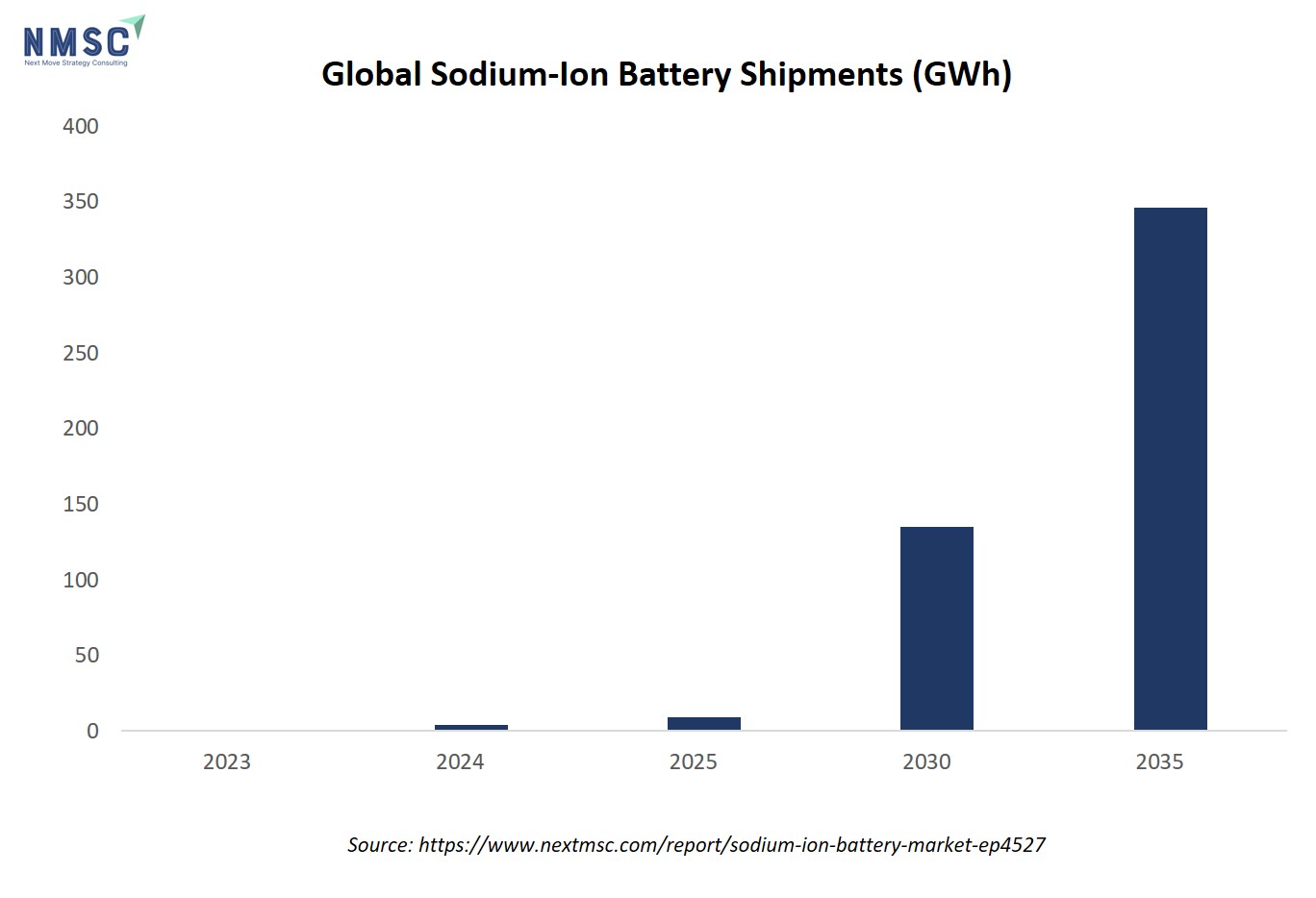
The scale of CATL's April 2026 supply agreement with Beijing HyperStrong Technology is significant not merely as a volume milestone but as a structural signal. At 60 GWh over three years, the contract exceeds the entire estimated global sodium-ion battery production output of 2025 — a year in which total sodium-ion shipments reached approximately 9 GWh, more than double the prior year's volume. The deal demonstrates that at least one major energy storage system manufacturer has made a multi-year procurement commitment to sodium-ion chemistry at a scale that requires CATL to operate dedicated, high-volume production lines — a fundamentally different commercial posture from the pilot-scale deployments that characterised the technology as recently as 2024.
The timing of the deal is also instructive. By early June 2026, the CME lithium hydroxide futures contract had risen 86% since the start of the year, trading back above USD 20,000 per metric ton for the first time since late 2023, driven by faster-than-anticipated demand growth from the battery energy storage sector, low inventories in China, and temporary supply disruptions including the suspension of operations at CATL's own Jianxiawo lithium mine. For battery manufacturers capable of maintaining multiple supply chains in parallel, sodium-ion expertise and production capacity function as a strategic hedge against precisely this kind of lithium price volatility — enabling rapid switching between chemistries if lithium costs make sodium-ion cost-competitive across a broader range of applications.
CATL–Changan: The World's First Mass-Production Sodium-Ion Passenger Vehicle
The February 2026 launch of the Changan Nevo A06 — equipped with CATL's Naxtra sodium-ion battery — represents the first time a sodium-ion battery has been integrated into a mass-production passenger vehicle intended for broad commercial sale, not a limited demonstration run. CATL's Naxtra battery achieves an energy density of up to 175 Wh/kg, which CATL describes as the current benchmark for mass-produced sodium-ion cells. The vehicle is slated for market availability across Changan's brand portfolio — including AVATR and Deepal — targeting mid-2026 commercial launch.
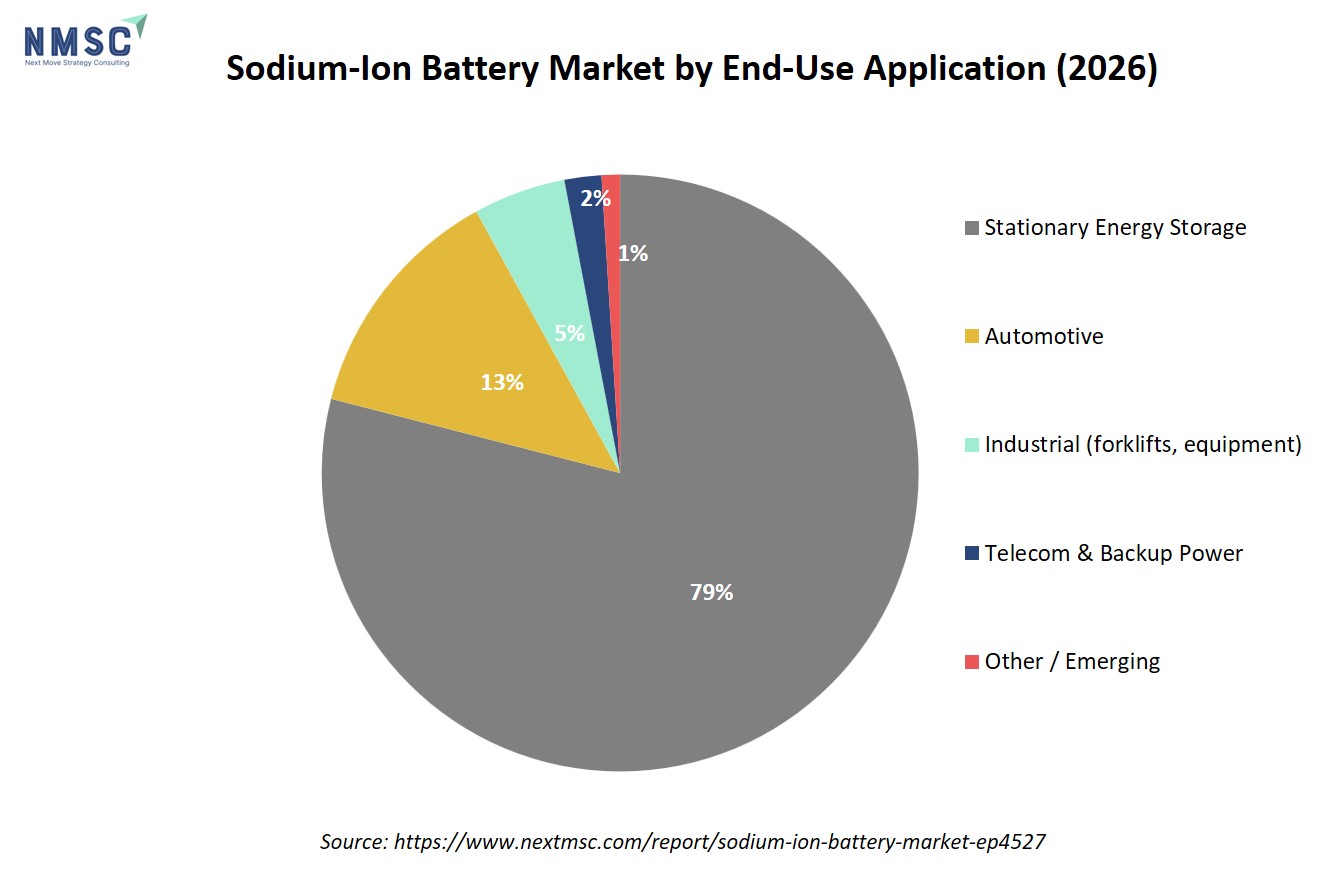
The Naxtra battery's cold-temperature performance — retaining over 90% of nominal capacity at −40°C — directly addresses the primary application advantage that the International Energy Agency (IEA) identifies for sodium-ion chemistry: superior performance in cold climates where lithium iron phosphate (LFP) batteries experience significant capacity degradation. The IEA's Global EV Outlook 2026 notes that sodium-ion batteries are expected to be better suited for small-range electric cars, light commercial vehicles operating in urban areas, two- and three-wheelers, industrial equipment such as forklifts, and battery stationary storage — a segmentation that aligns precisely with NMSC's proprietary analysis identifying energy storage systems and entry-level automotive as the two dominant end-user segments in the sodium-ion battery market.
General Motors and Peak Energy: The US Sodium-Ion Grid Storage Bet
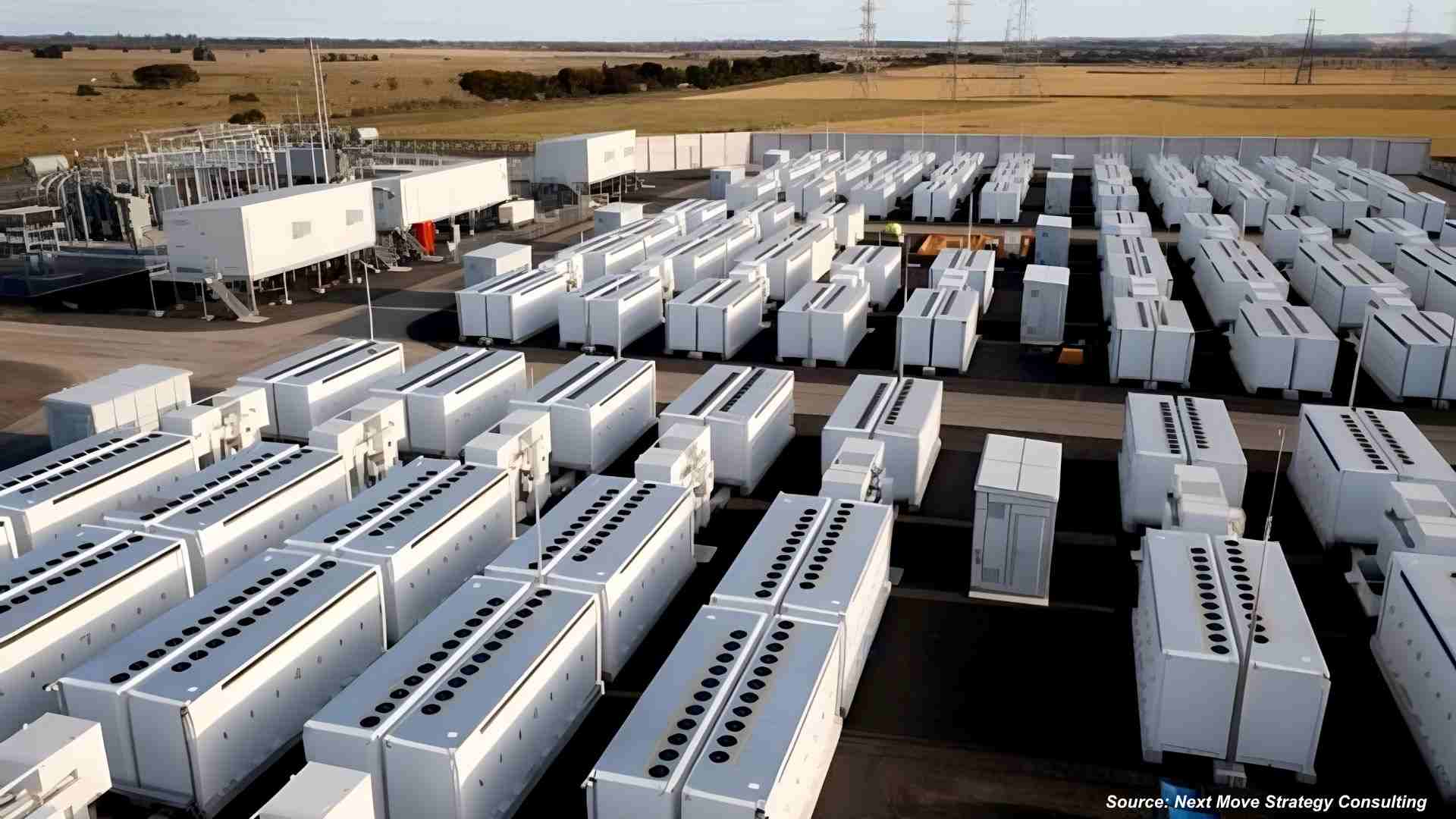
While China's battery manufacturers are driving the technology's commercial-scale deployment in EVs and grid storage, the United States is establishing its own sodium-ion supply chain infrastructure — with General Motors making the most consequential commitment to date. In June 2026, GM announced it was building supply chains for sodium-ion battery storage with developer Peak Energy, with production due to start in Michigan by 2028.
"We believe sodium-ion will be a defining chemistry for grid-scale energy storage systems in the years ahead," said Kurt Kelty, GM Vice President, Battery & Sustainability, in a statement reported by Reuters Events on June 29, 2026. "Sodium-ion batteries offer a compelling mix of durability across a wider temperature range, and the potential for lower system costs."
The GM announcement followed Peak Energy's February 2026 strategic development agreement with Energy Vault to provide energy management systems for sodium-ion storage systems, with initial production capacity of 1.5 GWh. Peak Energy has also signed a USD 500 million agreement with US energy storage developer Jupiter Power to supply up to 4.75 GWh of sodium-ion battery storage by 2030.
"By offering lower cooling requirements than lithium and wider operating temperature ranges, sodium-ion systems directly align with the needs of data center customers," said Marco Terruzzin, Energy Vault Chief Revenue Officer, in the same Reuters Events report.
The US data center energy storage demand surge — driven by the AI infrastructure buildout — is creating a new, high-volume demand channel for sodium-ion batteries that did not exist in prior technology adoption cycles. US sodium-ion battery production is also well-positioned to qualify for federal domestic content investment tax credits, given that sodium-ion cells require minimal imported inputs, improving project economics relative to lithium-ion and foreign-sourced alternatives.
IEA Institutional Assessment: 2026 as the Pivotal Scaling Year
The IEA's February 17, 2026, commentary — authored by Teo Lombardo (Energy Technology Analyst), Leonardo Paoli (Clean Energy Technology Analyst), Araceli Fernandez Pales (Head of Technology Innovation Unit), and Timur Gül (Chief Energy Technology Officer) — provides the most authoritative institutional assessment of the technology's current status and near-term trajectory.
The IEA commentary states that "sodium-ion batteries are on course for commercial success, and 2026 could prove to be a pivotal year for the technology's scaling efforts." It identifies the technology's key performance parameters: the latest sodium-ion cells reach up to 175 Wh/kg, compared with up to 205 Wh/kg for LFP batteries and 255 Wh/kg for NMC batteries — a gap that translates into a driving range of up to 350 km for an average SUV equipped with sodium-ion batteries, versus 400–600 km for lithium-ion batteries under average weather conditions.
Critically, the IEA also quantifies the scale of the manufacturing gap that must be closed: current sodium-ion battery cell manufacturing capacity equals just over 1% of that of lithium-ion cells, and announced projects for 2030 amount to only approximately 7% of the committed lithium-ion manufacturing capacity for the same year. The IEA separately projects that sodium-ion batteries will account for approximately 10% of annual energy storage additions globally by 2030.
The IEA also flags a structural supply chain concentration risk that is specific to sodium-ion: nearly all existing global sodium-ion manufacturing capacity is located in China, which also accounts for more than 95% of 2030 capacity when accounting for already installed and announced production plants. This concentration extends beyond cell production to cathode and anode active materials and their precursors — a supply chain architecture that mirrors, and in some respects amplifies, the geographic concentration risks already present in the lithium-ion battery industry.
HiNa Battery: The Specialist Commercialisation Pathway
While CATL and BYD are scaling sodium-ion through their existing gigafactory infrastructure, HiNa Battery Technology Co., Ltd. — the first company to power an electric vehicle using sodium-ion batteries — is demonstrating a specialist commercialisation pathway focused on industrial and commercial applications. In October 2025, HiNa inaugurated what it described as the commercial era of sodium-ion batteries at its "Evolution & Leap" event, confirming that four product lines had entered mass production. Among these is a 200Ah sodium-ion system for commercial electric tractors, co-developed with Golden Dragon, featuring a nominal capacity of 200Ah and a cycle life of 4,500 cycles with 83% capacity retention.
HiNa's commercial tractor application is strategically significant because it targets a use case — heavy-duty agricultural and industrial equipment operating in variable temperature environments — where sodium-ion's cold-temperature performance advantage over LFP is commercially decisive, and where the energy density gap relative to lithium-ion is less operationally constraining than in passenger EV applications.
NMSC Strategic Perspective: Five Structural Observations on the 2026 Sodium-Ion Market Shift
Next Move Strategy Consulting's proprietary research and analysis of the sodium-ion battery market identifies five structural observations that distinguish the current commercialisation environment from prior technology development cycles:
1. The 86% Lithium Price Surge Is Functioning as a Commercial Accelerant, Not a Temporary Anomaly
The 86% rise in CME lithium hydroxide futures between January and June 2026 is not merely a commodity price event — it is a procurement signal that is actively accelerating sodium-ion adoption decisions among energy storage developers and battery manufacturers. NMSC's primary research and analysis identifies lithium price volatility as the single most powerful near-term demand catalyst for sodium-ion batteries, because it directly narrows the cost gap between the two chemistries in stationary storage applications where energy density is not a binding constraint. If lithium prices remain elevated through 2027, NMSC's analysis indicates that sodium-ion could achieve cost parity with LFP in grid-scale stationary storage applications ahead of the base-case forecast timeline.
2. The CATL–HyperStrong 60 GWh Deal Establishes a Commercial Volume Benchmark That Will Attract Competing Supply Commitments
The April 2026 CATL–HyperStrong agreement is the first sodium-ion supply contract of sufficient scale to require dedicated, high-volume production infrastructure. NMSC's competitive analysis anticipates that this deal will function as a market-signalling event, prompting competing energy storage system manufacturers to secure their own long-term sodium-ion supply agreements — accelerating the buildout of manufacturing capacity and compressing the cost curve through economies of scale. BYD's 30 GWh sodium-ion plant in Xuzhou, co-invested with Huaihai Group, is the most immediate competitive response to CATL's commercialisation momentum.
3. Manufacturing Infrastructure Compatibility Is the Most Underappreciated Commercialisation Accelerant
NMSC's primary research and analysis identifies the compatibility of sodium-ion cell architectures with existing lithium-ion gigafactory equipment — electrode coating lines, assembly processes, formation protocols — as the most underappreciated structural advantage of the technology. This compatibility allows manufacturers to deploy sodium-ion production capacity without the full capital expenditure of a greenfield facility, reducing the financial barrier to entry and enabling faster pilot-to-commercial scaling. The IEA's Global EV Outlook 2026 confirms that global nameplate lithium-ion manufacturing capacity reached more than 4 TWh by end-2025, up roughly 30% year-on-year — a vast installed base of production infrastructure that sodium-ion developers can partially leverage.
4. The US Data Center Demand Channel Is Creating a Sodium-Ion Addressable Market That Did Not Exist in Prior Forecasts
The AI infrastructure buildout is generating unprecedented demand for grid-adjacent energy storage capable of operating across wide temperature ranges with minimal cooling infrastructure — a performance profile that sodium-ion batteries are uniquely positioned to meet relative to LFP alternatives. NMSC's analysis identifies the US data center energy storage segment as a structurally new demand channel for sodium-ion batteries that was not captured in pre-2025 market forecasts, and which is likely to contribute meaningfully to North American market growth through 2030.
5. The Hard Carbon Anode Supply Chain Is the Critical Bottleneck That Will Determine the Speed of Global Scale-Up
NMSC's primary research and analysis identifies the hard carbon anode supply chain — the sodium-ion equivalent of graphite in lithium-ion batteries — as the most significant near-term constraint on global sodium-ion manufacturing scale-up. The IEA's Global EV Outlook 2026 confirms that the supply chain for hard carbon, the anode active material used in sodium-ion batteries, is still poorly developed and largely concentrated in China. Resolving this bottleneck — through investment in hard carbon precursor processing capacity outside China — is the single most important supply-side action required to support the IEA's projection of sodium-ion batteries reaching 10% of annual global energy storage additions by 2030.
Competitive Landscape: Key Developments Reshaping Market Positioning
|
Company |
Development |
Strategic Significance |
|
CATL |
Signed 60 GWh sodium-ion supply agreement with Beijing HyperStrong Technology — the world's largest sodium-ion battery order |
Establishes CATL as the dominant commercial-scale sodium-ion supplier for grid storage; creates a volume benchmark that will drive competing supply commitments |
|
CATL + Changan Automobile |
Jointly unveiled world's first mass-production sodium-ion passenger vehicle (Changan Nevo A06) with Naxtra battery (175 Wh/kg, >90% capacity at −40°C); targeting AVATR and Deepal brand deployment |
First sodium-ion battery in a mass-production passenger vehicle; validates the chemistry for entry-level EV applications and cold-climate markets |
|
General Motors + Peak Energy |
GM building US sodium-ion grid storage supply chains; production due in Michigan by 2028; Peak Energy signed USD 500M deal with Jupiter Power for up to 4.75 GWh by 2030 |
First major US automaker commitment to sodium-ion grid storage; establishes a domestic supply chain pathway and qualifies for federal domestic content tax credits |
|
BYD |
Invested in 30 GWh sodium-ion plant in Xuzhou alongside Huaihai Group, targeting both battery storage projects and electric vehicles |
Positions BYD as the primary competitive alternative to CATL in sodium-ion supply; 30 GWh capacity represents a significant manufacturing commitment |
|
HiNa Battery Technology |
Confirmed four product lines in mass production, including 200Ah system for commercial electric tractors co-developed with Golden Dragon |
Demonstrates specialist commercialisation pathway for industrial applications; 4,500-cycle life validates long-duration performance for commercial use cases |
|
LG Energy Solution |
Building sodium-ion pilot line at existing plant in Nanjing, China |
Signals that Korean battery manufacturers are entering the sodium-ion development race, though the choice of China for the pilot line underscores the attractiveness of China's sodium-ion ecosystem |
Market Segmentation Snapshot
|
Segment |
Key Sub-Segments |
Primary Demand Driver (2026) |
|
By Component |
Cathode, Anode, Electrolyte, Separator, Current Collectors |
Cathode dominates; Prussian Blue Analog and Layered Oxide cathode innovation is the primary performance differentiator |
|
By Cathode Chemistry |
Prussian Blue Analogs, Layered Oxide Cathodes, Polyanionic Compounds |
Prussian Blue Analogs lead on cost and cycle stability; Layered Oxides gaining traction for higher energy density applications |
|
By Voltage Range |
Below 48V, 48V–400V, Above 400V |
48V–400V dominates, driven by electric mobility and stationary storage system adoption |
|
By Energy Capacity |
Below 1 kWh, 1–10 kWh, 11–100 kWh, Above 100 kWh |
1–10 kWh segment leads; above 100 kWh gaining traction in utility-scale grid storage |
|
By Cell Type |
Cylindrical, Prismatic, Pouch |
Prismatic cells dominate due to efficient space utilisation and compatibility with EV and stationary storage pack designs |
|
By Battery Form |
Cell Level, Module Level, Pack Level |
Pack Level dominates as most deployments occur at system integration level for automotive and energy storage applications |
|
By End-User Industry |
Automotive, Energy Storage Systems, Consumer Electronics, Industrial & Specialty, Telecom & Backup Power |
Energy Storage Systems drive the largest demand share; Automotive gaining traction in entry-level EVs and two/three-wheelers |
|
By Sales Channel |
OEM Supply, Battery Pack Integrators, Energy Storage Project Developers, BaaS |
OEM Supply dominates; Battery-as-a-Service models gradually expanding with growing installed base |
Regional Analysis: Where Sodium-Ion Capital Is Flowing
-
Asia-Pacific leads global sodium-ion commercialisation by a decisive margin, accounting for the overwhelming majority of installed and announced manufacturing capacity. China alone accounts for more than 95% of 2030 sodium-ion manufacturing capacity when accounting for installed and announced production plants, according to the IEA's February 2026 commentary. CATL's Naxtra production lines, BYD's 30 GWh Xuzhou plant, and HiNa Battery's four mass-production lines are all China-based, reflecting the country's integrated battery supply chain from materials processing through cell manufacturing and system integration.
-
North America is establishing its first domestic sodium-ion manufacturing infrastructure, anchored by Peak Energy's Michigan facility (production due 2028) and supported by federal domestic content investment tax credits that improve the economics of US-produced sodium-ion storage relative to imported lithium-ion alternatives. NMSC's primary research and analysis identifies the US grid storage and data center energy storage segments as the primary near-term demand drivers for North American sodium-ion adoption.
-
Europe is advancing through research collaboration and pilot-scale development, with LG Energy Solution's January 2026 decision to build a sodium-ion pilot line — albeit in Nanjing rather than Europe — highlighting the challenge of building competitive sodium-ion supply chains outside China's established ecosystem. The IEA's commentary notes that addressing geographic concentration risks in sodium-ion manufacturing will require higher investments, partnerships with leading battery manufacturers, and stronger international co-operation.
Key Restraint: Energy Density Gap Limits Addressable Market in High-Performance EV Segments
Despite the acceleration in commercial deployments, NMSC's primary research and analysis identifies the energy density gap between sodium-ion and lithium-ion batteries as the primary restraint on market growth through 2035. The latest sodium-ion cells reach up to 175 Wh/kg, compared with up to 205 Wh/kg for LFP batteries and 265 Wh/kg for NMC batteries — a gap that translates into a maximum driving range of approximately 350 km for an average SUV equipped with sodium-ion batteries, versus 400–600 km for lithium-ion batteries under average weather conditions. This performance constraint effectively excludes sodium-ion from the long-range passenger EV segment — the largest single volume driver of battery demand globally — and limits its automotive addressable market to entry-level vehicles, two- and three-wheelers, and short-range urban mobility platforms.
The IEA's Global EV Outlook 2026 projects that sodium-ion batteries will provide less than 10% of EV batteries through 2030, with their primary growth contribution coming from stationary storage rather than automotive applications. NMSC's analysis concurs with this segmentation, identifying energy storage systems as the dominant end-user category in the sodium-ion battery market through the 2026–2035 forecast period.
Bottom Line
The sodium-ion battery market entered a structurally new phase in 2026, defined by three concurrent developments that collectively validate the technology's commercial viability at scale. CATL's 60 GWh supply agreement with Beijing HyperStrong Technology — the largest sodium-ion contract ever recorded — demonstrates that energy storage system manufacturers are making multi-year procurement commitments to the chemistry at volumes that require dedicated production infrastructure. The CATL–Changan Nevo A06 launch establishes sodium-ion as a commercially viable automotive chemistry for entry-level and cold-climate applications, with the Naxtra battery's 175 Wh/kg energy density and −40°C performance setting the current mass-production benchmark. General Motors' commitment to build US sodium-ion grid storage supply chains with Peak Energy signals that the technology's commercial momentum has crossed the Atlantic and is now attracting investment from major industrial players outside China's battery ecosystem. The 86% surge in lithium hydroxide futures prices through mid-2026 is functioning as a structural accelerant, narrowing the cost gap between sodium-ion and LFP in stationary storage applications and reinforcing the strategic case for supply chain diversification. According to Next Move Strategy Consulting's proprietary research and analysis, the market's trajectory from USD 1.29 billion in 2026 to USD 7.09 billion by 2035 at a CAGR of 20.87% is supported by durable structural forces — grid storage expansion, lithium supply chain risk, and manufacturing infrastructure compatibility — that are unlikely to reverse regardless of near-term commodity price fluctuations.
About Next Move Strategy Consulting
Next Move Strategy Consulting is a premier market research and management consulting firm that has been committed to provide strategically analysed well documented latest research reports to its clients. The research industry is flooded with many firms to choose from, what makes NMSC different from the rest is its top-quality research and the obsession of turning data into knowledge by dissecting every bit of it and providing fact-based research recommendation that is supported by information collected from over 500 million websites, paid databases, industry journals and one on one consultations with industry experts across a diverse range of industry sectors. The high-quality customized research reports with actionable insights and excellent end-to-end customer service help our clients to take critical business decisions that enables them to move beyond time and have competitive edge in the industry.
We have been servicing over 1000 customers globally that includes 90% of the Fortune 500 companies over a decade. Our analysts are constantly tracking various high growth markets and identifying hidden opportunities in each sector or the industry. We provide one of the industry's best quality syndicate as well as custom research reports across 10 different industry verticals. We are committed to deliver high quality research solutions in accordance to your business needs. Our industry standard delivery solutions that ranges from the pre consultation to after-sales services, provide an excellent client experience and ensure right strategic decision making for businesses.
For more information, please contact:
Next Move Strategy Consulting
5th Floor 867 Boylston St, STE 500,
Boston, MA 02116, U.S.
E-Mail: [email protected]
Direct: +1-217-650-7991
Website: www.nextmsc.com
About the Author
 Sanyukta Deb
— Sanyukta Deb is Digital Marketing Team Lead at Next Move Strategy Consulting, where she has led content strategy and technical SEO for the firm's B2B market research publications for over 2 years. Her editorial process translates NextMSC's primary and secondary research — spanning technology, industrial, and consumer sectors — into commercial narratives, backed by search-intent, keyword, and competitive analysis. She brings 5 years of overall experience in digital marketing and content strategy.
Sanyukta Deb
— Sanyukta Deb is Digital Marketing Team Lead at Next Move Strategy Consulting, where she has led content strategy and technical SEO for the firm's B2B market research publications for over 2 years. Her editorial process translates NextMSC's primary and secondary research — spanning technology, industrial, and consumer sectors — into commercial narratives, backed by search-intent, keyword, and competitive analysis. She brings 5 years of overall experience in digital marketing and content strategy.
About the Reviewer
 Debashree Dey
— Debashree Dey is Assistant Manager at Next Move Strategy Consulting, where she supports cross-vertical market content and communications across diverse industries for 6 years. Her professional background includes senior content writing, communications, and published manuscript authorship, with experience developing audience-focused business narratives and maintaining clear, consistent messaging. Her role supports research-led content development and editorial quality across NextMSC publications.
Debashree Dey
— Debashree Dey is Assistant Manager at Next Move Strategy Consulting, where she supports cross-vertical market content and communications across diverse industries for 6 years. Her professional background includes senior content writing, communications, and published manuscript authorship, with experience developing audience-focused business narratives and maintaining clear, consistent messaging. Her role supports research-led content development and editorial quality across NextMSC publications.















Add Comment