Starlink's Wireless Expansion Could Reshape the Satellite Internet Market
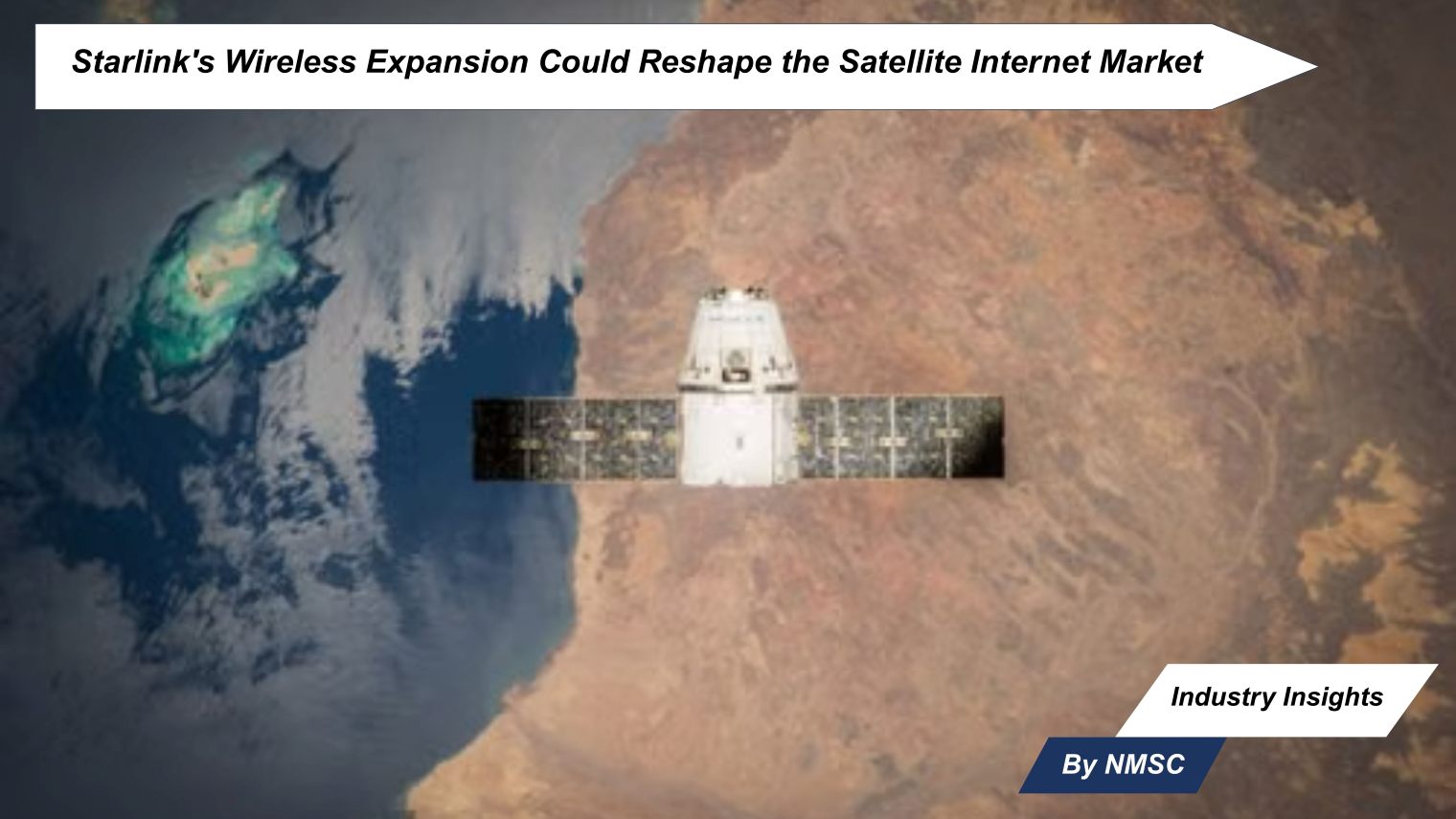
SpaceX Spectrum Deal Sparks Global Telecom Selloff, Fuels Satellite Internet Competition Debate
BENGALURU, India — October 13, 2026 — Telecom stocks across Australia and New Zealand tumbled on Monday as SpaceX's acquisition of a nationwide low-band spectrum portfolio in the United States intensified investor concerns that satellite-based connectivity could mount a credible challenge to legacy wireless carriers worldwide, adding fresh momentum to the rapidly expanding Satellite Internet Market. According to Next Move Strategy Consulting, the global satellite internet market is projected to reach USD 23.46 billion by 2030, growing at a CAGR of 21.8% from 2024 to 2030.
Australia's largest telecom operator, Telstra, shed 2.5% to close at a six-week low, while third-ranked TPG Telecom lost nearly 5% its worst single-day decline since early June. New Zealand's Spark also slipped 1.8%, as the ripple effects of SpaceX's U.S. spectrum deal extended well beyond North American markets.
SpaceX last week struck a deal to acquire a nationwide low-band spectrum portfolio, moving Elon Musk's satellite venture closer to mounting a direct, orbital challenge to legacy wireless giants across the United States. Low-band spectrum, which can travel longer distances and penetrate buildings more effectively than higher-frequency airwaves, is considered a critical asset for broad-area mobile coverage a capability that has historically been the exclusive domain of terrestrial carriers.
The market reaction underscored how investor sentiment has shifted from viewing SpaceX's mobile ambitions as a U.S.-centric concern to a potential global structural threat. Australia's mobile market is dominated by Telstra, Singapore Telecommunications-owned Optus, and TPG Telecom, with Superloop and Aussie Broadband competing at the fringes. Superloop shed 2.4% and Aussie Broadband lost nearly 2% on the day.
Key Highlights:
-
Global selloff: Telecom stocks in Australia and New Zealand declined sharply Telstra at a six-week low, TPG Telecom posting its worst session since early June following SpaceX's U.S. spectrum acquisition.
-
Coverage advantage eroding: Investors fear the United States is only the first market where satellite connectivity could undermine the coverage superiority that legacy carriers have long relied upon as their primary competitive moat.
-
Spectrum's dual significance: Citi analysts noted that while SpaceX's spectrum purchase is likely to weigh on Telstra's share price, it simultaneously reinforces the strategic importance of holding terrestrial spectrum a point that could benefit incumbents with diversified spectrum portfolios.
-
Near-term vs. long-term risk: Analysts distinguish between immediate pricing pressure in regional markets and the longer-term structural risk to subscriber bases, suggesting the competitive threat is real but may take years to fully materialize.
Analyst Insight:
According to analysts at Next Move Strategy Consulting, SpaceX's spectrum acquisition represents a pivotal inflection point for the satellite internet sector. The deal signals that satellite broadband is no longer confined to rural or underserved connectivity it is increasingly positioned as a mainstream alternative to terrestrial mobile networks, with implications for incumbents across both developed and emerging markets.
NMSC analysts note that the global satellite internet market's projected CAGR of 21.8% through 2030 reflects structural tailwinds that predate SpaceX's mobile ambitions. However, the integration of low-band terrestrial spectrum into a hybrid satellite-ground architecture could meaningfully accelerate adoption timelines, particularly in markets where coverage gaps have historically limited satellite internet's competitive reach. The near-term risk to legacy carriers is concentrated in regional pricing power, but the long-term trajectory points toward a more fundamental realignment of the global connectivity landscape.
Industry Outlook:
The market reaction across Australia and New Zealand illustrates that the competitive implications of SpaceX's spectrum strategy are no longer a U.S.-specific concern. David Tuckwell, CIO at ETF Shares in Sydney, stated that "investors fear the U.S. is just the first market, and that incumbents' biggest advantage, coverage, is losing its value," adding that coverage-reliant operators such as Telstra are among the most exposed.
Citi, however, maintained a "buy" rating on Telstra, citing upside to the company's 2027 financial earnings guidance and noting that terrestrial spectrum holdings retain strategic value even in a satellite-competitive environment. The SpaceX spectrum deal remains subject to regulatory approval by the U.S. Federal Communications Commission, and its commercial and competitive outcomes will depend on the pace of network buildout, regulatory decisions, and the response of established carriers. As the satellite internet sector advances toward a projected market size of USD 23.46 billion by 2030, the competitive boundaries between satellite and terrestrial connectivity are set to be tested with increasing intensity across global markets.
Source: Reuters
For More Information: Download FREE Sample on Satellite Internet Market Report
Prepared By: Sanyukta Deb
About the Author
 Sanyukta Deb
— Sanyukta Deb is Digital Marketing Team Lead at Next Move Strategy Consulting, where she has led content strategy and technical SEO for the firm's B2B market research publications for over 2 years. Her editorial process translates NextMSC's primary and secondary research — spanning technology, industrial, and consumer sectors — into commercial narratives, backed by search-intent, keyword, and competitive analysis. She brings 5 years of overall experience in digital marketing and content strategy.
Sanyukta Deb
— Sanyukta Deb is Digital Marketing Team Lead at Next Move Strategy Consulting, where she has led content strategy and technical SEO for the firm's B2B market research publications for over 2 years. Her editorial process translates NextMSC's primary and secondary research — spanning technology, industrial, and consumer sectors — into commercial narratives, backed by search-intent, keyword, and competitive analysis. She brings 5 years of overall experience in digital marketing and content strategy.
About the Reviewer
 Debashree Dey
— Debashree Dey is Assistant Manager at Next Move Strategy Consulting, where she supports cross-vertical market content and communications across diverse industries for 6 years. Her professional background includes senior content writing, communications, and published manuscript authorship, with experience developing audience-focused business narratives and maintaining clear, consistent messaging. Her role supports research-led content development and editorial quality across NextMSC publications.
Debashree Dey
— Debashree Dey is Assistant Manager at Next Move Strategy Consulting, where she supports cross-vertical market content and communications across diverse industries for 6 years. Her professional background includes senior content writing, communications, and published manuscript authorship, with experience developing audience-focused business narratives and maintaining clear, consistent messaging. Her role supports research-led content development and editorial quality across NextMSC publications.


















Add Comment