SpaceX Starlink V3 Satellites Reach Orbit on Starship Flight
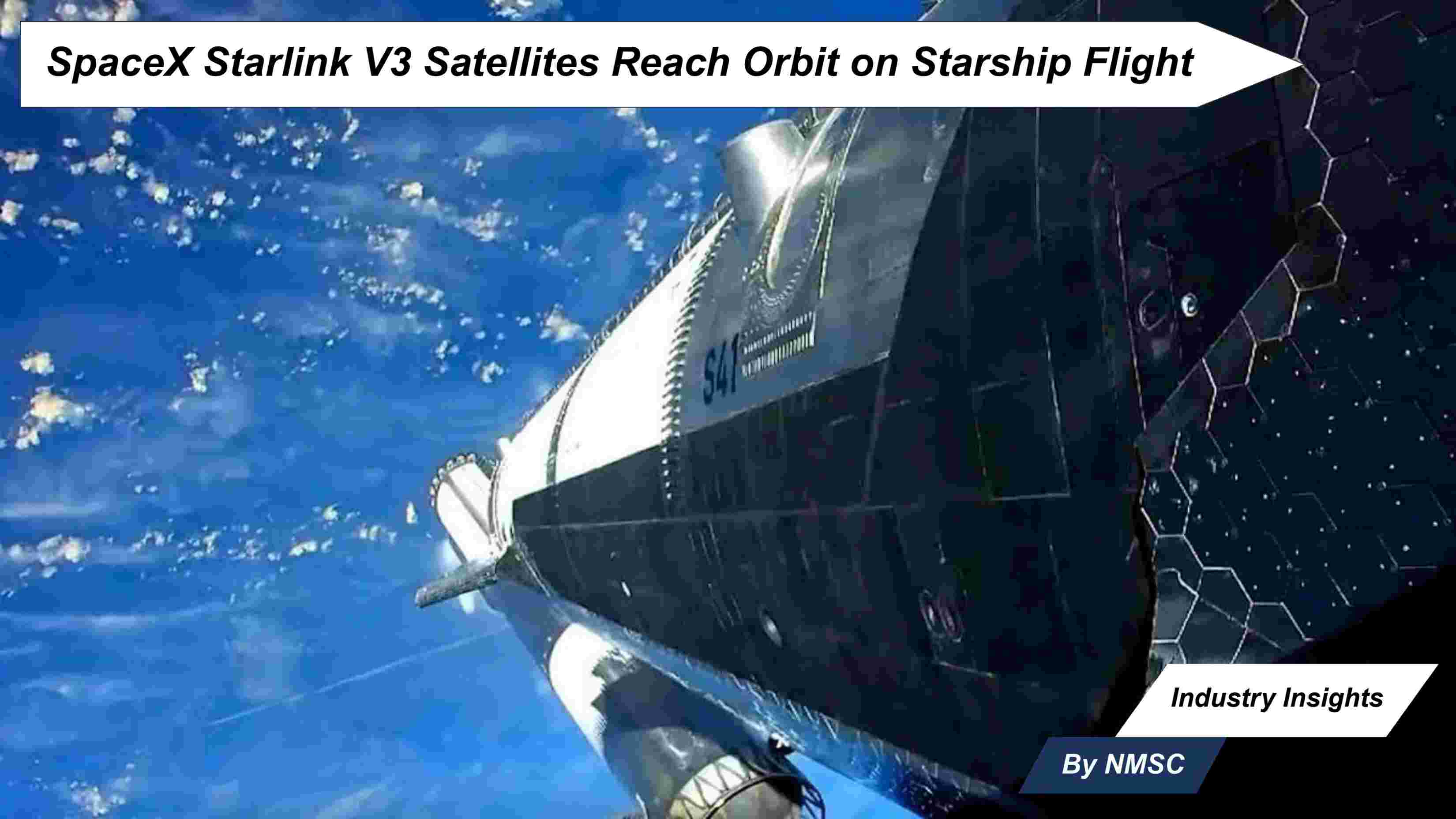
SpaceX Deploys 26 Starlink V3 Satellites in Starship's First-Ever Orbital Mission
BOCA CHICA, United States September 28, 2026, SpaceX successfully launched its Starship-Super Heavy rocket to orbit for the first time in program history on Monday, deploying 26 third-generation Starlink internet satellites into low Earth orbit in a mission that marks a defining inflection point for the LEO Satellite Market. The milestone flight, designated Starlink 31-1 and the 14th integrated Starship-Super Heavy launch, signals a significant expansion in commercial satellite deployment capacity at a time when the global LEO satellite market is projected to reach USD 25.5 billion by 2030, growing at a CAGR of 16.3% from 2024 to 2030, according to Next Move Strategy Consulting.
The 124-meter-tall Starship-Super Heavy lifted off at 8:49 a.m. EDT from SpaceX's Starbase facility on the Texas Gulf Coast, generating approximately 16 million pounds of thrust from its 33 methane-burning Raptor engines twice the thrust of NASA's Space Launch System. Despite an early engine shutdown during ascent, SpaceX's flight control team assessed the vehicle as healthy and proceeded with an orbital insertion burn, placing the Starship upper stage into a 180-mile-high orbit.
Approximately 34 minutes after liftoff, the Starship deployed all 26 Starlink Version 3 satellites each carrying 10 times the communications capacity of the previous generation in a roughly 30-minute deployment sequence. With the satellites safely on their way, mission managers opted to conclude the flight ahead of schedule, executing a controlled Pacific Ocean splashdown north of Hawaii at 11:57 a.m. EDT, approximately three hours after launch.
NASA Administrator Jared Isaacman publicly congratulated SpaceX following the mission, stating the agency is "excited to help where we can and for Starship missions to become routine." The successful orbital flight is considered a critical step toward validating Starship for NASA's Artemis IV crewed moon landing, currently targeted for 2028, which will require multiple Super Heavy-Starship tanker flights to refuel the lunar lander variant in orbit.
Key Highlights:
-
Historic orbital milestone: Starship-Super Heavy completed its first full orbital flight after 13 prior suborbital test missions, deploying 26 Starlink V3 satellites into a 180-mile-high LEO orbit.
-
Next-generation capacity: Each Starlink V3 satellite carries 10 times the communications throughput of the prior generation, substantially increasing broadband delivery potential per launch.
-
Scalable deployment architecture: SpaceX has indicated future Starship missions could carry up to 60 Starlink V3 satellites per flight, dramatically increasing constellation build-out velocity.
-
Dual strategic value: The mission simultaneously advances SpaceX's commercial Starlink constellation and validates Starship as a launch vehicle for NASA's Artemis lunar program, with additional launch pads under construction in Florida.
Analyst Insight:
According to analysts at Next Move Strategy Consulting, the successful orbital deployment of Starlink V3 satellites aboard Starship represents a structural shift in LEO constellation economics. The ability to deploy next-generation, high-capacity satellites at scale with per-launch payload potential of up to 60 units could materially compress the timeline for global broadband coverage and accelerate subscriber growth across underserved markets. NMSC analysts note that as launch costs decline and satellite throughput increases, the competitive dynamics of the LEO satellite market are likely to intensify, drawing further investment from both commercial operators and government-backed programs across North America and Asia-Pacific.
Industry Outlook:
Monday's mission establishes Starship as an operational commercial launch vehicle for the first time, with direct implications for the pace of LEO constellation deployment globally. As SpaceX prepares additional launch infrastructure in Florida and scales its Starship production cadence, the frequency and volume of LEO satellite deployments are expected to increase substantially. For the broader LEO satellite industry spanning communications, Earth observation, navigation, and defense applications the demonstrated reliability of a high-capacity, reusable heavy-lift vehicle introduces a new benchmark for mission planning and constellation economics. The trajectory of the market, already on course toward USD 25.5 billion by 2030 per Next Move Strategy Consulting, may see further upward pressure as operational confidence in next-generation launch systems grows.
Source: Spaceflight Now
For More Information: Download FREE Sample on LEO Satellite Market Report
Prepared By: Sanyukta Deb
About the Author
 Sanyukta Deb
— Sanyukta Deb is Digital Marketing Team Lead at Next Move Strategy Consulting, where she has led content strategy and technical SEO for the firm's B2B market research publications for over 2 years. Her editorial process translates NextMSC's primary and secondary research — spanning technology, industrial, and consumer sectors — into commercial narratives, backed by search-intent, keyword, and competitive analysis. She brings 5 years of overall experience in digital marketing and content strategy.
Sanyukta Deb
— Sanyukta Deb is Digital Marketing Team Lead at Next Move Strategy Consulting, where she has led content strategy and technical SEO for the firm's B2B market research publications for over 2 years. Her editorial process translates NextMSC's primary and secondary research — spanning technology, industrial, and consumer sectors — into commercial narratives, backed by search-intent, keyword, and competitive analysis. She brings 5 years of overall experience in digital marketing and content strategy.
About the Reviewer
 Debashree Dey
— Debashree Dey is Assistant Manager at Next Move Strategy Consulting, where she supports cross-vertical market content and communications across diverse industries for 6 years. Her professional background includes senior content writing, communications, and published manuscript authorship, with experience developing audience-focused business narratives and maintaining clear, consistent messaging. Her role supports research-led content development and editorial quality across NextMSC publications.
Debashree Dey
— Debashree Dey is Assistant Manager at Next Move Strategy Consulting, where she supports cross-vertical market content and communications across diverse industries for 6 years. Her professional background includes senior content writing, communications, and published manuscript authorship, with experience developing audience-focused business narratives and maintaining clear, consistent messaging. Her role supports research-led content development and editorial quality across NextMSC publications.

















Add Comment