FCC Spectrum Overhaul Signals New Turning Point for LEO Satellite Market

FCC's Sevenfold Spectrum Overhaul and the G7 Science Alarm: The LEO Satellite Market Reaches Its Regulatory Crossroads
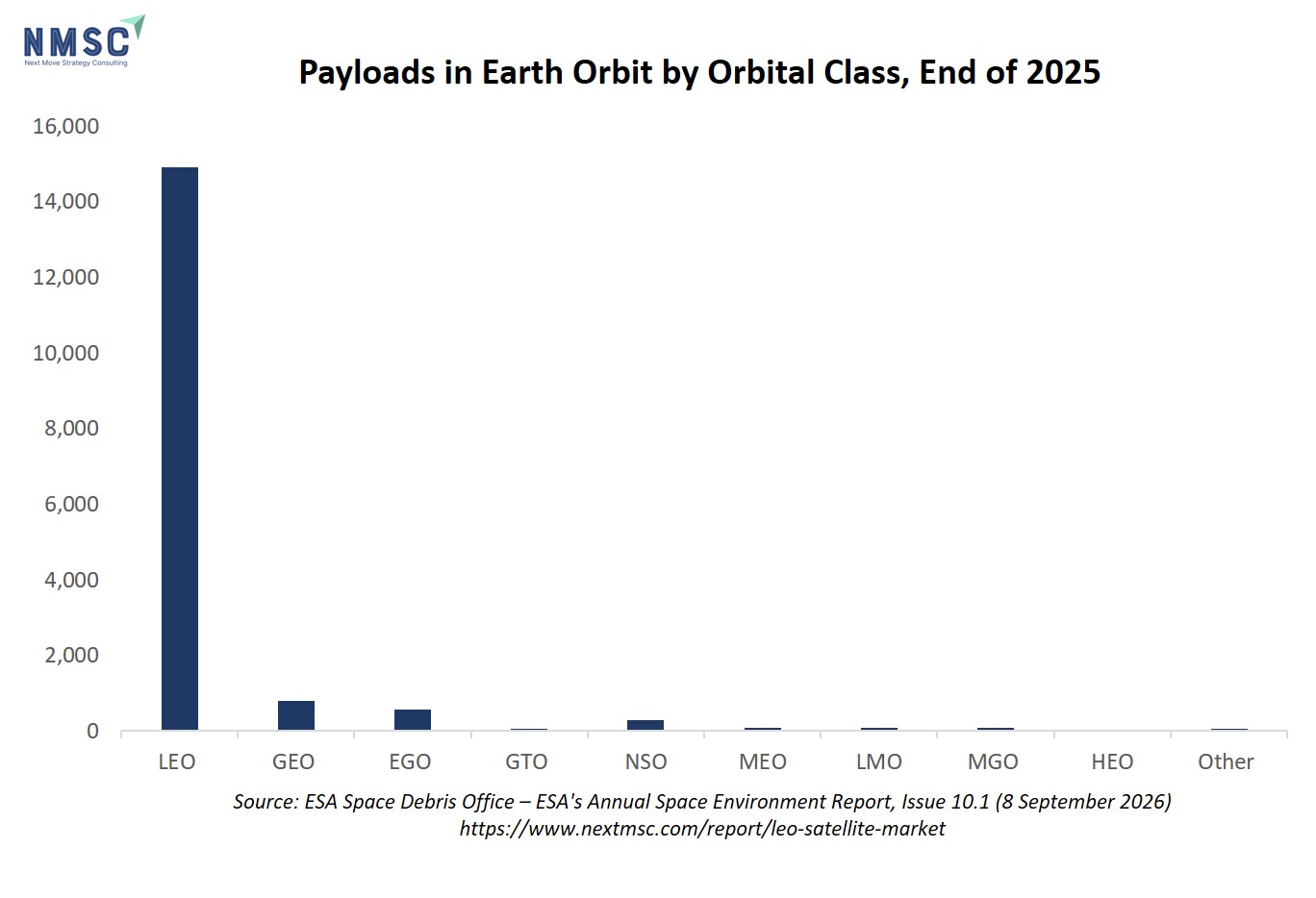
On April 30, 2026, the United States Federal Communications Commission voted unanimously to rewrite the spectrum-sharing rules that govern low Earth orbit satellite broadband — a decision that FCC Chairman Brendan Carr said could multiply the connection capacity of LEO satellite networks by as much as seven times. The ruling, which permits LEO operators to transmit at higher power levels across the 10.7–12.7 GHz, 17.3–18.6 GHz, and 19.7–20.2 GHz frequency bands, dismantles decades-old interference protections that had been designed for a geostationary satellite era and had never been updated to reflect the dense, mobile constellations now dominating low orbit. The ruling arrives at a moment of acute commercial and scientific tension: the same orbital environment that regulators are opening for higher-power broadband now hosts nearly 18,000 active satellites — a figure that has grown more than 17-fold since 2010 — and the G7 nations' combined science academies have formally warned that unchecked proliferation threatens both astronomical observation and atmospheric integrity.
According to Next Move Strategy Consulting's Low Earth Orbit (LEO) Satellites Market report, the global LEO satellite market is projected to reach USD 25.5 billion by 2030, growing at a CAGR of 16.3% from 2024 to 2030. NMSC's model — which applies bottom-up segment analysis across communications, Earth observation, positioning and navigation, and scientific development applications, weighted by regional investment trajectories and launch-cost deflation curves — places the market's compound growth firmly above the pace of most adjacent aerospace segments, reflecting the structural shift from geostationary to LEO-centric broadband infrastructure.
For More Information: Download FREE Sample on Low Earth Orbit (LEO) Satellites Market Report
The FCC Spectrum Ruling: What It Changes and Why It Matters Now
The April 30 order is not a marginal technical adjustment. For years, LEO operators including SpaceX's Starlink and Amazon's Leo constellation had been constrained by power limits originally calibrated to protect geostationary orbit (GEO) satellites — systems that occupy fixed points 35,786 km above the equator and whose interference geometry bears no resemblance to the dynamic, low-altitude passes of LEO constellations.
"The existing decades-old rules no longer reflect today's offerings. In fact, they're holding them back," FCC Chairman Brendan Carr stated at the agency's April 30 meeting. "Modern satellite designs make it far easier to share spectrum than what yesterday's regulations assume. We can do a lot better."
Dan Goldman, SpaceX's Vice President of Satellite Policy, publicly welcomed the decision, stating the ruling would deliver "more broadband for more people." Amazon, which is deploying its own LEO constellation under the Amazon Leo brand, also expressed support for the order.
FCC Commissioner Anna Gomez, while voting in favour, underscored that the new framework carries obligations: "Good faith negotiation is not optional. It is a fundamental principle that drives the sharing framework we adopt today, and we take it seriously." Commissioner Olivia Trusty added that the U.S. adoption of the rules would strengthen the country's position in pushing for equivalent reforms at the International Telecommunication Union (ITU), where global spectrum coordination for LEO constellations remains unresolved.
The FCC followed this ruling with a further modernisation order on July 22, 2026 — formally titled Space Modernization for the 21st Century (SB Docket No. 25-306, FCC 26-47) — which streamlined satellite and earth station licensing and opened additional spectrum for launch, reentry, and in-orbit activities.
Constellation Race Intensifies: Starlink Reconfigures, Amazon Leo Reaches Commercial Threshold
The regulatory shift is landing in the middle of the most competitive constellation build-out in the history of commercial space. As of August 2026, SpaceX's Starlink network comprised approximately 10,900 active satellites — more than 50% of all active satellites worldwide — and the company is responsible for the majority of the projected growth in LEO orbital density.
In a structural reconfiguration announced on January 1, 2026, SpaceX disclosed that it would lower the orbital altitude of its entire Starlink constellation from approximately 550 km to 480 km over the course of the year. Michael Nicolls, SpaceX's Vice President of Starlink Engineering, stated that the manoeuvre was designed to improve space safety by operating below the altitude band where debris objects and planned constellations are most concentrated. "Lowering the satellites results in condensing Starlink orbits, and will increase space safety in several ways," Nicolls wrote in a public statement, noting that "the number of debris objects and planned satellite constellations is significantly lower below 500 km, reducing the aggregate likelihood of collision."
Amazon's Leo constellation — formerly known as Project Kuiper — reached a commercial deployment milestone on July 2, 2026, when the company announced it had deployed sufficient satellites to launch broadband internet service commercially. With more than 390 production satellites in orbit as of mid-2026, Amazon Leo has become the third-largest constellation by satellite count, and the company has filed with the FCC to deploy up to 5,105 additional satellites that would extend data, messaging, and emergency services coverage.
S&P Global Market Intelligence, in a September 15, 2026 research report authored by Tomás Sarmiento and John Fletcher, projected that across the eight leading LEO satellite operators, the total active constellation count will grow nearly fourfold — from 10,859 satellites as of March 2026 to an eventual 51,699 — assuming launches proceed according to current plans.
Leading LEO Satellite Operators: Active Satellites and Planned Constellation Size
|
Operator |
Active Satellites (March 2026) |
Planned Constellation Size |
Primary Application |
|
SpaceX Starlink |
~10,900 |
42,000+ |
Broadband Internet / D2D |
|
Amazon Leo |
~390 |
3,232 (Phase 1) + 5,105 (filed) |
Broadband Internet |
|
OneWeb (Eutelsat) |
~648 |
648 (Phase 1) |
Broadband / Backhaul |
|
Planet Labs |
~200+ |
~200 |
Earth Observation |
|
Other Operators |
~8,721 |
Varies |
Mixed |
|
Total (8 leading operators) |
~10,859 |
~51,699 (projected) |
— |
The G7 Science Alarm: Orbital Congestion and Atmospheric Risk
The commercial acceleration is generating a proportionate scientific and institutional response. In June 2026, the S7 — the combined national science academies of all seven G7 nations (the United States, the United Kingdom, Germany, France, Italy, Japan, and Canada) — published a formal report titled "Large Satellite Constellations: Perspectives and Challenges," which documented the measurable interference that LEO satellites are causing to optical and radio astronomy, and raised concerns about the atmospheric consequences of mass satellite reentry.
The S7 report noted that the total number of objects in orbit — operational and non-operational — had reached 29,181 as of mid-2026, with the total expected to exceed 100,000 within the next decade. The Vera C. Rubin Observatory in Chile — one of the world's largest optical telescopes and the host of the 10-year Legacy Survey of Space and Time — has formally documented that LEO satellites appear as bright streaks in its imaging data, rendering underlying astronomical sources undetectable during affected observation windows.
A 2022 U.S. Government Accountability Office (GAO) report to Congress had previously flagged that increased rocket launches and satellite reentries could elevate concentrations of black carbon, alumina, nitrogen oxides, and chlorine in the upper atmosphere — substances that may contribute to ozone depletion and atmospheric warming — and that rocket launch frequency could increase as much as threefold in the coming years.
Starlink has responded with documented mitigation measures. Its second-generation V2 and V2mini satellites employ darker, less reflective materials that reduce observed brightness by a factor of ten compared to first-generation hardware, and the company operates a "terminator tracking" manoeuvre that minimises satellite visibility from the ground. In 2023, SpaceX and the U.S. National Science Foundation signed a coordination agreement to protect specific radio astronomy frequencies, including commitments beyond the internationally mandated protections for the 10.6–10.7 GHz band.
GSMA Regulatory Playbook: A Global Framework for Satellite Governance
On June 24, 2026, the GSMA — the global organisation representing mobile network operators — published its Satellite Regulatory Playbook, a structured guide for national policymakers seeking to build technology-neutral regulatory frameworks for LEO and direct-to-device (D2D) satellite services.
"As satellite connectivity becomes an increasingly important part of the global communications landscape, policymakers have an opportunity to create regulatory frameworks that are fit for the future," said Michaela Angonius, Head of Policy & Regulation at the GSMA. "The Satellite Regulatory Playbook gives policymakers practical guidance to create frameworks that protect people, ensure law enforcement can always do their job, attract investment into the whole communications sector and keep pace with innovation."
The Playbook, developed in collaboration with Access Partnership, identifies eight regulatory pillars: local establishment rules, national security, consumer protection and operational measures, infrastructure and facility requirements, end-user terminal deployment, fiscal considerations, emergency services and public safety, and enforcement. Its publication is particularly significant for emerging markets, where existing regulatory frameworks often leave gaps for satellite broadband and D2D services delivered without mobile operator partnerships — precisely the service model that Starlink and Amazon Leo are deploying at scale.
The ITU, for its part, published a dedicated report in 2026 examining satellite telecommunications policy practices across Brazil, Indonesia, Kenya, Nigeria, and Saudi Arabia, reflecting the growing urgency of harmonising LEO governance across jurisdictions where terrestrial broadband infrastructure remains underdeveloped.
Orbital Data Centers: The Next Frontier for LEO Infrastructure
A September 28, 2026 policy report by the Information Technology and Innovation Foundation (ITIF), authored by Ellis Scherer and Elizabeth Sanchez, identified orbital data centers — satellites equipped with onboard computing and storage for AI and data-processing workloads — as an emerging application class that could expand the LEO market's addressable revenue beyond communications and Earth observation.
The U.S. Government Accountability Office's April 2026 Science & Tech Spotlight described space-based data centers as "satellites that would house data processing and storage systems for AI and other computing needs," with the potential to reduce the land, electricity, and water demands of terrestrial data centre infrastructure. Google's Project Suncatcher is examining the feasibility of scaling machine-learning compute in space using solar-powered satellite constellations and free-space optical communications links, while Thales Alenia Space's ASCEND project has completed a formal feasibility study on space-based data centres.
The ITIF report cautioned that orbital data centers face substantial engineering constraints — thermal management in the vacuum of space, radiation exposure, limited servicing access, and cybersecurity vulnerabilities spanning spacecraft, communications links, and ground infrastructure — and recommended that policymakers streamline spectrum access and satellite licensing rather than mandate specific technical architectures.
North America holds the dominant share of the LEO satellite market, anchored by the presence of SpaceX, Amazon Leo, Lockheed Martin, Northrop Grumman, and L3Harris Technologies, as well as sustained U.S. government investment in space programmes. According to NASA's published budget data, the United States spent USD 24.9 billion on space research and exploration in 2022, up from USD 23.3 billion in 2021, with defence and navigation satellite programmes representing a significant portion of that expenditure.
Asia-Pacific is the fastest-growing regional segment, driven by China's expanding military and commercial satellite programmes, India's growing space agency investment, and Japan's participation in international constellation partnerships. The International Telecommunication Union reported that over 5.3 billion people worldwide were using the internet as of 2022, with the largest unserved populations concentrated in Asia, Africa, and Latin America — precisely the markets that LEO broadband is structurally positioned to address.
NMSC Strategic Perspective: The Regulatory Inflection Point and Its Market Implications
Next Move Strategy Consulting's analysis identifies the current period as the most consequential regulatory inflection point in the LEO satellite market's commercial history. The FCC's April 30, 2026 spectrum order does not merely improve throughput for existing operators — it structurally alters the competitive economics of LEO broadband by allowing operators to serve more users per satellite pass at higher data rates, which directly compresses the per-subscriber cost curve and accelerates the timeline to profitability for constellations that have been capital-intensive but revenue-constrained.
NMSC's proprietary research and analysis indicates that the communications segment — encompassing broadband internet, IoT/M2M connectivity, mobile backhaul, and aviation and maritime connectivity — will remain the dominant revenue driver through 2030, consistent with the market's projected trajectory from USD 8.9 billion in 2023 to USD 25.5 billion by 2030 at a 16.3% CAGR. The FCC's spectrum liberalisation, combined with Amazon Leo's commercial launch and Starlink's constellation reconfiguration to 480 km altitude, means that the addressable broadband market for LEO operators in North America and Europe is materially larger in the second half of 2026 than it was at the start of the year.
However, NMSC's analysis also flags that the market's growth trajectory carries two structural risks that investors and operators must price into their planning horizons. First, the G7 science academies' June 2026 report and the growing institutional opposition to orbital congestion — including formal objections from the Vera C. Rubin Observatory and the U.S. GAO's documented concerns about atmospheric chemistry — represent a credible regulatory headwind. If the ITU or national regulators in key markets respond to scientific pressure by imposing constellation size caps or mandatory deorbit timelines, the capital expenditure assumptions underpinning current constellation business plans would require material revision.
Second, the emergence of orbital data centers as a new application class — validated by the GAO's April 2026 spotlight, Google's Project Suncatcher, and Thales Alenia Space's ASCEND feasibility study — represents an upside scenario that NMSC's current forecast does not fully capture. If orbital computing clears its thermal management and radiation-hardening constraints within the forecast period, the Earth observation and scientific development segments could see accelerated revenue growth as in-orbit processing reduces downlink bandwidth demands and enables new real-time analytics services.
The GSMA's Satellite Regulatory Playbook, published June 24, 2026, is a constructive development for market expansion in emerging economies, where the absence of clear regulatory frameworks has historically delayed LEO operator market entry. NMSC's regional analysis indicates that Asia-Pacific and the Rest of World segments — which currently represent a smaller share of the global market than North America — carry the highest incremental growth potential through 2030, contingent on regulatory harmonisation along the lines the GSMA Playbook recommends.
Bottom Line
The LEO satellite market is navigating a simultaneous acceleration on two fronts: commercial and regulatory. The FCC's unanimous April 30, 2026 spectrum overhaul — which permits LEO operators to transmit at higher power across three key frequency bands, potentially multiplying broadband capacity sevenfold — removes the single most significant technical constraint on LEO broadband throughput and directly benefits the two largest constellation operators, SpaceX Starlink and Amazon Leo. Amazon Leo's July 2026 commercial deployment milestone and Starlink's orbital reconfiguration to 480 km altitude further signal that the market is transitioning from infrastructure build-out to revenue generation. Against this backdrop, NMSC's proprietary research projects the global LEO satellite market will grow from USD 8.9 billion in 2023 to USD 25.5 billion by 2030 at a 16.3% CAGR. The principal risk to this trajectory is the mounting institutional opposition to orbital congestion — formalised by the G7 science academies in June 2026 — which, if it translates into binding ITU or national regulatory constraints, could slow constellation expansion timelines. The GSMA's Satellite Regulatory Playbook and the ITIF's orbital data center policy recommendations both point toward a regulatory environment that is actively adapting to LEO's commercial scale, but the pace of that adaptation will determine whether the market's upper-bound growth scenario is realised within the current forecast window.
About Next Move Strategy Consulting
Next Move Strategy Consulting is a premier market research and management consulting firm that has been committed to provide strategically analysed well documented latest research reports to its clients. The research industry is flooded with many firms to choose from, what makes NMSC different from the rest is its top-quality research and the obsession of turning data into knowledge by dissecting every bit of it and providing fact-based research recommendation that is supported by information collected from over 500 million websites, paid databases, industry journals and one on one consultations with industry experts across a diverse range of industry sectors. The high-quality customized research reports with actionable insights and excellent end-to-end customer service help our clients to take critical business decisions that enables them to move beyond time and have competitive edge in the industry.
We have been servicing over 1000 customers globally that includes 90% of the Fortune 500 companies over a decade. Our analysts are constantly tracking various high growth markets and identifying hidden opportunities in each sector or the industry. We provide one of the industry's best quality syndicate as well as custom research reports across 10 different industry verticals. We are committed to deliver high quality research solutions in accordance to your business needs. Our industry standard delivery solutions that ranges from the pre consultation to after-sales services, provide an excellent client experience and ensure right strategic decision making for businesses.
For more information, please contact:
Next Move Strategy Consulting
5th Floor 867 Boylston St, STE 500,
Boston, MA 02116, U.S.
E-Mail: [email protected]
Direct: +1-217-650-7991
Website: www.nextmsc.com
About the Author
 Sanyukta Deb
— Sanyukta Deb is Digital Marketing Team Lead at Next Move Strategy Consulting, where she has led content strategy and technical SEO for the firm's B2B market research publications for over 2 years. Her editorial process translates NextMSC's primary and secondary research — spanning technology, industrial, and consumer sectors — into commercial narratives, backed by search-intent, keyword, and competitive analysis. She brings 5 years of overall experience in digital marketing and content strategy.
Sanyukta Deb
— Sanyukta Deb is Digital Marketing Team Lead at Next Move Strategy Consulting, where she has led content strategy and technical SEO for the firm's B2B market research publications for over 2 years. Her editorial process translates NextMSC's primary and secondary research — spanning technology, industrial, and consumer sectors — into commercial narratives, backed by search-intent, keyword, and competitive analysis. She brings 5 years of overall experience in digital marketing and content strategy.
About the Reviewer
 Debashree Dey
— Debashree Dey is Assistant Manager at Next Move Strategy Consulting, where she supports cross-vertical market content and communications across diverse industries for 6 years. Her professional background includes senior content writing, communications, and published manuscript authorship, with experience developing audience-focused business narratives and maintaining clear, consistent messaging. Her role supports research-led content development and editorial quality across NextMSC publications.
Debashree Dey
— Debashree Dey is Assistant Manager at Next Move Strategy Consulting, where she supports cross-vertical market content and communications across diverse industries for 6 years. Her professional background includes senior content writing, communications, and published manuscript authorship, with experience developing audience-focused business narratives and maintaining clear, consistent messaging. Her role supports research-led content development and editorial quality across NextMSC publications.

















Add Comment