Travel Insurance Market Faces Conflict Exclusions
Industry Insights from Next Move Strategy Consulting
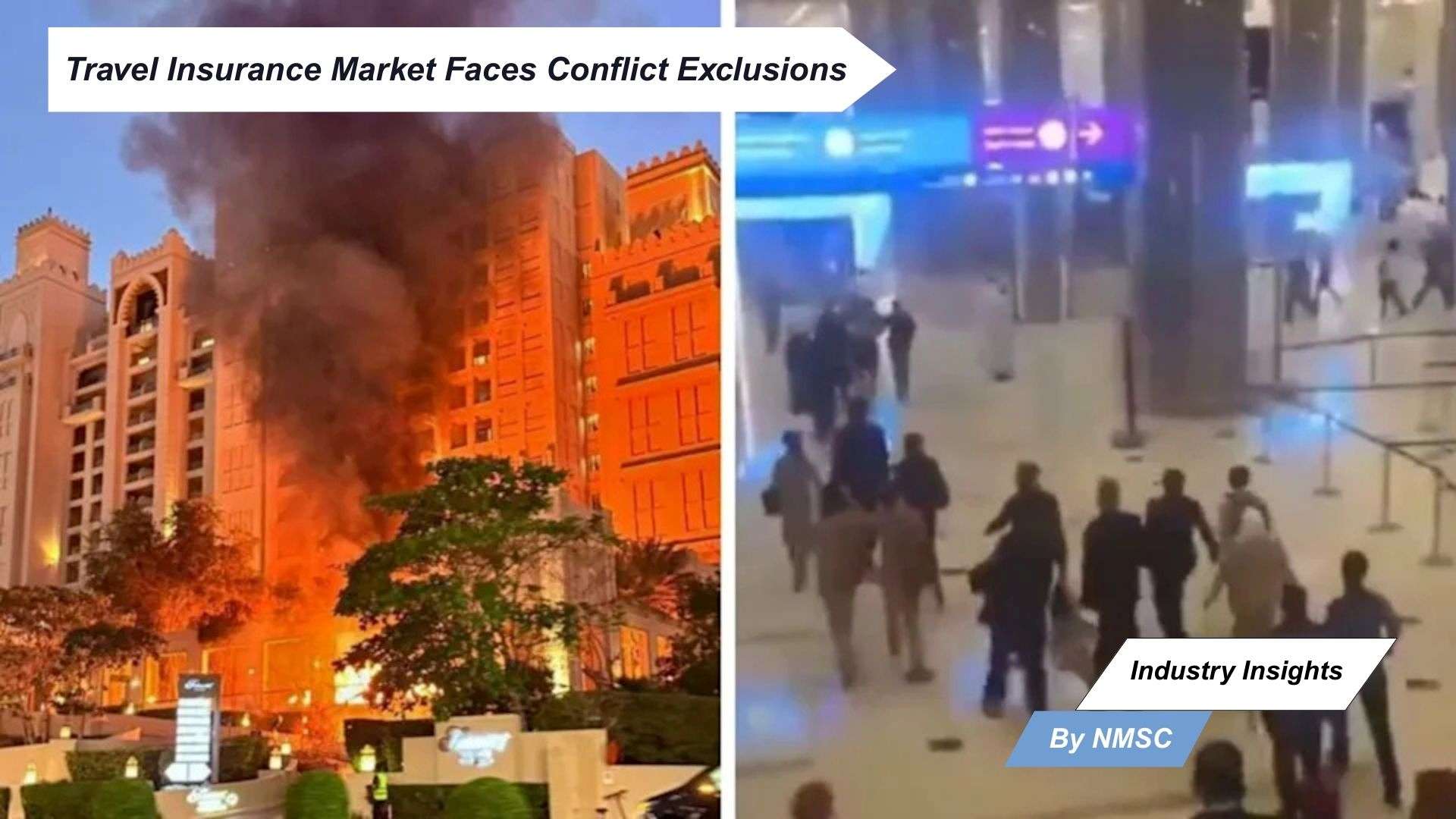
Rising geopolitical tensions in the Middle East are reshaping the global travel insurance landscape, as insurers reinforce exclusions linked to war and conflict-related events. Recent developments highlight how travelers may face limited protection when disruptions stem from escalating regional instability, bringing renewed scrutiny to policy terms and coverage boundaries.
As international travel rebounds, many policyholders are discovering that standard travel insurance products often exclude claims connected to acts of war, civil unrest, or government advisories. This evolving risk environment is prompting both consumers and insurers to reassess expectations around coverage scope and financial protection.
Growing Awareness of Policy Limitations
Industry observers note that while travel insurance policies typically cover trip cancellations, medical emergencies, and lost belongings, exclusions tied to armed conflict are common. Travelers heading to or transiting through affected regions may find that claims related to flight disruptions, safety concerns, or evacuation scenarios are not automatically covered.
These exclusions can significantly impact travelers who booked trips before conflict escalations occurred. In many cases, coverage depends on when the policy was purchased relative to official travel warnings or the formal recognition of hostilities.
Key Coverage Considerations
-
War and Conflict Exclusions: Many standard policies exclude claims arising directly or indirectly from acts of war.
-
Government Travel Advisories: Coverage may be limited if authorities issue “do not travel” warnings after policy purchase.
-
Timing of Purchase: Eligibility for certain claims can hinge on whether insurance was secured prior to conflict escalation.
-
Evacuation and Medical Claims: Not all policies extend to emergency evacuation in conflict zones.
For travelers, these conditions underscore the importance of carefully reviewing policy documents before departure, particularly during periods of geopolitical uncertainty.
Market Response and Consumer Implications
The renewed focus on exclusions is driving demand for greater transparency across the travel insurance market. Insurers are being encouraged to clearly communicate coverage limitations, while travelers are urged to assess risk exposure when planning international trips.
This development also reflects a broader shift within the insurance sector, where geopolitical volatility is increasingly factored into underwriting and product design. As regional tensions persist, policy structures may continue to evolve to balance affordability with risk mitigation.
According to Next Move Strategy Consulting
According to Next Move Strategy Consulting, heightened geopolitical instability is expected to influence purchasing behavior within the travel insurance market. Consumers are likely to prioritize comprehensive policy reviews and seek specialized coverage options, while insurers may adopt stricter underwriting standards and clearer disclosure practices. This dynamic could reshape competitive positioning and product differentiation strategies across the sector.
Navigating an Uncertain Travel Environment
As global mobility intersects with rising geopolitical risk, the travel insurance market faces mounting pressure to clarify the boundaries of protection. For travelers and insurers alike, understanding the implications of conflict-related exclusions has become an essential component of responsible trip planning and risk management.
Source: SBS
Prepared by: Next Move Strategy Consulting
About the Author
 Sanyukta Deb
— Sanyukta Deb is Digital Marketing Team Lead at Next Move Strategy Consulting, where she has led content strategy and technical SEO for the firm's B2B market research publications for over 2 years. Her editorial process translates NextMSC's primary and secondary research — spanning technology, industrial, and consumer sectors — into commercial narratives, backed by search-intent, keyword, and competitive analysis. She brings 5 years of overall experience in digital marketing and content strategy.
Sanyukta Deb
— Sanyukta Deb is Digital Marketing Team Lead at Next Move Strategy Consulting, where she has led content strategy and technical SEO for the firm's B2B market research publications for over 2 years. Her editorial process translates NextMSC's primary and secondary research — spanning technology, industrial, and consumer sectors — into commercial narratives, backed by search-intent, keyword, and competitive analysis. She brings 5 years of overall experience in digital marketing and content strategy.
About the Reviewer
 Debashree Dey
— Debashree Dey is Assistant Manager at Next Move Strategy Consulting, where she supports cross-vertical market content and communications across diverse industries for 6 years. Her professional background includes senior content writing, communications, and published manuscript authorship, with experience developing audience-focused business narratives and maintaining clear, consistent messaging. Her role supports research-led content development and editorial quality across NextMSC publications.
Debashree Dey
— Debashree Dey is Assistant Manager at Next Move Strategy Consulting, where she supports cross-vertical market content and communications across diverse industries for 6 years. Her professional background includes senior content writing, communications, and published manuscript authorship, with experience developing audience-focused business narratives and maintaining clear, consistent messaging. Her role supports research-led content development and editorial quality across NextMSC publications.


















Add Comment