Uber, Nissan, and Wayve Collaboration Accelerates the Robotaxi Market
Industry Insights from Next Move Strategy Consulting
As autonomous mobility continues to gain traction across global transportation ecosystems, the strategic collaboration between Uber, Nissan Motor Co., Ltd., and Wayve marks an important development in the evolving Robotaxi Market. The companies have announced plans to work together on deploying autonomous ride-hailing services, with a pilot program expected to begin in Tokyo by late 2026.
The initiative combines Wayve’s artificial intelligence–driven autonomous driving technology with Nissan’s electric vehicles and Uber’s global ride-hailing platform. By integrating these capabilities, the partnership aims to introduce robotaxi services that can be accessed through the Uber application, offering passengers a new model for urban transportation.
A Strategic Partnership Driving Autonomous Mobility
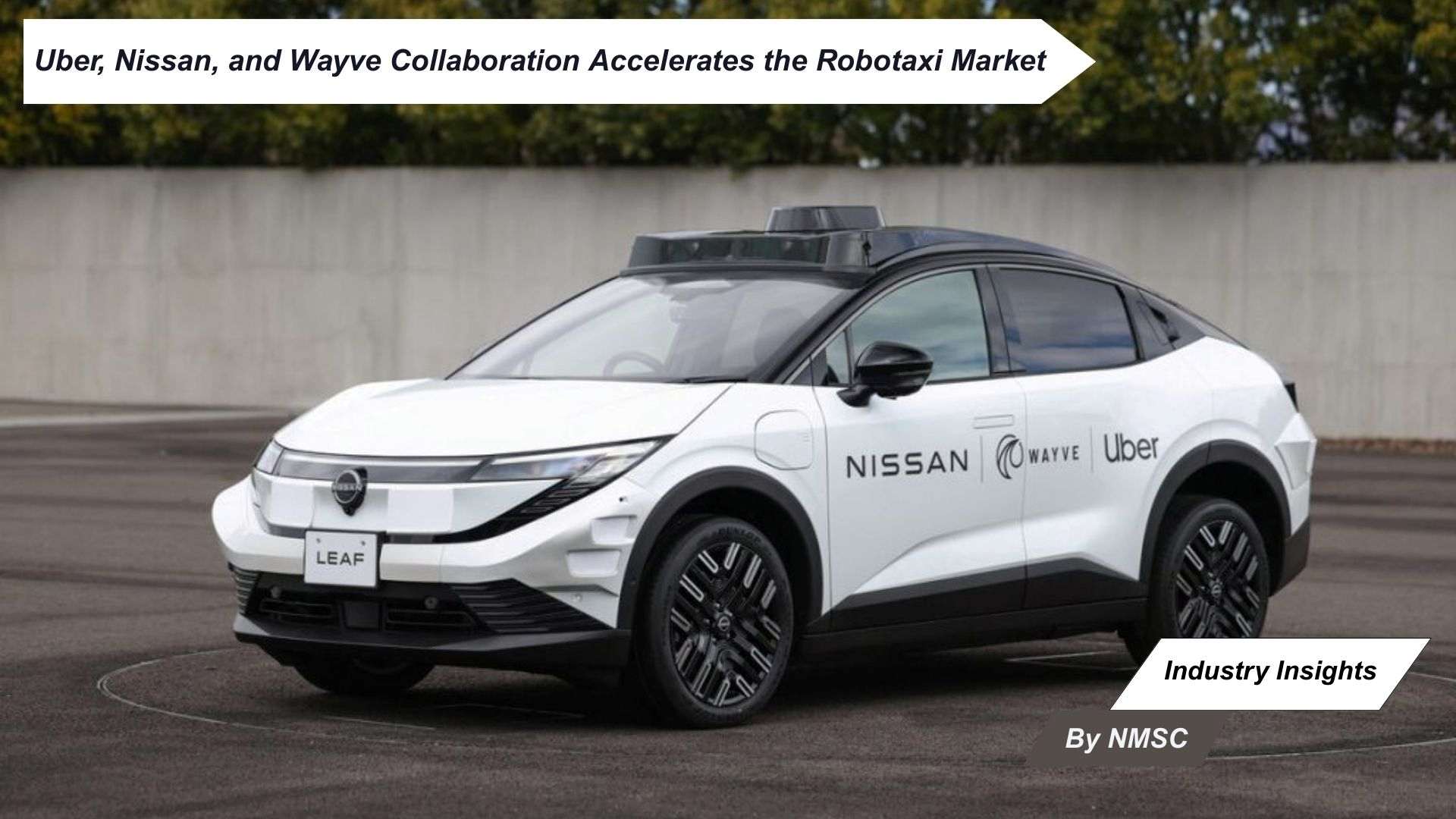
The collaboration represents Uber’s first autonomous vehicle partnership in Japan and reflects a broader effort to accelerate the deployment of self-driving mobility services in major global cities. Under the agreement, the robotaxi fleet will initially consist of Nissan Leaf electric vehicles equipped with Wayve’s AI-based autonomous driving system and connected to Uber’s ride-hailing network.
The vehicles will operate on the Uber platform, allowing riders to request autonomous rides through the same interface used for conventional ride-hailing services. During the initial phase of the deployment, each vehicle will include a trained safety operator to support early operations and ensure safe integration into real-world traffic conditions.
To facilitate the rollout, Uber plans to launch the service through a licensed taxi partner in Japan while working closely with local authorities to secure the necessary approvals and operational frameworks.
AI-Driven Technology Enabling Scalable Deployment
A core component of the partnership is Wayve’s autonomous driving platform, known as the AI Driver. The system is designed to learn from real-world driving data and adapt to new road environments without relying on high-definition maps. This approach allows autonomous vehicles to operate across different cities and road networks while continuously improving through data-driven learning.
The companies have been preparing for this deployment through ongoing testing activities. Wayve has been evaluating its technology in Japan since early 2025 to better understand the country’s complex road environments and traffic conditions.
Tokyo’s dense traffic patterns, intricate road layouts, and strict safety requirements make it one of the most challenging urban environments for autonomous driving. Successfully operating in such a setting could provide valuable insights for scaling robotaxi services globally.
Expanding the Global Robotaxi Ecosystem
The Tokyo pilot is part of a broader plan to introduce robotaxi services across more than ten cities worldwide. Future deployments under the collaboration are expected to include markets such as London, highlighting the partners’ ambition to establish a global autonomous mobility network.
By combining Wayve’s AI capabilities, Nissan’s vehicle manufacturing expertise, and Uber’s extensive ride-hailing platform, the partnership aims to create a scalable model for autonomous transportation that can be implemented in diverse urban environments.
The initiative also reflects a wider industry trend, where automotive manufacturers, AI technology developers, and mobility platforms increasingly collaborate to accelerate the commercialization of autonomous ride services.
According to Next Move Strategy Consulting
According to Next Move Strategy Consulting, initiatives such as the Uber–Nissan–Wayve collaboration are expected to significantly influence the robotaxi market by accelerating the integration of artificial intelligence, electric vehicles, and ride-hailing platforms. The deployment of pilot programs in complex urban environments like Tokyo could serve as a critical benchmark for large-scale commercialization of autonomous mobility.
As partnerships between automakers, technology developers, and mobility service providers continue to expand, the robotaxi ecosystem is likely to witness increased innovation, improved operational capabilities, and broader adoption across major global cities.
Source: Nova News
Prepared by: Next Move Strategy Consulting
About the Author
 Joydeep Dey
— Joydeep Dey is a content writer and analyst fueled by creativity, research, and continuous learning. He combines compelling storytelling with market insights to turn complex information into engaging, impactful content. Passionate about emerging trends, digital strategy, and innovation-driven communication, he believes curiosity and consistent growth are key to creating meaningful influence in every project.
Joydeep Dey
— Joydeep Dey is a content writer and analyst fueled by creativity, research, and continuous learning. He combines compelling storytelling with market insights to turn complex information into engaging, impactful content. Passionate about emerging trends, digital strategy, and innovation-driven communication, he believes curiosity and consistent growth are key to creating meaningful influence in every project.
About the Reviewer
 Debashree Dey
— Debashree Dey is Assistant Manager at Next Move Strategy Consulting, where she supports cross-vertical market content and communications across diverse industries for 6 years. Her professional background includes senior content writing, communications, and published manuscript authorship, with experience developing audience-focused business narratives and maintaining clear, consistent messaging. Her role supports research-led content development and editorial quality across NextMSC publications.
Debashree Dey
— Debashree Dey is Assistant Manager at Next Move Strategy Consulting, where she supports cross-vertical market content and communications across diverse industries for 6 years. Her professional background includes senior content writing, communications, and published manuscript authorship, with experience developing audience-focused business narratives and maintaining clear, consistent messaging. Her role supports research-led content development and editorial quality across NextMSC publications.

















Add Comment