USACE, KICT Advance Modular Construction in South Korea
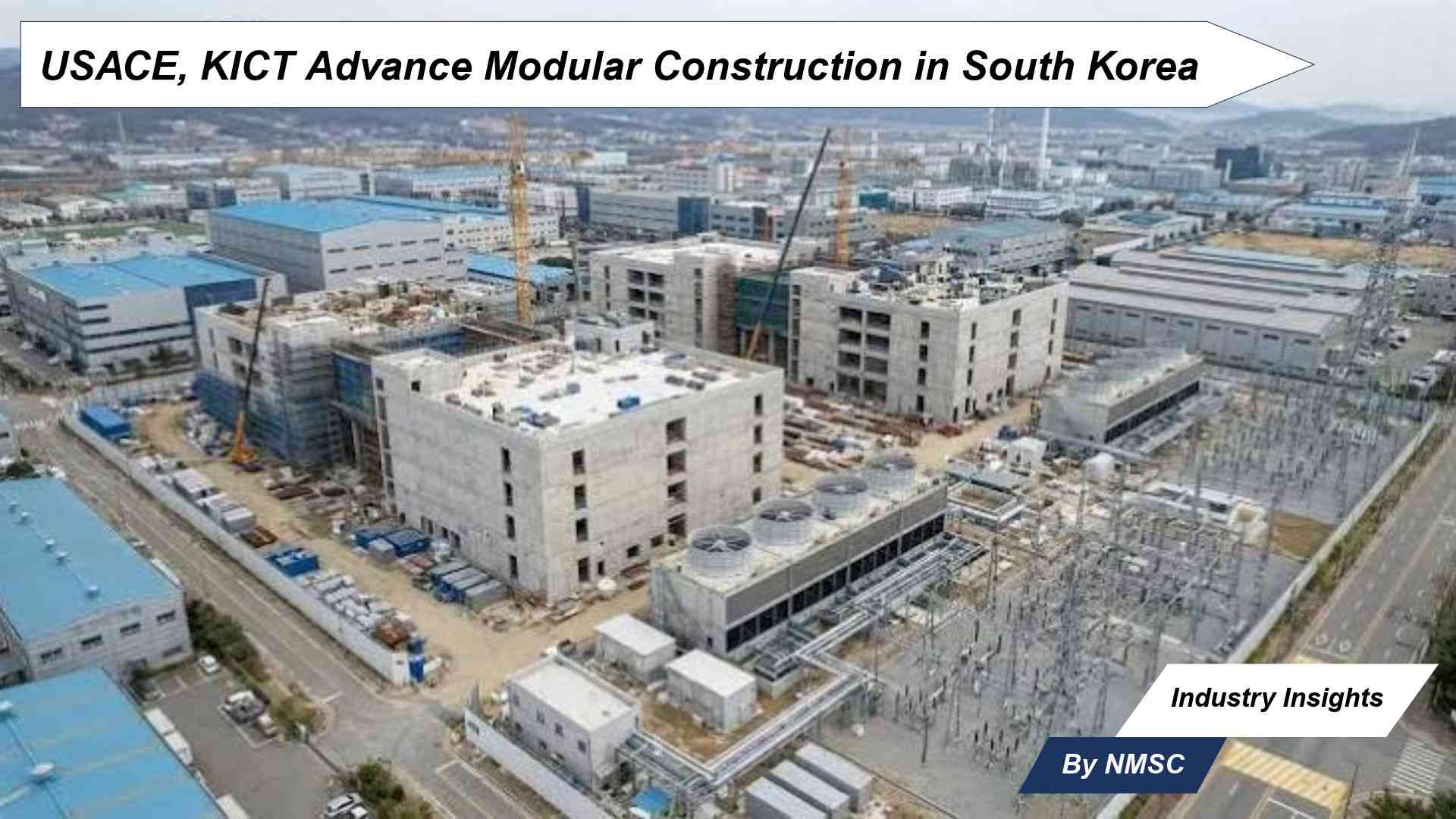
USACE Far East District and KICT Explore Off-Site Modular Construction for U.S. Military Projects in Korea
CAMP HUMPHREYS, South Korea October 2, 2026 The U.S. Army Corps of Engineer Far East District (USACE FED) has convened a formal technical exchange with the Korea Institute of Civil Engineering and Building Technology (KICT) to evaluate the application of off-site and modular construction methods to future U.S. military infrastructure projects in South Korea, marking a significant institutional step for the global Modular and Prefabricated Construction Market. The briefing, held at FED headquarters at Camp Humphreys on September 18, 2026, was formally reported by the U.S. Army on October 2, 2026.
The exchange introduced FED engineers and project delivery professionals to Korea's more than two decades of accumulated experience in off-site construction (OSC), encompassing military facilities, housing, and educational buildings. KICT representatives presented case studies and lessons learned spanning the full OSC lifecycle from design and factory production to transportation and on-site assembly.
OSC relocates significant portions of construction activity from traditional job sites to controlled factory environments, where building components, panels, or complete modules are fabricated in parallel with on-site groundwork. This concurrent workflow can materially compress overall construction schedules while enabling greater standardization and quality control attributes of particular strategic value in military construction contexts.
According to Next Move Strategy Consulting, the global Modular and Prefabricated Construction Market is projected to reach USD 472.21 billion by 2030, expanding at a CAGR of 6.1% from 2025 to 2030. Institutional adoption by defense and government agencies such as the current USACE-KICT initiative is increasingly recognized as a structural demand driver for the sector.
Key Highlights:
-
Standardized military facilities identified as priority candidates: Sarah Woo, Chief of FED's Engineering Division, stated that barracks, unaccompanied personnel housing, officer quarters, guard posts, and smaller administrative buildings represent the strongest near-term opportunities for OSC adoption, given their repeatable design requirements.
-
Two decades of Korean OSC expertise on the table: KICT's Sang Sup Lee, Director and Senior Research Fellow, noted that Korea has built comprehensive experience across the entire modular construction process from design and factory production to transportation and on-site assembly across housing, schools, and military facilities over the past 20 years.
-
Cross-standard compatibility under review: Participants identified key challenges requiring resolution before OSC can be applied to FED projects, including design criteria alignment, procurement frameworks, contracting methods, and compatibility between U.S. and Korean construction standards.
-
Pilot project pathway outlined: As a structured next step, FED leadership recommended continued technical exchanges, site visits to modular manufacturing facilities and active project sites, a formal assessment of eligible FED facility types, and a potential small-scale pilot project to validate OSC applicability in the U.S. military construction context in Korea.
Analyst Insight:
According to analysts at Next Move Strategy Consulting, the USACE-KICT technical exchange reflects a broader institutional trend in which defense and public-sector agencies are actively evaluating off-site construction as a means of addressing persistent challenges in project delivery timelines, labor availability, and quality consistency. NMSC analysts note that government-led adoption of modular construction methodologies particularly in high-demand segments such as military housing and standardized infrastructure carries significant implications for market scalability, as it validates OSC at an institutional level and can accelerate private-sector confidence and investment in modular manufacturing capacity. The initiative also underscores the growing cross-border transfer of modular construction knowledge, with Asia-Pacific markets where key players such as Sekisui House and Larsen and Toubro operate increasingly serving as reference models for Western defense and infrastructure programs.
Industry Outlook:
The USACE-KICT exchange signals a maturation in how government agencies approach construction innovation moving from theoretical interest in modular methods to structured, evidence-based evaluation frameworks that include site visits, pilot programs, and cross-jurisdictional standards harmonization. For the broader modular and prefabricated construction sector, institutional engagement of this nature is consequential: it expands the addressable market beyond commercial real estate and residential housing into defense infrastructure, a segment characterized by large-scale, repeatable facility requirements that align closely with OSC's core value proposition.
As urbanization intensifies globally and labor shortages in the construction sector persist, the convergence of government mandates, sustainability imperatives, and technological advancement in factory-built construction is expected to sustain the market's upward trajectory through 2030 and beyond. The outcome of FED's pilot project assessment and any subsequent procurement decisions will be closely monitored as a bellwether for broader U.S. military adoption of modular construction in overseas operational environments.
Source: U.S. Army
For More Information: Download FREE Sample on Modular and Prefabricated Construction Market Report
Prepared By: Sanyukta Deb
About the Author
 Sanyukta Deb
— Sanyukta Deb is Digital Marketing Team Lead at Next Move Strategy Consulting, where she has led content strategy and technical SEO for the firm's B2B market research publications for over 2 years. Her editorial process translates NextMSC's primary and secondary research — spanning technology, industrial, and consumer sectors — into commercial narratives, backed by search-intent, keyword, and competitive analysis. She brings 5 years of overall experience in digital marketing and content strategy.
Sanyukta Deb
— Sanyukta Deb is Digital Marketing Team Lead at Next Move Strategy Consulting, where she has led content strategy and technical SEO for the firm's B2B market research publications for over 2 years. Her editorial process translates NextMSC's primary and secondary research — spanning technology, industrial, and consumer sectors — into commercial narratives, backed by search-intent, keyword, and competitive analysis. She brings 5 years of overall experience in digital marketing and content strategy.
About the Reviewer
 Debashree Dey
— Debashree Dey is Assistant Manager at Next Move Strategy Consulting, where she supports cross-vertical market content and communications across diverse industries for 6 years. Her professional background includes senior content writing, communications, and published manuscript authorship, with experience developing audience-focused business narratives and maintaining clear, consistent messaging. Her role supports research-led content development and editorial quality across NextMSC publications.
Debashree Dey
— Debashree Dey is Assistant Manager at Next Move Strategy Consulting, where she supports cross-vertical market content and communications across diverse industries for 6 years. Her professional background includes senior content writing, communications, and published manuscript authorship, with experience developing audience-focused business narratives and maintaining clear, consistent messaging. Her role supports research-led content development and editorial quality across NextMSC publications.

















Add Comment