WeRide's Global Expansion Signals New Phase in Autonomous Mobility
Industry Insights from Next Move Strategy Consulting
The autonomous vehicle industry is witnessing a strategic realignment as leading players expand beyond domestic markets, with Chinese autonomous driving company WeRide accelerating its driverless mobility operations across multiple continents. Following its dual listing in Hong Kong and the United States, the company is leveraging international partnerships and favorable regulatory environments to scale commercial deployments from the Middle East to Europe and Southeast Asia, positioning itself at a global inflection point for driverless transport.
A Strategic Pivot to International Growth
Founded in 2017, WeRide has built its reputation on Level 4 autonomous driving technology, where vehicles operate without human intervention under defined conditions. While it gained early recognition in China by launching the country's first L4 robotaxi in 2018, the company's strategic focus is increasingly oriented toward offshore opportunities. It now operates autonomous vehicles in more than 40 cities across 11 countries and regions.
This global expansion is underpinned by a proprietary technology platform that supports a full product range from driver assistance systems to fully driverless vehicles, including robotaxis, autonomous minibuses, freight vehicles, and robotic street sweepers. The overseas push is supported by substantial and sustained investment, with the company spending more than 35 billion yuan ($5 billion) on research and development from 2022 through the first half of 2025.
Cornerstone Markets and Commercial Traction
The Middle East has emerged as a cornerstone of WeRide's international strategy. In Abu Dhabi, the company has operated robotaxi services since 2021, making it the first city in the region to launch commercial driverless ride-hailing. In partnership with Uber, WeRide now runs one of the largest robotaxi fleets outside China and the United States. By late 2025, a single WeRide robotaxi in Abu Dhabi was completing up to 18 passenger trips per 12-hour shift, with local fares roughly four times higher than those in China's largest cities, offering significantly stronger revenue potential.
Saudi Arabia has followed suit. In Riyadh, WeRide and Uber launched public robotaxi services, marking the first time autonomous vehicles were available through Uber's app in the country.
Singapore represents another priority market. WeRide has secured permits for fully driverless operations of its autonomous minibuses and rolled out a consumer-facing autonomous ride-hailing service developed with Grab. The city-state has also become a testing ground for WeRide's autonomous sanitation vehicles, which entered commercial service in 2024.
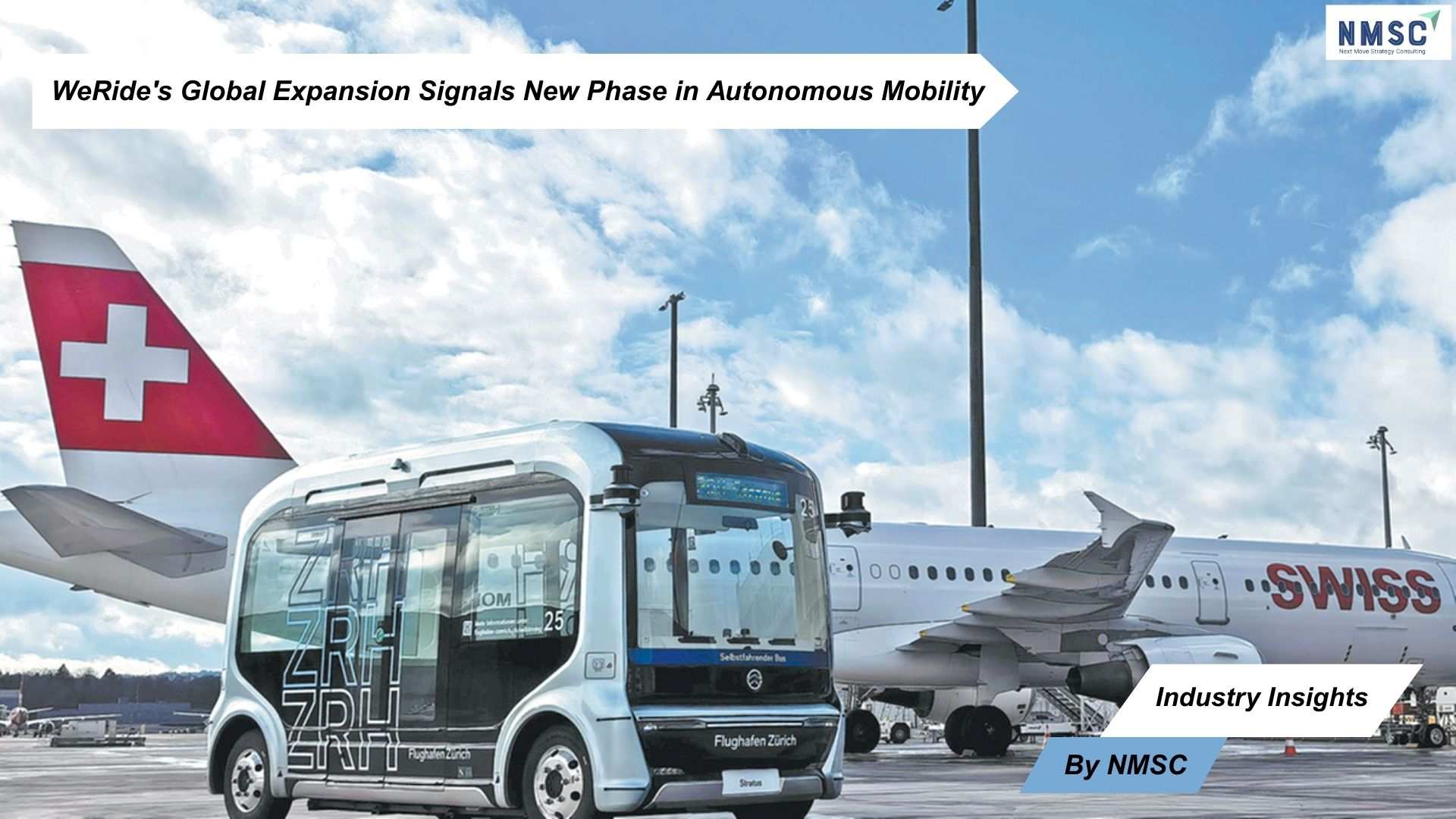
In Europe, WeRide has deployed L4 autonomous fleets in France, Switzerland, and Belgium, and is preparing to launch fully driverless autonomous minibuses at Zurich Airport. Industry data show it is currently the only company with L4 fleets operating commercially across multiple European countries.
Leadership Vision and Investor Confidence
Han Xu, founder and CEO of WeRide, connects the company's trajectory to broader national directives, stating, "China's 15th Five-Year Plan (2026-30) emphasizes new quality productive forces, a new national innovation system, a new security framework and Chinese-style modernization. All these will help drive autonomous driving to commercial success."
Ahead of the Hong Kong IPO, Han signed a voluntary lock-up agreement pledging not to sell any of his shares for three years, a move aimed at reassuring investors as the company increases spending to support its global ambitions. The listing itself serves as a platform to attract long-term international investors, including sovereign funds and strategic partners such as Uber, Grab, and Bosch, all of whom participated in the offering.
The financial impact of this strategy is becoming clear. According to the company's prospectus, robotaxi revenue surged more than eightfold year-on-year in the second quarter, accounting for over 30 percent of WeRide's total revenue, driven largely by its overseas operations.
Industry Response and Strategic Outlook
According to Next Move Strategy Consulting, WeRide's rapid international commercialization reflects a pivotal shift in the autonomous vehicle market. The move from limited pilot programs to large-scale, revenue-generating deployments in key international corridors signals growing maturity and regulatory acceptance. This expansion, particularly in partnership with global mobility platforms like Uber and Grab, creates a new competitive dynamic, shifting the battleground from technological prowess alone to the execution of scalable, profitable business models in diverse urban environments. The strategy also highlights the increasing importance of strategic geographic diversification, as companies align with national economic agendas, such as the Gulf region's diversification plans, to secure first-mover advantage in high-potential markets.
Redefining the Global Autonomous Mobility Landscape
As Gulf countries set targets for autonomous vehicles to account for a quarter of urban transport by around 2030, and regulators in Asia and Europe facilitate larger deployments, the industry is approaching a commercial turning point. WeRide's multi-continent expansion, backed by significant R&D investment and strategic partnerships, demonstrates a blueprint for scaling autonomous mobility globally. This positions the company not merely as a technology provider, but as an integrated global operator shaping the next phase of urban transportation.
Source: News GD
Prepared by: Next Move Strategy Consulting
About the Author
 Joydeep Dey
— Joydeep Dey is a content writer and analyst fueled by creativity, research, and continuous learning. He combines compelling storytelling with market insights to turn complex information into engaging, impactful content. Passionate about emerging trends, digital strategy, and innovation-driven communication, he believes curiosity and consistent growth are key to creating meaningful influence in every project.
Joydeep Dey
— Joydeep Dey is a content writer and analyst fueled by creativity, research, and continuous learning. He combines compelling storytelling with market insights to turn complex information into engaging, impactful content. Passionate about emerging trends, digital strategy, and innovation-driven communication, he believes curiosity and consistent growth are key to creating meaningful influence in every project.
About the Reviewer
 Debashree Dey
— Debashree Dey is Assistant Manager at Next Move Strategy Consulting, where she supports cross-vertical market content and communications across diverse industries for 6 years. Her professional background includes senior content writing, communications, and published manuscript authorship, with experience developing audience-focused business narratives and maintaining clear, consistent messaging. Her role supports research-led content development and editorial quality across NextMSC publications.
Debashree Dey
— Debashree Dey is Assistant Manager at Next Move Strategy Consulting, where she supports cross-vertical market content and communications across diverse industries for 6 years. Her professional background includes senior content writing, communications, and published manuscript authorship, with experience developing audience-focused business narratives and maintaining clear, consistent messaging. Her role supports research-led content development and editorial quality across NextMSC publications.
















Add Comment