Will Physical AI and Space Heritage Missions Redefine the Future of Robotics and Exploration?
Lede
Fujitsu’s spatial AI breakthrough and NASA’s Artemis II symbolic payload highlight a convergence of advanced robotics and legacy-driven space innovation shaping next-generation industries, with the Space Robotics Market emerging as a critical intersection of these trends. Fujitsu Limited’s advancement in physical AI and NASA’s Artemis II signal a broader shift in how intelligent systems and human heritage are integrated into future technologies. While one focuses on real-time human–robot collaboration, the other underscores the continuity of innovation in space exploration, collectively accelerating the evolution of autonomous systems within the Space Robotics Market.
News Section 1: Fujitsu Unveils Spatial World Model for Human–Robot Collaboration
Fujitsu Limited announced on December 2, 2025, the development of a spatial world model technology designed to improve human–robot interaction. According to the official release, the system uses 3D scene graphs to interpret spatial environments and predict the behavior of humans, robots, and objects in real time.
The company confirmed that its model improves behavioral intention estimation accuracy by 3x in benchmark testing, addressing a long-standing limitation in physical AI systems. This advancement allows robots to anticipate human actions and avoid collisions, enabling safer collaboration in dynamic environments.
At Next Move Strategy Consulting, we observe that this innovation directly addresses scalability challenges in physical AI deployment, particularly in unstructured environments such as homes, offices, and public infrastructure. Our analysis indicates that moving beyond pixel-based perception toward graph-based spatial reasoning represents a foundational shift in robotics intelligence.
Fujitsu plans to showcase the technology at CES 2026, signaling commercial readiness and industry validation.
Convergence of Physical AI and Space Exploration: A New Innovation Cycle
The latest developments from Fujitsu Limited and NASA illustrate a powerful convergence between physical AI and space exploration, forming a new innovation cycle. Fujitsu’s spatial world model enhances real-time human–robot collaboration through predictive intelligence and 3D scene understanding, while the Artemis II mission reinforces the continuity of technological progress by linking early aviation history with modern deep-space exploration. Together, these advancements highlight how intelligent systems are evolving beyond isolated applications into interconnected ecosystems, where robotics, AI, and aerospace technologies collectively drive efficiency, safety, and long-term industrial transformation.

Key Features of Fujitsu’s Spatial World Model
|
Feature Area |
Description |
Industry Impact |
|
3D Scene Graphs |
Models spatial relationships dynamically |
Enables real-time decision-making |
|
Behavior Prediction |
Estimates human intent using causal relationships |
Improves safety and collaboration |
|
Multi-Actor Coordination |
Synchronizes multiple robots |
Enhances industrial automation |
|
Accuracy Improvement |
3x increase in prediction accuracy |
Boosts deployment confidence |
NASA’s Artemis II Carries Wright Flyer Legacy into Deep Space
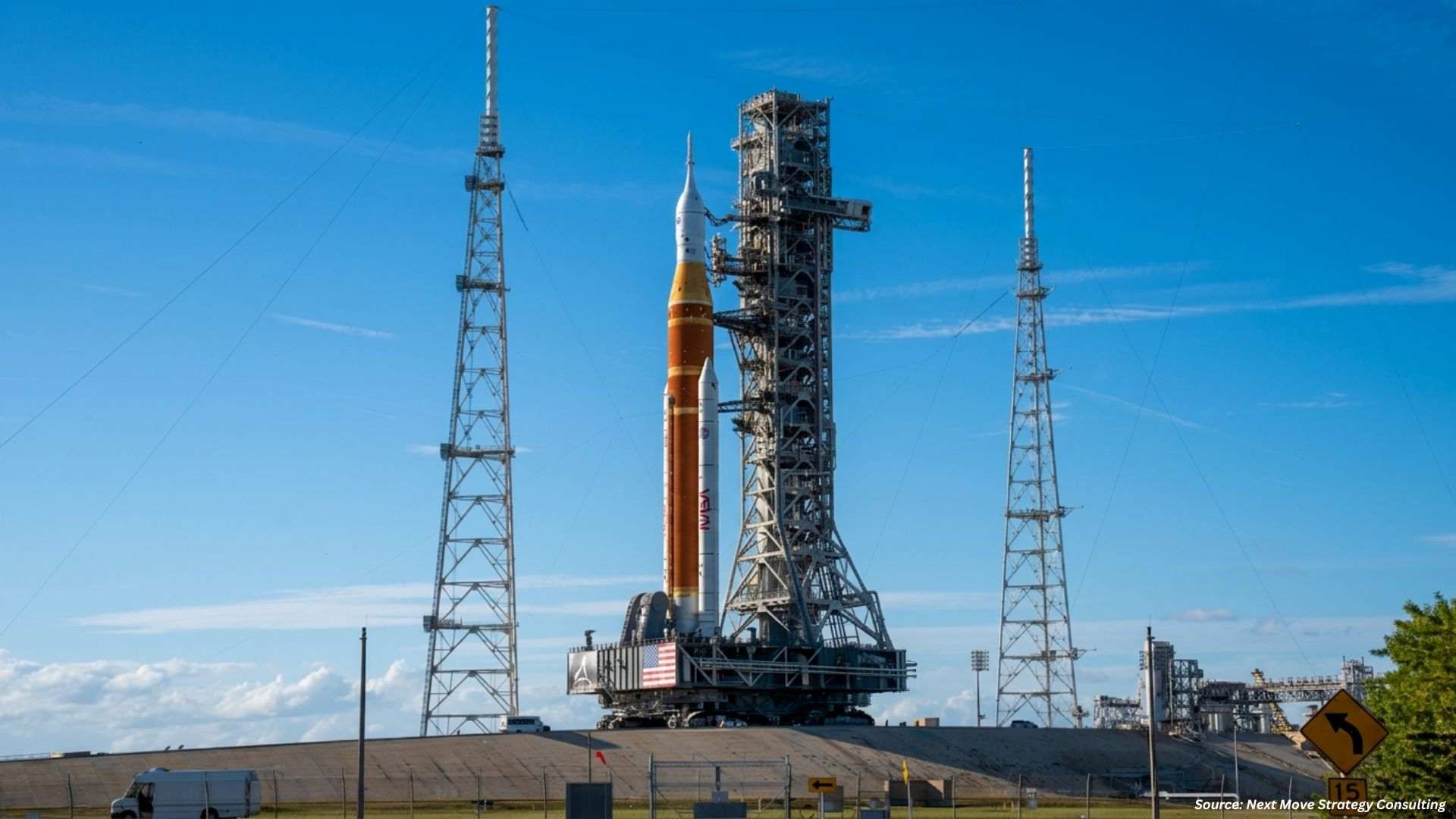
Artemis II, scheduled as the first crewed mission in NASA’s Artemis program, will carry four astronauts around the Moon to validate Orion spacecraft systems. The inclusion of historical artefacts reflects NASA’s long-standing tradition of linking past aviation milestones with future exploration.
The mission also includes biological experiments such as seed exposure and lunar soil studies, alongside symbolic items from international partners like the European Space Agency and Canadian Space Agency.
At Next Move Strategy Consulting, we notice that this mission is not purely symbolic. Our analysis indicates that Artemis II serves as a multi-layered platform combining engineering validation, international collaboration, and public engagement, all of which are critical for long-term commercialization of space ecosystems.

Data-Driven Robotics Meets Deep-Space Missions
The integration of predictive AI models with real-world environments is accelerating the transition toward autonomous ecosystems. Fujitsu Limited’s use of 3D scene graphs enables robots to interpret dynamic surroundings and anticipate human intent, reducing operational risks and improving efficiency. At the same time, NASA’s Artemis II demonstrates how mission architectures are increasingly incorporating both scientific experimentation and symbolic continuity. This parallel evolution indicates that data-driven intelligence is becoming central not only to terrestrial automation but also to mission-critical space operations.

Artemis II Mission Payload Highlights
|
Category |
Item |
Purpose |
|
Historical Artefact |
Wright Flyer fabric |
Symbolic continuity of aviation |
|
Scientific Payload |
Seeds, lunar soil |
Biological research |
|
Engineering Material |
SLS shavings |
Material testing |
|
Cultural Items |
Flags, patches |
International collaboration |
Market Analysis: Robotics, Physical AI, and Space Systems Convergence
The convergence of physical AI and space exploration technologies is accelerating across industries in 2024–2026.
Key Developments
-
Rapid advancements in physical AI for real-world interaction
-
Increased investment in autonomous robotics
-
Expansion of deep-space missions and commercialization
-
Integration of AI in aerospace systems
At Next Move Strategy Consulting, we observe that companies are shifting from isolated AI applications to integrated physical intelligence systems capable of operating across domains.
Regional Insights
-
Japan: Leading in robotics innovation (Fujitsu, industrial automation)
-
U.S.: Dominating space exploration and AI integration (NASA, private players)
-
Europe & Canada: Strengthening collaborative aerospace ecosystems
Emerging Industry Convergence Trends
|
Sector |
Technology Driver |
Use Case |
|
Robotics |
Physical AI |
Smart factories, service robots |
|
Aerospace |
AI + Automation |
Autonomous navigation |
|
Healthcare |
Human–robot interaction |
Assistive robotics |
|
Space Exploration |
International missions |
Lunar & Mars programs |
Technology Focus Distribution in Emerging Innovation Ecosystem (2026)
The pie chart above illustrates how innovation efforts are currently distributed across key domains shaping the future ecosystem. Physical AI & Robotics leads with 35%, reflecting strong industry investment in real-world automation and intelligent systems, driven by advancements from players like Fujitsu Limited. Space Exploration follows at 25%, supported by missions such as Artemis II led by NASA, highlighting renewed global focus on lunar and deep-space programs. Human-Robot Collaboration and Scientific Research each account for 20%, indicating balanced growth in safety-driven AI systems and experimental validation. At Next Move Strategy Consulting, we interpret this distribution as a clear signal that while robotics remains the dominant driver, its convergence with space and research domains will define long-term technological leadership.

NMSC Perspective: Long-Term Market Impact
At Next Move Strategy Consulting, we identify a significant long-term impact driven by the intersection of physical AI and space exploration:
-
Cross-industry innovation: Robotics developed for Earth-based applications will increasingly be adapted for space missions
-
Human-centric AI systems: Demand for safe human–robot collaboration will expand in healthcare, logistics, and smart cities
-
Space commercialization: Artemis missions will catalyze private-sector participation and infrastructure development
-
Data-driven ecosystems: AI models trained in physical environments will become foundational to autonomous systems globally
Our analysis indicates that these combined developments could redefine automation standards and create multi-billion-dollar opportunities across robotics and aerospace sectors.
What to Do Next
I recommend the following actions for stakeholders:
-
Invest in Physical AI Capabilities: Focus on technologies enabling real-world interaction and predictive intelligence
-
Align with Space Ecosystem Growth: Explore partnerships linked to Artemis and international space programs
-
Adopt Human-Centric Robotics: Prioritize safety, collaboration, and adaptability in robot design
-
Monitor Cross-Sector Opportunities: Identify applications where robotics and aerospace technologies overlap
-
Mitigate Risks: Address ethical concerns, regulatory frameworks, and system reliability
Conclusion
I conclude that Fujitsu’s spatial world model and NASA’s Artemis II mission together represent a pivotal moment in technological evolution. One advances the intelligence of machines on Earth, while the other extends human legacy into deep space.
At Next Move Strategy Consulting, we emphasize that the real opportunity lies in the convergence of these domains. Organizations that recognize and act on this intersection will be best positioned to lead in the next phase of global innovation.
About Next Move Strategy Consulting:
Next Move Strategy Consulting is a premier market research and management consulting firm that has been committed to provide strategically analysed well documented latest research reports to its clients. The research industry is flooded with many firms to choose from, what makes Next Move different from the rest is its top-quality research and the obsession of turning data into knowledge by dissecting every bit of it and providing fact-based research recommendation that is supported by information collected from over 500 million websites, paid databases, industry journals and one on one consultations with industry experts across a diverse range of industry sectors. The high-quality customized research reports with actionable insights and excellent end-to-end customer service help our clients to take critical business decisions that enables them to move beyond time and have competitive edge in the industry.
We have been servicing over 1000 customers globally that includes 90% of the Fortune 500 companies over a decade. Our analysts are constantly tracking various high growth markets and identifying hidden opportunities in each sector or the industry. We provide one of the industry’s best quality syndicate as well as custom research reports across 10 different industry verticals. We are committed to deliver high quality research solutions in accordance to your business needs. Our industry standard delivery solutions that ranges from the pre consultation to after-sales services, provide an excellent client experience and ensure right strategic decision making for businesses.
For more information, please contact:
Next Move Strategy Consulting
5th Floor 867
Boylston St, STE 500,
Boston, MA 02116, U.S.
E-Mail: [email protected]
Direct: +1-217-650-7991
Website: www.nextmsc.com
About the Author
 Sanyukta Deb
— Sanyukta Deb is Digital Marketing Team Lead at Next Move Strategy Consulting, where she has led content strategy and technical SEO for the firm's B2B market research publications for over 2 years. Her editorial process translates NextMSC's primary and secondary research — spanning technology, industrial, and consumer sectors — into commercial narratives, backed by search-intent, keyword, and competitive analysis. She brings 5 years of overall experience in digital marketing and content strategy.
Sanyukta Deb
— Sanyukta Deb is Digital Marketing Team Lead at Next Move Strategy Consulting, where she has led content strategy and technical SEO for the firm's B2B market research publications for over 2 years. Her editorial process translates NextMSC's primary and secondary research — spanning technology, industrial, and consumer sectors — into commercial narratives, backed by search-intent, keyword, and competitive analysis. She brings 5 years of overall experience in digital marketing and content strategy.
About the Reviewer
 Debashree Dey
— Debashree Dey is Assistant Manager at Next Move Strategy Consulting, where she supports cross-vertical market content and communications across diverse industries for 6 years. Her professional background includes senior content writing, communications, and published manuscript authorship, with experience developing audience-focused business narratives and maintaining clear, consistent messaging. Her role supports research-led content development and editorial quality across NextMSC publications.
Debashree Dey
— Debashree Dey is Assistant Manager at Next Move Strategy Consulting, where she supports cross-vertical market content and communications across diverse industries for 6 years. Her professional background includes senior content writing, communications, and published manuscript authorship, with experience developing audience-focused business narratives and maintaining clear, consistent messaging. Her role supports research-led content development and editorial quality across NextMSC publications.















Add Comment