Accounts Payable Automation Market By Product Type (Standalone Accounts Payable Solution, Procure-to-Pay Platform, and Others), By Revenue Stream (Software Subscription and License Revenue, Professional Services Revenue, and Others), By Deployment Model (Cloud Multitenant SaaS, Private Cloud Single Tenant, and Others), By Pricing Model (Per-User, Per-Transaction, and Others), By Industry Vertical (BFSI, IT & Telecom, and Others) – Global Analysis & Forecast, 2025–2035
Industry: BFSI | Publishing Date: September 11, 2026 | Last Updated: October 16, 2026 | No of Pages: N/A | No. of Tables: N/A | No. of Figures: N/A | Format: PDF | Report Code: BF4264
Industry Outlook
The Accounts Payable Automation Market size was valued at USD 6.24 billion in 2025 and is expected to reach USD 7.13 billion by 2026. Looking ahead, the industry is projected to expand significantly, reaching USD 23.61 billion by 2035, registering a CAGR of 14.23% from 2026 to 2035.
Accounts Payable Automation Market Size & Forecast
|
Parameters |
Details |
|
Market Size in 2026 |
USD 7.13 Billion |
|
Revenue Forecast in 2035 |
USD 23.61 Billion |
|
Growth Rate |
CAGR of 14.23% from 2026 to 2035 |
|
Analysis Period |
2025–2035 |
|
Base Year Considered |
2025 |
|
Forecast Period |
2026–2035 |
|
Market Size Estimation |
Billion (USD) |
|
Companies Profiled |
20 |
|
Countries Covered |
33 |
|
Market Share |
Available for 10 companies |
Based on NMSC’s primary research, the global market is experiencing strong growth, driven by enterprise digital transformation initiatives, rising invoice volumes, and increasing pressure to improve financial efficiency, compliance, and working capital visibility. Organisations are increasingly adopting AI-enabled invoice processing, robotic process automation (RPA), and cloud-based procure-to-pay platforms to reduce manual errors, accelerate payment cycles, and enhance financial governance. In parallel, we also observed that integration with ERP systems, digital payment platforms, and supplier portals is strengthening end-to-end financial process automation and enabling real-time visibility into liabilities and cash flows, thereby improving strategic financial decision-making. From our regional assessment, we found that North America and Europe lead market maturity due to high automation adoption and regulatory compliance requirements, while Asia-Pacific demonstrates rapid uptake supported by SME digitalisation, cloud adoption, and expanding fintech ecosystems.
Furthermore, through direct evaluation of enterprise AP automation implementations, we observed that solution prioritization is shaped by invoice complexity, integration capabilities, data security requirements, and organisational IT maturity. Enterprises are increasingly shifting from rule-based automation to AI-driven exception handling, predictive analytics, and intelligent fraud detection to improve straight-through processing rates and reduce financial risk. We noticed that emerging accounts payable automation market such as India and Southeast Asia are accelerating adoption through cloud SaaS platforms, digital payments infrastructure, and finance process outsourcing models, reinforcing AP automation as a strategic enabler for scalable, data-driven financial operations.
What are the Key Trends in the Accounts Payable Automation Industry?
How Did AI-Driven Intelligence Reshape Invoice Processing and Financial Operations Efficiency?
Based on our analysis, we observed that AI-driven intelligence significantly reshapes how accounts payable processes are automated, optimised, and scaled across enterprise finance functions. As part of NMSC’s primary research, we conducted interviews with finance transformation leaders and AP technology providers implementing intelligent finance platforms, and we found that participants consistently reported improved invoice data extraction accuracy, faster exception resolution, and reduced processing costs following the integration of AI-enabled OCR, machine learning, and robotic process automation (RPA).
Furthermore, machine-learning models applied to invoice datasets, supplier behaviour patterns, and transaction histories improve fraud detection, duplicate invoice identification, and early-payment discount optimisation. From our evaluation of enterprise deployments, AI-driven workflows outperformed traditional rule-based automation by continuously learning from exceptions and improving straight-through processing rates.
How Did Platform-Based Procure-to-Pay (P2P) Integration Redefine AP Automation Strategies?
Through our evaluation of enterprise finance technology ecosystems, we found that platform-based P2P integration redefined AP automation strategies and digital finance roadmaps. Our interviews with finance transformation leaders revealed that organisations increasingly adopted integrated platforms combining procurement, invoicing, payments, and analytics rather than relying on standalone AP tools.
Moreover, enterprises leveraging centralised P2P platforms improved working capital optimisation, supplier management, and compliance oversight by aligning procurement and payment workflows in real time. Further, the transition from fragmented point solutions to unified financial platforms reduced operational silos and enhanced financial visibility.
How Did Real-Time Data Analytics and Digital Payments Transform Financial Decision-Making?
From our market evaluations, we determined that real-time financial analytics and digital payment capabilities transformed enterprise financial decision-making and AP automation value propositions. Our interviews with fintech providers indicated that real-time dashboards, predictive cash flow analytics, and dynamic discounting tools enabled proactive working capital management and improved supplier relationships.
Moreover, organisations leveraging real-time data and integrated digital payment platforms achieved faster payment cycles, reduced late-payment penalties, and enhanced supplier satisfaction compared to enterprises operating batch-based financial processes. Based on our review of implementation programs, we also found that real-time analytics supported data-driven finance strategies rather than purely cost-driven automation initiatives.
Case Study:
How did the Lenus Accounts Payable Automation implementation demonstrate measurable efficiency gains in finance operations?
Our evaluation of the Lenus accounts payable (AP) software implementation confirms that the organisation achieved significant operational improvements by digitising invoice processing and global payment workflows. Based on documented outcomes, Lenus reduced payment cycle times by approximately 35% through automated approval routing, centralised invoice management, and seamless integration with NetSuite OneWorld, while simultaneously streamlining international payments across 11 countries and multiple currencies.
The case evidence further highlights that automation improved standardisation and internal controls, eliminating spreadsheet-based approvals and reducing manual reconciliation errors, which allowed the finance team to reallocate capacity toward more strategic financial management tasks. Collectively, this demonstrates that AP automation strengthens financial visibility, improves payment accuracy, accelerates processing, and enables finance teams to shift from transactional operations toward supporting broader business growth
SWOT Analysis of the Accounts Payable Automation Market:
This SWOT framework directly reflects the operational realities, technology adoption patterns, and competitive dynamics observed across global AP automation deployments.
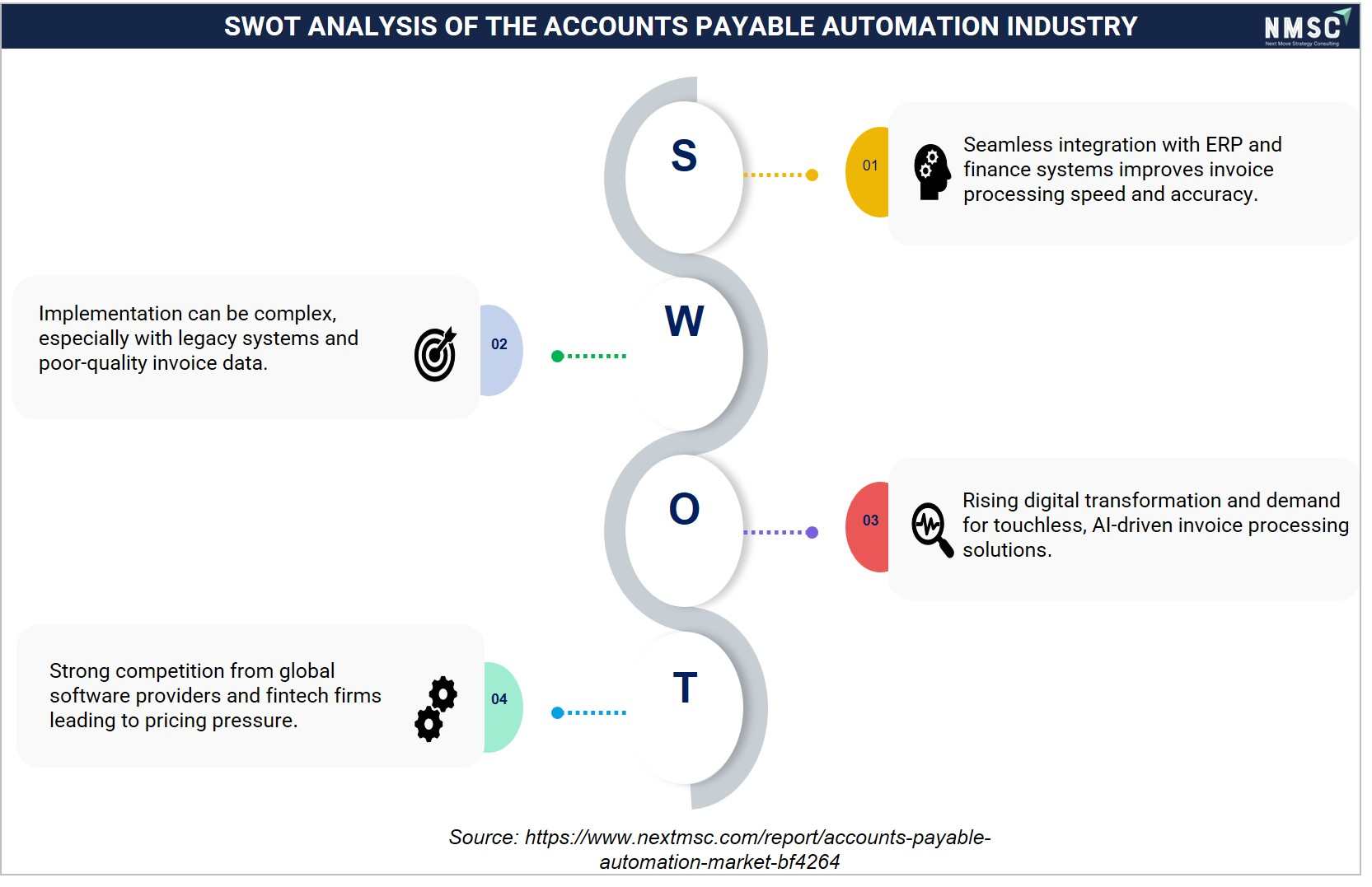
Based on our comprehensive evaluation of the AP automation landscape, the SWOT analysis presented in the infographic reflects the structural growth drivers and competitive dynamics influencing the accounts payable automation market. We observe that seamless integration with ERP and finance systems remains a core strength, as enterprises increasingly prioritise interoperable platforms that accelerate invoice processing, enhance data accuracy, and strengthen audit compliance. Based on our assessment of vendor strategies, we also found that providers offering robust API frameworks and compatibility across both legacy and cloud environments secure a measurable competitive advantage.
At the same time, based on accelerating digital transformation initiatives and increasing demand for touchless, AI-driven invoice processing, we saw substantial opportunities emerging in the market. Our research indicates that enterprises are prioritising higher straight-through processing rates, enhanced fraud detection capabilities, and cloud-enabled remote financial operations. Nevertheless, we also recognise that intense competition from global software providers and fintech firms continues to create pricing pressure and accelerate feature commoditisation. As a result, sustained innovation, differentiated value propositions, and strategic ecosystem partnerships are essential to maintain long-term competitiveness.
Strategic Value Framework for Accounts Payable Automation Market:
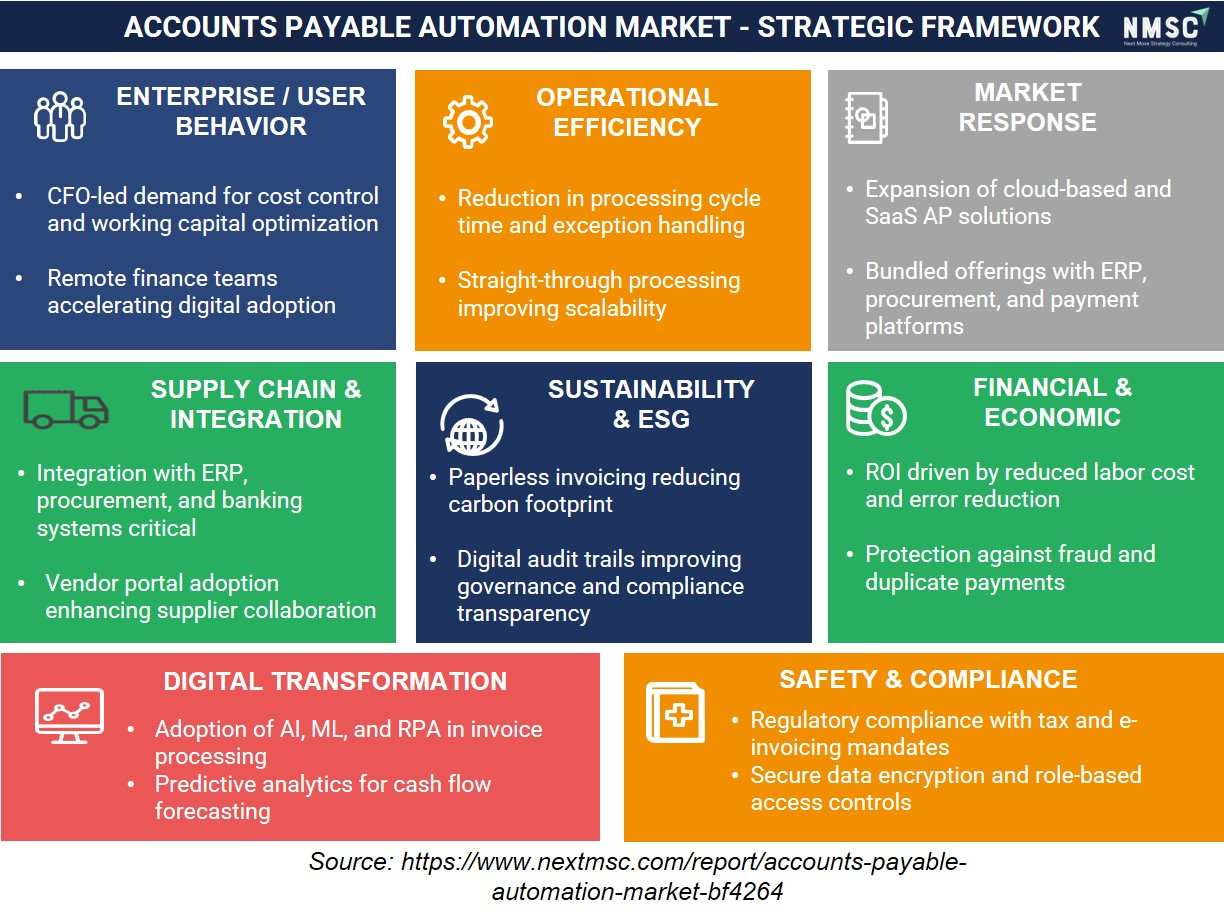
Based on our market assessment, the chart illustrates how enterprise priorities, financial objectives, compliance requirements, and technological advancements collectively drive the evolution of the accounts payable automation market. We observed that CFO-led cost optimisation initiatives and the rise of remote finance teams are accelerating demand for automation. Organisations are adopting AP automation to reduce invoice processing time, minimise manual errors, and improve straight-through processing rates. These operational efficiencies translate into measurable financial benefits, including labour cost reduction, improved fraud prevention, enhanced working capital management, and stronger ROI.
At the same time, based on accelerating digital transformation strategies, we identified growing adoption of AI, ML, RPA, and predictive analytics to optimise invoice workflows and cash flow forecasting. Regulatory mandates, e-invoicing requirements, data security standards, and governance controls are further shaping system architecture and compliance frameworks. These measures not only reduce operational risk but also support ESG objectives through paperless processes and transparent audit trails.
What Are the Key Market Drivers, Breakthroughs, and Investment Opportunities That Will Shape the Accounts Payable Automation Industry in the Next Decade?
Growth Catalyst & Risk Assessment Matrix
|
DRIVERS/TRENDS/RESTRAINTS |
(+/-) % IMPACT ON THE CAGR FORECAST |
GEOGRAPHIC RELEVANCE |
IMPACT TIMELINE |
|
Increased adoption of digital transformation initiatives to optimise finance operations |
+0.9% |
Global; strongest in North America and Europe, growing in the Asia Pacific |
Short to medium term (≤ 3 years) |
|
Rising demand for cost reduction and efficiency improvements in AP workflows |
+0.8% |
Global; high impact in developed markets and large enterprises |
Short term (≤ 2 years) |
|
Integration of AI/ML for intelligent invoice processing, fraud detection, and analytics |
+0.7% |
North America, Europe, and the developed Asia Pacific |
Medium to long term (2–5 years) |
|
Remote and hybrid work models are driving demand for cloud-based AP solutions |
+0.6% |
Global; highest impact in North America and Europe |
Short term (≤ 2 years) |
|
High initial implementation cost and integration complexity with legacy systems (Restraint) |
–0.5% |
Emerging markets and highly regulated industries |
Short to medium term (≤ 3 years) |
Based on NMSC’s evaluation of global finance transformation programs and enterprise workflow modernisation initiatives, we identified that large-scale digital transformation, cost optimisation mandates, regulatory compliance pressures, and working capital efficiency objectives are the primary drivers of the market. We observed that organisations are actively replacing manual and paper-based AP processes with cloud-based, AI-enabled platforms to manage increasing invoice volumes, multi-entity operations, cross-border tax requirements, and evolving e-invoicing mandates.
Based on our assessment, we found that automation enhances straight-through processing, improves real-time financial visibility, strengthens internal controls, accelerates approval cycles, and enables early-payment discount capture. These combined benefits generate measurable ROI through labour cost reduction, error minimisation, fraud mitigation, and improved cash flow forecasting.
Growth Drivers:
How Is Enterprise Digital Transformation Driving the Accounts Payable Automation Market?
Based on NMSC’s primary evaluation of global enterprise finance transformation programs, we found that enterprise digital transformation represents one of the most structurally embedded drivers of the accounts payable automation market. Organisations across industries are increasingly modernising finance functions to reduce manual workloads, improve operational efficiency, and enhance financial transparency. Rising invoice volumes, distributed workforces, and growing regulatory complexity are accelerating the shift from paper-based and manual AP processes to automated, cloud-based platforms.
Further, from our assessment of enterprise finance workflows and shared service models, we found that digital transformation initiatives are expanding centralised AP operations, standardising global processes, and increasing reliance on AI-driven automation tools. These dynamics materially increase demand for intelligent invoice processing, RPA, and integrated procure-to-pay platforms, thereby reinforcing sustained long-term adoption of AP automation solutions.
How is the Need for Cost Optimisation and Working Capital Efficiency Boosting Market Growth?
Based on our evaluation of global enterprise finance strategies, we identified cost optimisation and working capital efficiency as central forces that accelerated the growth in the accounts payable automation market. We observed that organisations across industries are under increasing pressure to reduce operating expenses, improve cash flow visibility, and strengthen balance sheet performance amid economic uncertainty and margin constraints. So, enterprises deployed AP automation solutions to minimise manual processing costs, reduce invoice cycle times, eliminate duplicate payments, and lower exception handling rates. These improvements translated into measurable financial gains, including reduced administrative overhead, improved accuracy, and enhanced audit readiness, thereby reinforcing the strategic value of automation investments.
We also observed that working capital optimisation has become a strategic priority for CFOs and treasury teams, with AP automation delivering tangible financial control benefits. Implementations improved real-time cash visibility, optimised payment scheduling, enabled dynamic discount capture, and strengthened supplier negotiations, while greater payables transparency enhanced liquidity planning and reduced reliance on short-term borrowing. Automated workflows and predictive analytics also improved forecasting accuracy and governance. Overall, we concluded that rising cost discipline and working capital efficiency demands have elevated AP automation into mission-critical digital finance infrastructure.
Growth Inhibitors:
How Are Integration Complexity and Data Quality Challenges Limiting Market Growth?
Based on our analysis, we observed that integration complexity and data quality limitations continue to act as key restraints on the growth of the accounts payable automation market. In discussions with enterprise IT teams and finance leaders, we observed that legacy ERP infrastructures, fragmented data environments, and inconsistent invoice formats are consistently highlighted as major barriers that complicate automation implementation and reduce straight-through processing efficiency.
Moreover, our review of real-world deployment programs indicates that these technical and data governance challenges increase implementation timelines, raise customisation and integration costs, and constrain enterprise-wide scalability. As a result, despite growing organisational interest in automation, persistent integration hurdles and data standardisation gaps continue to moderate adoption rates, particularly among large multinational enterprises operating within complex and heterogeneous IT ecosystems.
Growth Opportunities:
How Are Cloud-Based SaaS Platforms and SME Digitalisation Creating Opportunities for the Market?
Based on our evaluation of global SME digitalisation trends and cloud-based finance platform adoption, we observed that cloud-native AP automation platforms represent a significant growth opportunity for the market. The accelerating digital transformation of small and mid-sized enterprises, coupled with rising adoption of subscription-based SaaS financial tools, is expanding the addressable customer base beyond traditional large enterprise deployments.
Furthermore, through our discussions with automation solution vendors, we noticed that cloud-based AP platforms are enabling faster deployment, lower upfront investment, and scalable automation capabilities for organisations with limited IT resources. In addition, integration with digital payment platforms, banking APIs, and supplier portals is expected to facilitate the development of end-to-end digital finance ecosystems, thereby unlocking new revenue streams and accelerating AP automation penetration across emerging markets and underserved enterprise segments.
How Accounts Payable Automation Industry Segmented in This Report, And What Are the Key Insights from The Segmentation Analysis?
Market Highlights & Strategic Insights – Accounts Payable Automation Market:
|
Segments |
Key Takeaways |
|
Product Type |
Procure-to-Pay (P2P) Platforms and ERP-Embedded Accounts Payable Modules dominate due to enterprise preference for integrated finance ecosystems. Payment Orchestration Platforms and Supplier Network & E-invoicing Platforms are witnessing the highest CAGR, driven by embedded payments and global e-invoicing mandates. |
|
Revenue Stream |
Software Subscription & License Revenue dominates with strong SaaS adoption. Network & Transaction Revenue shows the highest CAGR, supported by virtual cards, payment processing fees, and transaction-based monetisation models. |
|
Deployment Model |
Cloud Multitenant SaaS dominates the market due to scalability and cost efficiency. Hybrid and Private Cloud models are growing moderately, while Cloud-native SaaS continues to register the highest CAGR as enterprises modernise legacy systems. |
|
Product Capability |
Invoice Capture & OCR and Approval Workflow dominate as core automation functions. Payment Initiation & Settlement Orchestration and Compliance & Audit Trail are growing at the highest CAGR due to regulatory complexity and cross-border payment needs. |
|
Pricing Model |
Tiered ARR and Per-User models dominate enterprise deployments. Per-Transaction pricing is witnessing the highest CAGR, driven by embedded payments and usage-based fintech models. |
|
Industry Vertical |
Manufacturing, Retail & E-commerce, and BFSI dominate adoption due to high invoice volumes. Healthcare, Government, and Public Sector segments are recording the highest CAGR, driven by compliance and digital governance initiatives. |
By Product Type Insights
Which Product Types Are Driving Growth in the Accounts Payable Automation Market?
Based on the product type, the accounts payable automation market is segmented into standalone accounts payable solutions, procure to pay (P2P) platforms, ERP-embedded accounts payable module, payment orchestration platform, supplier network and e-invoicing platform.
Our analysis indicates that P2P platforms are leading market growth, as enterprises increasingly prefer integrated solutions that connect procurement, invoicing, approvals, and payments within a unified digital workflow. We also observed strong adoption of standalone accounts payable solutions, particularly among mid-sized organisations seeking rapid deployment and cost-effective automation without complex system integration. In contrast, ERP-embedded accounts payable modules are steadily expanding among large enterprises that rely on existing ERP ecosystems to streamline invoice processing and compliance workflows.
Furthermore, we found that payment orchestration platforms are gaining traction due to rising demand for global payment capabilities, fraud control, and multi-rail transaction management, while supplier network and e-invoicing platforms are experiencing increasing uptake driven by regulatory e-invoicing mandates and growing supplier digitalisation. Overall, we observed that accounts payable automation market growth across product types is shaped by enterprise digital transformation strategies, integration requirements, regulatory compliance needs, and the push toward end-to-end financial process automation.

By Revenue Stream Insights
Which Revenue Streams Are Driving Growth in the Accounts Payable Automation Market?
On the basis of revenue stream, the accounts payable automation market is segmented into software subscription and license revenue, professional services revenue and network and transaction revenue.
Our analysis indicates that software subscription and license revenue represent the largest share of market growth, as enterprises increasingly adopt cloud-based AP automation platforms through recurring subscription models that ensure scalability and continuous feature updates. We also observed steady growth in professional services revenue, driven by the need for implementation, system integration, customisation, and ongoing support, particularly among large enterprises with complex financial infrastructures.
Furthermore, network and transaction revenue are gaining momentum, supported by rising digital invoice volumes, supplier network participation, and transaction-based payment processing models. Overall, we found that revenue stream expansion across the market is shaped by the shift toward SaaS adoption, enterprise digital transformation initiatives, and increasing transaction digitisation across global financial workflows.

By Deployment Model Insights
Which Deployment Models Are Driving Growth in the Accounts Payable Automation Market?
On the basis of deployment model, the accounts payable automation market is segmented into cloud multitenant SaaS, private cloud single tenant, on-premises and hybrid.
Our analysis indicates that cloud multitenant SaaS is leading market growth, as organisations increasingly prioritise scalable, cost-efficient, and rapidly deployable solutions with continuous updates and lower IT overhead. We also observed growing adoption of private cloud single-tenant deployments among large enterprises and regulated industries that require enhanced data security, customisation, and compliance control.
In contrast, on-premises deployments continue to maintain a stable presence, particularly among legacy-driven organisations with strict data governance policies and internal IT infrastructure investments. Furthermore, hybrid deployment models are gaining traction as enterprises seek to balance cloud flexibility with on-premises control, enabling phased digital transformation and integration with existing ERP systems. Overall, we found that deployment model adoption is shaped by security requirements, regulatory compliance needs, IT modernisation strategies, and the accelerating shift toward cloud-based financial process automation.
Regional Outlook
Geographic Performance Snapshot:
|
Geography |
Key Takeaways |
|
North America |
The most mature accounts payable automation market is driven by early cloud adoption, high labour costs, and a strong focus on financial efficiency and compliance. Enterprises prioritise AI-driven invoice processing, ERP integration, and advanced analytics. |
|
Europe |
Growth shaped by regulatory compliance (VAT, e-invoicing mandates, GDPR) and strong demand for auditability and data security. Adoption is high in Western and Northern Europe, with increasing public-sector digitalisation. |
|
Asia‑Pacific |
Fastest-growing region due to rapid enterprise digitisation, expanding SME base, and government-led e-invoicing initiatives. Cost efficiency, scalability, and mobile-enabled AP workflows are key adoption drivers across India, China, Japan, and Southeast Asia. |
|
Latin America |
The emerging accounts payable automation market is supported by mandatory e-invoicing frameworks and growing ERP adoption. Companies focus on compliance-ready, cloud-based solutions with strong local tax integration. |
|
Middle East & Africa |
Early-stage but growing adoption, driven by finance transformation programs, shared service centres, and cloud migration. Demand is strongest in GCC countries, while broader adoption is limited by legacy systems and digital maturity gaps. |
The accounts payable automation market is geographically studied across North America, Europe, Asia Pacific, the Middle East & Africa, and Latin America, and each region is further studied across countries.
Accounts Payable Automation Market in North America
North America represents a mature, technology-driven accounts payable automation market, characterised by high digital adoption, advanced enterprise IT infrastructure, and strong cloud transformation initiatives. From our regional assessments, we observed that market growth is sustained by enterprise-wide digital finance transformation programs, rising invoice volumes, and strong compliance and governance requirements. The United States continues to drive regional momentum through rapid SaaS adoption, extensive ERP penetration, and strong investment in fintech and automation platforms, while Canada demonstrates steady expansion supported by digital enterprise modernisation initiatives and growing adoption among mid-sized enterprises. Our research also indicates that increasing remote work adoption, regulatory compliance requirements, and CFO-led cost optimisation initiatives are key demand drivers. Furthermore, emphasis on data security, auditability, and financial governance continues to shape vendor platform development and enterprise deployment strategies.
Accounts Payable Automation Market in the United States
The United States remains the largest and most commercially advanced accounts payable automation market globally. Based on our engagements with technology vendors and system integrators, we found that adoption is driven by high invoice processing volumes, complex supplier ecosystems, and strong ROI-focused digital transformation initiatives. Cloud-based P2P platforms, AI-enabled invoice processing, and payment orchestration solutions dominate enterprise adoption pipelines. Our analysis further shows that strong SaaS ecosystem maturity, deep ERP integration capabilities, and growing use of analytics and real-time financial monitoring support accelerated deployment. The market is increasingly shifting toward integrated finance automation ecosystems that connect procurement, treasury, and supplier management, strengthening lifecycle value for solution providers.
Accounts Payable Automation Market in Canada
Based on our assessment of the North American region, we observed steady growth in Canada’s accounts payable automation Market, supported by enterprise cloud migration, digital finance initiatives, and evolving compliance requirements. Our interactions with enterprise stakeholders indicated increasing adoption of cloud-based AP platforms across large enterprises and mid-sized organisations, particularly in manufacturing, BFSI, and the public sector. Compared with the United States, adoption progressed at a more measured pace due to centralised IT governance and structured cost evaluations. However, continued focus on process efficiency, audit compliance, and operational transparency supported stable and sustained accounts payable automation market demand.
Accounts Payable Automation Market in Europe
Based on our regional assessment, Europe represents a regulation-driven and compliance-focused accounts payable automation market environment. We observed strong demand across Western Europe, supported by mandatory e-invoicing regulations, enterprise automation programs, and the expansion of shared service centres. Regulatory bodies continue to prioritise tax transparency, structured e-invoicing frameworks, and strict data privacy standards, directly influencing platform architecture, hosting models, and vendor compliance capabilities. We further found that Northern Europe advanced cloud-based finance transformation, Southern Europe emphasised digital compliance and SME participation, while Central Europe strengthened enterprise automation and shared service outsourcing models. Although these regional variations increase implementation complexity, they also reinforce long-term adoption and provide regulatory-backed market stability.
Accounts Payable Automation Market in the United Kingdom
Based on our assessment, the UK accounts payable automation market has been driven by digital finance adoption, e-invoicing regulations, and enterprise cost optimisation initiatives. As organisations prioritised greater efficiency and compliance, we observed increasing deployment of P2P platforms, AI-based invoice processing, and supplier collaboration tools, supported by the expansion of shared service centres. At the same time, regulatory emphasis on tax compliance and audit transparency influenced vendor selection and platform design. Despite economic pressures and disciplined IT budgets, enterprises continued investing in automation to strengthen process control and improve financial visibility, supported by the UK’s mature SaaS ecosystem and integration capabilities.
Accounts Payable Automation Market in Germany
Germany represents a process-driven and compliance-focused market, driven by strong enterprise digitisation funding, structured financial governance, and high adoption of ERP-centric workflows. Our research indicates that German enterprises prioritise automation solutions supported by strong integration capabilities, data security, and regulatory compliance with VAT and tax reporting frameworks. The country’s structured enterprise procurement and finance processes support consistent adoption of P2P and ERP-embedded AP automation platforms. Furthermore, collaboration between software vendors, system integrators, and enterprise shared service centres enables large-scale automation deployment, reinforcing Germany’s position as a key European market for enterprise finance automation solutions.
Accounts Payable Automation Market in France
Based on our assessment of enterprise finance transformation and regulatory developments, we observed steady growth in France’s market, supported by structured digital transformation programs and mandated e-invoicing reforms. We found that public and private sector organisations increasingly adopted cloud-based AP platforms to improve invoice compliance, enhance supplier collaboration, and strengthen financial controls. At the same time, regulatory emphasis on tax transparency, digital reporting, and audit requirements influenced platform selection and deployment models. Our interactions further indicated that established shared service centres and financial outsourcing frameworks supported broader automation adoption, particularly among large enterprises and multinational corporations operating in France.
Accounts Payable Automation Market in Italy
Based on our assessment, Italy’s accounts payable automation market has been progressing in line with the expansion of mandatory e-invoicing frameworks and broader enterprise digital finance initiatives. We observed that demand for invoice automation and supplier digitisation increased due to regulatory compliance requirements and SME digitalisation programs. At the same time, fragmented IT environments across enterprises affected integration complexity and led to variations in automation maturity. However, continued government-led digital transformation efforts and rising cloud adoption strengthened the overall market foundation and supported the gradual acceleration of enterprise-scale AP automation deployment.
Accounts Payable Automation Market in Spain
Spain is experiencing accelerated growth in the accounts payable automation market, supported by enterprise cloud adoption, expanding shared services operations, and regulatory-driven digital invoicing initiatives. Based on our engagements with finance leaders, we observed a growing emphasis on process standardisation, cost optimisation, and centralised AP workflows. Adoption patterns remain influenced by cost sensitivity and ROI-driven purchasing decisions, favouring modular and scalable automation platforms. As digital compliance requirements strengthen and enterprise IT modernisation progresses, Spain is expected to play a more prominent role in Southern Europe’s finance automation landscape.
Accounts Payable Automation Market in the Nordics
Based on our regional assessment, the Nordic countries comprising Denmark, the Netherlands, Finland and others, we found that the region represents a digitally mature and efficiency-driven accounts payable automation market, supported by strong cloud adoption and well-established digital finance ecosystems. We further observed that enterprises in Sweden, Finland, and Norway prioritised end-to-end automation, data-driven financial management, and integrated supplier networks to improve operational control and transparency. High institutional trust in cloud infrastructure, combined with structured digital regulatory frameworks, supported wider adoption of AI-enabled invoice processing and real-time financial workflows. In our view, vendors offering analytics-based automation solutions with robust compliance capabilities remained competitively positioned within the Nordic market landscape.
Accounts Payable Automation Market in the Asia-Pacific
Based on our regional assessment, we observed that Asia-Pacific represented one of the fastest-growing regions in the accounts payable automation market, driven by rapid enterprise digitisation, rising invoice volumes, and expanding shared service centre models. As organisations scaled operations across borders, we observed increasing demand for cloud-based platforms supported by evolving e-invoicing regulations and multinational enterprise expansion. Within the region, growth patterns vary, as China advanced through enterprise digital finance programs and domestic SaaS innovation, while Japan prioritised process precision and ERP-led automation. Similarly, South Korea strengthened digital finance integration, whereas Southeast Asian markets accelerated adoption as enterprise IT maturity improved. Consequently, we found that localised compliance strategies, system integration partnerships, and enterprise digital education initiatives were essential to achieving scalable and sustainable market penetration across Asia-Pacific.
Accounts Payable Automation Market in China
Based on our regional assessment, China represented the largest accounts payable automation market within Asia-Pacific, supported by its extensive enterprise base, accelerating cloud adoption, and expanding digital finance policies. We observed that government-backed digitalisation initiatives and strong domestic fintech innovation encouraged broader adoption of AI-enabled invoice processing solutions. While domestic software providers led mid-market deployments, multinational vendors primarily focused on large enterprises and cross-border payment capabilities. Further, effective market participation requires alignment with national digital policies, compliance with local data regulations, and strong enterprise-scale integration expertise.
Accounts Payable Automation Market in Japan
Based on our research, Japan reflected a mature and process-oriented AP Automation market, shaped by high enterprise automation standards and strong ERP integration. We noted steady demand for solutions that enhanced operational accuracy, reduced manual intervention, and strengthened compliance controls. Japanese enterprises prioritised reliability, data integrity, and long-term vendor relationships, favouring providers with proven integration capabilities and lifecycle support. Consequently, vendors with established local presence and strong enterprise credibility were better positioned to sustain growth in the Japanese market.
Accounts Payable Automation Market in India
Based on our market interactions, we observed that India represents a high-growth and evolving accounts payable automation market, supported by rapid enterprise digitalisation, expansion of shared service centres, and increasing cloud adoption. We noticed rising adoption among large enterprises and mid-sized organisations, primarily driven by cost efficiency objectives and scalability requirements. However, integration challenges, legacy ERP systems, and SME cost sensitivity created variability in adoption levels. At the same time, government-led digital initiatives, domestic SaaS innovation, and growing multinational presence improved overall market accessibility. In our assessment, vendors offering cost-effective, scalable, and localised automation solutions achieved stronger market penetration across India.
Accounts Payable Automation Market in South Korea
Based on our research, South Korea represents an advanced AP Automation market, supported by high enterprise IT maturity and strong government backing for digital transformation. We observed early adoption of AI-enabled invoice processing, cloud-based P2P platforms, and digital payment orchestration solutions, with domestic technology providers contributing to a well-integrated fintech ecosystem. Enterprises prioritised analytics-driven automation and seamless digital finance integration. Consequently, vendors that combined strong automation capabilities with localised support and proven integration expertise were better positioned to capture growth in the South Korean market.
Accounts Payable Automation Market in Taiwan
Based on our assessment, Taiwan reflected a digitally ready AP Automation market, supported by a strong manufacturing sector and mature enterprise IT infrastructure. We observed growing adoption of cloud-based AP platforms, supplier digitisation tools, and compliance-driven automation workflows, alongside participation in regional supply chains and multinational operations. Enterprises prioritised ERP integration and measurable ROI in solution selection. In our view, vendors offering robust integration capabilities and evidence-based value propositions were better positioned to expand their presence and drive adoption across Taiwan.
Accounts Payable Automation Market in Indonesia
Based on our regional assessment, Indonesia represented an early-stage but rapidly developing AP Automation market, driven by enterprise cloud adoption, rising invoice volumes, and increasing awareness of digital finance solutions. We observed adoption concentrated among large enterprises and multinational corporations in major cities, while SMEs faced challenges from cost sensitivity and legacy ERP environments. At the same time, improvements in national digital infrastructure and IT maturity supported wider market access. In our assessment, vendors offering affordable, scalable, and locally adapted automation solutions were best positioned to accelerate adoption and long-term growth in Indonesia.
Accounts Payable Automation Market in Australia
Based on our assessment, we observed that Australia represents a well-developed and compliance-focused AP Automation market, supported by high enterprise cloud adoption and mature financial governance frameworks. We observed growing emphasis on automation-driven cost optimisation, auditability, and enhanced supplier collaboration. Enterprises prioritised solutions that delivered operational efficiency, regulatory compliance, and reliable post-implementation support. Vendors demonstrating these capabilities achieved stronger and more durable adoption. Additionally, Australia’s role as a regional hub for shared service centres and enterprise digital finance innovation further reinforced the market’s maturity and provided opportunities for scalable, cross-border AP automation deployments.
Accounts Payable Automation Market in Latin America
Based on our analysis, Latin America represented a developing yet increasingly relevant AP Automation market, supported by enterprise modernisation programs, expanding shared services, and regulatory digitalisation initiatives. We observed that Brazil and Mexico led adoption due to stronger enterprise IT infrastructure and regulatory-driven e-invoicing frameworks. At the same time, affordability constraints, integration complexity, and fragmented enterprise systems influenced adoption consistency across the region. Based on our assessment, we found that vendors leveraging localised pricing models and regional partnerships are better positioned to expand market access. Despite economic volatility, sustained enterprise digital transformation initiatives underpinned long-term growth potential in Latin America.
Accounts Payable Automation Market in the Middle East & Africa
Based on our regional assessment, the Middle East & Africa represented a dual-speed AP Automation market. We observed that Gulf countries demonstrated advanced adoption driven by substantial enterprise digitisation budgets, modern IT infrastructure, and regulatory compliance initiatives, while Sub-Saharan Africa remained at an early stage due to limited enterprise IT maturity. Stakeholder engagements further indicated that shared service centre expansion, cloud finance adoption, and government digitalisation programs are critical growth drivers. In our view, vendors offering premium enterprise automation solutions in the Gulf and scalable, cloud-based entry solutions in Sub-Saharan Africa are best positioned to capture long-term accounts payable automation market opportunities across the region.
Regulatory Framework Shaping the Accounts Payable Automation Industry:
The accounts payable automation market is being significantly shaped by evolving regulations, compliance standards, and government initiatives that drive secure, efficient, and standardised digital adoption.
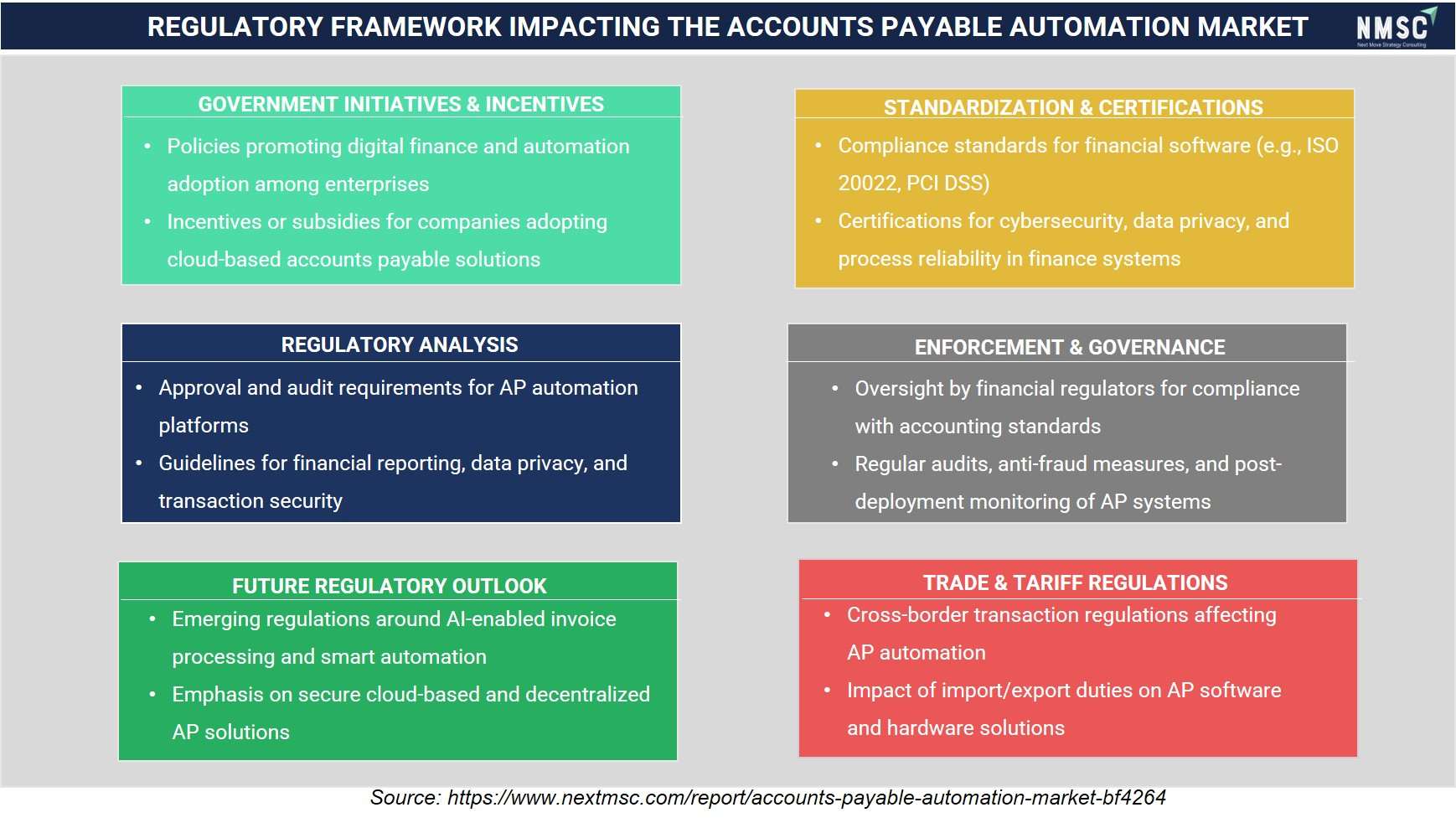
Based on our analysis of industry reports, regulatory frameworks, and expert interviews, we found that the market is increasingly influenced by government policies, compliance standards, and evolving technological guidelines. We observed that government initiatives and incentives are driving enterprises to adopt digital and cloud-based AP solutions, while standardisation and certifications, such as ISO 20022 and PCI DSS, ensure cybersecurity, data privacy, and process reliability. Our research further highlights that regulatory oversight emphasises approval, audit requirements, and financial reporting, whereas enforcement and governance involve continuous monitoring, anti-fraud measures, and system audits. Trade and tariff regulations impact cross-border transactions and the import/export of AP software and hardware.
Competitive Landscape
Competitive Dynamics & M&A Landscape:
|
Key Takeaways |
|
The accounts payable automation market features a balanced mix of dominant global enterprise software providers such as SAP SE, Oracle Corporation, and OpenText Corp, alongside leading spend management and procurement platform vendors including Coupa Software, Ivalua, JAGGAER, and GEP, as well as highly specialized AP automation and fintech-focused providers such as BILL Holdings, Inc., Tipalti, AvidXchange, Ramp, Esker, Medius, Basware, Tungsten Automation, Bottomline Technologies, Quadient, Corcentric, Tradeshift, and Stampli, which cater to enterprise, mid-market, and SME segments with differentiated automation, analytics, and embedded payment capabilities. |
|
Companies are pursuing a strategic blend of AI-driven invoice capture and matching, machine learning enabled workflow orchestration, embedded payment and virtual card integration, real-time spend analytics, fraud detection systems, supplier self-service portals, and deep ERP interoperability to enhance financial visibility, optimize working capital, reduce manual intervention, and support evolving compliance and global tax requirements across multi-entity and cross-border finance environments. |
|
Recent M&A and investment activity includes private equity acquisitions of AP automation specialists, platform consolidation across procure-to-pay and spend management ecosystems, and strategic technology integrations aimed at expanding global payment capabilities, strengthening AI and predictive analytics engines, enhancing ERP connectivity, and accelerating geographic expansion into high-growth digital finance markets. |
Which Companies Dominate the Accounts Payable Automation Industry and How Do They Compete?
Based on our primary research of the AP automation solutions ecosystem, we found that the competitive landscape is shaped by a combination of global enterprise software leaders and agile fintech innovators. Companies such as SAP SE, Oracle Corporation, and OpenText Corp compete primarily through deep ERP integration, global compliance capabilities, and enterprise-grade scalability. Because these vendors are embedded within broader financial and procurement systems, they offer organisations a tightly connected, end-to-end automation environment.
At the same time, our analysis shows that platform-driven spend management providers such as Coupa Software, Ivalua, JAGGAER, and GEP differentiate themselves by integrating procurement, invoicing, supplier management, and payments within unified cloud architectures. As a result, they position AP automation as part of a broader business spend optimisation strategy rather than a standalone workflow tool.
Furthermore, we also noticed that fintech-oriented providers, including BILL Holdings, Inc., Tipalti, Ramp, and AvidXchange, focus on usability, rapid onboarding, and embedded payment capabilities. According to our assessment, these vendors are particularly strong among small and mid-sized enterprises that prioritise speed of implementation and real-time financial visibility. In addition, automation specialists such as Esker, Basware, Medius, Tungsten Automation, Stampli, Bottomline Technologies, Quadient, Corcentric, and Tradeshift emphasise AI-driven invoice capture, supplier collaboration networks, workflow intelligence, and payment security. Consequently, competition in this market is driven not only by feature breadth but also by automation accuracy, fraud prevention, and ecosystem connectivity.
Market Dominated by Accounts Payable Automation Giants and Specialists
From our research, we found that the accounts payable automation market demonstrates a clear dual structure, where global ERP leaders such as SAP SE and Oracle Corporation maintain strong enterprise penetration through embedded AP modules within broader ERP ecosystems, enabling centralised financial governance, standardised compliance, and seamless cross-functional integration. At the same time, specialist providers including Medius, Basware, Esker, and Stampli concentrate specifically on AP workflow optimisation, allowing them to innovate rapidly in artificial intelligence, invoice matching, and exception management. Meanwhile, fintech-driven players such as Ramp and BILL Holdings, Inc. continue to gain traction among digitally mature organisations seeking intuitive, cloud-native financial tools. Therefore, the competitive balance between enterprise scale and focused specialisation fosters continuous solution enhancement, where large vendors strengthen integration depth and niche innovators refine automation precision and user experience.
Innovation and Adaptability Drive Market Success
Based on our assessment, we observed that innovation remains the primary factor influencing long-term competitiveness in the accounts payable automation Market, as vendors increasingly integrate artificial intelligence, machine learning, and predictive analytics to enhance straight-through processing and reduce manual intervention. Companies such as Tipalti and AvidXchange are expanding global payment automation and tax compliance functionalities to address cross-border transactions and complex multi-entity environments.
Similarly, Tungsten Automation, Esker, and Stampli are advancing AI-powered invoice recognition and contextual approval workflows, thereby improving processing accuracy and cycle efficiency. At the same time, platform providers such as Coupa Software and Ivalua are reinforcing spend analytics and supplier risk visibility, positioning AP automation as a strategic financial control lever rather than a transactional tool. As enterprises demand enhanced transparency, fraud prevention, and real-time insights, vendors continue investing in dashboards, supplier portals, and compliance monitoring systems, making adaptability to regulatory shifts and evolving CFO priorities central to sustained market relevance.
Market Players to Opt for Merger & Acquisition Strategies to Expand Their Presence
From our continuous evaluation of competitive developments, we observed that mergers, acquisitions, and strategic investments serve as critical mechanisms for expanding technological capabilities and geographic reach within the accounts payable management system ecosystem. For instance, platform-focused vendors such as Coupa Software and OpenText Corp have pursued acquisition-led strategies to enhance analytics depth, supplier management functionality, and intelligent automation capacity. In parallel, private equity-backed expansions across firms like Medius and AvidXchange reflect sustained investor confidence in the scalability of digital financial workflow solutions. Consequently, these strategic initiatives allow providers to accelerate innovation, integrate complementary technologies, and broaden regional presence. Overall, the market is increasingly characterised by consolidation and platform expansion, and companies that effectively combine ERP integration strength, AI-enabled automation, and scalable payment infrastructure are positioned to maintain leadership as global finance digitalisation advances.
List of Key Accounts Payable Automation Companies
-
Oracle Corporation
-
BILL Holdings, Inc.
-
Coupa Software
-
Tungsten Automation
-
AvidXchange
-
Basware
-
Tipalti
-
Ramp
-
Esker
-
Medius
-
JAGGAER
-
GEP
-
Bottomline Tech
-
Quadient
-
Corcentric
-
Tradeshift
-
Ivalua
-
Stampli
What are the Latest Key Industry Developments?
-
May 2025- AvidXchange Completed Acquisition by TPG & Corpay for USD 2.2 billion, a strategic move that will take the AP automation specialist private and provide flexibility to invest in growth and enhance its integrated payments and automation suite.
-
August 2025- Coupa Software Launched Virtual Card Payments in Japan, integrating virtual cards into its AI-enabled AP automation workflows to modernise B2B payments, improve cash flow insights, reduce fraud, and provide localised currency support through partnerships with regional banks.
What Are the Key Factors Influencing Investment Analysis & Opportunities in the Accounts Payable Automation Market?
In our assessment of the accounts payable automation market, investment analysis and opportunities are shaped by several strategic factors that extend beyond traditional volume growth. Funding trends increasingly favour companies that demonstrate strong capabilities in sustainable materials, advanced dispensing technologies, and modular platform solutions that are adapted across multiple product categories. Investors are prioritising partners with clear roadmaps for eco-innovation and regulatory compliance, as consumer preference for recyclable, refillable, and low-waste packaging continues to intensify. These priorities have elevated the valuation of firms that combine aesthetic appeal with environmental credentials, reinforcing long-term competitive value.
We also observed regional investment hotspots emerging around Asia-Pacific and Western Europe, driven by rapid accounts payable automation market expansion, strong e-commerce adoption, and supportive government initiatives for sustainability. Investment flows are increasingly targeting mid-sized specialists and design-centric innovators that offer differentiated solutions for both mass-market and premium brands. This evolution reflects a broader shift in capital toward technology-enabled packaging, cross-sector collaboration, and scalable manufacturing platforms that meet rising global demand while maintaining agility in an era of shifting consumer and regulatory expectations.
Key Benefits for Stakeholders:
Next Move Strategy Consulting (NMSC) presents a comprehensive analysis of the accounts payable automation market, covering historical trends from 2020 through 2025 and offering detailed forecasts through 2035. Our study examines the market at regional and country levels, providing quantitative projections and insights into key growth drivers, challenges, and investment opportunities across all major accounts payable automation segments.
In our experience analysing the accounts payable automation market, we observed that multiple stakeholder groups derive interconnected benefits as digital finance transformation accelerates. Firstly, investors benefit from predictable recurring revenue streams supported by SaaS-based subscription models, high customer retention rates, and the growing demand for AI-driven automation and embedded payment capabilities, which collectively enhance long-term valuation potential. At the same time, enterprise customers, including CFOs, finance teams, and procurement departments, gain measurable operational advantages such as reduced manual workloads, faster invoice approvals, improved compliance visibility, and stronger working capital optimisation.
In addition, suppliers indirectly benefit from increased transparency, streamlined dispute resolution, and quicker payment cycles enabled by automated workflows and self-service portals. Consequently, as automation intelligence, analytics, and integrated payment infrastructure continue to converge, the market fosters a mutually reinforcing ecosystem where efficiency, compliance, and financial control align stakeholder interests and support sustainable value creation across the evolving digital finance landscape.
|
Parameters |
Details |
|
Customization Scope |
Free customization (equivalent to up to 80 analyst-working hours) after purchase. Addition or alteration to country, regional & segment scope. |
|
Pricing and Purchase Options |
Avail customized purchase options to meet your exact research needs. |
|
Approach |
In-depth primary and secondary research; proprietary databases; rigorous quality control and validation measures. |
|
Analytical Tools |
Porter's Five Forces, SWOT, value chain, and Harvey ball analysis to assess competitive intensity, stakeholder roles, and relative impact of key factors. |
Accounts Payable Automation Market Key Segments
By Product Type
-
Standalone Accounts Payable Solution
-
Procure To Pay (P2P) Platform
-
ERP Embedded Accounts Payable Module
-
Payment Orchestration Platform
-
Supplier Network and E-invoicing Platform
By Revenue Stream
-
Software Subscription and License Revenue
-
Professional Services Revenue
-
Implementation & Integration
-
Consulting & Training
-
Managed & Support Services
-
Transactional Processing and BPO
-
-
Network and Transaction Revenue
-
Supplier Network Access Fees
-
Transaction Processing Fees Retained by Network
-
Payment Processing Commissions and Interchange Share
-
By Deployment Model
-
Cloud Multitenant Saas
-
Private Cloud Single Tenant
-
On-premises
-
Hybrid
By Product Capability
-
Invoice Capture & Receipt OCR
-
Policy Controls & Approval Workflow
-
Reconciliation & Matching
-
Dispute & Exception Management
-
Supplier Onboarding and Master Data
-
Payment Initiation and Settlement Orchestration
-
Compliance and Audit Trail
By Pricing Model
-
Per-User
-
Per-Transaction
-
Tiered organization ARR
-
Per-module
-
Other Monetization Models
By Organization Size
-
Micro (1–49 employees)
-
Small (50–249 employees)
-
Mid (250–999 employees)
-
Large (1,000–4,999 employees)
-
Global Enterprise (5,000+ employees)
By Industry Vertical
-
BFSI
-
Information Technology & Telecom
-
Manufacturing & Industrials
-
Retail & E-commerce
-
Healthcare & Life Sciences
-
Government & Public Sector
-
Hospitality, Travel & Leisure
-
Energy & Utilities
-
Education and Non Profit
-
Transportation & Logistics
-
Professional Services & Consulting
-
Other Industries
Geographical Breakdown
-
North America: U.S., Canada, and Mexico.
-
Europe: UK, Germany, France, Italy, Spain, Sweden, Denmark, Finland, the Netherlands, and rest of Europe.
-
Asia Pacific: China, India, Japan, South Korea, Taiwan, Indonesia, Vietnam, Australia, Philippines, Malaysia and rest of APAC.
-
Middle East & Africa (MEA): Saudi Arabia, UAE, Egypt, Israel, Turkey, Nigeria, South Africa, and rest of MEA.
-
Latin America: Brazil, Argentina, Chile, Colombia, and rest of LATAM.
Conclusion & Recommendations
In conclusion, our analysis indicated that the accounts payable automation market is shaped by converging forces of sustainability, premiumization, regulatory alignment, and functional innovation, all of which redefined competitive priorities across the value chain. We observed that companies that invested early in eco-designed materials, refillable systems, and advanced dispensing technologies were better positioned to capture long-term demand, while regional growth dynamics continued to favour Asia-Pacific and design-driven European hubs. From our experience, future success in this market is increasingly tied to agility, balancing cost efficiency with customisation, compliance, and brand differentiation as consumer expectations evolved.
Based on these findings, we assessed that executives and investors act decisively by prioritising partnerships with innovation-led packaging suppliers, allocating capital toward scalable, sustainable platforms, and strengthening regional footprints in high-growth markets.


About the Author
 Jayanta Das
— Jayanta Das is Senior Analyst at Next Move Strategy Consulting, where he has spent 4.5 years covering the firm's full industry taxonomy — spanning aerospace and defense, healthcare, BFSI, energy and power, semiconductors, and beyond — rather than one specialization. His work follows NextMSC's research model, combining data mining, analytics, and secondary research to build market sizing and forecasts behind NextMSC's 2,000-plus research reports, trusted by more than 3,000 organizations globally.
Jayanta Das
— Jayanta Das is Senior Analyst at Next Move Strategy Consulting, where he has spent 4.5 years covering the firm's full industry taxonomy — spanning aerospace and defense, healthcare, BFSI, energy and power, semiconductors, and beyond — rather than one specialization. His work follows NextMSC's research model, combining data mining, analytics, and secondary research to build market sizing and forecasts behind NextMSC's 2,000-plus research reports, trusted by more than 3,000 organizations globally.
About the Reviewer
 Supradip Baul
— Supradip Baul is an accomplished business consultant and strategist with over a decade of rich experience in market intelligence, strategy, technology, and business transformation. His work has included rigorous qualitative and quantitative analysis across multiple industries, helping clients shape investment decisions and long-term roadmaps. Earlier in his career, he was associated with Gartner, where he contributed to industry-leading reports and market share analyses. He has worked with leading global companies and holds an MBA with a dual specialization in Marketing and Finance.
Supradip Baul
— Supradip Baul is an accomplished business consultant and strategist with over a decade of rich experience in market intelligence, strategy, technology, and business transformation. His work has included rigorous qualitative and quantitative analysis across multiple industries, helping clients shape investment decisions and long-term roadmaps. Earlier in his career, he was associated with Gartner, where he contributed to industry-leading reports and market share analyses. He has worked with leading global companies and holds an MBA with a dual specialization in Marketing and Finance.
At Next Move Strategy Consulting, we understand that insightful market research is the cornerstone of successful business decisions. That's why we employ a robust and multifaceted approach, combining various methodologies to deliver the most accurate and actionable data for our clients.

Research Landscape
We navigate the world of research with two primary approaches:
Qualitative Approach
Our qualitative research methodologies involve immersive techniques such as in-depth interviews, focus groups, and observational studies. By engaging directly with individuals and stakeholders, we uncover valuable insights that quantitative data alone may overlook.

Quantitative Research
In tandem with qualitative methodologies, NMSC leverages the power of Quantitative Research to provide a robust foundation of numerical insights. Through systematic data collection and analysis, we quantify patterns, preferences, and market trends, offering a comprehensive view of the business landscape.
Our quantitative research approach employs diverse tools, including surveys, experiments, and statistical modelling. These methodologies enable us to gather data from a large and representative sample, ensuring the statistical significance of our findings. By employing structured questionnaires and standardized data collection methods, we guarantee the reliability and validity of the information we present to our clients.
Quantitative research is particularly effective in measuring the prevalence of trends, assessing market size, and gauging the impact of various factors on consumer behavior. The numerical precision attained through this approach equips our clients with actionable insights, facilitating data-driven decision-making and strategy formulation.


Our Specialized Toolbox for Industry-Specific Market Research
We deploy a specialized arsenal of techniques tailored to meet your unique requirements. Here's a glimpse into our comprehensive toolbox:

Information Procurement
The stage entails acquiring market data or relevant information through various sources and methodologies.


Market Research Approach
We utilize both top-down and bottom-up approaches in market research analysis to achieve a comprehensive understanding of the market dynamics, leveraging the broad perspective of industry trends and macroeconomic factors alongside detailed insights from specific segments and individual companies.

Porters Five Forces Analysis
We conduct Porter's Five Forces analysis to evaluate the competitive landscape of an industry, providing us with insights into factors that affect profitability and strategic positioning.

SWOT Analysis

Forecasting
We utilize a forecasting model to predict future consumption by considering parameters like population, economics, regulations, market competition, drivers, constraints, technology, and pricing. We also employ statistical techniques such as multilinear regression, exponential smoothing, moving average, ARIMA, and Monte Carlo simulations for accurate predictions. In econometric forecasting, we analyzed short-term and long-term event impacts, attributing values based on regulatory frameworks, economic factors, and market events.





 Speak to Our Analyst