AI in Healthcare Market By Offering {Software (Clinical, Operational, & Others), Services, and Devices}, By Deployment Model (Cloud, On-Premise, and Embedded), By Commercial Model (Subscription, Usage-Based, and Others), By Sales Channel (Direct Sales, Partner Channel, OEM Embedded, Marketplace), By End-User {Healthcare Providers (Hospitals, Clinics, Diagnostic Laboratories, & Others), Healthcare Payers, Life Sciences Companies, and Others} – Global Analysis & Forecast, 2025-2035
Industry: Healthcare | Publishing Date: June 5, 2026 | Last Updated: September 30, 2026 | No of Pages: N/A | No. of Tables: N/A | No. of Figures: N/A | Format: PDF | Report Code: HC4603
Industry Outlook
The global AI in Healthcare Market size was valued at USD 41.24 billion in 2025 and is expected to be valued at USD 60.50 billion by the end of 2026. The industry is projected to grow, hitting USD 1903.88 billion by 2035, with a CAGR of 46.7% between 2026 and 2035.
AI in Healthcare Industry Size & Forecast
|
Parameters |
Details |
|
Market Size in 2026 |
USD 60.50 billion |
|
Revenue Forecast in 2035 |
USD 1903.88 billion |
|
Growth Rate |
CAGR of 46.7% from 2026 to 2035 |
|
Analysis Period |
2025–2035 |
|
Base Year Considered |
2025 |
|
Forecast Period |
2026–2035 |
|
Market Size Estimation |
Billion (USD) |
|
Companies Profiled |
20 |
|
Countries Covered |
33 |
|
Market Share |
Available for 10 companies |
The AI in healthcare market is shifting from early-stage experimentation toward scaled, enterprise-level deployment, supported by improving digital infrastructure and a widening range of clinical applications. Our analysis indicates that AI is becoming increasingly embedded across diagnostics, clinical decision support, workflow automation, and patient engagement, enabling providers to improve both operational efficiency and care quality. The expansion of interoperable health records and broader digital health adoption is strengthening the data backbone required for effective AI integration, while evolving regulatory frameworks are creating clearer pathways for commercialization.
Looking ahead, the market’s trajectory will be shaped by scalable platforms, real-time care delivery models, and responsible AI deployment. We found that emerging trends such as generative AI, edge computing, and platform-based ecosystems are extending AI’s role across both clinical and operational functions. At the same time, increasing emphasis on transparency, governance, and accountability is influencing procurement and implementation strategies. In parallel, sustained demand driven by efficiency pressures, workforce constraints, and rising system complexity is positioning AI as a critical enabler of next-generation, data-driven healthcare systems.
FDA-Authorized AI-Enabled Medical Devices
|
Devices |
Company |
Panel (Lead) |
|
TruSPECT Processing Station |
Spectrum Dynamics Medical, Ltd. |
Radiology |
|
SKOUT system |
Iterative Health |
Gastroenterology-Urology |
|
eMurmur Heart AI |
CSD Labs |
Cardiovascular |
|
SANSA HSAT |
Huxley Medical |
Anesthesiology |
|
DeepRESP |
Nox Medical Ehf |
Neurology |
|
HYDROS Robotic System (HY1000) |
Procept Biorobotics |
General and Plastic Surgery |
|
CHLOE BLAST |
Fairtility Ltd. |
Obstetrics and Gynecology |
What Are the Key Trends in the AI in Healthcare Industry?
How is Generative AI Transforming Clinical and Administrative Workflows?
NMSC’s evaluation indicates that generative AI is emerging as a transformative layer across both clinical and administrative functions, particularly in automating documentation, discharge summaries, and patient communication. Hospitals are integrating generative AI into clinical systems to reduce physician burnout and improve workflow efficiency. Our discussions with hospital CIOs indicate that these tools are enabling faster data interpretation and improved care coordination. Importantly, generative AI is not replacing clinical judgment but augmenting it, allowing healthcare professionals to focus more on patient care while improving operational productivity across departments.
How is Edge AI Advancing Real-Time Care Delivery in the AI in Healthcare Market?
Our analysis suggests that edge AI is playing a critical role in enabling real-time, low-latency clinical decision-making, particularly in high-acuity care settings. Embedding AI capabilities directly into medical devices such as imaging systems, ICU monitors, and wearable technologies allows immediate data processing without reliance on cloud connectivity. From our discussions with device manufacturers, we noticed that this is significantly improving responsiveness in emergency care, remote monitoring, and ambulatory settings. Furthermore, edge AI enhances data privacy and reduces bandwidth constraints, which is particularly valuable in regions with limited digital infrastructure. This trend is strengthening the shift toward decentralized, patient-centric care models while improving clinical outcomes through faster interventions.
How is the Focus on Responsible and Explainable AI Shaping Adoption?
Responsible and explainable AI is becoming a key determinant of market adoption, procurement behavior, and regulatory alignment in healthcare. Our observations suggest that both providers and regulators are placing increasing weight on transparency, bias control, and auditability to support safe and ethically grounded deployment. Explainability, in particular, is critical for building clinician trust in AI-assisted decision-making, especially in high-risk clinical contexts. At the same time, organizations are strengthening governance frameworks and validation protocols to ensure accountability across the entire AI lifecycle. This heightened focus on responsible AI is not only addressing ethical and regulatory expectations but also establishing a more structured and durable foundation for long-term adoption across global healthcare systems.
Ecosystem Analysis of the AI in Healthcare Market
The AI in Healthcare ecosystem is a multi-layered, data-driven network where innovation, clinical demand, and regulatory frameworks collectively shape market evolution and adoption.
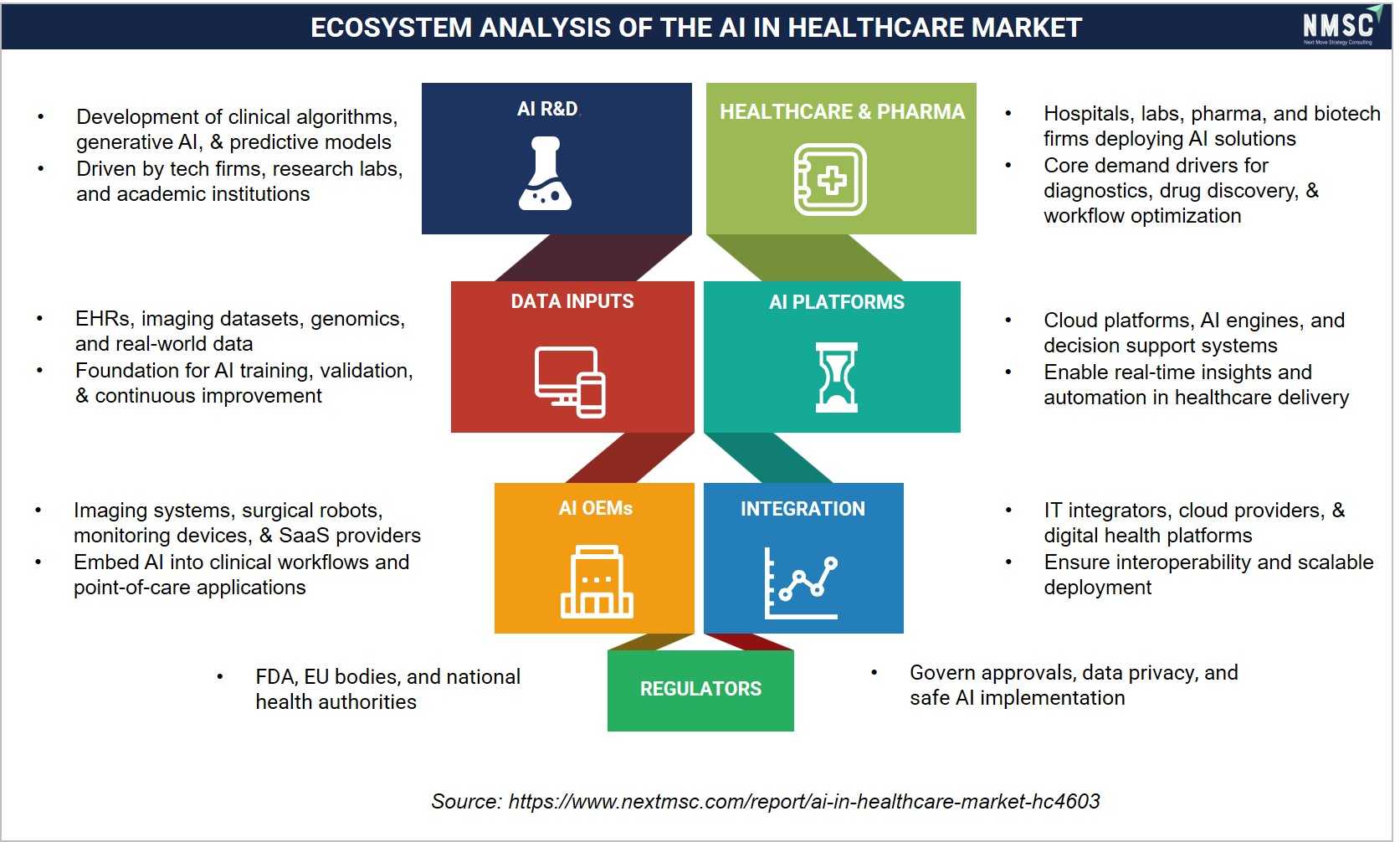
The above infographic highlights a highly interconnected AI in healthcare market where data, technology, and clinical application layers operate in synergy. We observed that AI R&D and data inputs form the foundational layer, enabling advanced platform development and analytics. Healthcare and pharma players act as primary demand centers, driving real-world implementation across diagnostics and drug discovery, whereas AI OEMs and integration networks play a critical role in e embedding solutions into clinical workflows, ensuring scalability and interoperability. At the same time, regulators shape adoption through compliance and safety frameworks. This ecosystem structure is accelerating innovation while ensuring controlled and scalable deployment across healthcare systems.
What Are the Key Market Drivers, Breakthroughs, and Investment Opportunities that will Shape the AI in Healthcare Industry in the Next Decade?
Growth Catalyst & Risk Assessment Matrix
|
DRIVERS/TRENDS/ RESTRAINTS |
(+/-) % IMPACT ON CAGR FORECAST |
GEOGRAPHIC RELEVANCE |
IMPACT TIMELINE |
|
Interoperable digital health records accelerating AI-ready clinical infrastructure and data integration |
+3.28% |
North America, Europe, Nordics, UK, Australia, South Korea (digitally mature healthcare systems) |
Medium to Long term (3–8 years) |
|
Evolving regulatory frameworks enabling scalable AI deployment through lifecycle-based oversight and faster approvals |
+2.74% |
North America (U.S.), Europe (EU, UK), Japan, South Korea |
Medium term (3–6 years) |
|
Rapid adoption of AI-driven diagnostics and screening improving early detection and clinical efficiency |
+2.51% |
Europe, India, UK, China, Southeast Asia (public health & population-scale deployment) |
Short to Medium term (2–5 years) |
|
Interoperability gaps and uneven healthcare spending limiting large-scale AI deployment across fragmented systems |
-2.63% |
Emerging Asia (India, Indonesia), Africa, Latin America, parts of Eastern Europe |
Medium to Long term (3–8 years) |
The AI in healthcare market is being structurally shaped by the expansion of interoperable digital health infrastructure, evolving regulatory frameworks, and the growing adoption of AI-driven diagnostics. NMSC’s assessment indicates that increasing availability of structured electronic health records is strengthening the data foundation required for scalable AI deployment, supported by rising digital health access across major markets. At the same time, regulatory advancements from bodies such as the FDA and UK MHRA are improving market clarity through lifecycle-based oversight, accelerating commercialization and adoption. Additionally, AI-driven diagnostics are emerging as a key growth area, enabling early disease detection and workflow efficiency. However, interoperability gaps and uneven healthcare spending continue to constrain adoption, particularly in less mature systems. Overall, the market is high-growth but uneven, driven by infrastructure readiness and regulatory progress.
Growth Drivers:
How Are Interoperable Digital Health Records Accelerating the AI in Healthcare Market?
NMSC’s analysis indicates that interoperable digital health records are becoming the core infrastructure layer enabling scalable AI deployment across healthcare systems. We found that the transition from fragmented, paper-based systems to structured, machine-readable datasets is significantly improving AI readiness in clinical environments. OECD data indicates that digital health service availability reached 82% in 2024, while Eurostat reports that 28% of EU citizens accessed personal health records online and 40% booked appointments digitally, reflecting growing patient engagement. Additionally, the European Commission highlights that 85% of Member States enable broad population-level access to electronic health records. From our interactions with hospital CIOs, we observed that AI adoption is increasingly driven by data interoperability and workflow integration rather than standalone algorithm performance, directly accelerating enterprise-scale deployment. Overall, as healthcare systems continue expanding interoperable digital infrastructure, AI integration is expected to become more embedded within routine clinical, administrative, and population health management functions.
How Are Evolving Regulatory Frameworks Enabling Scalable AI Deployment?
Evolving regulatory frameworks are transforming AI in healthcare into a more structured and investable market, as regulators are shifting toward lifecycle-based oversight, covering validation, transparency, and post-market monitoring. The U.S. FDA had authorised over 1,200 AI-enabled medical devices by November 2025, demonstrating growing regulatory acceptance, while its 2025 guidance on predetermined change control plans enables continuous updates without repeated approvals. In parallel, the UK MHRA expanded its AI Airlock programme with USD 4.7 million in funding and launched a national regulatory commission in 2025. Overall, procurement trends indicate a growing preference for AI solutions that demonstrate strong explainability and auditability, as transparency and regulatory compliance become central to vendor selection. This increasing regulatory clarity is reducing market uncertainty, accelerating commercialisation timelines, and enabling more scalable global deployment of AI solutions.
Growth Inhibitor:
How Are Interoperability Gaps and Uneven Spending Slowing AI Adoption in the AI in Healthcare Market?
Our market analysis indicates that interoperability gaps and uneven healthcare spending remain structural barriers to AI adoption across regions, as AI performance is highly dependent on consistent, high-quality data environments, which remain uneven globally. OECD data shows some countries still provide less than 30% of core EHR functionalities, highlighting significant disparities. NHS England reports that although 90% of trusts achieved EHR adoption by 2023, integration remains incomplete across care settings. Additionally, World Bank data indicates that India’s internet penetration reached 70% in 2025, underscoring both growth potential and infrastructure gaps. Budget constraints and competing investment priorities, therefore, continue to delay AI adoption, resulting in a fragmented and uneven deployment landscape across healthcare systems.
Growth Opportunity:
How Is AI-Driven Diagnostics Creating New AI in Healthcare Market Opportunities?
AI-driven diagnostics and screening represent the most immediate and scalable growth opportunity in the AI in healthcare market. Our assessment indicates that these applications align strongly with clinical demand for early disease detection and improved workflow efficiency. WHO Europe reports that nearly three-quarters of EU countries are already deploying AI-assisted diagnostics, indicating a shift from pilot to real-world implementation. In India, the TB Mukt Bharat campaign has used AI-enabled screening tools to identify over 158,000 high-risk areas, demonstrating large-scale public health application. Additionally, NHS England reports that AI tools deployed in 2025 can predict patient fall risk with 97% accuracy and support over 2 million home visits monthly. Overall, we observed strong demand for solutions that extend specialist capacity, positioning diagnostics as a primary entry point for AI commercialisation.
How Is the AI in Healthcare Industry Segmented in This Report, and What Are the Key Insights from the Segmentation Analysis?
Market Highlights & Strategic Insights - AI in Healthcare Market:
|
Segments |
Key Takeaways |
|
Offering |
Offering segmentation reflects a functional stack in the AI in Healthcare Market, led by software solutions across clinical, operational, research, and platform layers. Clinical software dominates due to high demand for diagnostics, documentation, and care coordination, while services support implementation and integration, and AI-enabled devices such as imaging and surgical systems drive hardware-linked adoption in high-value clinical settings. |
|
Deployment Model |
Deployment trends are led by cloud-based models due to scalability, real-time data access, and integration with hospital IT systems. On-premise remains relevant for data-sensitive environments requiring high control and compliance. Embedded AI is growing rapidly within medical devices and imaging systems, enabling real-time decision-making at the point of care. |
|
Commercial Model |
Commercial models are shifting toward subscription and usage-based pricing, driven by SaaS adoption and flexible cost structures in the AI in Healthcare Market. Perpetual licensing remains in legacy systems, while device sales dominate hardware-linked AI. Service fees are increasing due to demand for consulting, customisation, and ongoing system management. |
|
Sales Channel |
Direct sales dominate large enterprise and hospital deployments, particularly for integrated AI platforms. On the other hand, partner channels are critical for regional expansion and system integration. OEM embedded models are growing within medical device ecosystems, while marketplaces are emerging as scalable distribution channels for AI software solutions. |
|
End-User |
Healthcare providers represent the largest end-user segment, driven by demand for clinical efficiency and diagnostic accuracy. Life sciences companies are leveraging AI for drug discovery and clinical trials, while payers use AI for risk assessment and fraud detection. Public sector and research institutions support adoption through funding and innovation initiatives, with patients increasingly engaging through AI-driven digital health tools. |
By Offering Insights
Is Software-Led AI Adoption Driving the AI in Healthcare Market in 2025?
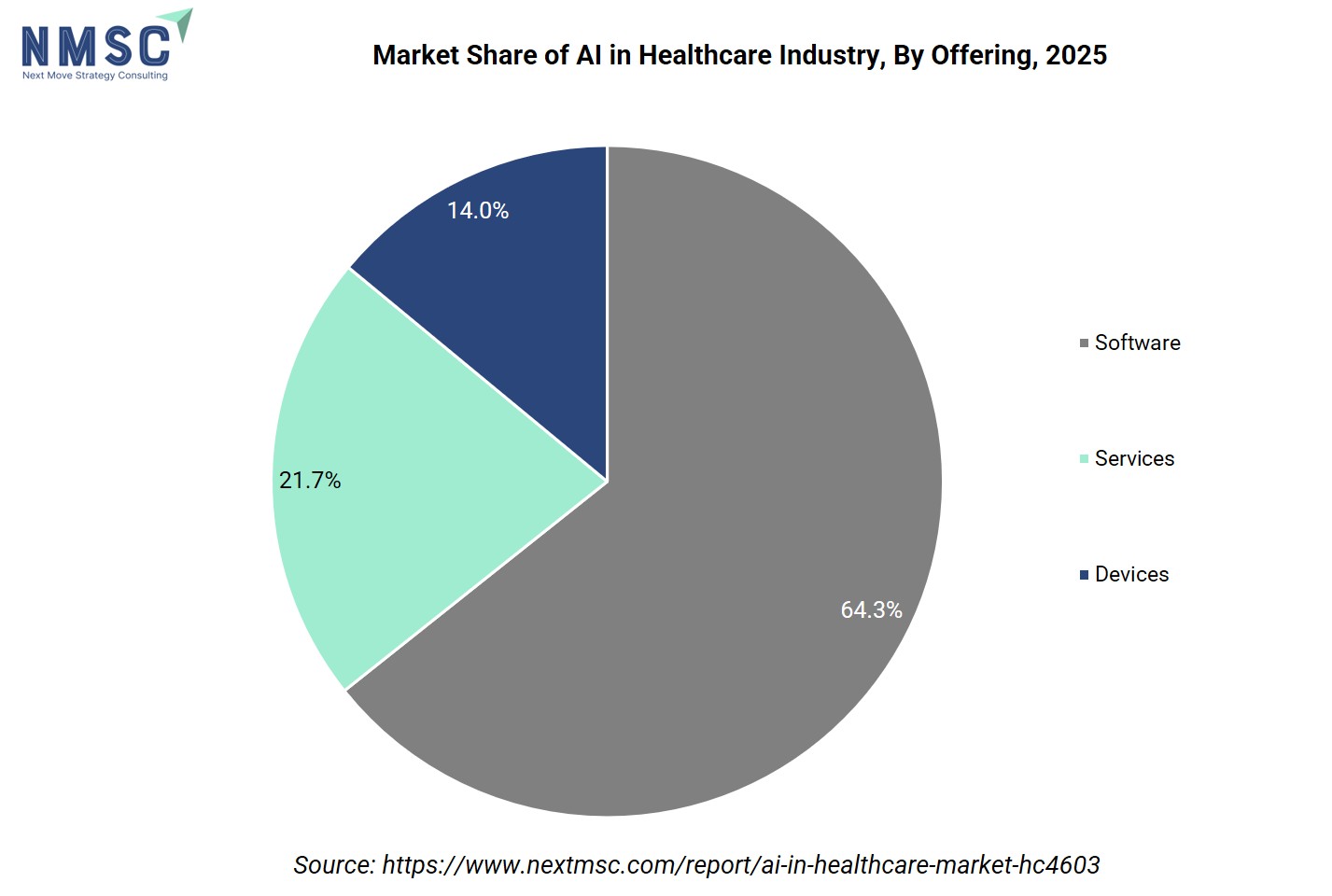
On the basis of offering, the AI in healthcare market is segmented into software, services, and devices.
Based on our assessment, we found that the software segment clearly dominates the AI in healthcare market due to its scalability, lower deployment barriers, and strong alignment with digital health transformation initiatives. While devices contribute significantly to high-value clinical applications, their growth is constrained by regulatory complexity and capital intensity. Services, although smaller in direct revenue share, act as a critical enabler of adoption by supporting integration and operationalisation of AI systems. Therefore, the market is fundamentally software-led, with services accelerating deployment and devices anchoring high-impact clinical use cases, creating a layered and interdependent competitive structure across the AI healthcare value chain.
By Deployment Model Insights
Is Cloud Deployment Accelerating AI Adoption in the AI in Healthcare Market in 2025?
Based on the deployment model, the market is segmented into cloud, on-premise, and embedded.
Cloud deployment clearly dominates the AI in healthcare market due to its scalability, lower upfront costs, and ability to support real-time data exchange across hospital networks and digital health platforms. We found that it enables faster AI model deployment, continuous updates, and seamless integration with electronic health records, making it central to enterprise-wide adoption. However, on-premise solutions remain critical in highly regulated environments where data sovereignty and control are paramount, particularly in large hospitals and public health systems. At the same time, embedded AI is gaining strategic importance in device-centric applications such as imaging and monitoring, enabling real-time, point-of-care decision support. Overall, the market is evolving toward a hybrid deployment ecosystem, where cloud acts as the backbone, supported by on-premise and embedded models to meet specific clinical, regulatory, and operational requirements.
By Commercial Model Insights
Is Subscription-Based Monetisation Driving the AI in Healthcare Market Growth?
Based on the commercial model, the AI in healthcare market is segmented into subscription, usage-based, perpetual license, device sales, and service fees.
NMSC’s research indicates that subscription models dominate the AI in healthcare market due to their alignment with cloud-based delivery, scalability, and predictable cost structures. Usage-based pricing is emerging as a flexible complementary model, particularly for diagnostics and API-driven services. While device sales remain critical in high-value clinical applications, their growth is constrained by capital intensity and slower adoption cycles. Perpetual licensing continues to decline as healthcare systems shift toward more agile and update-driven models. Service fees, although supportive in nature, are becoming increasingly important in enabling deployment and long-term system optimisation. Overall, the market is transitioning toward recurring and flexible monetisation structures, reflecting broader digital transformation trends in healthcare.
By Sales Channel Insights
Are Multi-Channel Commercial Strategies Accelerating AI Deployment in Healthcare in 2025?
Based on the sales channel, the AI in healthcare market is segmented into direct sales, partner channel, OEM embedded, and marketplace.
Direct sales continue to dominate due to their importance in enterprise-scale, high-complexity deployments requiring customisation and compliance assurance. However, we noticed that partner channels are becoming increasingly critical for expanding market reach and enabling localised implementation, particularly in emerging regions. OEM embedded models are gaining strong traction in device-driven applications, positioning them as a key growth driver in imaging and clinical hardware ecosystems. Meanwhile, marketplaces are gradually emerging as a flexible, digital-first channel for software distribution. Overall, the market is evolving toward a multi-channel strategy, where vendors leverage a combination of direct, partner, and embedded approaches to maximise adoption and scalability.
By End-User Insights
Are Healthcare Providers Driving AI Adoption in the AI in Healthcare Market Expansion in 2025?
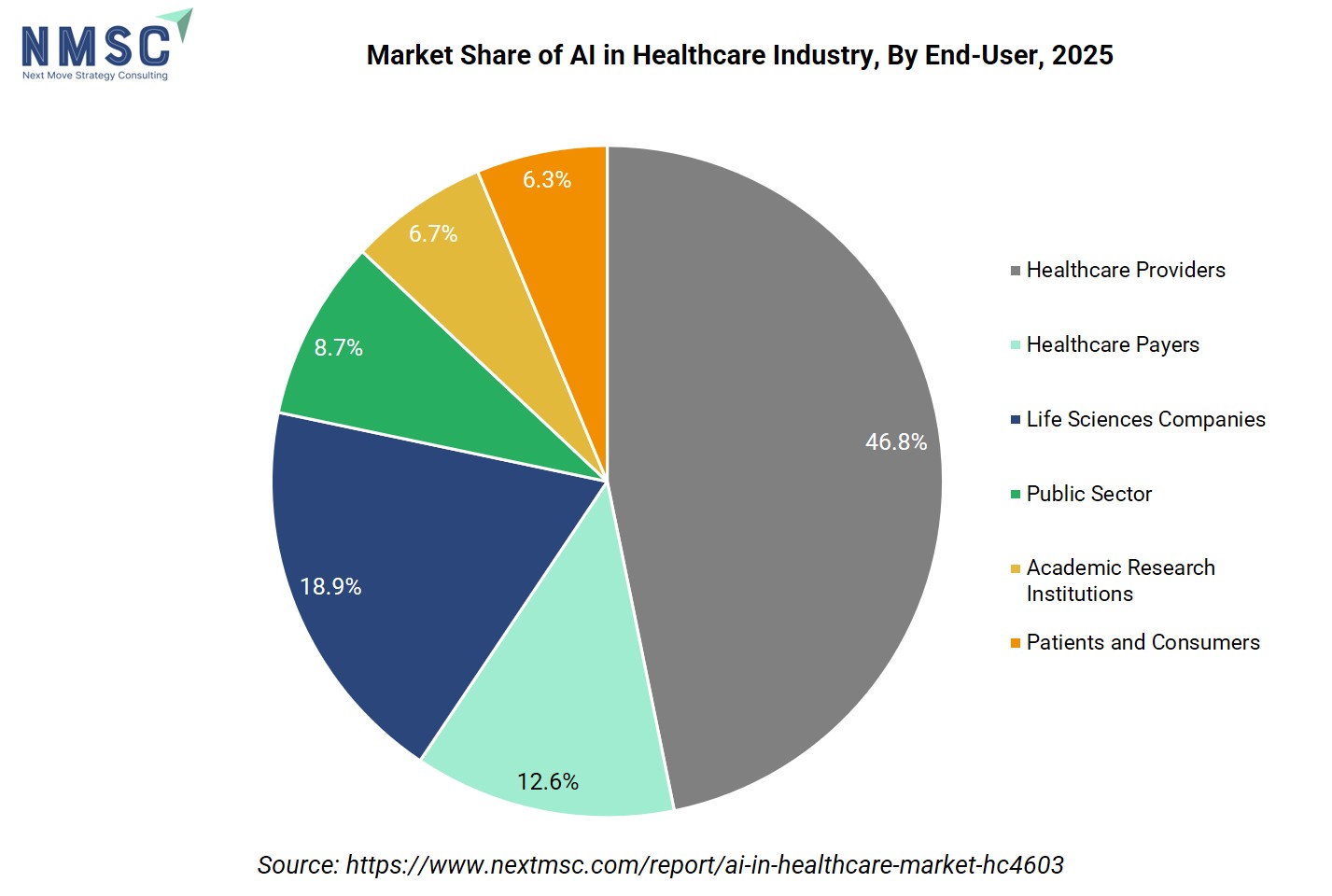
Based on end-user, the AI in healthcare market is segmented into healthcare providers, healthcare payers, life sciences companies, public sector, academic research institutions, and patients and consumers.
In our analysis, we observed that healthcare providers dominate the AI in healthcare market as primary adopters, given their direct role in diagnosis, treatment, and hospital operations. Life sciences companies act as key innovation drivers, particularly in drug discovery and clinical research, while payers contribute through financial optimisation and risk analytics. The public sector supports adoption through policy and funding, and academic institutions drive foundational research. Meanwhile, patients and consumers are emerging as a fast-growing segment through digital health engagement. Overall, the market is provider-centric, supported by a broader ecosystem of stakeholders enabling innovation, funding, and end-user engagement across healthcare systems.
Regional Outlook
Geographic Performance Snapshot:
|
Geography |
Key Takeaways |
|
North America |
North America is a mature AI in Healthcare Market driven by advanced healthcare infrastructure, high digital adoption, and strong regulatory frameworks led by the FDA. Demand is supported by widespread use of AI in imaging, diagnostics, and clinical workflows. We also observed increasing focus on generative AI, workflow automation, and cloud-integrated healthcare systems, shaping innovation and deployment strategies across the region. |
|
Europe |
Europe is a highly regulated and quality-driven AI healthcare market, influenced by GDPR and evolving EU AI regulations. Demand is strong across Germany, France, and the UK, with growing adoption of AI in diagnostics and hospital automation. Moreover, increasing emphasis on ethical AI, interoperability, and data governance is shaping long-term, sustainable AI integration across healthcare systems. |
|
Asia‑Pacific |
Asia-Pacific is the fastest-growing AI in Healthcare Market, driven by large population demand, healthcare access gaps, and strong government-led digital health initiatives. Countries such as China, India, Japan, and South Korea are key contributors. We also noticed rapid adoption of AI in diagnostics, telemedicine, and hospital automation, supported by scalable and cost-efficient deployment models. |
|
Latin America |
Latin America is an emerging AI healthcare market supported by rising healthcare digitisation and increasing demand for accessible care. We found strong adoption in telemedicine and diagnostic AI, particularly in Brazil and Mexico. Cost sensitivity remains a key factor, while improving digital infrastructure and public health initiatives are gradually supporting broader AI integration. |
|
Middle East & Africa |
The Middle East & Africa region is in a developing phase, driven by government-led healthcare modernisation and increasing investment in digital health. Gulf countries show higher adoption of AI in smart hospitals and diagnostics, while Africa remains focused on telemedicine and basic AI applications. We also observed gradual regulatory development and growing investment, supporting long-term market expansion. |
The AI in healthcare market is geographically studied across North America, Europe, Asia Pacific, the Middle East & Africa, and Latin America, and each region is further studied across countries.
AI in Healthcare Market in North America
Based on our analysis, we found that North America remains the most mature and innovation-led AI in healthcare market globally, driven by advanced digital infrastructure, strong hospital IT penetration, and high healthcare spending intensity. The region benefits from large-scale adoption of AI in diagnostics, imaging, and clinical workflow automation. The U.S. Centers for Medicare & Medicaid Services (CMS) continues to highlight that healthcare spending accounts for nearly one-fifth of GDP, creating strong demand pressure for efficiency-driven AI deployment. The presence of hyperscalers like Microsoft, Amazon, and Google, alongside medtech leaders such as GE HealthCare, accelerates the commercialisation of AI tools. Canada is also advancing through publicly funded digital health modernization programs. Overall, we found North America’s competitive edge lies in rapid AI adoption, strong regulatory clarity for medical devices, and deep integration of AI into enterprise healthcare systems.
AI in Healthcare Market in the United States
The United States represents the epicenter of AI in healthcare innovation, supported by a highly digitised hospital ecosystem and a strong venture-backed AI ecosystem. Based on CMS data trends and FDA regulatory approvals for AI-based medical devices, we found that radiology, oncology, and predictive analytics dominate adoption. The U.S. healthcare system’s scale and complexity drive AI integration for cost containment and operational efficiency. Leading players such as Epic Systems, Microsoft, and NVIDIA are deeply embedded in hospital workflows. The U.S. Food and Drug Administration (FDA) has also accelerated approvals for AI-enabled diagnostic tools, reinforcing commercialisation speed. The U.S. market, therefore, is defined by rapid innovation cycles, strong private-sector investment, and early adoption of generative AI in clinical documentation and decision support systems.
AI in Healthcare Market in Canada
Our evaluation shows that Canada represents a steadily growing but structurally centralised AI in healthcare market, driven by publicly funded healthcare systems and national digital health strategies. Provinces such as Ontario and British Columbia are leading AI adoption in diagnostic imaging and virtual care platforms. According to Health Canada and provincial digital health programs, AI is increasingly being deployed to improve wait-time management and radiology efficiency. In our assessment, Canada’s market strength lies in its coordinated healthcare system, enabling faster nationwide scaling of AI pilots compared to fragmented markets. However, slower procurement cycles and strict data governance frameworks moderate adoption speed. We found that Canada is positioning itself as a testbed for responsible AI deployment, particularly in ethical AI governance, clinical validation, and privacy-first healthcare data ecosystems.
AI in Healthcare Market in Europe
From our regional assessment, we observed that Europe presents a highly regulated yet innovation-intensive AI healthcare market, driven by strong data protection frameworks such as GDPR and EU AI Act compliance requirements. Increasing investment in AI across diagnostic imaging, hospital automation, and population health analytics is further strengthening market development. Europe’s competitive landscape is shaped by close collaboration between public healthcare systems and private medtech firms, enabling structured deployment pathways. Countries such as Germany, France, and the UK are leading adoption, while Nordic countries demonstrate advanced digital maturity. Overall, Europe’s AI healthcare growth is defined by regulatory rigour, interoperability standards, and a strong emphasis on ethical AI deployment, which may slow commercialisation but enhances long-term system trust and scalability.
AI in Healthcare Market in the United Kingdom
Our market assessment suggests that the United Kingdom is a frontrunner in AI-driven public healthcare transformation, primarily led by the National Health Service (NHS). We observed that NHS England is actively deploying AI across imaging triage, patient scheduling, and clinical decision support, with growing integration into radiology networks to address persistent diagnostic backlogs. Furthermore, the UK benefits from centralized healthcare data systems, enabling relatively faster and more scalable AI deployment compared to other European peers. However, funding constraints and workforce shortages continue to pose structural challenges to widespread implementation. Despite these limitations, the UK AI in healthcare market remains highly receptive to partnerships between public institutions and AI vendors, positioning it as a key European hub for clinical AI innovation and real-world validation.
AI in Healthcare Market in Germany
Our regional assessment indicates that Germany represents Europe’s most engineering-driven AI healthcare market, supported by robust hospital infrastructure and progressive digital health legislation such as the Digital Healthcare Act (DVG). Drawing on initiatives led by the Federal Ministry of Health, we observed increasing adoption of AI in diagnostics, particularly in radiology and oncology. Germany’s market is characterised by stringent data protection standards and physician-led adoption models, which may slow large-scale deployment but enhance clinical validation and trust. Overall, German hospitals are steadily increasing investments in AI-enabled imaging systems and hospital information platforms, with Siemens Healthineers playing a central role in domestic innovation and the global export of AI-integrated medical technologies.
AI in Healthcare Market in France
France is rapidly strengthening its AI in healthcare market ecosystem through national digital health strategies led by the Ministry of Health and initiatives such as the Health Data Hub. Based on our analysis, we found that there is strong investment in AI across population health analytics, hospital automation, and cancer diagnostics, supporting broader system modernization. France’s centralised healthcare system enables more structured data access, improving AI training capabilities and deployment potential. However, regulatory caution and well-defined ethical governance frameworks continue to slow commercial scaling. Overall, France is positioning itself as a leader in responsible AI healthcare deployment, balancing innovation with strict data sovereignty and patient protection principles.
AI in Healthcare Market in Italy
We observed that Italy’s AI in healthcare market is in a transition phase, supported by EU-funded digital transformation programs and the modernisation of regional healthcare systems, although adoption remains uneven across northern and southern regions. AI is primarily deployed in hospital administration, imaging support, and telemedicine expansion, reflecting an operational focus rather than advanced clinical integration. However, fragmented infrastructure and persistent regional disparities continue to limit scalability and uniform implementation. Italy presents significant long-term opportunities for AI vendors, particularly in standardizing hospital IT systems and improving diagnostic efficiency across public healthcare networks.
AI in Healthcare Market in Spain
Based on our assessment, we analysed that Spain demonstrates moderate but accelerating AI adoption in healthcare, driven by national digital health strategies and regional hospital digitisation programs, with strong use of AI in radiology and primary care optimisation, particularly across autonomous regions. Spain’s public healthcare system enables structured AI pilot deployment, supporting controlled testing and validation of new technologies; however, budget constraints continue to limit rapid scaling. Spain is therefore increasingly collaborating with broader European AI initiatives to improve interoperability and clinical data integration, positioning itself as an emerging adopter within Western Europe’s AI healthcare ecosystem.
AI in Healthcare Market in the Nordics
The Nordics, comprising Sweden, Norway, Denmark, and Finland, represent one of the most digitally advanced healthcare regions globally. Based on national e-health agency reports, AI adoption is highly integrated into national health records and diagnostic systems. Moreover, strong public trust, high digital literacy, and centralized healthcare databases enable rapid AI deployment in predictive care and chronic disease management. We conclude that the Nordics are global leaders in AI-driven preventive healthcare models, particularly in data-driven population health analytics and real-time clinical decision support systems.
AI in Healthcare Market in the Asia-Pacific
Our regional assessment indicates that Asia-Pacific represents the fastest-evolving AI in healthcare market, driven by a combination of large population bases, healthcare infrastructure gaps, and strong government-led digital health initiatives. AI adoption is accelerating across diagnostics, telemedicine, and hospital workflow automation, reflecting growing system-wide demand for efficiency and accessibility. The region demonstrates a dual-speed adoption pattern: developed economies such as Japan, South Korea, and Australia are advancing toward integrated, AI-enabled hospital ecosystems, while emerging economies like India and Indonesia are leveraging AI to expand access and reduce cost barriers. We also noted that public-private partnerships and national AI strategies are playing a critical role in scaling deployment across the region. Overall, Asia-Pacific’s competitive advantage lies in its ability to combine high-volume data generation with scalable, cost-efficient AI applications, positioning it as a key growth engine for the global market.
AI in Healthcare Market in China
China stands out as one of the most aggressive adopters of AI in healthcare, supported by strong central government direction and large-scale digitisation programs led by the National Health Commission. We observed widespread deployment of AI across radiology, pathology, and hospital triage systems, particularly within urban care networks, reflecting rapid operational integration. The country’s vast patient data ecosystem enables accelerated training and scaling of AI models, creating a significant competitive advantage. China’s regulatory environment is becoming increasingly structured to support AI commercialisation while maintaining strict data governance. Furthermore, domestic technology platforms are deeply embedded within care delivery, enabling end-to-end digital ecosystems. Overall, China’s market is defined by speed, scale, and state-backed integration, positioning it as a global leader in operationalising AI across large patient populations.
AI in Healthcare Market in Japan
Japan’s AI in healthcare market is shaped by its ageing population and the need to enhance clinical efficiency within a highly developed healthcare system. Drawing on initiatives from the Ministry of Health, Labour and Welfare, we observed that AI adoption is primarily focused on imaging diagnostics, robotic-assisted procedures, and elderly care management, reflecting targeted clinical use cases. Japan also benefits from a strong robotics and precision technology ecosystem, which supports the seamless integration of AI into clinical workflows. However, adoption remains cautious due to stringent clinical validation requirements and a conservative healthcare environment. Overall, Japan’s strategy emphasizes accuracy, safety, and incremental innovation, positioning it as a leader in high-precision, reliability-focused AI healthcare solutions rather than rapid large-scale deployment.
AI in Healthcare Market in India
Based on our research, we observed that India represents a high-growth, opportunity-driven AI healthcare market, underpinned by large population demand and rapid digital health expansion. There is increasing integration of AI across telemedicine platforms, diagnostic tools, and hospital management systems, reflecting a strong push toward scalable healthcare delivery. Affordability constraints and uneven healthcare infrastructure are key factors driving the adoption of low-cost, scalable AI solutions, particularly in radiology and pathology. India’s strong IT ecosystem and dynamic startup landscape are further accelerating innovation in AI-driven healthcare delivery models. Overall, India is emerging as a critical market for democratized AI healthcare, with a focus on improving access, reducing diagnostic gaps, and scaling digital health services across both urban and rural populations.
AI in Healthcare Market in South Korea
South Korea is among the most technologically advanced AI in healthcare market in Asia-Pacific, supported by robust digital infrastructure, including nationwide 5G networks and smart hospital initiatives. AI is widely deployed across imaging diagnostics, genomics, and clinical decision support systems, reflecting high levels of technological integration. The country’s advantage lies in the rapid adoption of advanced technologies and close collaboration between government bodies, hospitals, and technology companies, enabling efficient innovation cycles. We also noted that regulatory frameworks are evolving to support faster approval and commercialisation of AI-based medical devices. Overall, South Korea is positioning itself as a leader in precision medicine and AI-integrated hospital ecosystems, with a strong focus on innovation and real-time clinical intelligence.
AI in Healthcare Market in Taiwan
Our assessment indicates that Taiwan is emerging as a niche but strategically important AI healthcare market, driven by its strong semiconductor and information technology ecosystem. We observed increasing adoption of AI in hospital imaging systems, clinical decision support, and medical device innovation, reflecting a technology-led growth model. Taiwan’s integration of hardware capabilities with AI software provides a unique advantage, particularly in the development of AI-enabled diagnostic equipment. Government-led healthcare digitalization initiatives are further supporting adoption across hospitals and research institutions, strengthening the deployment environment. Overall, Taiwan’s market is characterized by high technical expertise and export-oriented growth, positioning it as a key player in the convergence of AI and medical device manufacturing.
AI in Healthcare Market in Indonesia
Indonesia’s AI healthcare market is in an early but rapidly evolving stage, driven by the need to improve healthcare accessibility across a geographically dispersed population. AI adoption is primarily concentrated in telemedicine, mobile health platforms, and basic diagnostic support systems, reflecting an access-oriented deployment model. Infrastructure limitations and uneven healthcare access remain key challenges; however, these factors also generate strong demand for scalable, low-cost AI solutions. At the same time, increasing investment in digital health platforms aimed at expanding rural healthcare coverage is supporting gradual market development. Indonesia, therefore, presents significant long-term growth potential, particularly for AI applications focused on accessibility, affordability, and primary care optimisation.
AI in Healthcare Market in Australia
Australia represents a mature and steadily advancing AI in healthcare market, supported by a strong public healthcare system and high adoption of digital health records. The growing use of AI in radiology, chronic disease management, and hospital workflow optimisation reflects a shift toward data-driven clinical efficiency. Australia also benefits from well-defined regulatory frameworks and a high level of clinical validation, which support the safe and structured deployment of AI technologies. In parallel, there is increasing integration of AI with cloud-based healthcare systems, enabling greater scalability and interoperability across care networks. Overall, Australia is positioning itself as a regional leader in clinically validated AI deployment, with a strong focus on quality, safety, and patient-centric care delivery.
AI in Healthcare Market in Latin America
Our regional analysis indicates that Latin America is an emerging AI healthcare market characterized by growing digital transformation efforts and persistent healthcare access challenges. We observed increasing adoption of AI across telemedicine, diagnostics, and public health management systems, reflecting a focus on expanding access and improving system efficiency. Countries such as Brazil and Argentina are leading adoption due to relatively stronger healthcare infrastructure and higher levels of digital readiness. However, economic constraints and uneven access to advanced technologies continue to limit large-scale deployment across the region. Overall, Latin America offers strong long-term growth potential, particularly in AI-enabled remote care, diagnostic accessibility, and cost-efficient healthcare delivery models aimed at underserved populations.
AI in Healthcare Market in the Middle East & Africa
The Middle East & Africa region represents a high-potential but uneven AI in healthcare market, driven by government-led modernisation programs and varying levels of infrastructure development. Based on initiatives such as Saudi Vision 2030 and the UAE’s national health strategies, we observed significant investment in smart hospitals, AI diagnostics, and broader digital health ecosystems. The Middle East is advancing rapidly due to strong funding and centralised healthcare planning, while Africa remains in earlier stages of adoption due to infrastructure and funding constraints. However, telemedicine and mobile-based AI solutions are expanding quickly across African markets, improving access in underserved regions. Overall, the region presents a dual opportunity landscape, with high-end AI deployment in the Middle East and scalable, access-driven solutions in Africa.
Regulatory Framework Analysis of the AI in Healthcare Market
The AI in Healthcare regulatory landscape is evolving rapidly, where policy frameworks, compliance standards, and data governance collectively shape market adoption and innovation.
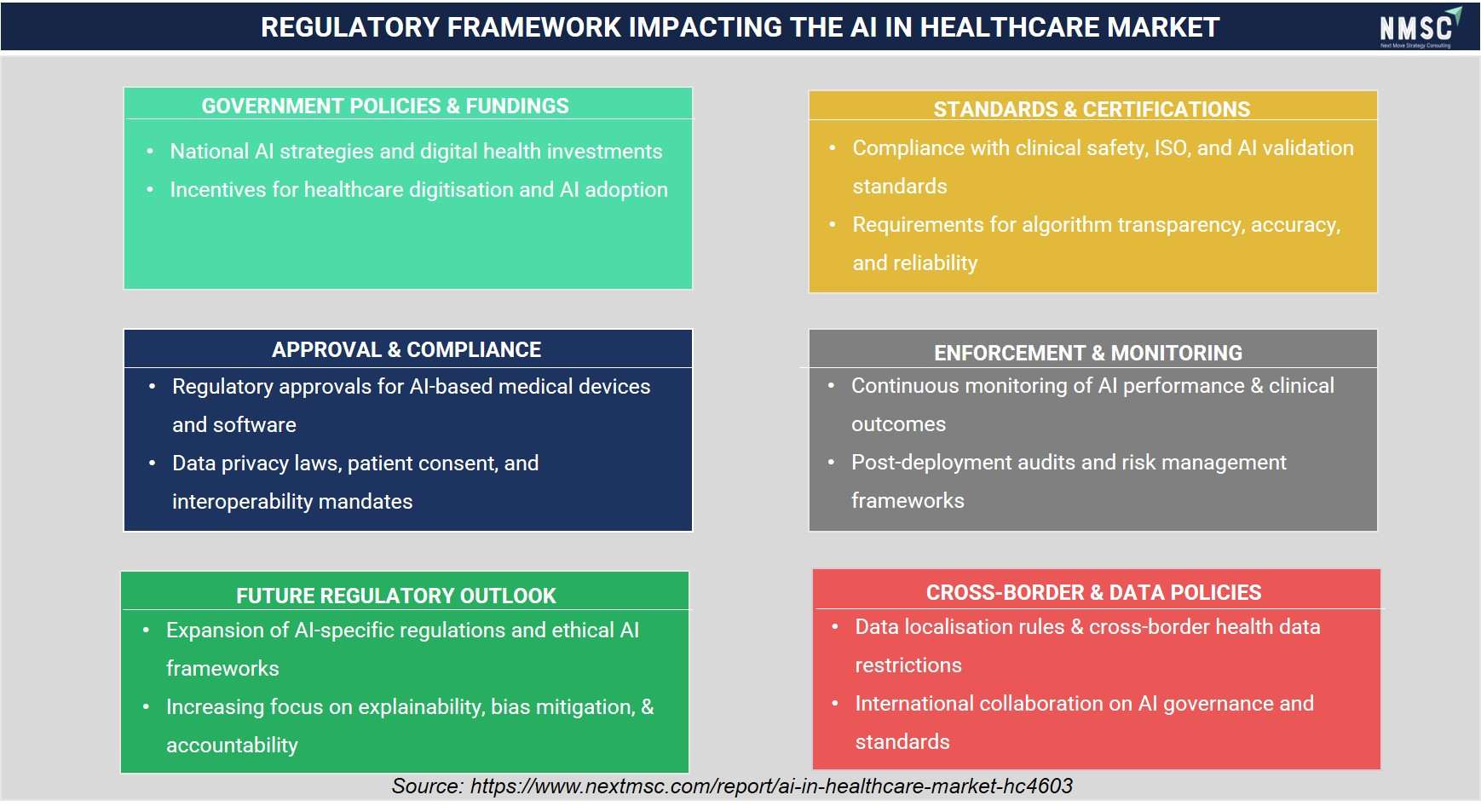
The above infographic highlights a structured regulatory ecosystem governing AI in healthcare market, where policy support and compliance frameworks directly influence market growth. We noticed that government funding and national AI strategies are accelerating adoption, while stringent approval processes ensure clinical safety and reliability. Standards and certifications are increasingly focused on algorithm validation and transparency, reinforcing trust among stakeholders. At the same time, enforcement mechanisms and post-market monitoring are critical in managing risks associated with real-world deployment. We also found that evolving data governance and cross-border policies are shaping scalability. In our assessment, regulatory frameworks are not only controlling risk but actively enabling sustainable and responsible AI integration across healthcare systems.
Competitive Landscape
Competitive Dynamics & M&A Landscape:
|
Key Takeaways |
|
The competitive landscape is shaped by global leaders such as Microsoft, Google, Amazon, NVIDIA, Oracle, Siemens Healthineers, GE HealthCare, Philips, Epic Systems, and AI-native firms like Aidoc, Viz.ai, and Tempus AI. We observe that competition is driven by ecosystem scale, clinical integration depth, and dominance in high-value areas like imaging, diagnostics, and predictive analytics. Market leadership is increasingly defined by interoperability and embedded AI across healthcare workflows rather than standalone solutions. |
|
Global players are building integrated AI healthcare ecosystems combining cloud platforms, hospital systems, and clinical decision tools, while specialised firms focus on niche applications such as radiology, pathology, and emergency triage. In our analysis, hyperscalers like Microsoft and Amazon compete on cloud scale, while medtech firms embed AI into imaging systems. Niche AI companies differentiate through precision-focused clinical applications where speed and accuracy are critical. |
|
Innovation is a key competitive driver, especially in generative AI, predictive analytics, and workflow automation. Companies such as Microsoft and Epic Systems are embedding AI into clinical workflows, while NVIDIA strengthens healthcare AI infrastructure. We found that investment is shifting toward real-time decision support and interoperable platforms, making adaptability and clinical reliability the core basis of competitive advantage. |
Which Companies Dominate the AI in Healthcare Industry and How Do They Compete?
Based on our analysis, we observed that the AI in healthcare market is led by a mix of hyperscale tech firms and specialised medtech companies, including Microsoft, NVIDIA, Google (Alphabet), Amazon, Oracle, Siemens Healthineers, GE HealthCare, Philips, Epic Systems, and emerging AI-native firms like Aidoc, Viz.ai, and Tempus AI. Competition is primarily centred on platform control, data access, and clinical integration depth. For instance, NVIDIA continues to strengthen its healthcare AI compute leadership through expanded ecosystem collaborations for medical imaging and life sciences workloads in 2025, reinforcing its infrastructure dominance. Similarly, Microsoft and Amazon compete through cloud-integrated AI ecosystems, while medtech firms differentiate through embedded diagnostic intelligence within imaging and hospital systems.
Market Dominated by AI in Healthcare Giants and Specialists
Industry analysis suggests that the market structure is increasingly bifurcated between large-scale ecosystem providers and niche AI specialists. Giants such as Microsoft, Google, and Oracle focus on cloud-based AI infrastructure and hospital-wide deployment models, while firms like Aidoc, Viz.ai, and Qure.ai concentrate on radiology-specific AI solutions. For example, GE HealthCare and Siemens Healthineers continue to expand AI-enabled imaging ecosystems, as highlighted in RSNA 2025 coverage showing intensified competition in AI-forward imaging platforms. This dual-structure competition is intensifying regional adoption differences, with developed markets prioritizing integrated enterprise AI systems while emerging markets lean toward modular, cost-efficient diagnostic AI tools.
Innovation and Adaptability Drive Market Success
Innovation speed and clinical adaptability are now central competitive differentiators. We found that companies are rapidly moving toward AI-native hospital workflows that integrate predictive analytics, automation, and real-time decision support. Companies are rapidly embedding generative AI, predictive analytics, and workflow automation into hospital systems to improve diagnostic accuracy and operational efficiency. The shift is clearly moving from standalone AI applications to fully integrated, workflow-embedded intelligence systems that support clinicians in real time. Adaptability is also critical, as vendors must align solutions with regulatory standards, interoperability requirements, and diverse hospital IT infrastructures. This is accelerating the transition toward AI-enabled healthcare ecosystems that prioritise efficiency, precision, and scalability.
Market Players to opt for Merger & Acquisition Strategies to Expand Their Presence
Strategic partnerships, collaborations, and targeted acquisitions are increasingly shaping competitive positioning in the AI in healthcare market. Companies are actively acquiring or partnering with AI startups to strengthen capabilities in areas such as imaging analytics, predictive diagnostics, and clinical decision support. These moves are not aimed at scale alone but at capability enhancement, particularly in high-value clinical domains. This trend reflects a broader consolidation strategy where healthcare enterprises integrate specialised AI technologies to accelerate product development cycles, expand solution portfolios, and improve clinical accuracy across healthcare delivery systems.
List of Key AI in Healthcare Companies
-
Microsoft Corporation
-
Alphabet Inc.
-
Amazon.com, Inc.
-
Oracle Corporation
-
Siemens Healthineers AG
-
GE HealthCare Technologies Inc.
-
Koninklijke Philips N.V.
-
Medtronic plc
-
Intuitive Surgical, Inc.
-
Epic Systems Corporation
-
Tempus AI, Inc.
-
PathAI, Inc.
-
Aidoc Medical, Ltd.
-
Viz.ai, Inc.
-
Qure.ai Technologies Inc.
-
Cleerly, Inc.
-
Owkin, Inc.
-
ClosedLoop.ai Inc.
What Are the Latest Key Industry Developments?
-
March, 2026- Microsoft introduced Copilot Health, an AI healthcare assistant that analyses medical records, wearable data, and clinical notes to generate personalised insights. The system aims to transform consumer healthcare engagement and chronic disease management, strengthening Microsoft’s position in AI-powered digital health platforms.
-
November, 2025- Microsoft expanded its healthcare agentic AI systems integrated with Teams and Foundry, enabling automated cancer staging, treatment planning, and clinical summarisation. The initiative supports hospital workflow automation and reduces physician workload, reinforcing Microsoft’s shift toward autonomous AI agents in healthcare operations.
-
November, 2025- Microsoft launched its MAI Superintelligence Team focused on developing domain-specific AI, starting with medical diagnosis. The initiative aims to build highly specialized models surpassing human capability in healthcare decision-making, signalling a strategic shift from general AI to sector-focused “humanist superintelligence.
Expert Insights
 “With generative AI, we have the opportunity to address some of the most pressing needs of the healthcare industry. We can help mitigate widespread staffing shortages and increase access to high-quality care — all while improving outcomes for patients.”
- Munjal Shah, Co-founder and CEO of Hippocratic AI
Statement made in the context of healthcare generative AI microservices launched by NVIDIA.
Market Interpretation
The statement reflects the growing transition of generative AI from experimental healthcare applications toward scalable enterprise-grade deployment across drug discovery, medical technology, and digital health ecosystems. Based on NVIDIA’s healthcare AI announcements, the company introduced generative AI microservices designed to support biomedical imaging, digital biology, clinical documentation, and drug development workflows through interoperable deployment frameworks. Industry analysis suggests that healthcare organisations are increasingly prioritising modular AI infrastructure that can integrate into existing clinical and research environments rather than relying on isolated AI tools. This evolution is positioning generative AI as a foundational healthcare infrastructure layer capable of improving operational efficiency, accelerating research timelines, supporting clinical decision-making, and expanding automation across healthcare workflows.
Porter’s Five Forces Analysis of the AI in Healthcare Market
The AI in healthcare market is shaped by competitive forces that influence innovation, adoption, and long-term profitability across the ecosystem.
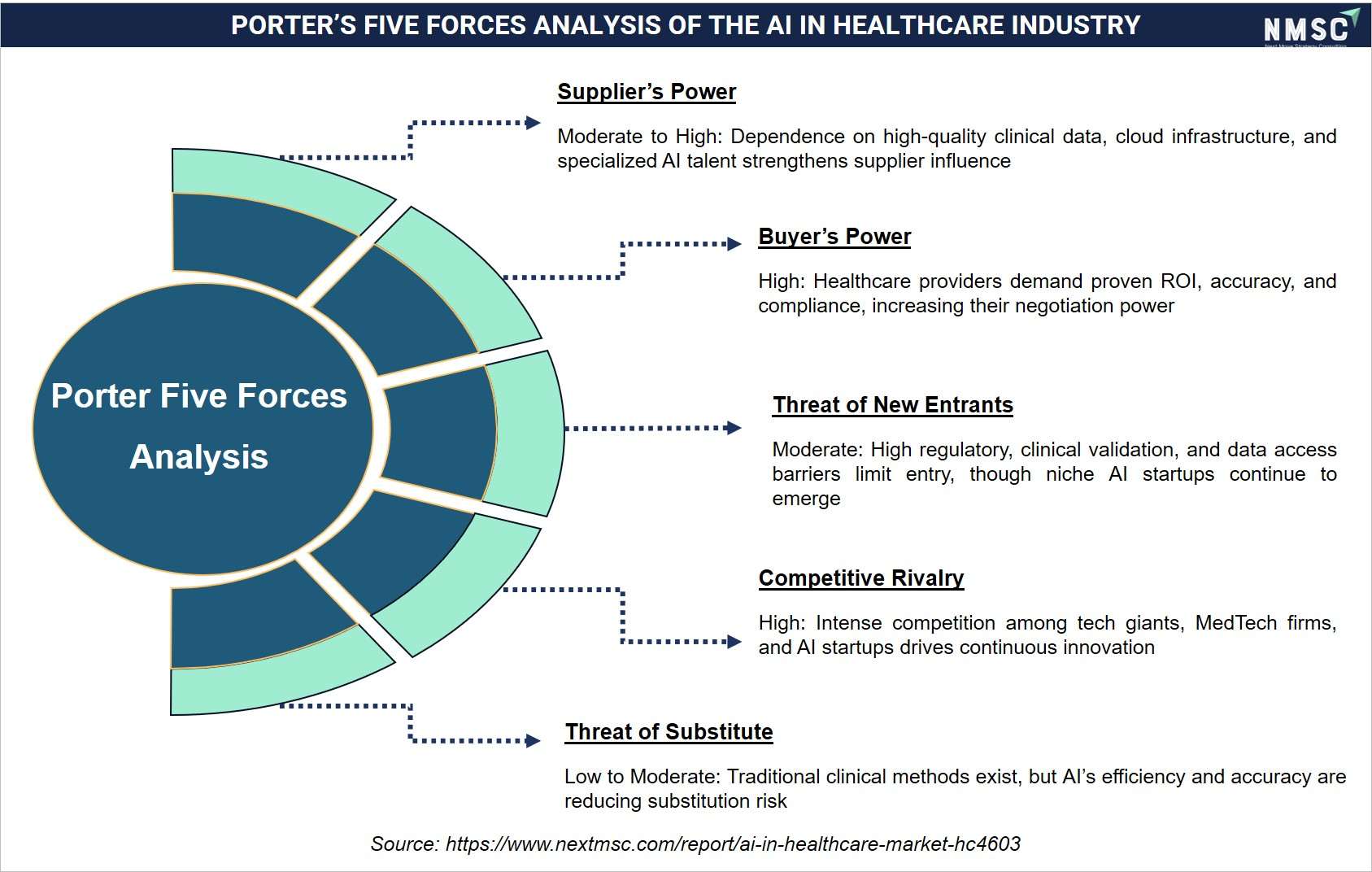
Our evaluation indicates a highly competitive AI in healthcare market shaped by strong buyer power and intense rivalry. We observed that regulatory and data barriers moderate new entrant risk, while supplier influence remains significant due to reliance on datasets and infrastructure. Healthcare providers exert strong control by demanding validated and cost-effective solutions. At the same time, substitution risk is declining as AI demonstrates superior clinical efficiency. These forces collectively drive innovation, partnerships, and differentiation, shaping long-term competitiveness and scalable adoption across healthcare systems.
What Are the Key Factors Influencing Investment Analysis & Opportunities in the AI in Healthcare Market?
From our analysis, we found that investor activity in the AI in healthcare market is increasingly concentrating around scalable, workflow-integrated platforms that demonstrate measurable clinical and operational value. Venture capital and strategic healthcare investors are prioritising companies focused on ambient clinical documentation, AI-enabled drug discovery, predictive diagnostics, and healthcare automation, as buyers increasingly demand production-ready solutions rather than experimental pilots. Furthermore, valuations are strengthening for AI-native healthcare firms capable of integrating with electronic health records, imaging systems, and enterprise care workflows.
We also noticed growing investment momentum around generative AI infrastructure, multimodal clinical data platforms, and healthcare foundation models, particularly in North America and selected European innovation hubs. Strategic partnerships between technology companies, hospital systems, pharmaceutical firms, and cloud providers are accelerating commercial deployment opportunities. Investor interest is increasingly shifting toward platforms that improve clinician productivity, reduce administrative burden, support personalised medicine, and enable interoperable digital healthcare ecosystems, positioning AI as a long-term infrastructure investment opportunity rather than a standalone software category.
Key Benefits for Stakeholders:
Next Move Strategy Consulting (NMSC) provides a comprehensive and evidence-based analysis of the AI in healthcare market, covering historical developments from 2020 to 2025 and offering forward-looking forecasts through 2035. Our study assesses the market at global, regional, and country levels, combining quantitative outlooks with qualitative insights into key growth drivers, adoption constraints, technology evolution, and investment dynamics across major AI in Healthcare segments.
Our evaluation indicates that the AI in healthcare market is creating differentiated value across investors, healthcare providers, patients, and technology stakeholders by improving operational efficiency, accelerating clinical decision-making, and strengthening long-term digital healthcare infrastructure. Investors benefit from expanding opportunities in scalable AI platforms, clinical automation, digital therapeutics, and interoperable healthcare ecosystems, particularly as healthcare systems increasingly prioritise productivity-enhancing technologies with recurring enterprise value. Additionally, healthcare providers and hospital networks gain from reduced administrative burden, improved workflow optimisation, enhanced diagnostic support, and more efficient resource allocation, helping address workforce shortages and rising care complexity. Patients benefit through faster diagnosis pathways, improved care coordination, personalised treatment planning, and broader digital access to healthcare services. We also noticed that regulators and public health authorities are supporting adoption through evolving AI governance frameworks, digital health modernisation initiatives, interoperability standards, and responsible AI guidelines, which are collectively improving market confidence and accelerating enterprise-scale deployment opportunities.
|
Parameters |
Details |
|
Customization Scope |
Free customization (equivalent to up to 80 analyst-working hours) after purchase. Addition or alteration to country, regional & segment scope. |
|
Pricing and Purchase Options |
Avail customized purchase options to meet your exact research needs. |
|
Approach |
In-depth primary and secondary research; proprietary databases; rigorous quality control and validation measures. |
|
Analytical Tools |
Porter's Five Forces, SWOT, value chain, and Harvey ball analysis to assess competitive intensity, stakeholder roles, and relative impact of key factors. |
AI in Healthcare Market Key Segments
By Offering
-
Software
-
Clinical Software
-
Diagnosis and Screening
-
Documentation and Coding
-
Care Coordination
-
-
Operational Software
-
Hospital Operations
-
Revenue Cycle Management
-
Supply Chain
-
-
Research Software
-
Drug Discovery
-
Clinical Trials
-
Real-World Evidence
-
-
Platform Software
-
Model Development
-
Model Hosting
-
-
-
Services
-
Consulting
-
Implementation
-
Managed Services
-
Business Process Outsourcing
-
-
Devices
-
Imaging Systems
-
Endoscopy Systems
-
Surgical Systems
-
Monitoring Systems
-
Other AI Devices
-
By Deployment Model
-
Cloud
-
On-Premise
-
Embedded
By Commercial Model
-
Subscription
-
Usage-Based
-
Perpetual License
-
Device Sale
-
Services Fee
By Sales Channel
-
Direct Sales
-
Partner Channel
-
OEM Embedded
-
Marketplace
By End User
-
Healthcare Providers
-
Hospitals
-
Clinics
-
Diagnostic Laboratories
-
Imaging Centers
-
-
Healthcare Payers
-
Insurance Companies
-
Government Programs
-
-
Life Sciences Companies
-
Pharmaceutical Companies
-
Biotechnology Companies
-
Contract Research Organisations
-
-
Public Sector
-
Health Agencies
-
Defense Health
-
-
Academic Research Institutions
-
Patients and Consumers
Geographical Breakdown
-
North America: U.S., Canada, and Mexico.
-
Europe: UK, Germany, France, Italy, Spain, Sweden, Denmark, Finland, the Netherlands, and the rest of Europe.
-
Asia Pacific: China, India, Japan, South Korea, Taiwan, Indonesia, Vietnam, Australia, Philippines, Malaysia and the rest of APAC.
-
Middle East & Africa (MEA): Saudi Arabia, UAE, Egypt, Israel, Turkey, Nigeria, South Africa, and the rest of MEA.
-
Latin America: Brazil, Argentina, Chile, Colombia, and the rest of LATAM.
Conclusion & Recommendations
The AI in healthcare market is evolving from isolated pilot deployments toward integrated, enterprise-scale healthcare infrastructure. AI adoption is increasingly being shaped by interoperability readiness, workflow integration, regulatory maturity, and the ability to generate measurable operational and clinical value rather than standalone algorithm performance. We observed that healthcare providers are prioritising AI applications capable of reducing administrative burden, improving clinical efficiency, strengthening diagnostic support, and addressing workforce constraints within increasingly complex care environments. At the same time, generative AI, predictive analytics, and multimodal healthcare platforms are expanding the strategic role of AI across clinical, operational, and population health functions.
The future market leadership will increasingly depend on the ability to combine scalable AI capabilities with trusted governance, secure data environments, and deep integration into healthcare delivery systems. Executives and investors should prioritise opportunities linked to interoperable digital health ecosystems, enterprise workflow automation, clinical productivity enhancement, and responsible AI deployment frameworks. Organisations that align AI investments with long-term healthcare infrastructure modernisation and regulatory readiness will be better positioned to capture sustainable competitive advantage as AI becomes embedded within routine healthcare operations.


About the Author
 Mayurima Roy
— Mayurima Roy is Research Analyst at Next Move Strategy Consulting, where she has spent 4 years working across the firm's full industry coverage rather than a single fixed vertical. Her work centers on structured research, ongoing trend tracking, competitive assessment, and insight-led content development, translating complex market data into clear, decision-ready narratives that support informed client decision-making across diverse global industries, market sectors, and world regions every day.
Mayurima Roy
— Mayurima Roy is Research Analyst at Next Move Strategy Consulting, where she has spent 4 years working across the firm's full industry coverage rather than a single fixed vertical. Her work centers on structured research, ongoing trend tracking, competitive assessment, and insight-led content development, translating complex market data into clear, decision-ready narratives that support informed client decision-making across diverse global industries, market sectors, and world regions every day.
About the Reviewer
 Supradip Baul
— Supradip Baul is an accomplished business consultant and strategist with over a decade of rich experience in market intelligence, strategy, technology, and business transformation. His work has included rigorous qualitative and quantitative analysis across multiple industries, helping clients shape investment decisions and long-term roadmaps. Earlier in his career, he was associated with Gartner, where he contributed to industry-leading reports and market share analyses. He has worked with leading global companies and holds an MBA with a dual specialization in Marketing and Finance.
Supradip Baul
— Supradip Baul is an accomplished business consultant and strategist with over a decade of rich experience in market intelligence, strategy, technology, and business transformation. His work has included rigorous qualitative and quantitative analysis across multiple industries, helping clients shape investment decisions and long-term roadmaps. Earlier in his career, he was associated with Gartner, where he contributed to industry-leading reports and market share analyses. He has worked with leading global companies and holds an MBA with a dual specialization in Marketing and Finance.
At Next Move Strategy Consulting, we understand that insightful market research is the cornerstone of successful business decisions. That's why we employ a robust and multifaceted approach, combining various methodologies to deliver the most accurate and actionable data for our clients.

Research Landscape
We navigate the world of research with two primary approaches:
Qualitative Approach
Our qualitative research methodologies involve immersive techniques such as in-depth interviews, focus groups, and observational studies. By engaging directly with individuals and stakeholders, we uncover valuable insights that quantitative data alone may overlook.

Quantitative Research
In tandem with qualitative methodologies, NMSC leverages the power of Quantitative Research to provide a robust foundation of numerical insights. Through systematic data collection and analysis, we quantify patterns, preferences, and market trends, offering a comprehensive view of the business landscape.
Our quantitative research approach employs diverse tools, including surveys, experiments, and statistical modelling. These methodologies enable us to gather data from a large and representative sample, ensuring the statistical significance of our findings. By employing structured questionnaires and standardized data collection methods, we guarantee the reliability and validity of the information we present to our clients.
Quantitative research is particularly effective in measuring the prevalence of trends, assessing market size, and gauging the impact of various factors on consumer behavior. The numerical precision attained through this approach equips our clients with actionable insights, facilitating data-driven decision-making and strategy formulation.


Our Specialized Toolbox for Industry-Specific Market Research
We deploy a specialized arsenal of techniques tailored to meet your unique requirements. Here's a glimpse into our comprehensive toolbox:

Information Procurement
The stage entails acquiring market data or relevant information through various sources and methodologies.


Market Research Approach
We utilize both top-down and bottom-up approaches in market research analysis to achieve a comprehensive understanding of the market dynamics, leveraging the broad perspective of industry trends and macroeconomic factors alongside detailed insights from specific segments and individual companies.

Porters Five Forces Analysis
We conduct Porter's Five Forces analysis to evaluate the competitive landscape of an industry, providing us with insights into factors that affect profitability and strategic positioning.

SWOT Analysis

Forecasting
We utilize a forecasting model to predict future consumption by considering parameters like population, economics, regulations, market competition, drivers, constraints, technology, and pricing. We also employ statistical techniques such as multilinear regression, exponential smoothing, moving average, ARIMA, and Monte Carlo simulations for accurate predictions. In econometric forecasting, we analyzed short-term and long-term event impacts, attributing values based on regulatory frameworks, economic factors, and market events.





 Speak to Our Analyst